Whole Numbers and Integers
Not sure you’re ready?
Take the ~3-minute readiness diagnostic and see where you stand.
A patient’s fluid balance chart tells a mathematical story before it tells a medical one. When an intravenous line delivers 1,200 milliliters of saline, and the patient subsequently voids 1,500 milliliters, the resulting net balance is not simply a difference; it is a negative value representing a physiological deficit. The charting of this minus-300 milliliter state is the fundamental language of integers at work. In nursing and allied health professions, mastering basic numerical operations is not a mere academic hurdle to clear for the HESI A2 exam—it is the bedrock of patient safety, medication administration, and metabolic monitoring. We must understand exactly how numbers behave when they cross the threshold of zero.

To navigate healthcare mathematics securely, we must define the exact boundaries of the numbers we are using. Mathematics is a language of precision, and our vocabulary must be precise.
Whole numbers are non-negative numbers without fractions or decimals.
When you count the number of beds in a ward, or the number of intact syringes in a supply closet, you are using whole numbers. You can have 5 syringes, or 0 syringes, but you cannot hold −3 syringes, nor can you count 2.5 beds.
However, counting physical objects is only one way we measure reality. Sometimes we must measure deficits, debts, or decreases—like a drop in a patient's core temperature or a withdrawal from a supply budget of $500. This requires a broader set of numbers.
Integers include all positive whole numbers, their negative counterparts, and zero.
By this definition, zero is an integer. However, zero occupies a unique, neutral position in our numerical universe: zero is neither a positive number nor a negative number. It acts as the fulcrum, the precise balance point between surplus and deficit.
From this fulcrum, we define the rest of the integers:
- Positive numbers are numerical values greater than zero.
- Negative numbers are numerical values less than zero.
To visualize how integers relate to one another, we place them on a standard number line. On a standard number line, numerical values increase from left to right.
But the number line demands a fundamental shift in intuition when we cross zero into the negative domain.

Because values increase from left to right, a negative number with a larger absolute value is mathematically smaller than a negative number with a smaller absolute value.
Think of a hospital freezer storing critical biological samples. A temperature of −80∘C has a larger numerical "face value" (80) than a temperature of −20∘C (20), but −80∘C is further to the left on the number line. It represents less heat. Therefore, −80 is mathematically smaller than −20.
Absolute Value: The Measure of Distance
When assessing a clinical error, we care about the magnitude of the mistake, regardless of the direction. If you under-administer a fluid by 50 mL (−50) or over-administer it by 50 mL (+50), the sheer volume of the error is exactly 50 mL.
This concept of pure magnitude, stripped of its direction, is known as absolute value.
Absolute value represents the straight-line distance of a number from zero on a number line. It is mathematically denoted by two vertical bars surrounding a specific number, such as ∣−50∣.
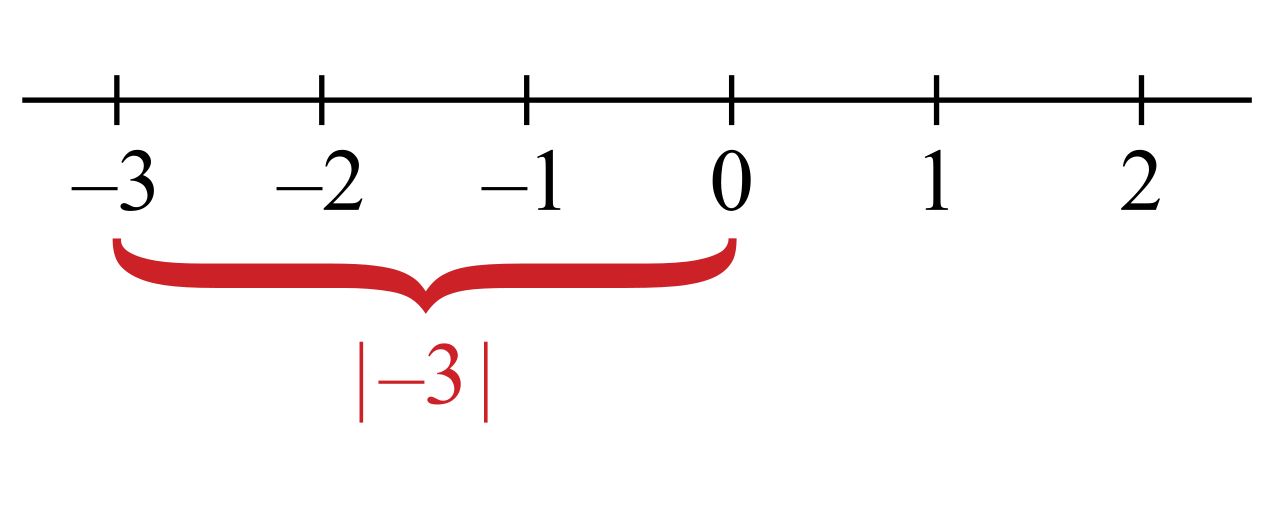
Because distance cannot be negative—you cannot walk "negative five miles"—the absolute value of any non-zero number is always a positive value.
- ∣5∣=5
- ∣−5∣=5
What about zero itself? Because zero is exactly zero units away from zero, the absolute value of zero is exactly zero. (∣0∣=0).
The HESI A2 exam requires you to perform addition, subtraction, multiplication, and division seamlessly, without hesitation. Let us demystify the mechanics behind these operations.
Addition: The Tug-of-War
Adding integers with the same sign is intuitive. You are moving in one consistent direction along the number line.
- Adding two positive integers always results in a positive integer sum. (3+4=7)
- Adding two negative integers always results in a negative integer sum. If a patient loses 3 pounds one week and loses 4 pounds the next week, the total deficit is 7 pounds. (−3+−4=−7)
The complexity arises when the signs are mixed. Adding a positive and a negative integer is akin to a tug-of-war between surplus and deficit.
To add a positive integer and a negative integer, a student must subtract the smaller absolute value from the larger absolute value. When adding integers with different signs, the final sum takes the mathematical sign of the integer with the larger absolute value.
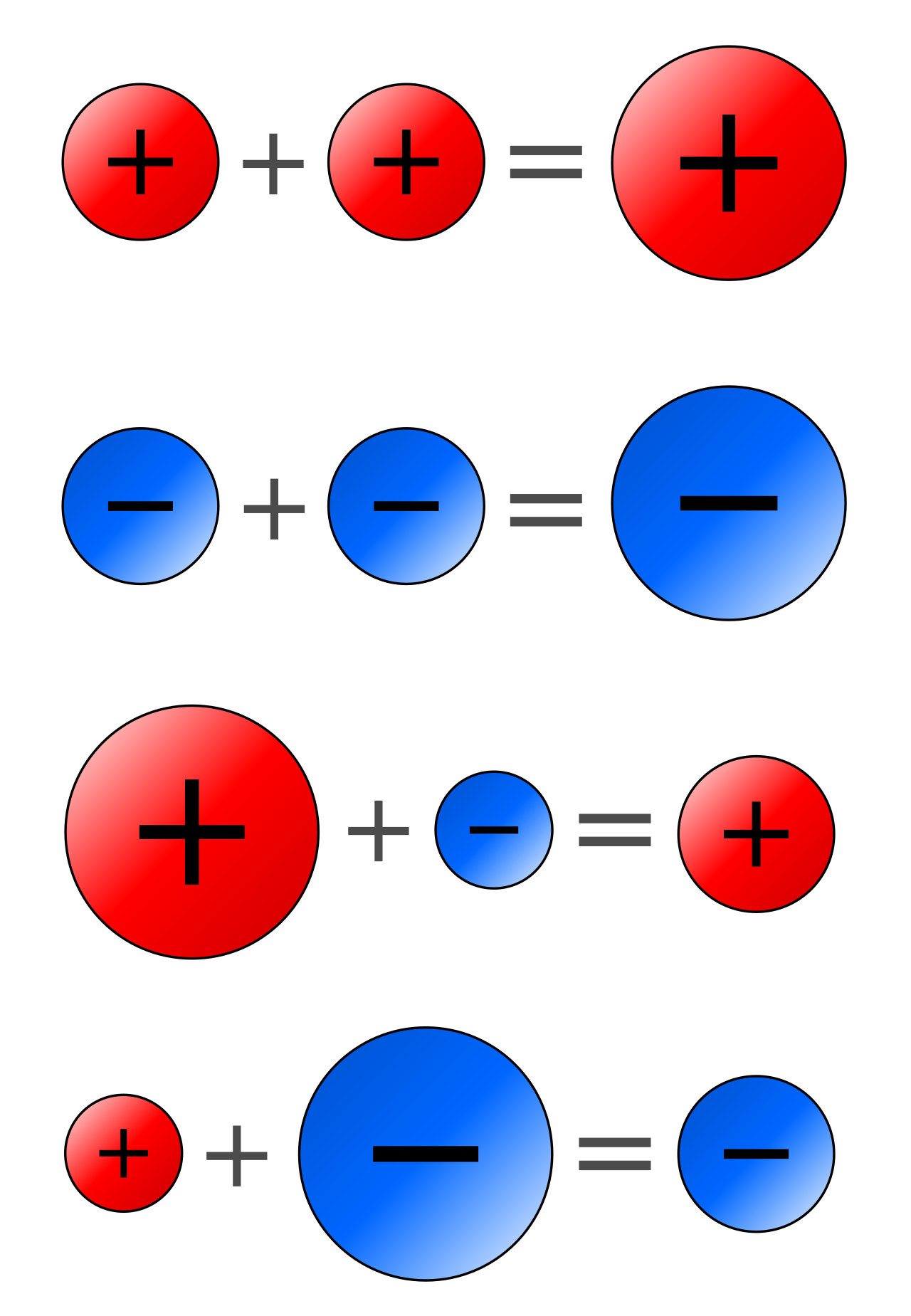
Example: Calculate −15+8.
- Find the absolute values: ∣−15∣=15, and ∣8∣=8.
- Subtract the smaller absolute value from the larger: 15−8=7.
- Assign the sign of the integer with the larger absolute value. Since ∣−15∣ is larger than ∣8∣, the "negative side" wins the tug-of-war.
- Result: −7.
Subtraction: Adding the Opposite
Subtraction often confuses students because they try to visualize taking away a deficit. We can eliminate this confusion entirely with one immutable rule:
Subtracting an integer is mathematically equivalent to adding the opposite value of that integer.
If you are asked to evaluate 10−15, rewrite it as adding the opposite: 10+(−15). Using our addition rules, the difference in absolute values is 5, and the negative number is "heavier," so the result is −5.
This rule becomes incredibly powerful when we encounter double negatives. Subtracting a negative integer is mathematically identical to adding a positive integer.
Imagine a patient's chart incurs a $200 penalty charge for a late fee, represented as a −200 deficit on the ledger. If the billing department forgives that fee, they are subtracting a negative. Taking away a penalty has the exact same effect on the total balance as handing someone cash—it increases the value.
- 500−(−200)→500+200=700.
Multiplication: Scaling the Number Line
Multiplication is simply scaling: making a value grow by a certain factor.
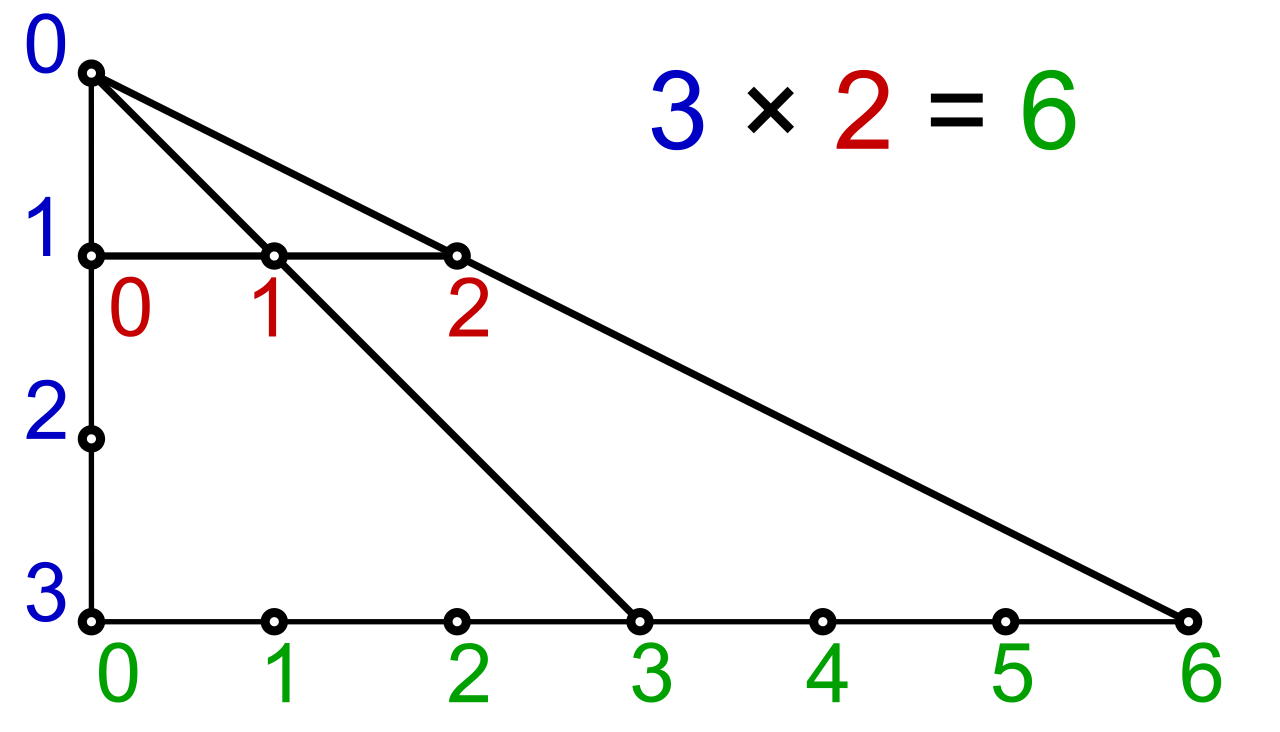
- Multiplying any integer by zero always results in a product of zero. Zero times any magnitude yields nothing. (14×0=0)
- Multiplying any integer by positive one results in the original integer. This is the identity property; scaling something by 1 leaves it completely unchanged. (−42×1=−42)
When multiplying non-zero integers, the result hinges strictly on the combination of their signs. Memorize this framework:
| Scenario | Rule | Clinical Example / Logic |
|---|---|---|
| Positive × Positive | Always yields a positive product. | 3 doses of 5 mg each = 15 mg of medication (3×5=15). |
| Positive × Negative | Always yields a negative product. | 3 instances of a 50 mL fluid loss = 150 mL total deficit (3×−50=−150). |
| Negative × Negative | Always yields a positive product. | Removing 3 (-3) penalties of $50 (-50) each = a net gain of $150 in the budget. (−3×−50=150). |
Division: Slicing the Value
Division is the inverse of multiplication, which means it obeys the exact same sign logic. If you know the rules for multiplying signs, you already know the rules for dividing them.
- Dividing two positive integers always yields a positive quotient. (20÷4=5)
- Dividing two negative integers always yields a positive quotient. (−20÷−4=5)
- Dividing a positive integer by a negative integer always yields a negative quotient. (20÷−4=−5)
- Dividing a negative integer by a positive integer always yields a negative quotient. (−20÷4=−5)
Finally, we arrive at the absolute edge cases of division, which frequently appear as trick questions on the HESI A2: the interaction with zero.
Dividing zero by any non-zero integer always results in a quotient of zero. If you have zero milligrams of a drug and you try to divide it equally among 5 patients, each patient receives exactly zero milligrams. (0÷5=0).
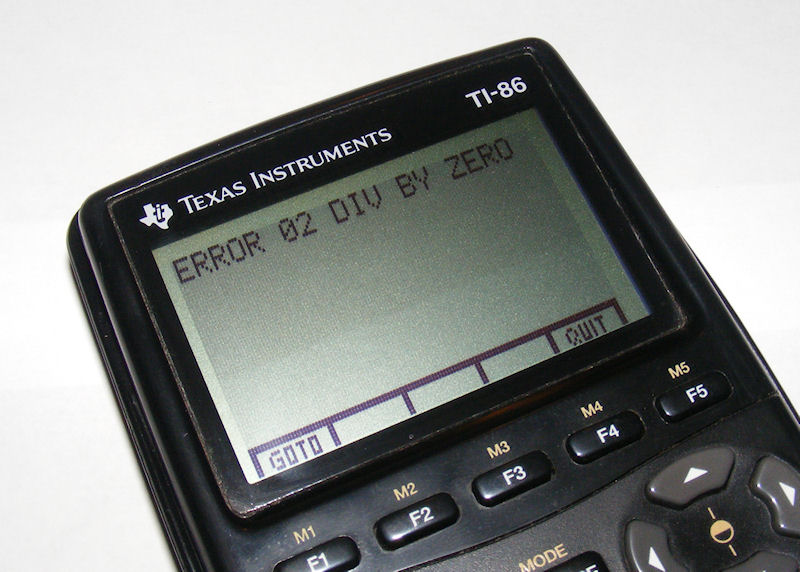
However, if you attempt the reverse, mathematics breaks down. Dividing any integer by zero is a mathematically undefined operation. You cannot take 50 pills and divide them into "zero groups." It defies the logical geometry of reality. If you see 50÷0 on the exam, the answer is never zero—it is undefined.
To succeed on the arithmetic modules of your entrance exam, you must strip away the anxiety of "doing math" and recognize these operations as a consistent set of physical rules.
Integers map the real world. A negative number is simply a value living to the left of the zero boundary. Its absolute value tells you its sheer magnitude, and its sign dictates its direction. If you subtract a deficit, you add to your total. If you multiply or divide two values moving in the same direction (same signs), the result is positive; if they clash (opposite signs), the result is negative. Approach these problems with the methodical precision of checking a vital sign, and the mathematical truth will consistently emerge.