Reporting of Incident, Event, Irregular Occurrence, or Variance
Not sure you’re ready?
Take the ~3-minute readiness diagnostic and see where you stand.
The Physics of Failure: A Masterclass on Incident Reporting and Just Culture
Welcome! Sit down. Today, we are going to talk about something fascinating. We are going to talk about mistakes.
Imagine you are working with a highly complex, beautifully intricate machine—the healthcare system. In any complex system with thousands of moving parts, unpredictable variables, and human operators, things are going to misfire. When a misfire happens, you have two choices: you can hide the broken part, which guarantees the machine will fail again, or you can investigate the failure like a scientist to redesign the machine.
In nursing, we choose the scientist's route. We observe, we acknowledge, we document, and we report. Let’s dive into exactly how we do this, the mechanics of incident reporting, and the absolute rules you need to know for the NCLEX-RN exam.
Before we talk about what to report, we have to talk about why.
The primary purpose of an incident report is to identify risks and improve system-wide patient safety. It is an internal risk management tool used to document any event inconsistent with the routine operation of a health care facility. You might hear it called an incident report, a variance report, or an occurrence report—these terms are used interchangeably in healthcare settings.
To get people to actually report these errors, hospitals use a just culture framework. A just culture focuses on evaluating the system factors contributing to errors rather than solely blaming the individual. It encourages the reporting of errors without the fear of immediate punitive action.
A just culture is highly precise. It differentiates between three types of behavior:
- Human Error: An honest mistake. In a just culture, human error is addressed through system changes and education. We fix the environment, not punish the person.
- At-Risk Behavior: Taking shortcuts without realizing the danger.
- Reckless Behavior: Conscious disregard for a substantial and unjustifiable risk. Unlike human error, reckless behavior is subject to disciplinary action.
Not all incidents are created equal. Let's look at the different magnitudes of unexpected events:
- Reporting a Variance: This broadly includes documenting any deviations from an established clinical pathway.
- A Near Miss: This is an unplanned event that did not reach the patient. However, you must pay attention to these! A near miss possessed the potential to cause patient harm despite not reaching the patient. Near misses require the completion of an incident report to help identify systemic vulnerabilities before someone actually gets hurt.
- A Sentinel Event: This is the big one. A sentinel event is an unexpected occurrence involving patient death or serious physical or psychological injury to a patient.
- Example: A retained foreign object after surgery is a sentinel event requiring an incident report.
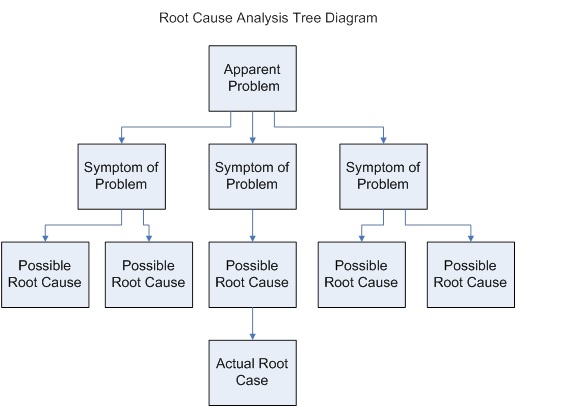
- The Rule: All sentinel events require immediate investigation and reporting to external regulatory agencies. They also trigger a root cause analysis—a retrospective process used to identify the underlying systemic reasons for the sentinel event.
You might think, "I only need to write a report if someone gets hurt, right?" Wrong! The machine needs to know about all its glitches.
Here is the master list of situations that demand an incident report. Read these carefully, because the NCLEX loves to test your ability to recognize them:
Medication and Treatment Glitches
- Medication errors (This requires the completion of an incident report regardless of whether patient harm occurred!).
- An unexpected adverse reaction to a properly administered medication.
- An adverse reaction to a blood transfusion.
- The omission of a prescribed therapy.
- An intravenous (IV) line infiltrates and causes tissue damage.
Environmental and Equipment Failures
- A patient fall.
- A patient sustaining a burn from a heating pad.
- A patient developing a healthcare-associated pressure injury.
- Equipment malfunctions. (Note: The report must detail the specific characteristics of the equipment involved).
Staff and System Breakdowns
- A breakdown in communication between healthcare providers resulting in delayed care.
- An accidental needlestick injury to a healthcare worker.
- A breach of patient confidentiality.
- A discrepancy in the controlled substance narcotic count.
Patient and Visitor Incidents
- A visitor sustaining an injury in a health care facility.
- The loss or damage of a patient's personal belongings.
- A patient elopement (wandering away from the facility).
The Exceptions: What DOESN'T need an incident report? A patient's routine refusal of a prescribed treatment does not require an incident report. Similarly, a patient signing out against medical advice (AMA) does not inherently require one. However, if a patient’s refusal of treatment directly results in an unexpected adverse event, an incident report is then required.
If you remember nothing else from this lecture, remember this: An incident report is not considered part of the patient's official medical record.
Why? Because if you write, "Incident report filed" in the patient's medical chart, you have just handed a golden key to a malpractice lawyer. Documenting the existence of an incident report in the medical record makes the incident report discoverable by attorneys in a malpractice lawsuit. A nurse must never document the completion of an incident report in the patient's medical record.
So, how do we document when things go wrong? We live in two different worlds simultaneously. Here is exactly what goes where:
| The Patient's Medical Record (The Chart) | The Incident Report (The Risk Tool) |
|---|---|
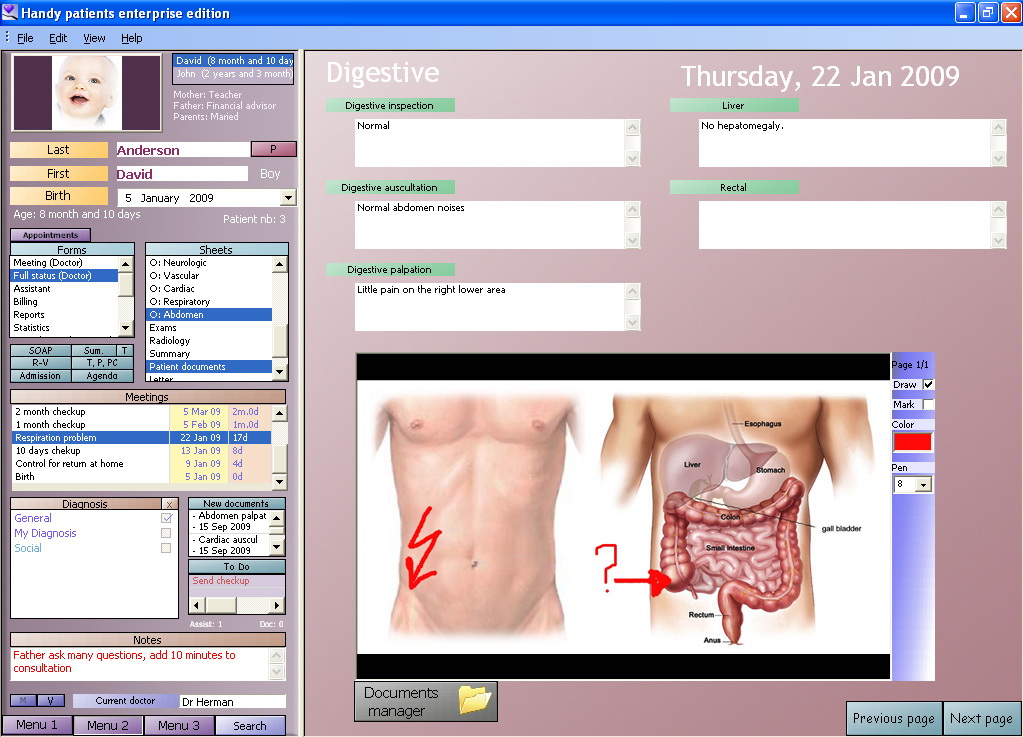
| Objective clinical facts of the incident. | Completed by the individual who observes or first discovers the incident. |
| The patient's vital signs and physical assessment findings immediately following the incident. | Must include exact, objective quotes from the patient or witnesses. |
| Documentation must remain strictly factual without placing blame. | Must include the names and contact information of any witnesses to the event. |
| Must not include assumptions about the cause of the event. | A description of any interventions performed in response to the incident. |
| The exact time the healthcare provider was notified. | The name of the healthcare provider who was notified of the event. |
| Any new orders received from the healthcare provider following the incident. | Details of specific characteristics of the equipment if a malfunction caused the incident. |
In physics, time is relative. In nursing, time is everything. When an incident occurs, there is a very specific sequence of events you must follow.
- The Patient First: Your immediate priority is the patient. You must assess the patient for injuries immediately after an incident occurs. Practice errors must be acknowledged immediately to ensure prompt medical assessment and intervention for the patient.
- Secure Stability: The patient's safety and physiological stability must be secured prior to notifying the provider, and prior to filing an incident report.
- Notify the Provider: Once the patient is safe and stable, call the doctor.
- File the Report: The incident report must be completed only after the patient is physiologically stable and the healthcare provider has been notified.
Timing the Report: Most healthcare facilities require an incident report to be filed within 24 hours of the event occurrence. Do not procrastinate! An incident report should not be delayed until the end of the nurse's shift; write it while the objective facts are completely fresh in your mind.
Sometimes, the "incident" isn't a slip on the floor; it's a colleague acting dangerously. Nurses have a profound legal and ethical obligation to report unsafe practices by other healthcare team members.
Immediate Interventions
If you observe another staff member's action posing an imminent threat to patient safety, you must intervene immediately. For example, if you observe a peer violating sterile technique, you must step in immediately to protect the patient, and then report the variance to the charge nurse or supervisor.
Navigating the Chain of Command
Unsafe staff practices must always be reported through the facility's designated chain of command.
- System Issues: A nurse must report staffing shortages that compromise patient safety directly to the nursing supervisor.
- Impairment: If you have suspicion of a nurse working under the influence of drugs or alcohol, it must be reported immediately to the nursing supervisor. Critical rule: A nurse must not confront an impaired coworker directly before notifying nursing management. Let management handle the confrontation to ensure safety and protocol adherence.
- Drug Diversion: Suspecting a colleague of stealing medication (drug diversion)? Report the suspicion to the nursing supervisor. Drug diversion by a healthcare professional constitutes a critical safety variance and is an illegal act requiring institutional reporting.
When to Break the Chain: You are required to bypass your immediate supervisor in the chain of command if:
- Your immediate supervisor is the source of the unsafe practice.
- Your immediate supervisor fails to take action on a reported safety concern.
Whistleblowing
What happens if the entire internal system fails to address a critical danger? You go outside. But remember the protocol: Nurses should utilize internal chain of command reporting procedures prior to contacting external regulatory agencies about unsafe practices.
If you do have to escalate externally, know that whistleblower protection laws exist to prohibit employer retaliation against a nurse who reports unsafe or illegal practice to an external agency.
Final Thoughts for the NCLEX
To pass this topic, think like a scientist fixing a complex machine. Secure the patient first. Stick to the objective facts. Never put the incident report in the chart. Protect the system by reporting near misses, and protect the patient by intervening on unsafe colleagues.
Master these principles, and you won't just pass the exam—you'll be the kind of professional who makes the whole hospital safer. Now, go study!