Security Plan
Not sure you’re ready?
Take the ~3-minute readiness diagnostic and see where you stand.
Welcome, everyone! Grab a seat. Today, we’re going to talk about something incredibly profound, yet something that is entirely hidden in plain sight. We are talking about the physics of human safety. We are talking about the Security Plan.
When you walk into a hospital, you see nurses, doctors, monitors, and medications. But there is a massive, invisible machinery running in the background. It is a web of protocols designed to protect the vulnerable, manage the chaotic, and literally pull order out of sheer disaster. And as a nurse, you are the chief operator of this machinery.
If there is a fire, if a baby goes missing, if a catastrophic storm hits—nature does not pause to let you read a manual. You have to know the rules of the game. So, let’s explore the beautiful, sometimes brutal, logic of clinical security and disaster planning.
Let’s start with a puzzle. How do you decide who lives and who dies when the universe throws everything it has at you?
We have to understand the fundamental difference between everyday emergency medicine and disaster medicine. They operate on two entirely different sets of physics.
The Everyday Emergency Room
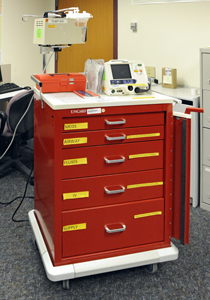
In normal, day-to-day operations, emergency department triage priorities focus on treating the most critically ill patients first regardless of resource consumption. If a patient comes in with a massive heart attack, you throw the whole kitchen sink at them. Six nurses, three doctors, the crash cart, the cath lab—you drain the hospital's resources to save that one life, because the system has the bandwidth to handle it.
Disaster Triage and the START Method
Now, imagine a devastating earthquake. You have fifty critically injured patients and only three nurses. If you spend all your time and resources trying to save one patient who requires CPR and massive transfusions, ten other patients who just needed a basic tourniquet or airway positioning will die.
In a disaster, the rules flip. Disaster triage principles prioritize doing the greatest good for the greatest number of people using available resources. We shift from focusing on the individual to optimizing the population.
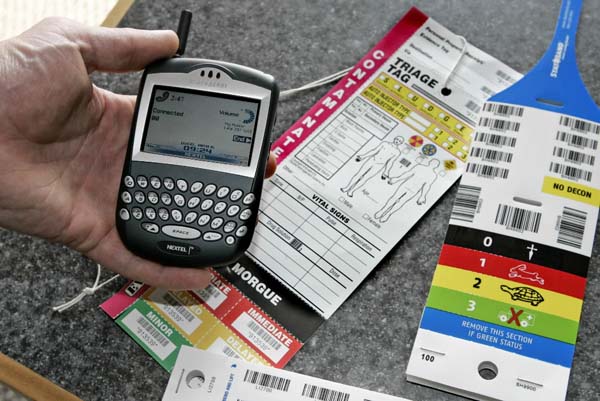
To do this, we use the Simple Triage and Rapid Treatment (START) method. This brilliant, ruthless algorithm categorizes disaster patients based on the severity of injuries and the likelihood of survival. It prevents us from making emotional decisions when we need to be strictly logical.
We sort our patients using four colored tags. Think of these tags as your currency in a disaster:
| Tag Color | Meaning & Action | The "Why" |
|---|---|---|
| Red | Immediate. Indicates an immediate threat to life requiring prompt intervention. | Airway issues, uncontrolled hemorrhage. They will survive if you fix them right now. |
| Yellow | Delayed. Indicates major injuries that can safely wait up to two hours for treatment. | Open fractures, large wounds without massive bleeding. They need a hospital, but they won't die in the next 120 minutes. |
| Green | Minimal. Indicates minor injuries for patients who are able to walk without assistance. | These are the "walking wounded." We can direct them to a safe area away from the chaos. |
| Black | Expectant. Indicates the patient is deceased or has injuries incompatible with life given available resources. | Massive head trauma, cardiac arrest. In a disaster, we do not perform CPR. It consumes too many resources. |
Feynman's Rule of Disasters: When resources are infinite, fight for every single life. When resources are finite, fight for the math. Maximize the survivors.
Suppose a fire breaks out in the East Wing of your hospital. You need to move people out. But moving a hospital full of sick people is like trying to move a fragile ecosystem. You can't just yell "Fire!" and expect it to work out.
We have two geometric directions for moving patients:
- Horizontal evacuation: This involves moving patients to a safe area on the same floor beyond fire doors. Modern hospitals are built like submarines with bulkheads. By crossing a set of heavy fire doors, you enter a new, safe "compartment." Always move horizontally first if you can!
- Vertical evacuation: If the whole floor is compromised, you must go down. This involves moving patients down stairwells to a different floor to escape danger. Never use elevators in a fire.
The Order of Operations
Now, who do you move first? Your instinct might be to grab the sickest patient on the ventilator. Stop. That is a fatal error. If you struggle to move a heavy ventilator down the stairs, you create a bottleneck, trapping thirty people who could have easily walked out.
Facility evacuation protocols dictate a strict, counter-intuitive order:
- Move ambulatory patients first. The green tags! Get the people who can walk out of the way. Clear the halls.
- Move non-ambulatory patients requiring minimal assistance second. People in wheelchairs, people who just need a guiding hand.
- Move patients requiring extensive life support assistance last. It sounds harsh, but moving these patients takes massive time and personnel. You secure the majority first.
Let’s shift gears. Think about a newborn nursery. To a parent, this room holds their entire universe. To a hospital, it is the most highly targeted area for abduction. Therefore, the security surrounding infants is absolute, multi-layered, and practically bulletproof.
If an infant is abducted, the hospital initiates a Code Pink, which is a commonly used hospital emergency code indicating an infant abduction. The exact moment this alarm sounds, the facility becomes a vault. During an infant abduction alert, staff must immediately secure and monitor all facility exits and stairwells. Nobody leaves.
But how do we prevent the Code Pink in the first place? We use a beautiful blend of technology and human diligence.
The Technology Layer
We literally microchip the babies! Infant security systems utilize electronic tags that trigger an alarm if an infant is brought near unit exits. But what if a clever thief tries to cut the tag off? The engineers thought of that. These infant security electronic tags automatically lock unit doors if tampered with or removed. It’s a closed-loop system.
The Human Protocol Layer
Technology fails, so human behavior must be flawless.
- The ID Check: Even if the person standing before you looks exactly like the mother, facility protocols require matching the newborn identification band with the parent identification band before leaving the infant with the parent. No match? No baby. Period.
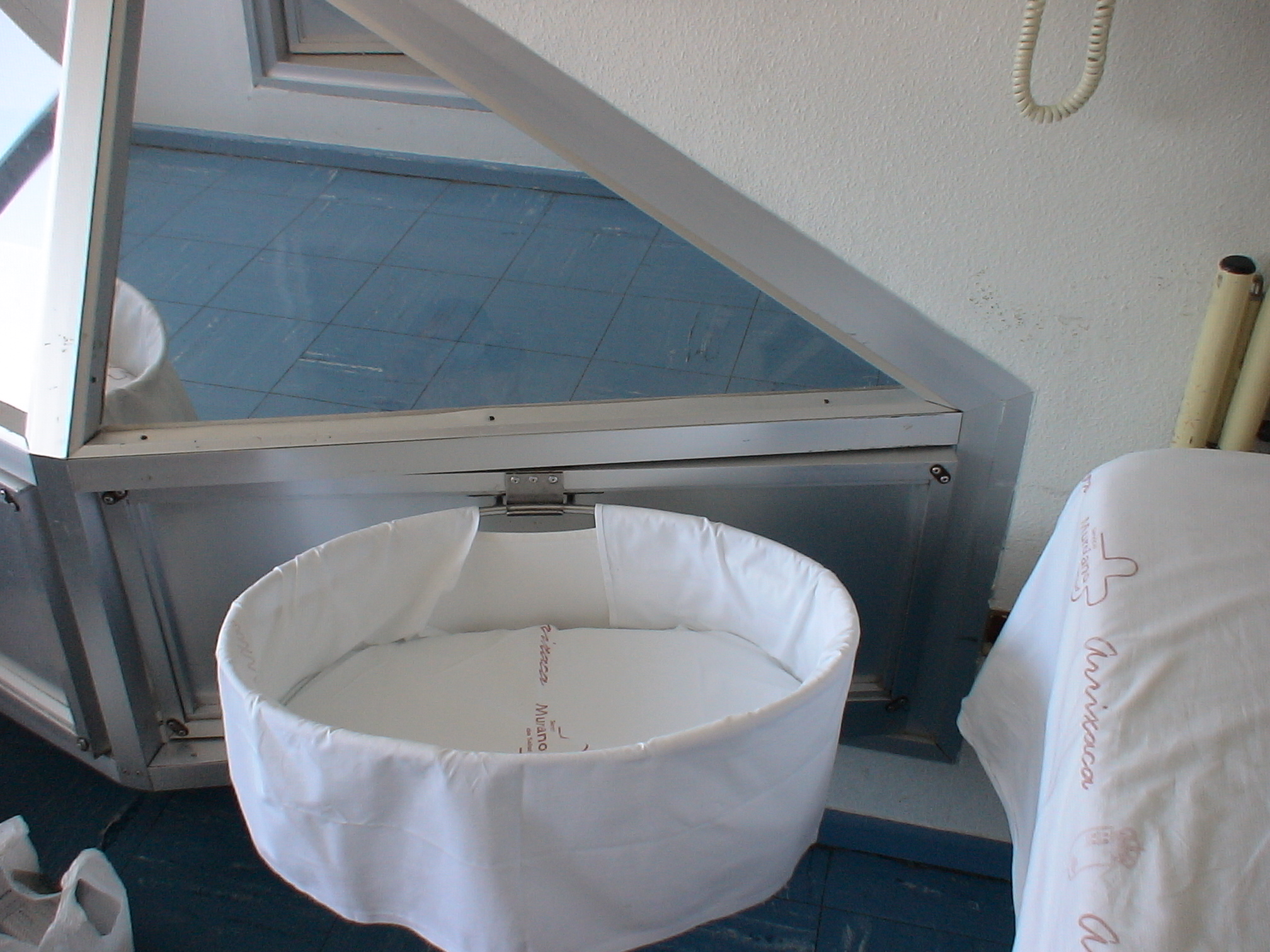
- The Bassinet Rule: You will never see a good nurse carrying a baby down a hallway in their arms. Safety protocols dictate transporting newborns in rolling bassinets rather than carrying newborns in staff arms. Why? If a nurse trips and falls, the baby is protected in the bassinet. Furthermore, it prevents anyone from "casually" walking out with an infant in their arms.
- The Uniform: Not just any doctor or nurse can walk into the nursery. Staff members authorized to work in newborn units must wear visibly distinct identification badges. Usually, these have a specific color or a special holographic overlay.
- Parent Education: Parents are our best allies. Parents must be educated to only release their newborn to facility staff members wearing the specific neonatal unit identification badge. If a person in scrubs walks in without that badge and asks for the baby, the parent knows to hit the call light immediately.
Not all security involves keeping bad guys out; a huge part of nursing is keeping confused patients in.
When a patient wanders away from a healthcare facility, we call it elopement. It is terrifying. A patient with dementia out in the freezing rain is a critical emergency. So, how do we stop it?
Identifying the Risk
You can't fix a problem you haven't measured. Therefore, nurses must assess a patient's risk for elopement upon admission using a standardized cognitive assessment tool.
Once a patient is deemed high risk, we deploy our countermeasures:
- Strategic Geography: Patients at high risk for elopement must be assigned to rooms located close to the nursing station. Keep them in your line of sight. Don't put them at the end of a long, dark hallway next to the fire exit!
- Technological Boundaries: Just like the infants, we use tech. Electronic wandering tracking systems trigger perimeter alarms when a high-risk patient approaches an exit.
- The Ultimate Guard: For severe cases, technology and geography aren't enough. Patients with dementia or cognitive impairments require continuous visual monitoring or a one-to-one sitter to prevent elopement.
Controlled Access and Tailgating
In sensitive areas (like the ICU, Labor & Delivery, or psych wards), we use Controlled access units, which require all visitors to be individually verified and granted entry by facility staff.
But here is where human psychology creates a security flaw. People are inherently polite. If you swipe your badge to open a secure door, and someone is walking right behind you holding a cup of coffee, your instinct is to hold the door for them. Do not do this. This is called "tailgating."
Staff members must intercept unauthorized individuals attempting to follow credentialed personnel through secure doors. It is your professional duty to look them in the eye and say, "I'm sorry, I need you to badge in or check at the desk."
Furthermore, to easily spot who belongs and who doesn't, facility security policies mandate that all employees wear visible identification badges at all times. Your badge is your passport.
Finally, we must talk about malicious human threats. These are low-probability but extremely high-impact events. In these situations, your brain will flood with adrenaline. You will experience tunnel vision. You must fall back on these rigid, deeply ingrained protocols.
Suspicious Packages and Bomb Threats
Suppose you are at the nurse's station and you notice a bizarre, unmarked box sitting near the elevators. A staff member discovering a suspicious package must secure the immediate area without touching the object. Do not be a hero. Do not shake it. Clear the hallway and call security.
What if the phone rings, and a voice tells you there is a bomb in the building?
- A staff member receiving a telephonic bomb threat must keep the caller on the line as long as possible. Why? To gather intelligence.
- A staff member receiving a telephonic bomb threat must document background noises and specific caller voice characteristics. Are there train horns in the background? Does the caller sound nervous, intoxicated, or accented? Write it down immediately!
Active Shooter Protocols
An active shooter in a hospital is a nightmare scenario. Law enforcement and security agencies have distilled survival into three chronological steps. You do them in exactly this order:
- Evacuate: Active shooter protocols prioritize evacuating the area immediately if a safe path is accessible. Forget your belongings. Get out.
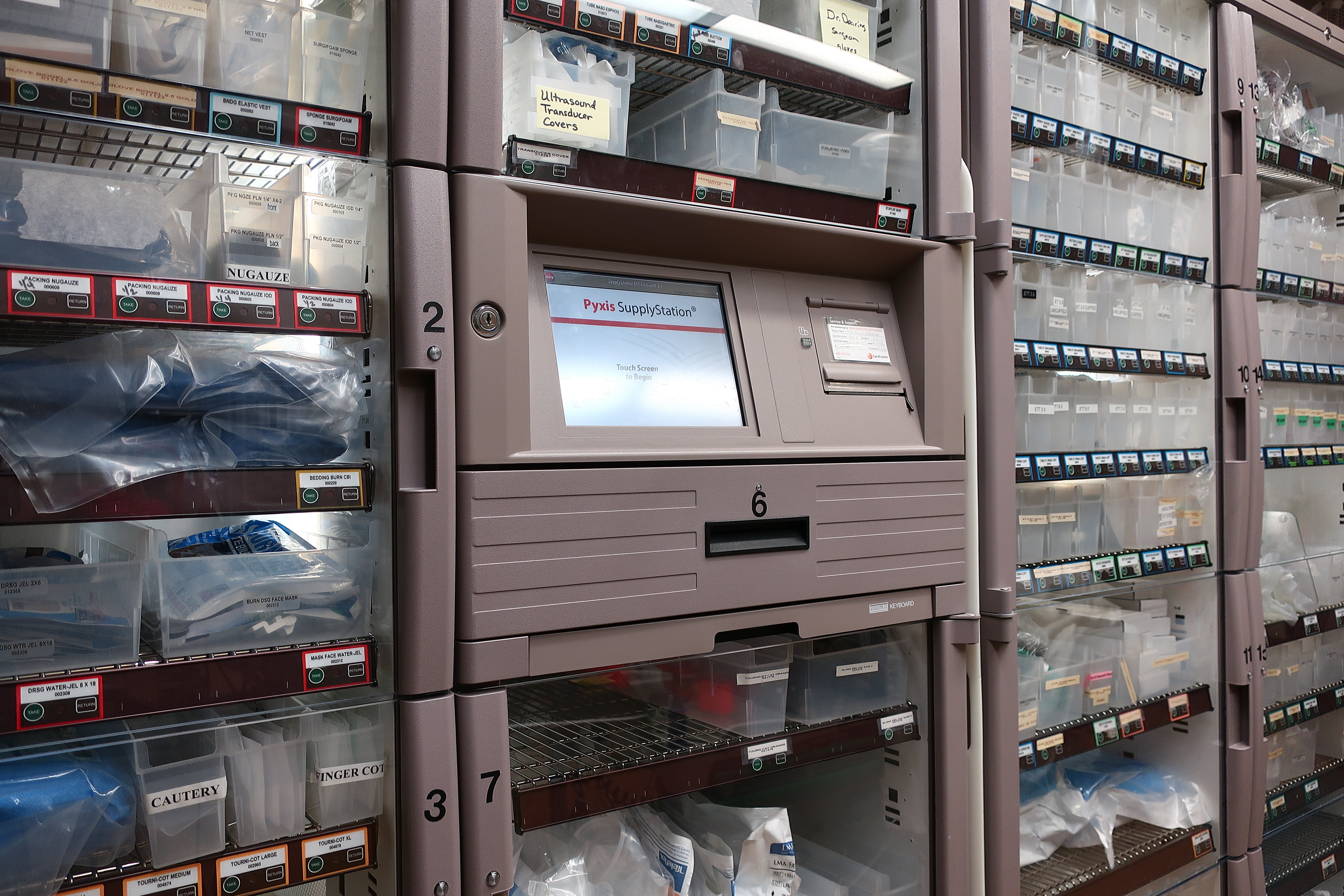
- Hide: If the shooter is between you and the exit, active shooter protocols dictate hiding in a secure location and barricading the door if evacuation is impossible. Turn off the lights, silence your pagers and cell phones, and block the door with heavy hospital beds or Pyxis machines.
- Fight: Active shooter protocols consider fighting the attacker as an absolute last resort to protect human life. If the door is breached, and you have no other option, use fire extinguishers, IV poles, or whatever you can find to incapacitate the threat.
Look at what we've covered today. From the simple elegance of sorting patients with colored tags during a mass casualty event, to the high-tech tracking of wandering dementia patients. From locking down stairwells during a Code Pink, to knowing precisely when to hold the line against a tailgating visitor.
_for_Mass_Casualty_Incidents.jpg)
As a nurse, you are not just administering medications. You are the architect of a safe environment. You are the invisible shield that protects the helpless when the universe decides to turn chaotic.
Study the math. Respect the protocols. Trust the physics of the security plan.
Class dismissed!