Standard Precautions, Transmission-Based Precautions, and Surgical Asepsis
Not sure you’re ready?
Take the ~3-minute readiness diagnostic and see where you stand.
Welcome, future nurses! Sit down, grab a cup of coffee, and let’s talk about the magnificent, terrifying, and completely invisible world of microorganisms.
Nature is wonderful, but make no mistake: at a microscopic level, there is a war going on every single day in our hospitals. Bacteria, viruses, and fungi are relentless. They want a warm place to multiply, and our clients are the perfect real estate. As nurses, you are the engineers of the physical environment. You are the frontline defenders manipulating physics, fluid dynamics, and barrier mechanics to stop these invisible invaders in their tracks.
To pass the NCLEX-RN and, more importantly, to save lives, you cannot just memorize infection control rules. You have to understand them. You have to see the invisible. Let’s break it down.
Before we talk about putting on gloves or opening sterile fields, we have to understand how an infection travels. Disease doesn't just spontaneously appear in a new patient; it requires an incredibly specific logistical supply line.
The Chain of Infection requires a continuous link between six distinct elements: an infectious agent, a reservoir (where it lives), a portal of exit (how it leaves), a mode of transmission (how it travels), a portal of entry (how it gets in), and a susceptible host (who it infects).
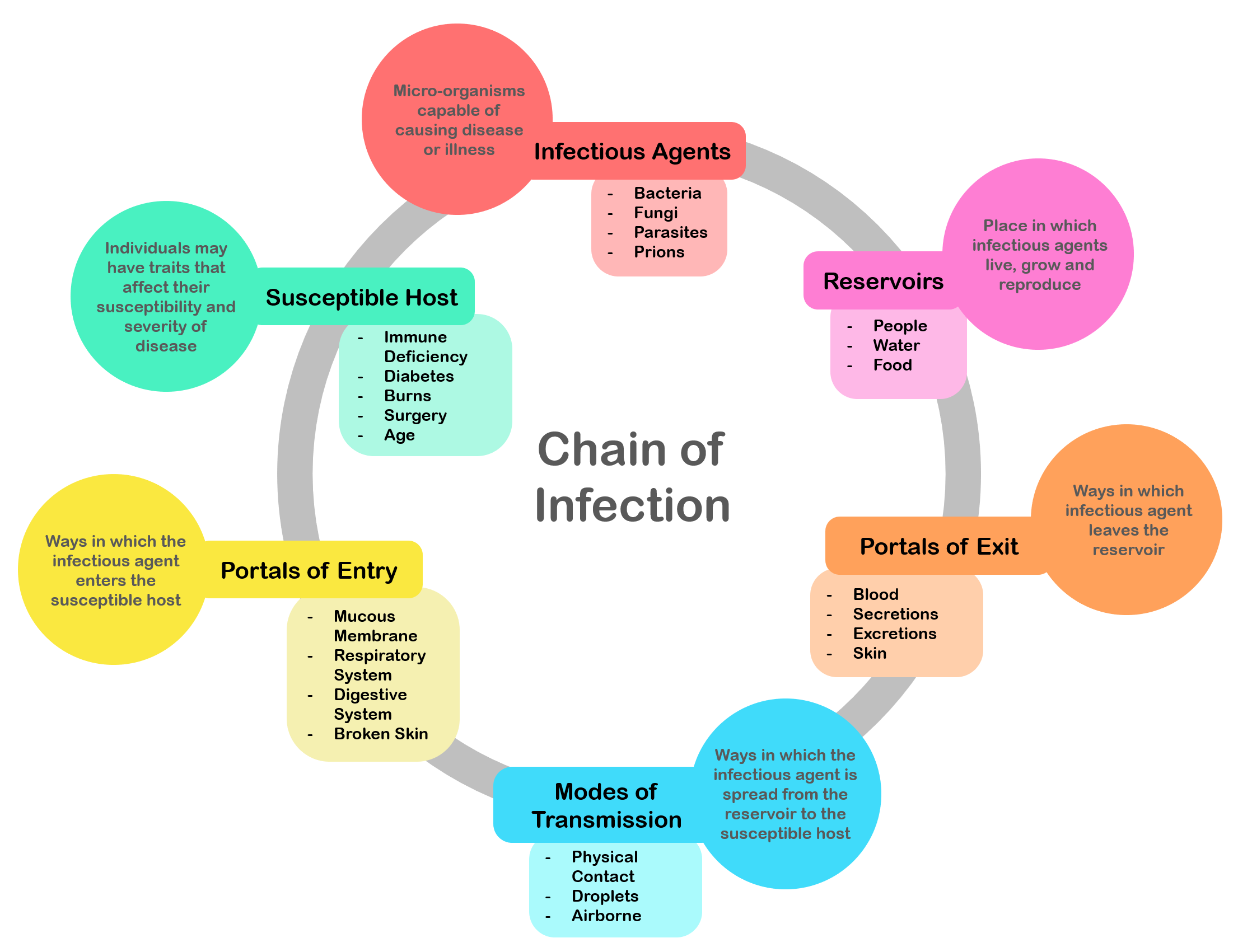
Think of this chain like a delicate electrical circuit. If the circuit is complete, the client gets infected. But here is the beautiful part: breaking any single link in the chain of infection prevents the spread of disease. You don't have to break all six links! If you intercept the mode of transmission, the chain shatters. If you block the portal of entry, the chain shatters. That is your primary job.
Medical asepsis aims to reduce the number of microorganisms and prevent disease spread. It’s not about eliminating every single germ—it’s about knocking their numbers down so low they can't establish a foothold. This is our "clean technique."
The Ultimate Weapon: Friction and Fluid
The most important tool in medical asepsis is brilliantly simple: handwashing. When you use soap and water, you must engage in active friction for a minimum duration of 20 seconds.
Now, alcohol-based hand rubs are fantastic for many things, but they have a massive blind spot: spores. Bacteria like Clostridioides difficile (C. diff) build a microscopic armor around themselves. Because of this, alcohol-based hand rubs are ineffective against Clostridioides difficile spores. The alcohol simply evaporates off their hardened shells. Therefore, handwashing with soap and water is required after caring for a client with a C. diff infection. You aren't necessarily killing the spores with the soap; you are mechanically dislodging them from your skin and washing them down the sink drain.

Standard Precautions: The Baseline Assumption
Imagine you are walking into a room. You don't know the client's infectious status. What do you do? You assume the worst and protect yourself anyway. Standard precautions apply to all clients regardless of their known infection status.
It boils down to a simple rule: if it is wet and comes from a human body, do not touch it with your bare hands.
- Standard precautions require the use of gloves when touching blood or body fluids.
- Standard precautions require the use of a face shield during procedures likely to generate splashes of body fluids. If there's a risk of a microscopic fluid projectile hitting your eye, put the shield on.
When you're done with a task, hygiene timing is critical. Healthcare workers must remove gloves immediately after completing a patient care task and before touching clean environmental surfaces. Don't adjust your stethoscope, touch the computer keyboard, or open the door with contaminated gloves!
The Physics of Sharps
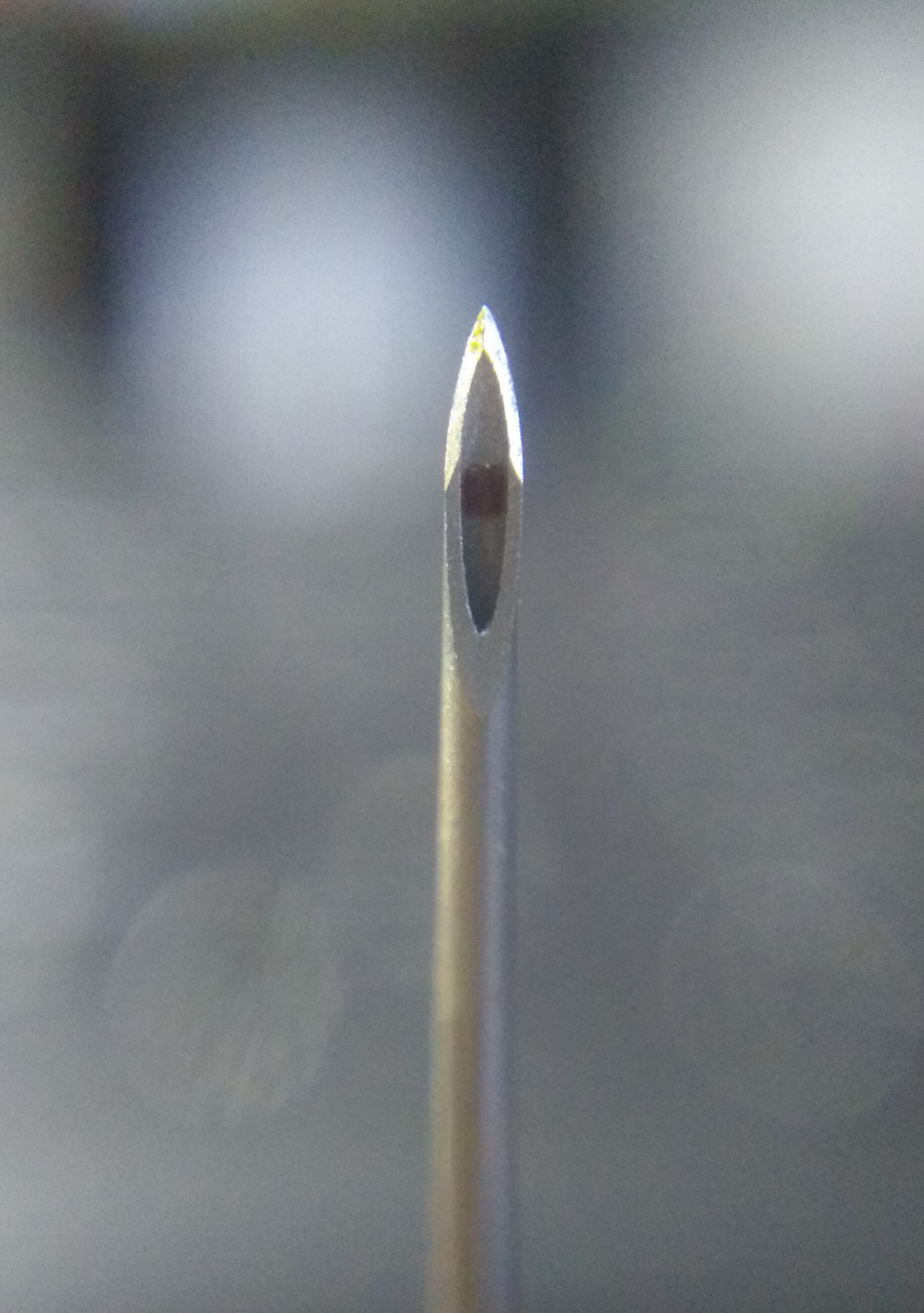
Needles are tiny, hollow spears covered in blood. Handling them requires immense respect. Needles must never be recapped using a two-handed technique. Why? Because human hands are clumsy. If your leading hand misses the tiny plastic cap, you will drive that contaminated spear straight into your opposite finger. Instead, contaminated needles must be immediately disposed of in a designated puncture-resistant sharps container. Don't set it on the bed, don't walk across the hall with it. Straight into the box.
Sometimes, standard precautions aren't enough. When we know (or strongly suspect) a patient has a highly communicable disease, we deploy Transmission-Based Precautions. To understand these, we have to look at the physics of a sneeze, a cough, and physical contact.
Airborne Precautions: The Microscopic Floaters
Imagine dropping a bowling ball and a feather. The bowling ball drops instantly; the feather surfs on the air currents. In the microbial world, size dictates travel.
Airborne droplet nuclei are smaller than 5 microns in diameter. Because they are so incredibly tiny and lack mass, they don't fall to the ground. They float. They evaporate and leave suspended infective particles riding on the room's air currents for hours.
To defeat floaters, we need specialized airflow and serious filtration:
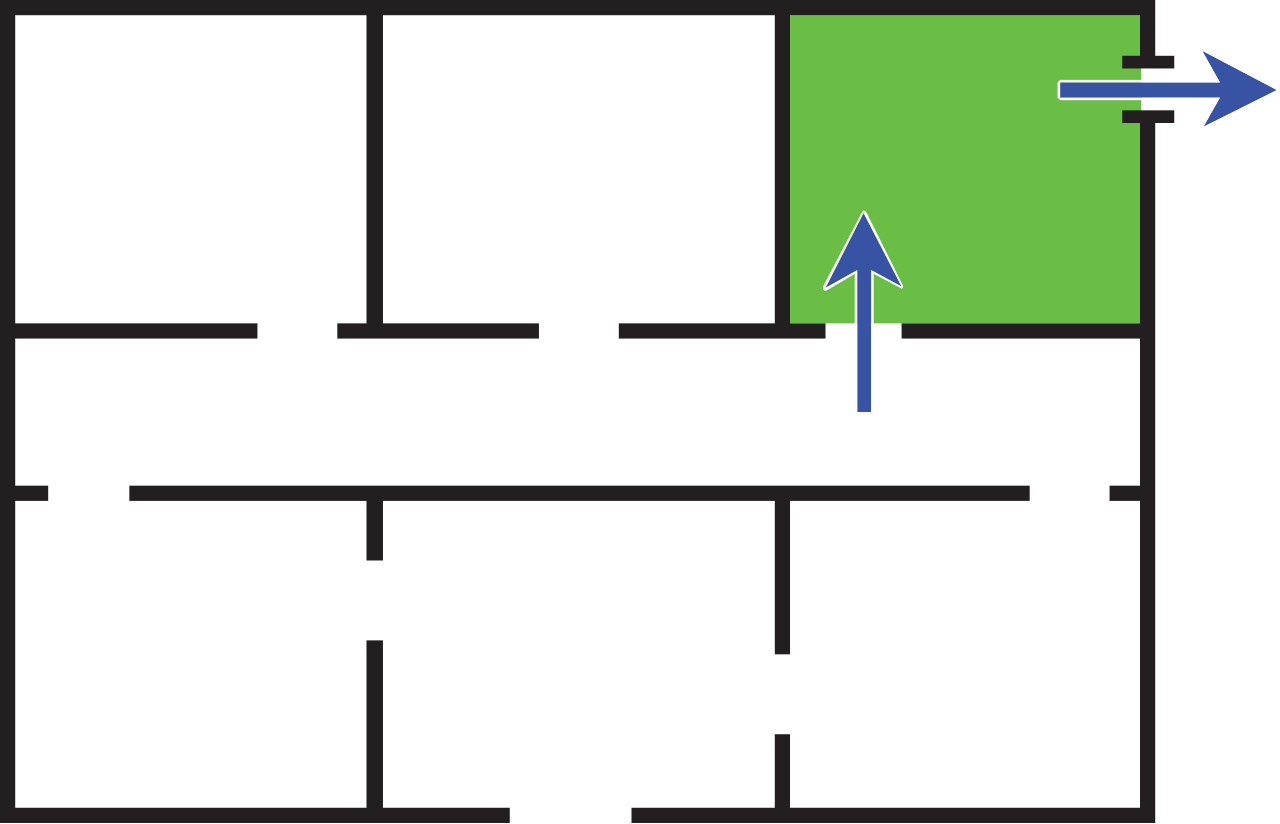
- The Room: Airborne precautions require the client to be placed in a negative-pressure room. This room is essentially a vacuum. When you open the door, hallway air rushes in, preventing infectious air from escaping into the surrounding hallway. To keep this vacuum clean, a negative-pressure isolation room requires a minimum of six air exchanges per hour, constantly sucking the contaminated air out through specialized HEPA filters.
- The Mask: A standard mask won't cut it. Airborne precautions require healthcare workers to wear a fit-tested N95 respirator that forms a tight seal around the face, filtering out particles smaller than 5 microns.
- The Exit Strategy: Because the room air is contaminated, removing a mask or respirator must occur outside the airborne infection isolation room, after the door has closed behind you.
Airborne Pathogens to Memorize:
- Tuberculosis
- Measles
- Varicella (Chickenpox)
- Disseminated herpes zoster (Shingles that has spread beyond a localized dermatome)
If a client on airborne precautions needs to leave their negative-pressure room for a necessary test (like an MRI), they must wear a standard surgical mask during transport outside the isolation room to trap the particles at their exit portal.
Droplet Precautions: The Heavy Artillery
Now, let's look at pathogens that travel in liquid droplets. Infectious droplets are particles larger than 5 microns in diameter. Because they are larger and heavier, gravity acts on them quickly. Infectious droplets typically travel no further than three feet from the infected client before hitting the floor or a surface.
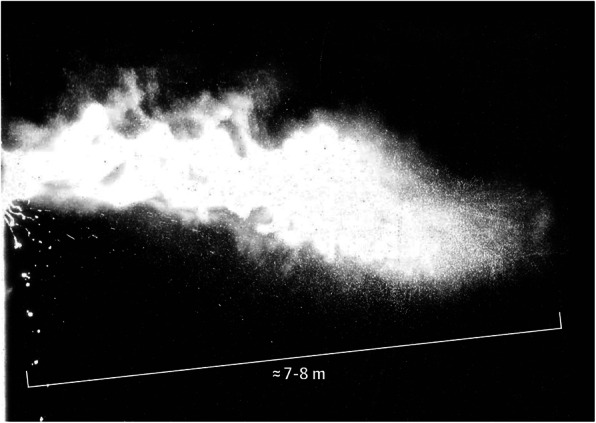
Because they don't float around the room, you don't need a negative pressure vacuum. You just need a barrier when you enter the "splash zone."
- Droplet precautions require healthcare workers to wear a surgical mask when within three feet of the client.
Droplet Pathogens to Memorize:
- Influenza
- Pertussis (Whooping cough)
- Mumps
- Neisseria meningitidis (Meningococcal disease)
Just like with airborne, clients on droplet precautions must wear a surgical mask during transport outside the isolation room to catch the heavy artillery right at the source.
Contact Precautions: The Hitchhikers
Some bugs don't fly, and they don't jump. They wait. They survive on bed rails, call lights, and stethoscopes, waiting for a host to touch them.
- Contact precautions require healthcare workers to don a gown upon entering the client room, protecting their scrubs from brushing against contaminated surfaces.
- They also require healthcare workers to don gloves upon entering the client room.
- Crucially, dedicated medical equipment (like stethoscopes and blood pressure cuffs) must be left inside the room of a client on contact precautions. You do not want a pathogen hitchhiking on your stethoscope into the next patient's room!
Contact Pathogens to Memorize:
- Methicillin-resistant Staphylococcus aureus (MRSA)
- Vancomycin-resistant enterococci (VRE)
- Respiratory syncytial virus (RSV)
- Scabies
- Pediculosis (Lice)
Cohorting
What happens when you are out of private isolation rooms? You play matchmaker with pathogens. Cohorting groups clients with the exact same active infection in the same shared room. You cannot put a MRSA client with a VRE client. But two MRSA clients? They can share a room because they share the exact same microscopic enemy.
Putting on and taking off your armor requires a strict sequence. Why? Because taking off contaminated gear the wrong way will instantly contaminate your uniform or your face. Furthermore, visitors of clients on transmission-based precautions must be educated on the proper use of personal protective equipment. You cannot assume the client's family knows how to don an N95 or safely remove a contaminated gown. You must teach them.
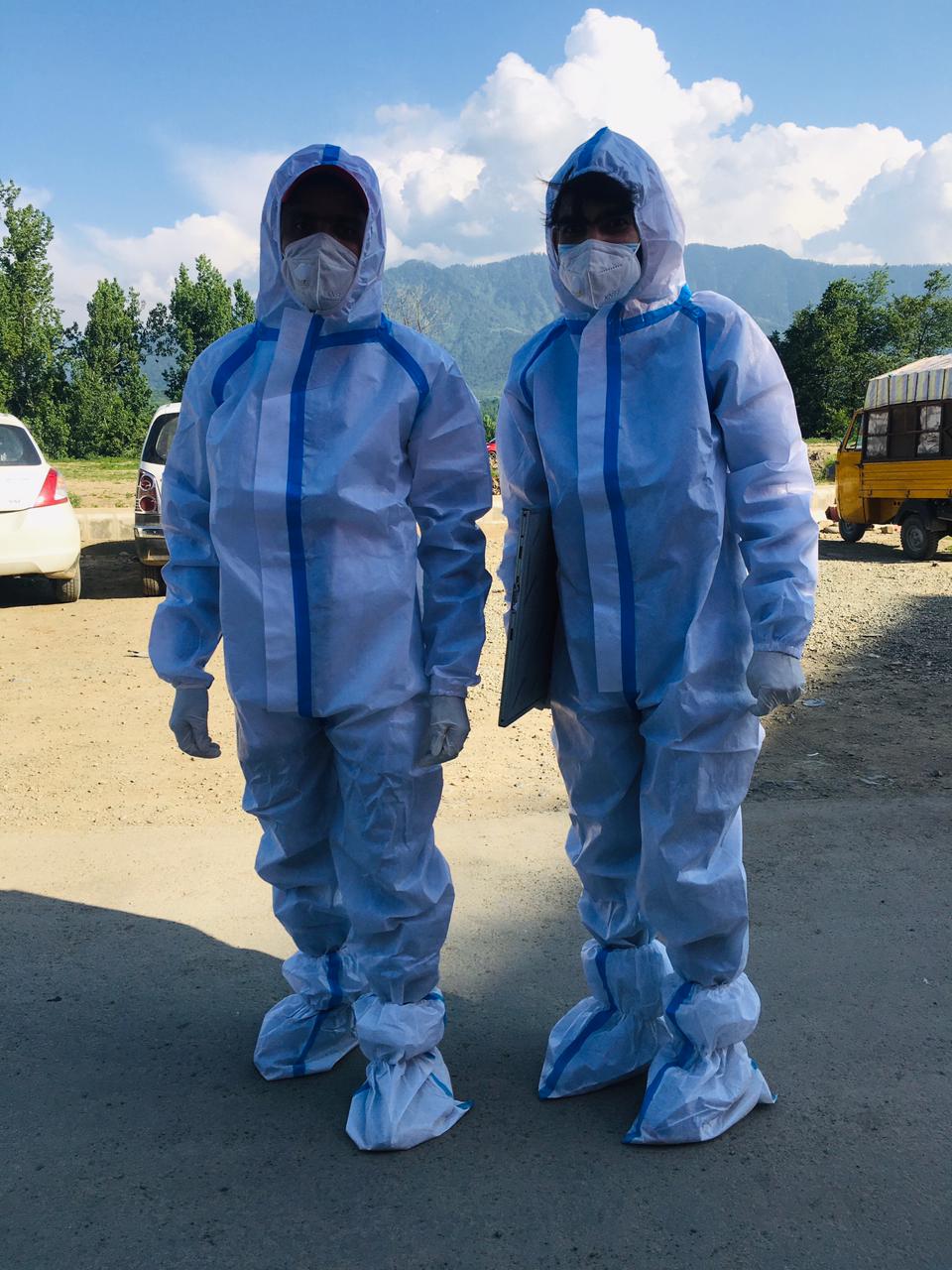
Donning (Putting it ON)
You are gearing up to go into the battle. You want to build your armor from the base up.
- Gown: Cover your uniform.
- Mask or Respirator: Protect your airway.
- Goggles or Face Shield: Protect your eyes.
- Gloves: Put these on last so they overlap the cuffs of your gown, sealing the suit.
Doffing (Taking it OFF)
You are covered in invisible pathogens. You must remove the most contaminated items first without touching your own skin or scrubs.
- Gloves: These touched the patient. Take them off first.
- Goggles or Face Shield: Handle by the clean earpieces/headband.
- Gown: Untie and pull it off, rolling it inside out so the contaminated side is trapped inside.
- Mask or Respirator: Take this off last (and if airborne, do it outside the room!).
If medical asepsis is "clean," surgical asepsis (sterile technique) is the absolute vacuum. Its goal is not to reduce, but to eliminate ALL microorganisms from an area or object. We use this for inserting Foley catheters, central line dressing changes, and in the operating room.
When you create a sterile field, you are establishing an invisible border. The rules governing this border are strict, unforgiving, and based entirely on physical laws.
The Geography of the Field
- The 1-Inch Border: The edges of a sterile drape inevitably touch the unsterile table it rests on. Therefore, the outer 1-inch border of a sterile drape is considered unsterile. Treat it like radioactive lava.
- The Equator (Your Waist): Gravity constantly pulls dust and microbes downward. Because of this, any sterile object held below the waist is considered contaminated. Keep your hands up!
- The Line of Sight: If you can't see it, you can't guarantee its sterility. Any sterile object that falls out of the healthcare worker's field of vision is considered contaminated. Similarly, turning one's back to a sterile field renders the sterile field contaminated.
The Physics of Contamination
- Gravity's Dust: When you reach over a sterile field, dead skin cells and microbes from your unsterile arm shed like microscopic snow. Therefore, reaching across an established sterile field contaminates the sterile environment.
- Capillary Action: Water is a microbial highway. If a sterile drape gets wet, the liquid acts as a bridge to the unsterile table below. Moisture drawn through a sterile fabric by capillary action contaminates the sterile field.
- Time and Air: The longer a sterile field sits out, the more airborne particles settle on it. Prolonged exposure to airborne microorganisms contaminates a sterile field. Never set up your field an hour before you need it.
- Liquid Time Limits: Once you open a bottle of sterile saline, the clock starts ticking. Sterile solutions are considered contaminated 24 hours after the container seal is initially broken.
Opening the Package
The way you open a sterile package dictates the safety of its contents.
- Check the integrity. Microbes can slip through tiny breaches. A sterile package is considered contaminated if the package wrapper is wet, torn, or punctured.
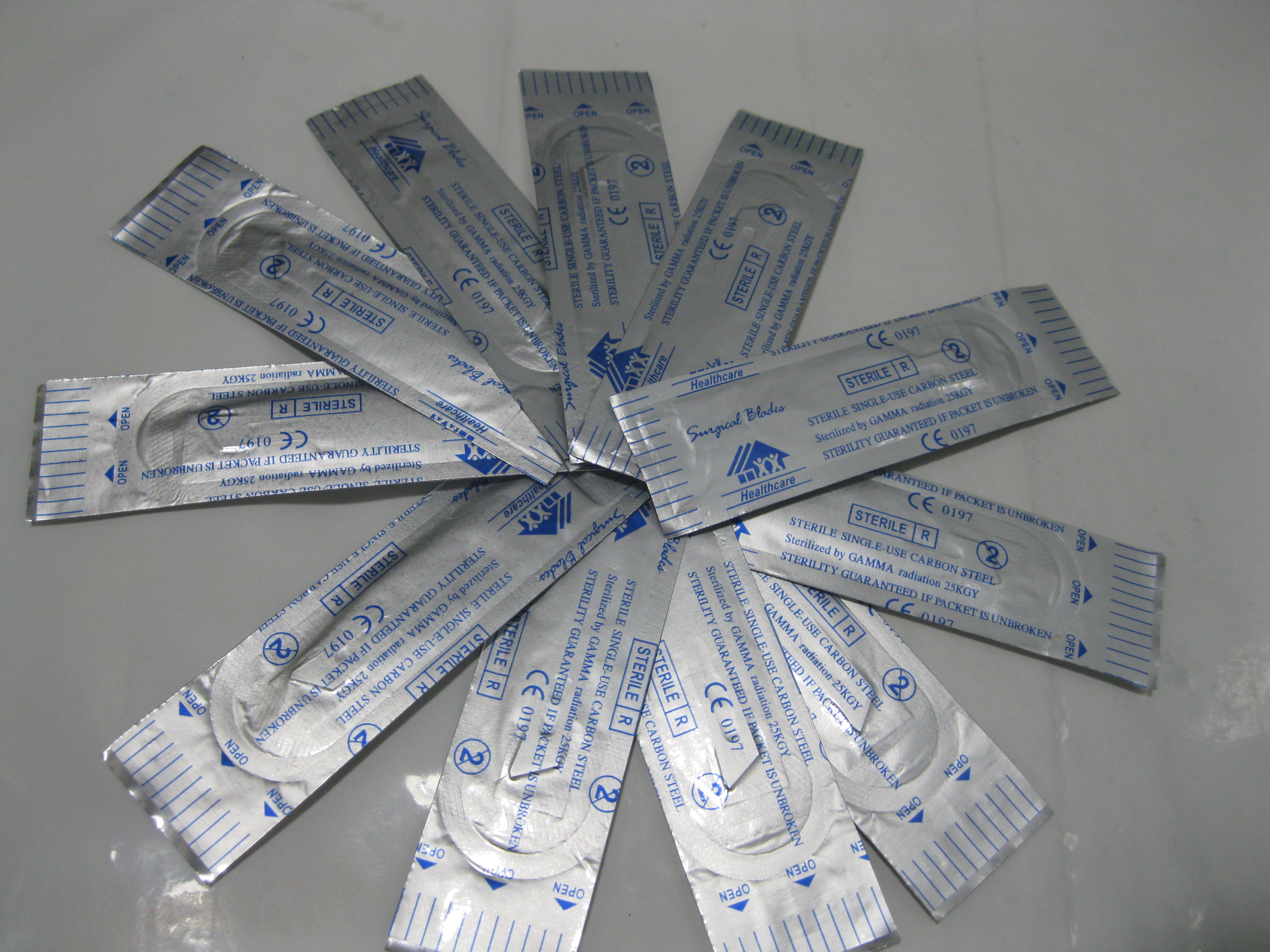
- When opening a sterile wrapped package on a table, the first flap must be opened away from the healthcare worker's body. Why? If you open the first flap toward yourself, you will be forced to physically reach across the sterile inside to open the remaining flaps, breaking the reaching-across rule!
Infection control is not arbitrary; it is a rigid application of biological and physical laws. Whether you are scrubbing your hands to wash down C. diff spores, relying on the negative-pressure vacuum of an airborne room, or meticulously keeping your hands above your waist during a sterile procedure, you are actively manipulating the environment to break the chain of infection.
Master the physics of pathogens, and you will not only ace the NCLEX—you will be an unstoppable force for patient safety. Now, go wash your hands!