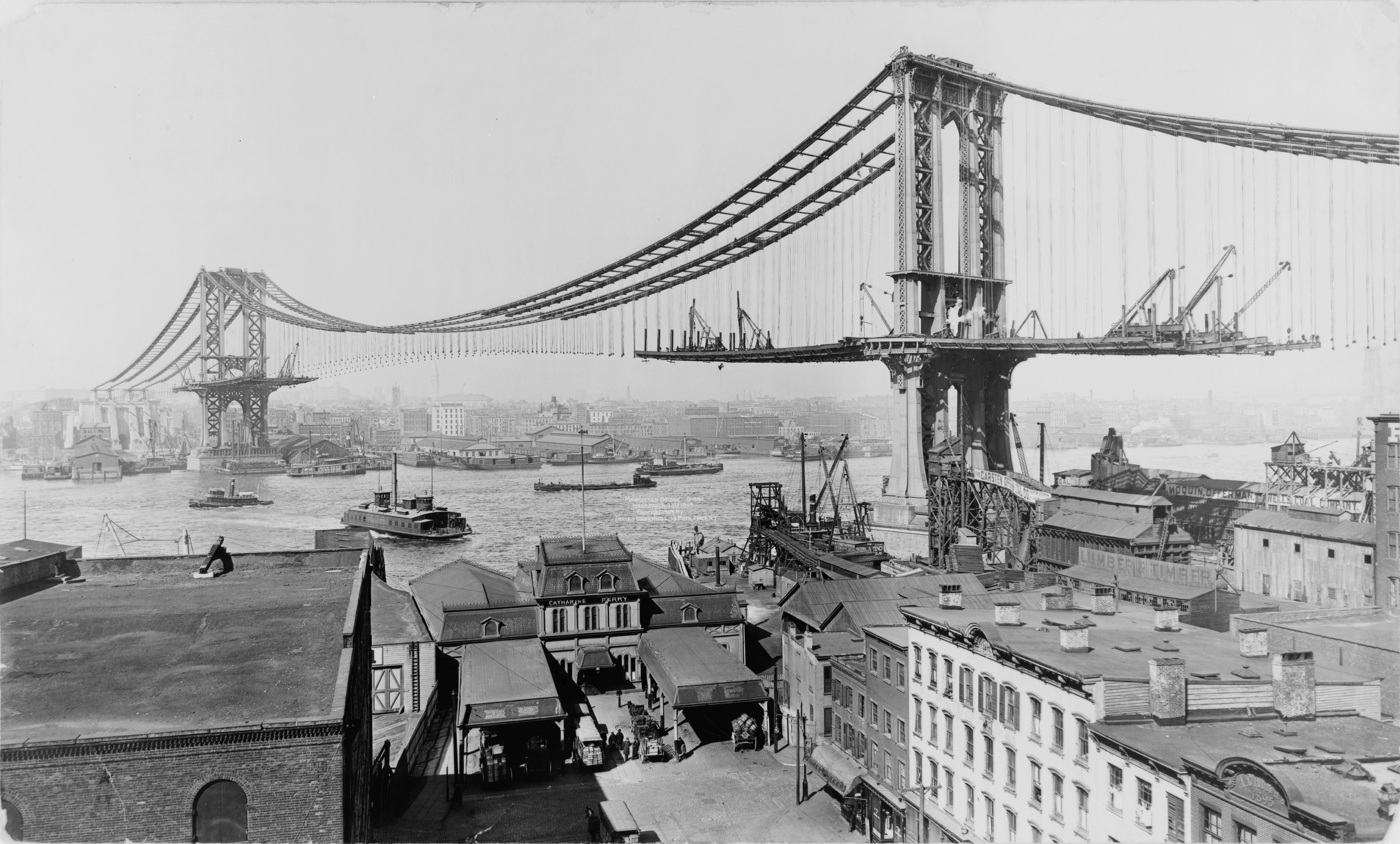
Building a commercial suspension bridge requires every engineering calculation, material specification, and safety threshold to be documented before a single steel cable is spun. You cannot realize halfway through construction that you actually wanted a drawbridge. Designing a new financial budgeting app, by contrast, relies on releasing a basic version, observing how users interact with the interface, and tweaking the features weekly based on their behavior.
Constructing a massive suspension bridge requires all requirements, materials, and safety limits to be finalized long before building begins, serving as a classic example of predictive planning.
The work of understanding exactly what a team needs to build—a discipline known as business analysis—must fundamentally shift depending on which of these two worlds you inhabit.
As a project professional, understanding this shift is critical. The foundation of this concept is simple: Project methodologies dictate the timing and depth of business analysis activities. You don't just change the meetings you attend; you change the nature of how you define, capture, and validate reality. The PMI Guide to Business Analysis defines how business analysis practices adapt to different project life cycles, recognizing that a "one-size-fits-all" approach to requirements is a recipe for project failure.
Let us pull these two environments apart and examine exactly how the day-to-day operations of a business analyst transform between predictive (plan-driven) and adaptive (agile) environments.
In a predictive methodology—often referred to as Waterfall—the project environment is highly structured and change is inherently expensive. Because of this high cost of change, predictive methodologies require business analysis processes to be heavily front-loaded.
You cannot pour a concrete foundation without knowing the exact dimensions of the house. Therefore, predictive plan-based approaches require a business analyst to finalize the project scope early in the project lifecycle.
Just as the depth and scale of a concrete foundation must be calculated based on the exact dimensions of the final building, predictive projects require scope to be finalized early before execution begins.
Documentation and Phased Execution
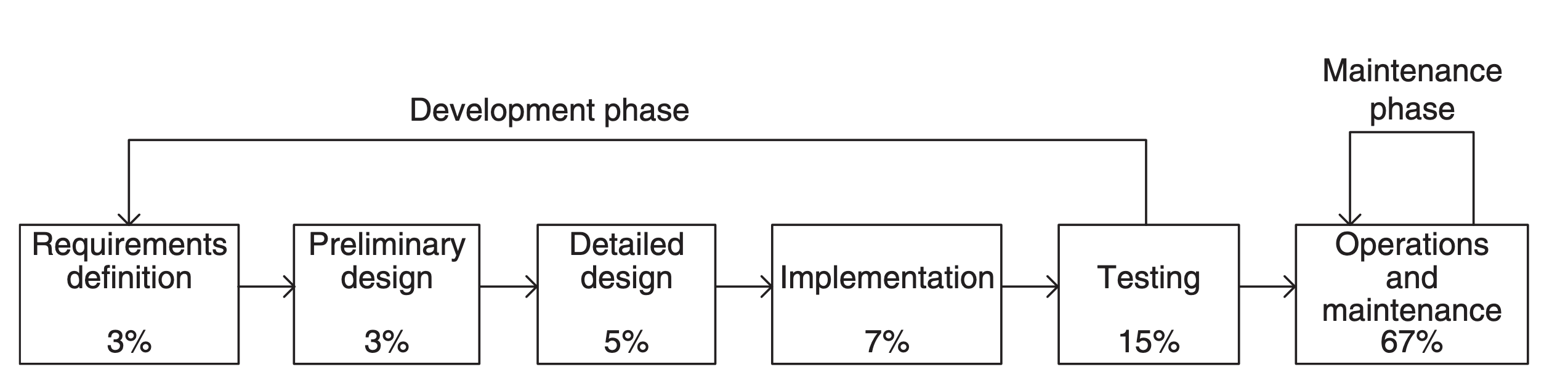
In this environment, predictive methodologies separate business analysis from project execution into distinct sequential phases. First comes analysis, then comes design, then development, and finally testing.
In a predictive, waterfall environment, project phases such as requirements analysis, design, and testing are executed sequentially, often accumulating high costs if changes are needed later in the lifecycle.
During the analysis phase, business analysts document requirements exhaustively before any development work begins. They interview stakeholders, draw process maps, and write down every functional requirement the system must meet. The culmination of this massive effort is a tangible artifact: A Business Requirements Document (BRD) is a standard output of business analysis in predictive methodologies.
The BRD as a Contract: Think of a BRD not just as a guidebook, but as a heavily negotiated contract between the business and the technical team. Once finalized, it serves as the absolute baseline for the project.
Because the BRD acts as this baseline, predictive methodologies demand formal sign-offs on requirements from stakeholders before development proceeds. The stakeholders are legally or procedurally committing to the statement: "Yes, this document perfectly describes what I want."
Tracking and Controlling Change
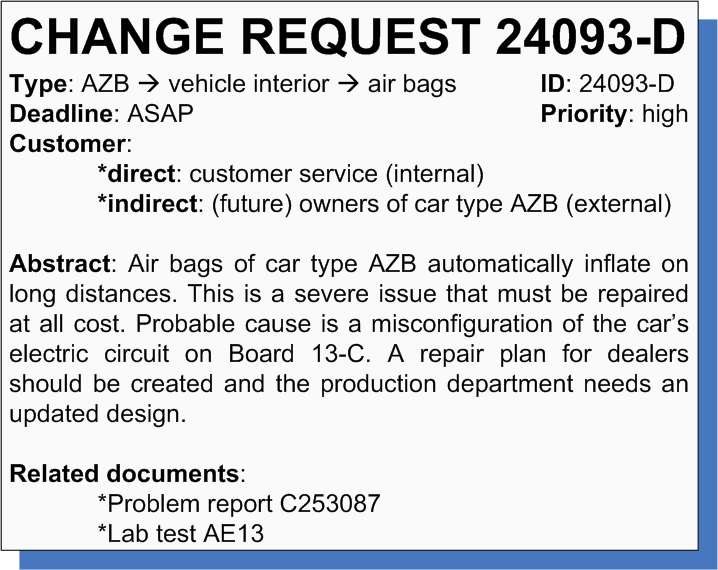
Once the build phase begins, the analyst’s role transitions from discovery to defense. Because the scope is locked, predictive methodologies use strict change control processes for all requirement modifications. If a stakeholder wants to add a new feature, they cannot simply ask the developers; they must submit a formal change request, which is analyzed for its impact on the budget and schedule.
In predictive methodologies, any deviation from the finalized requirements baseline must be managed through a formal change request to evaluate potential impacts on project constraints.
To ensure nothing is lost during the long development phase, a business analyst in a predictive project uses a requirements traceability matrix to track finalized requirements against project deliverables. If requirement #42 states "The system must export to PDF," the traceability matrix maps that exact requirement to the code module that performs the export and the test case that proves it works.
The Role of the Analyst
Structurally, in predictive projects, the business analyst acts as a primary communication bridge between stakeholders and the technical team. They live in the middle. They speak "business" to the stakeholders, write it all down in the BRD, and then translate that into "technical specifications" for the developers, stepping in to clarify misunderstandings as the project marches forward.
Now, step into the adaptive (Agile) world. Here, we embrace the reality that stakeholders rarely know exactly what they want until they see it. Change is not a failure of planning; it is a competitive advantage.
Because we expect change, adaptive methodologies integrate business analysis processes continuously throughout the entire project lifecycle.
Concurrent Activities and Lightweight Formats
Instead of finishing all analysis before starting development, adaptive methodologies treat requirements analysis and product development as concurrent activities. While developers are building feature A, the business analyst is actively figuring out the details of feature B.
In this fast-paced environment, business analysts elicit and refine requirements iteratively. They do not write exhaustive BRDs. Instead, adaptive methodologies prioritize continuous stakeholder collaboration over comprehensive requirements documentation.
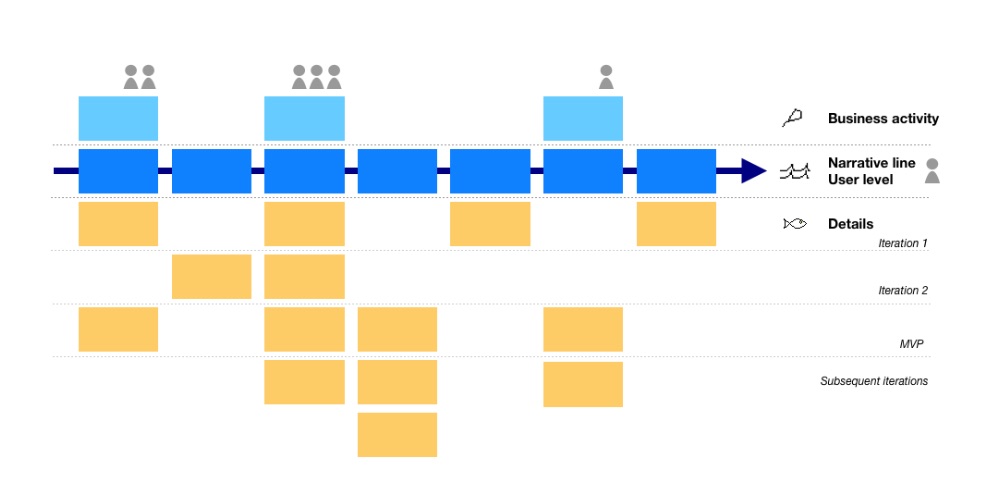
Adaptive methodologies replace heavy, upfront documentation with dynamic, collaborative tools like user story mapping to continuously refine requirements and prioritize features.
To facilitate this, adaptive methodologies capture requirements using lightweight formats like user stories. A user story (e.g., "As a customer, I want to filter my search results by price so I can stay within my budget") is not a detailed technical spec; it is a placeholder for a future conversation.
Validating the Work
If we aren't using a massive BRD and a traceability matrix, how do we know we built the right thing?
Acceptance Criteria: Instead of tracing back to a 200-page document, a business analyst in an adaptive project uses acceptance criteria to validate requirements during iterative cycles. These are simple, pass/fail conditions tied directly to an individual user story.
Iterative Reviews: Instead of demanding upfront formal sign-offs, adaptive methodologies rely on frequent iterative reviews to validate requirements directly with stakeholders. Every couple of weeks, the team demonstrates working software, gathers feedback, and adjusts course.
The Agile Shift: We trade the illusion of certainty (upfront sign-off) for the reality of empirical feedback (iterative reviews).
The Dynamic Role of the Analyst
In an adaptive setting, the business analyst isn't a distant bridge passing documents back and forth. In adaptive projects, business analysts collaborate directly with the development team during daily activities. They are in the daily stand-up meetings. They are answering developer questions in real-time.
Business analysts in agile environments engage continuously with the development team, often participating in daily stand-up meetings to clarify requirements and clear roadblocks in real-time.
Furthermore, because requirements are constantly shifting, adaptive approaches require a business analyst to manage and continuously prioritize a dynamic product backlog. They must constantly ask: "Based on what we learned yesterday, what is the most valuable thing for the team to build tomorrow?"
Because this deeply collaborative, prioritization-heavy role mirrors the responsibilities of agile leadership, the business analyst role in an adaptive project frequently overlaps with Product Owner responsibilities. In many organizations, the person performing business analysis simply holds the title of Product Owner.
To cement these concepts for your exam, synthesize the differences across these key dimensions:
Dimension
Predictive (Plan-Based)
Adaptive (Agile)
Timing of Analysis
Heavily front-loaded; distinct sequential phases.
Continuous throughout the lifecycle; concurrent with development.
Scope Definition
BA finalizes project scope early in the lifecycle.
BA manages and continuously prioritizes a dynamic product backlog.
Documentation
Exhaustive documentation before work begins (e.g., BRD).
Lightweight formats emphasizing conversation (e.g., User Stories).
Change Control
Strict change control processes for modifications.
Elicit and refine requirements iteratively as changes arise.
Validation & Approval
Formal sign-offs upfront; uses a requirements traceability matrix.
Iterative reviews with stakeholders; uses acceptance criteria.
Primary Focus
Comprehensive requirements documentation.
Continuous stakeholder collaboration.
Role Structure
Primary communication bridge between stakeholders and tech team.
Collaborates directly daily; frequently overlaps with Product Owner.
As an aspiring project coordinator or operations professional, understanding how methodologies influence business analysis prevents you from using the right tool at the wrong time.
If you are placed on a fast-moving Agile software team and you try to demand a locked, formal sign-off on a 50-page requirements document, you will grind development to a halt. Conversely, if you are helping manage a highly regulated pharmaceutical project and you suggest using "lightweight user stories" instead of a strict traceability matrix, you risk violating compliance laws.
_(6982162417).jpg)
The methodology is the physics of your project environment. By understanding whether you are in a predictive or adaptive world, you know exactly when to document heavily, when to prioritize conversation, and how to drive your team toward a successful outcome.