Product Roadmaps and Releases
Not sure you’re ready?
Take the ~3-minute readiness diagnostic and see where you stand.
Imagine attempting to construct a metropolitan transit system by immediately pouring concrete for a random bus stop. Without a comprehensive map detailing how the entire city will interconnect over the next decade, that single bus stop is useless. In project management, this overarching map is the product roadmap, a high-level visual summary of product vision and direction over time. It is the artifact that communicates the strategic intent behind a product development initiative, ensuring that before a single line of code is written or a physical prototype is built, every team member and investor is aligned on the destination.
For the project coordinator, the business analyst, or the operations professional, mastering the distinction between the broad sweep of a product roadmap and the tactical execution of a release plan is non-negotiable. One defines the why and the where; the other dictates the what and the when. Let us examine the mechanics of how organizations translate grand strategic visions into tangible products that customers can actually touch, use, and value.
To understand a product roadmap, we must first understand what it is not. A product roadmap contains broad themes rather than detailed task assignments. If you zoom in too closely on a map, you lose sight of the continent; similarly, if a roadmap is cluttered with daily to-do lists, it fails its primary purpose.
Fundamentally, a product roadmap aligns stakeholders on the long-term goals of a product. It serves as the primary communication bridge between the executive suite, the business analysts defining value, and the project teams executing the work.
To maintain this high-level view, roadmaps rely on specific organizational building blocks:
- Themes: Themes on a product roadmap group related features under a common strategic objective. Think of a theme as a driving organizational promise. If you are developing a new banking app, a theme might be "Frictionless Peer-to-Peer Payments."
- Epics: Sitting just beneath themes are epics. Epics are large bodies of strategic work depicted on a product roadmap. They are too massive to be completed in a single iteration but represent significant chunks of value—for example, "Integrate Biometric Security Authentication."
- Milestones: To orient the organization in time, product roadmap milestones indicate specific target dates for critical business achievements. A milestone is not the date a programmer finishes coding a button; it is the date the product is slated to be demonstrated at a major industry trade show, or the deadline to achieve regulatory compliance.
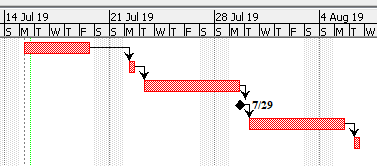
Predictive vs. Agile Roadmaps
The nature of your roadmap depends heavily on the environment in which you are building.
In highly regulated or physically constrained industries—like aerospace engineering or construction—predictive product roadmaps maintain a relatively fixed timeline for product deliverables. When you are building a commercial airliner, you cannot simply "pivot" the design of the fuselage halfway through production. The timeline is fixed, the scope is rigid, and the roadmap reflects a deterministic path.

Conversely, in software development or rapidly shifting consumer markets, rigid plans break. Agile product roadmaps adapt continuously based on emerging user feedback. In this environment, the roadmap is a living document. Business analysts update the product roadmap regularly to reflect changing market conditions, ensuring the organization doesn't spend a year perfectly executing a plan for a product that the market no longer wants.
| Characteristic | Predictive Product Roadmap | Agile Product Roadmap |
|---|---|---|
| Focus | Adherence to plan and schedule | Adaptability and value delivery |
| Timeline | Highly fixed, deterministic | Fluid, responsive to discovery |
| Updates | Subject to strict change control | Updated regularly by Business Analysts based on market conditions |
If the roadmap is the continent, the release plan is the highly detailed map of the city you are currently navigating.
Product Release: A product release is the distribution of a new product increment to end-users. It is the moment the product leaves the realm of theory and enters the hands of the customer.
To bridge the gap between the roadmap's grand vision and the reality of a release, we engage in release planning. Release planning determines the specific product components delivered to users in a defined timeframe. It is here that a release plan translates the broad timeline of the product roadmap into specific short-term delivery goals.
How does this translation occur? During the release planning process, project teams break roadmap epics down into specific features. That massive epic of "Integrate Biometric Security Authentication" is dissected into actionable, bite-sized components: "FaceID Integration," "Fingerprint Scanning," and "Fallback PIN generation."

Once broken down, these specific features are placed into a release backlog. A release backlog contains the specific set of items planned for delivery in the upcoming product release. It represents the immediate, tactical boundary of what the team is committed to building next.
The fundamental economic problem of project management is that human ambition is infinite, but time and budget are strictly finite. You cannot build everything at once. Therefore, the most critical intellectual work of product development is deciding what to build when.
1. The Minimum Viable Product (MVP)
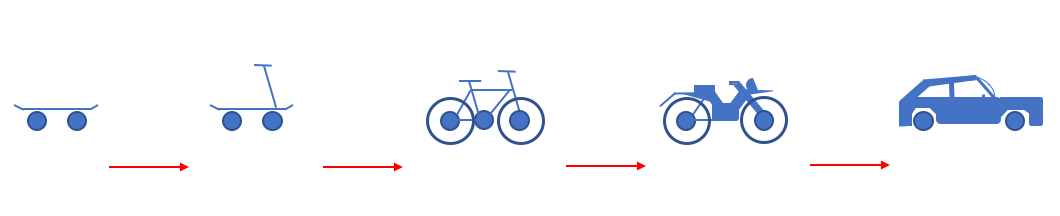
The journey begins with the MVP. The Minimum Viable Product includes the smallest collection of features required to deliver customer value. It is the bare-bones, foundational version of your product that allows you to enter the market and begin learning. Because of this, project teams schedule Minimum Viable Product components for the initial product release. If you are building a ride-sharing app, the MVP isn't the version with split-fares and premium luxury vehicle options; it is simply the ability for a user to request a ride and a driver to accept it.
2. Maximizing Business Value
Beyond the MVP, how do we sequence the remaining hundreds of desired features? This is where the business analyst shines. Business analysts group features into releases based on maximizing immediate business value. Furthermore, business analysts use prioritization techniques—such as MoSCoW (Must-have, Should-have, Could-have, Won't-have) or Weighted Shortest Job First (WSJF)—to assign high-value features to earlier product releases. The goal is simple: deliver the highest return on investment as early as possible.
3. Mitigating Technical Risk
However, business value cannot dictate the schedule in a vacuum. Sometimes, the physical or technical architecture demands a specific order. To ensure the product doesn't collapse under its own weight later, project teams often schedule foundational architectural components in early releases to mitigate technical risk. You might not see immediate customer enthusiasm for an upgraded database schema or a highly scalable cloud hosting environment, but if you do not build the plumbing first, the house will flood.
4. Navigating Dependencies and Constraints
Nature is governed by the laws of physics; project releases are governed by dependencies and constraints.
- Dependencies: Feature dependencies dictate the necessary sequence of components across different product releases. You cannot release a feature that allows users to refund a transaction in Release 2 if the core payment processing gateway isn't scheduled until Release 3.
- Constraints: Similarly, resource capacity constraints limit the number of product components allocated to a single product release. If your team only has 500 hours of development capacity in a given month, you mathematically cannot schedule 800 hours of feature work into that release, no matter how much business value it promises to deliver.
The system we have described is not a one-way street. As releases are deployed into the wild, they collide with reality. Real customers interact with the product. Real systems experience stress.
When a release occurs, the first thing that happens is a barrage of new information. Stakeholder feedback on a current product release directly influences the component prioritization for future releases. If the initial MVP reveals that users are highly confused by the navigation menu, the business analyst will immediately re-prioritize a UI overhaul for the next release, pushing other planned features down the backlog.
Through all of this shifting and re-prioritizing, chaos is held at bay by a rigorous practice of traceability. Business analysts trace individual release components back to the product roadmap to verify strategic alignment. If an engineer or a stakeholder proposes a new feature for an upcoming release, the business analyst must ask: Does this map back to an existing Epic? Does it support our core Themes? If it does not, it is a distraction, and it is excluded.
Summary for the CAPM Candidate
When sitting for your exam, or when sitting in your first strategic planning meeting, remember the hierarchy of these artifacts.
- The Product Roadmap is your compass. It holds the vision, the themes, the epics, and the milestones. It is updated by Business Analysts to reflect the market, and it tells you where you are going.
- The Release Plan is your engine. It breaks those epics down into specific features within a Release Backlog.
- The allocation of features into releases is a careful balancing act: scheduling the MVP and architectural components first, using BA prioritization to maximize business value early, and respecting the strict boundaries of feature dependencies and resource capacity.
- Finally, the process is cyclical. Every release generates feedback, which updates the roadmap and re-shuffles the next release backlog, all while maintaining rigorous traceability to ensure every line of code serves the ultimate strategic vision.
By grasping the mechanics of roadmaps and releases, you are no longer just reacting to tasks on a board; you are actively driving the strategic delivery of value.