Predictive Approach Suitability
Not sure you’re ready?
Take the ~3-minute readiness diagnostic and see where you stand.
Imagine engineering a commercial airliner. You do not construct the wings, start the engines, and then decide to alter the aircraft’s aerodynamics mid-flight based on a sudden pivot in passenger preferences. Every tolerance, every bolt, and every aerodynamic curve is mathematically modeled, explicitly documented, and strictly approved long before the first sheet of aluminum is cut.
This absolute reliance on upfront certainty is the core of a predictive, plan-based approach—commonly referred to in industry as a waterfall methodology. In this environment, you define project requirements and scope completely before execution begins. Once the design is locked, project execution occurs in sequential, non-overlapping phases. You finish the foundation, then you build the walls, then you construct the roof.
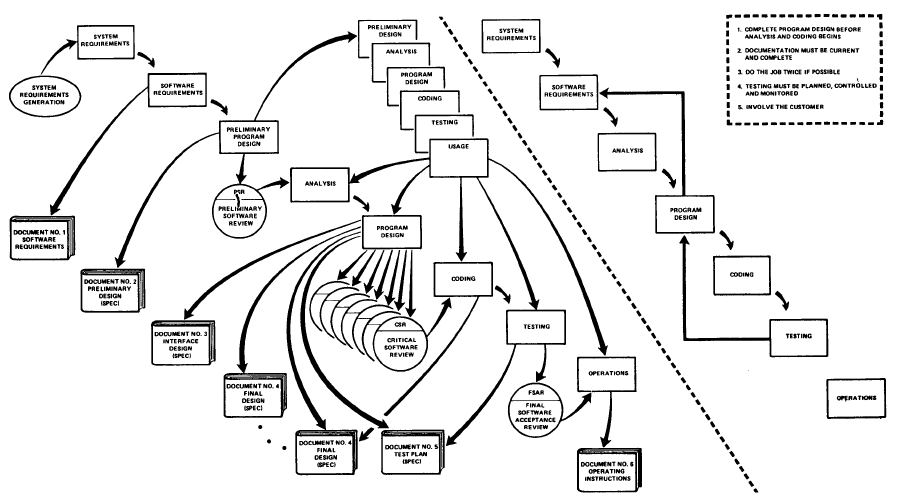
For the project professional, mastering the predictive approach requires understanding not just the mechanics of the methodology, but the environments in which it survives and thrives.
A methodology is only as effective as the organizational machinery powering it. The way a company distributes authority, handles communication, and arranges its people fundamentally dictates whether a rigid, sequential predictive project will succeed.
Hierarchical and Functional Foundations
Hierarchical organizational structures feature clear lines of authority and top-down communication networks. Imagine a traditional military or a legacy manufacturing firm. A predictive approach suits hierarchical structures perfectly by utilizing strict reporting lines for sequential phase-gate approvals. Before moving from the "Design" phase to the "Build" phase, a formal sign-off flows up and down the chain of command.
Within this category, a functional hierarchical organization dictates that functional managers (e.g., the Head of Engineering, the Head of Marketing) control resource allocation and project budgets. A predictive methodology aligns beautifully with a functional structure when project phases can be sequentially handed off between distinct departments. The Design department finishes the blueprints, officially "hands them over" to Engineering to build, and Engineering eventually hands the product to Quality Assurance.
The Matrix: A Tug-of-War for Authority
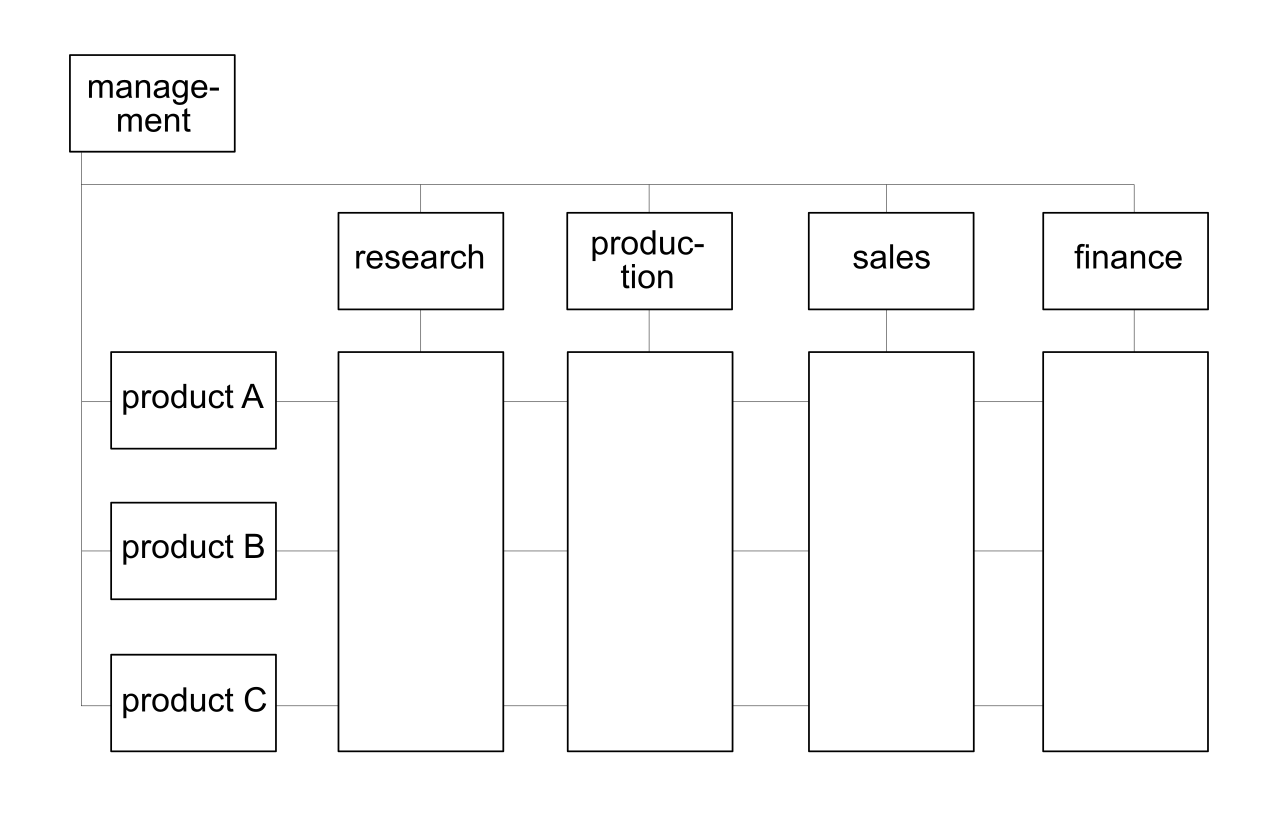
Modern organizations often try to balance functional silos with project-based agility using matrix organizational structures, where employees must report to both a functional manager and a project manager. The viability of a predictive project here depends entirely on power dynamics:
- Strong Matrix: A predictive approach thrives in a strong matrix structure because the project manager possesses high authority over resources and project scheduling. If the project manager dictates that a software engineer is needed for a 40-hour block in Week 3, that schedule holds firm.
- Weak Matrix: In a weak matrix structure, the project manager is limited to the role of a coordinator or expediter. Because the functional managers hold the real power over personnel, making rigid predictive scheduling stick is far more difficult to enforce.
Pure Projectized Environments
If you want the ultimate environment for a predictive approach, look to projectized organizations. Here, the project manager is granted total, undisputed authority over personnel and the project budget. Projectized organizations seamlessly support predictive approaches by dedicating full-time personnel to the uninterrupted execution of sequential project plans. There is no negotiating with a functional manager; the team’s singular loyalty is to the project schedule.
Geography: Virtual vs. Colocation
How your team is physically arranged drastically alters how a predictive project is managed.
| Organizational Geography | Definition & Predictive Application |
|---|---|
| Virtual Structures | Teams consist of geographically dispersed members who rely heavily on technology for collaboration. A predictive approach benefits virtual teams by providing comprehensive, upfront documentation to guide independent task execution. Because the plan is highly detailed, a developer in Tokyo and an analyst in New York do not need to constantly sync; they simply execute their explicitly documented tasks. Furthermore, detailed, rigid communication plans mitigate coordination risks across these dispersed environments. |
| Colocation Structures | All project team members share a single physical workspace. Colocation enables rapid, in-person communication during the execution of strict sequential phases within a predictive project, allowing teams to quickly address bottlenecks as work moves linearly down the project timeline. |
In a predictive environment, the project's parameters are locked into "baselines." These baselines are governed by the triple constraint principle, an iron law of project management which states that a modification in scope, schedule, or cost will invariably impact at least one of the other constraints.
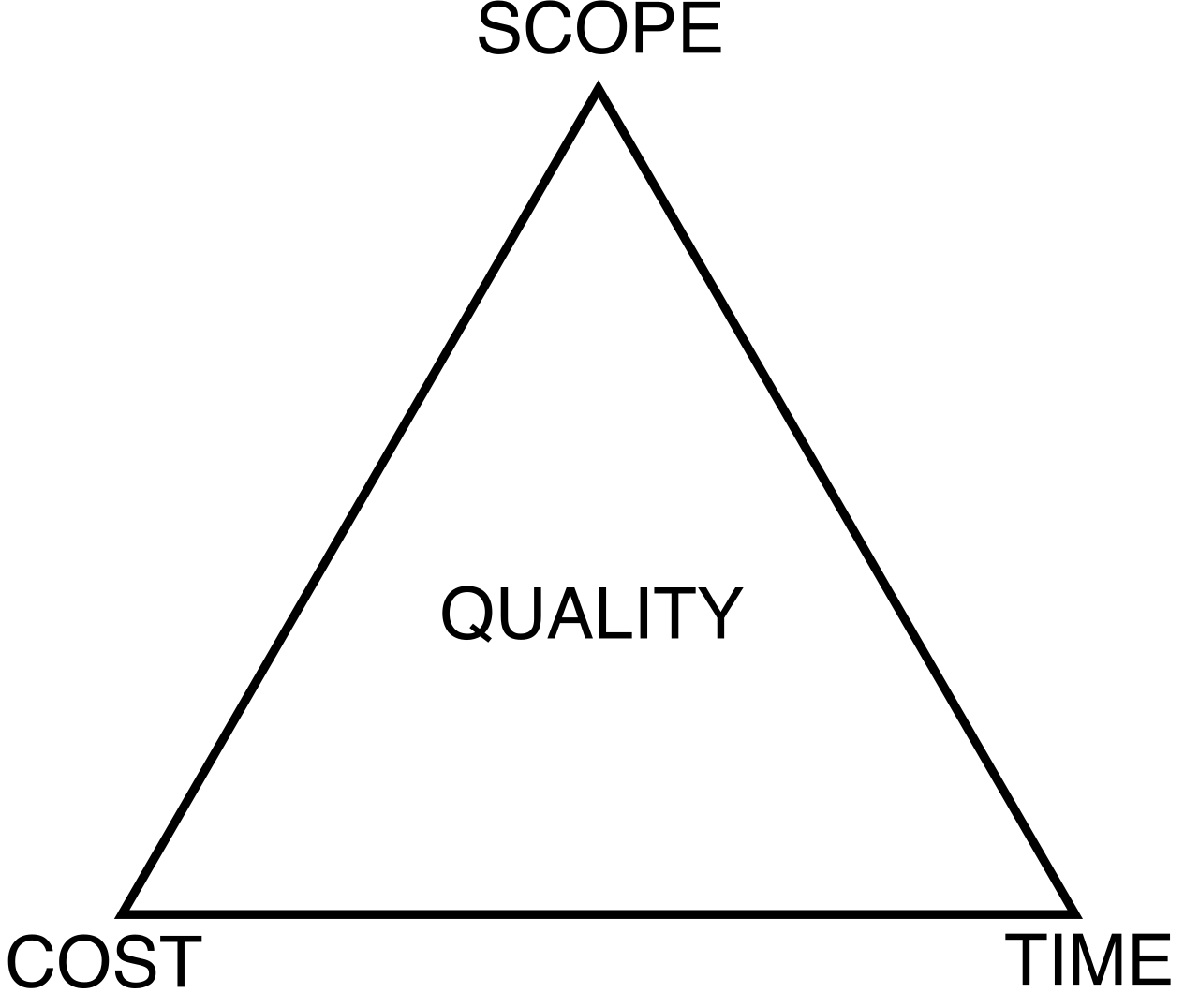
To maintain control, the predictive project management plan formally integrates the scope, schedule, and cost baselines into a unified framework for performance measurement.
The Scope Component
In a predictive approach, the project scope component is explicitly defined and formally baselined during the initial planning phase. We map out the totality of the work using a Work Breakdown Structure (WBS), which hierarchically decomposes the total predictive project scope into highly manageable work packages.
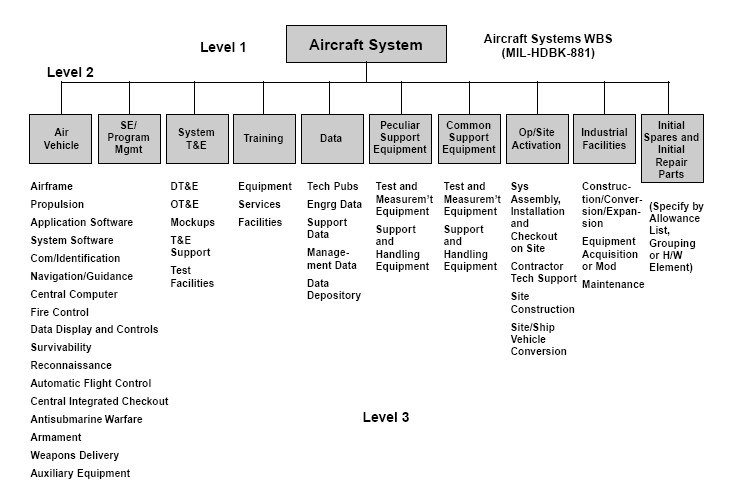
Crucial Distinction: Unlike agile, where scope is fluid, any modifications to the baselined scope in a predictive project must undergo a formal integrated change control process. You cannot simply "add a feature" to the project mid-execution; it requires documented requests, impact analysis, and formal approval.
The Schedule Component
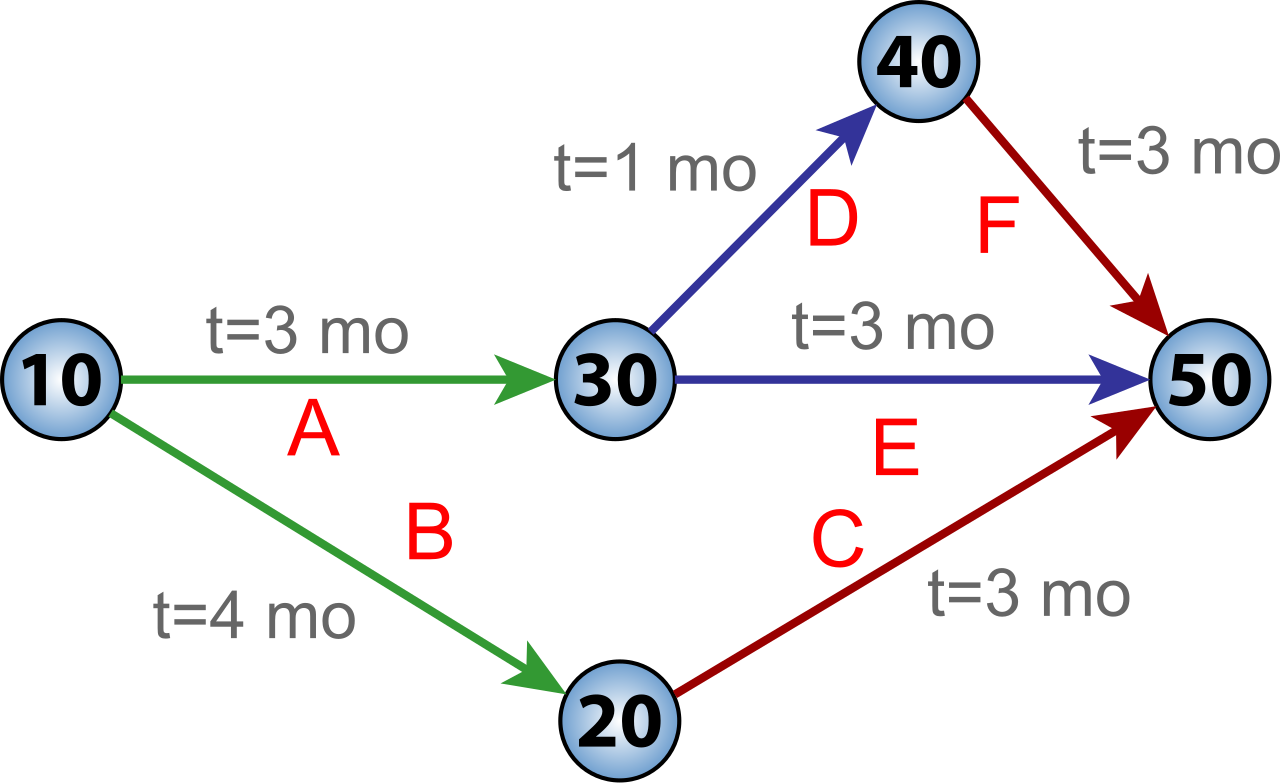
Because the scope is fully known, a predictive project schedule relies heavily on a dependency-based network of interconnected activities. Task "B" cannot start until Task "A" is finished.
To manage this, task durations and project milestones are comprehensively estimated upfront before a predictive project enters the execution phase. Planners use the critical path method to calculate the longest continuous sequence of dependent tasks within a predictive project schedule. If any task on this critical path is delayed, the final delivery date of the entire project is delayed.
The Cost Component
Money is not distributed piecemeal. Project costs are estimated for all defined tasks and aggregated into a formal budget during predictive planning. Once signed off, the approved project budget forms the official cost baseline used for measuring financial performance in a predictive project.
Beyond the "Big Three" baselines, the predictive methodology imposes strict upfront planning requirements on all other project management knowledge areas.
Resource and Quality Management
A predictive resource management plan acts as an exact recipe. It identifies the exact number, type, and availability of required resources prior to project execution. Because the timeline is fixed, resource allocation in a predictive approach tightly follows the predefined schedule to ensure personnel are available precisely when required.
Similarly, predictive quality management leaves nothing to subjective interpretation. It establishes specific product standards and acceptance criteria during early project planning. During the execution and monitoring phases, quality control in a predictive environment rigorously verifies completed deliverables against predefined acceptance criteria before stakeholder handover. If the blueprint called for a 5-millimeter tolerance, the output is measured precisely against that 5-millimeter standard.
Communications and Stakeholder Management
In a predictive project, stakeholder expectations are captured as detailed project requirements exclusively during the initial planning phases. You ask the client exactly what they want at the very beginning, document it, and then build it. To track these individuals, the stakeholder register categorizes project stakeholders by organizational influence, interest, and potential impact on a predictive project.
Because the plan handles the day-to-day execution mechanics, communication is highly structured. The communications management plan formally documents the frequency, format, and designated audience for all predictive project updates.
When it comes to communicating progress, predictive projects prioritize formalized status reports and scheduled milestone meetings over ad-hoc daily standup meetings. You do not need a daily 15-minute huddle to figure out what to do today; the heavily documented schedule already tells everyone exactly what to do.
Risk and Procurement Planning
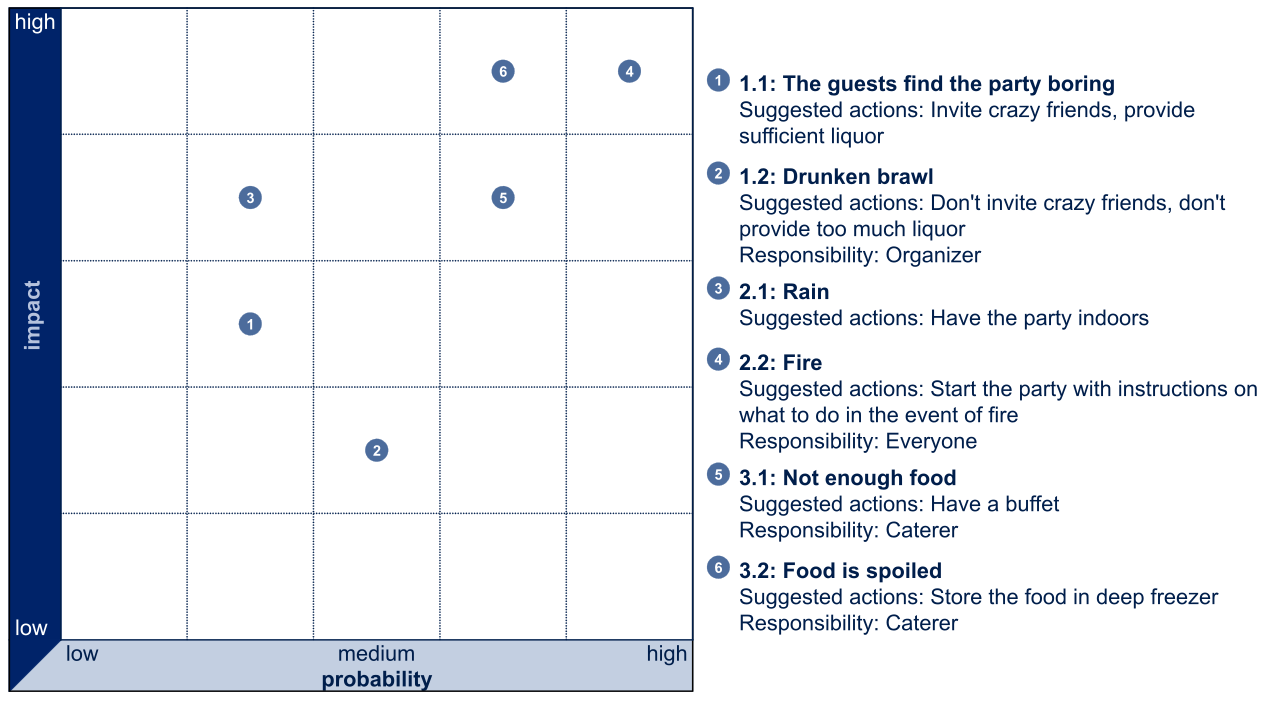
Uncertainty is the enemy of the predictive method. Therefore, comprehensive risk identification and quantitative analysis are completed before a predictive project execution phase begins. The project manager maintains a predictive risk register, which formally documents identified project risks, calculated probabilities, financial impacts, and planned mitigation responses. To absorb the financial blow of these calculated risks, contingency reserves are explicitly established within the predictive budget and schedule.
Finally, when purchasing goods or services from outside vendors, predictive procurement planning involves drafting detailed vendor contracts based on rigid, predefined scope specifications. Because the project requirements are locked in stone, predictive projects frequently utilize firm-fixed-price contracts. Vendors can comfortably agree to a strict dollar amount for their services due to the highly detailed and stable nature of the project scope.
A predictive approach is a marvel of organizational engineering. When the environment allows for rigid hierarchies, and when the project demands unyielding specifications, the predictive methodology provides the necessary control to deliver massive, complex initiatives with pinpoint precision.