Registers and Project Closure
Not sure you’re ready?
Take the ~3-minute readiness diagnostic and see where you stand.
Imagine orchestrating the migration of a massive corporate data center. You have thousands of delicate hardware components, millions of dollars at stake, and a chorus of executives, engineers, and end-users anxiously awaiting the outcome. Managing an endeavor of this scale cannot be done by intuition alone. It requires the meticulous, structured tracking of two highly volatile variables: the human beings involved, and the uncertainties that lie ahead. Furthermore, when the migration is finally complete, you cannot simply walk away from the servers and assume the job is done. The deliberate transition of power, the archiving of knowledge, and the formal conclusion of contracts are just as critical as the execution itself.

Mastering how to map your stakeholders, quantify your project risks, and execute flawless project closures separates the amateur coordinator from the professional project manager. Let us examine the mechanics of these critical project management components.
Before you can successfully deliver a project, you must understand exactly who cares about it, who can ruin it, and who benefits from it. We capture this intelligence in the stakeholder register, a fundamental project document that includes information about identified project stakeholders.
Stakeholder Register An output of the Identify Stakeholders process, this living document acts as your central repository for human intelligence on the project.
Because you cannot plan a project without knowing who you are delivering it for, the project team creates the stakeholder register during the project initiation phase. However, projects are dynamic; personnel change, and new departments get involved. Therefore, a project manager updates the stakeholder register whenever a new stakeholder is identified during the project lifecycle.
What Goes into the Register?
To be useful, the stakeholder register must be highly specific. It captures two primary categories of data:
- Identification Information: This includes the stakeholder name and the stakeholder organizational position (e.g., Jane Doe, VP of Information Security).
- Assessment Information: This goes beyond titles, capturing the major requirements of each stakeholder alongside the subjective expectations of each stakeholder. Jane Doe might require a specific encryption standard, but her expectation might be that she receives weekly, high-level status updates rather than daily technical logs.
Analyzing and Categorizing Stakeholders
You will inevitably have more stakeholders than you have time to manage equally. A project manager uses the stakeholder register to classify stakeholders based on their power or interest, allowing you to prioritize your limited time. We do this using two primary classification tools:
- The Power/Interest Grid: A classic classification tool used in the stakeholder register to group stakeholders based on their level of authority (power) and concern (interest). A highly concerned executive with high authority needs to be managed closely, whereas a low-authority, low-concern bystander just needs to be monitored.
- The Salience Model: A more nuanced classification tool used in the stakeholder register to group stakeholders by power, urgency, and legitimacy. This is incredibly useful in complex environments. A local regulatory agency might not be involved daily, but when they have an urgent compliance request, their legitimacy and power demand immediate attention.
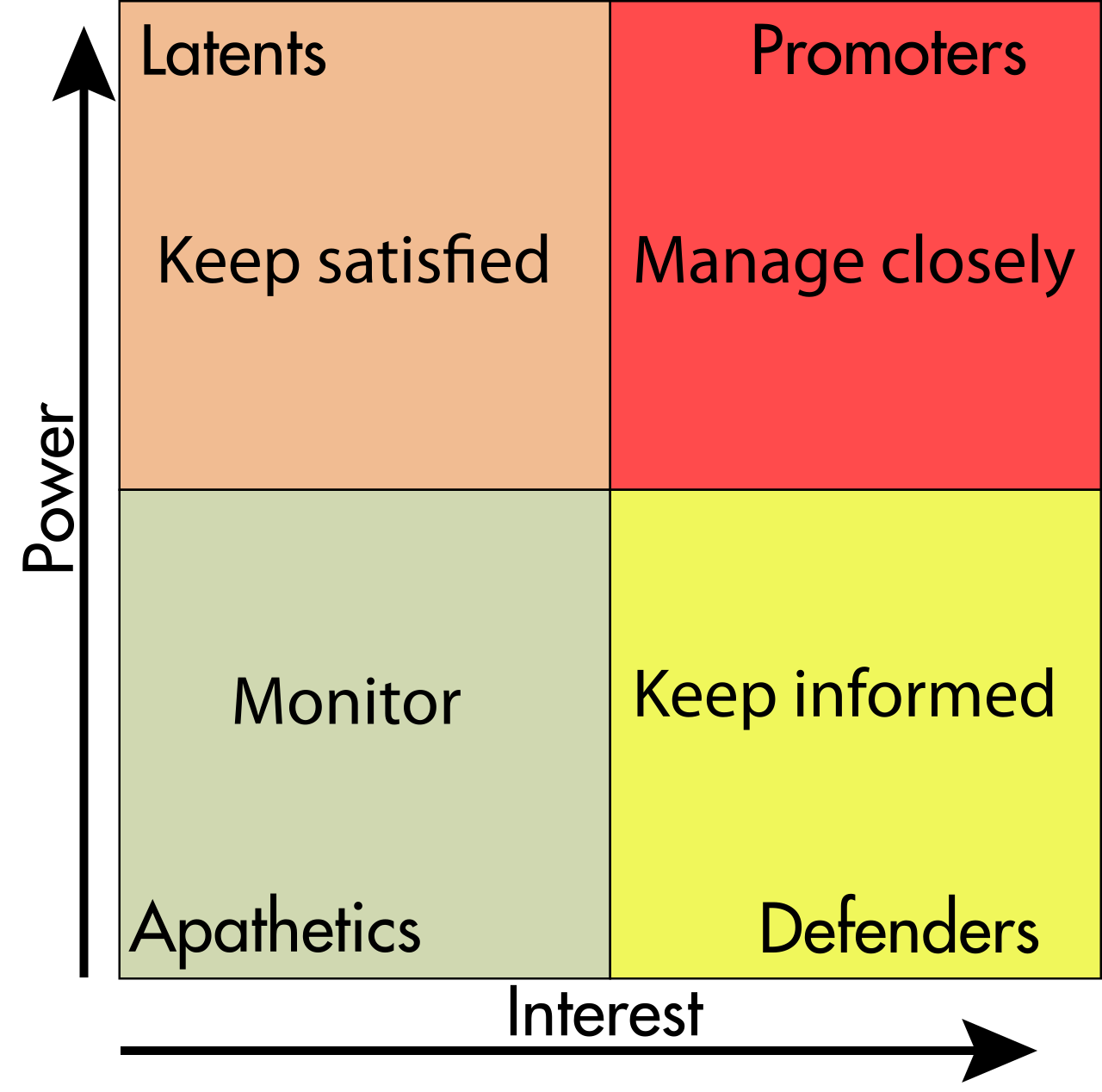
Ultimately, the stakeholder register helps the project manager develop an effective stakeholder engagement strategy. By knowing who needs what and how much power they hold, the stakeholder register helps determine the appropriate communication methods for different project stakeholders.
If stakeholders are the who of a project, risks represent the what ifs. To manage uncertainty, we utilize a risk register, a document that records the details of all identified individual project risks.
Risk Register The definitive output of the Identify Risks process. It is the central nervous system for anticipating the future.
Just like the stakeholder document, a project manager updates the risk register continuously throughout the project lifecycle. Uncertainty never sleeps, and neither should your tracking of it.
Expanding the Definition of Risk
In everyday language, "risk" is a bad word. In project management, risk simply means uncertainty that matters.
- Threats: Naturally, a risk register tracks uncertainty that could negatively affect project objectives (e.g., a critical supplier might go bankrupt).
- Opportunities: Crucially, a risk register tracks uncertainty that could positively affect project objectives (e.g., a new technology might allow us to finish coding two weeks early).
The Anatomy of a Risk Register
A well-crafted risk register does not merely list fears and hopes; it quantifies them and assigns accountability. For every identified project risk, the register includes:
- Probability and Impact: The risk register includes the probability of occurrence for each identified project risk, alongside the potential impact on project objectives.
- Risk Rating: By multiplying or combining probability and impact, a risk rating is calculated and stored in the risk register to prioritize project risks. You tackle the high-probability, high-impact risks first.
- Risk Owner: The risk register includes the name of the risk owner assigned to manage each specific risk. If a risk is owned by "everyone," it is managed by no one.
- Risk Responses: The risk register documents potential responses for each identified project risk. Will you avoid the risk, mitigate it, transfer it to an insurance company, or simply accept it?
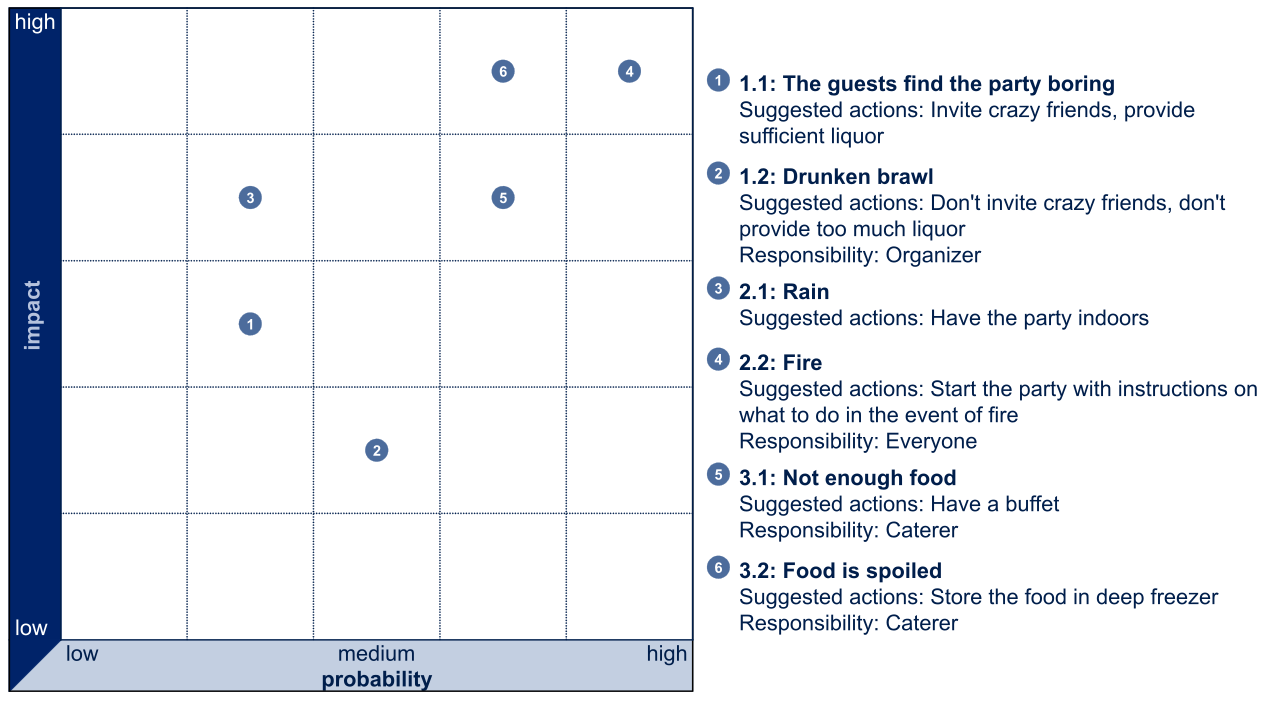
Throughout the project execution, project teams use the risk register to monitor the status of previously identified risks to see if their probabilities are shifting.
Secondary, Residual, and Realized Risks
When you implement a risk response, the story does not end there. The register must evolve to capture two resulting phenomena:
- Secondary Risks: A risk register records secondary risks that arise as a direct result of implementing a risk response. (e.g., You mitigate the risk of data loss by implementing cloud backups, but that creates a secondary risk of unauthorized cloud access).
- Residual Risks: A risk register documents residual risks that remain after planned risk responses have been implemented. (e.g., You install a fire suppression system, but there is still a 1% residual risk of fire damage).
What happens when a forecasted risk actually happens? The moment uncertainty becomes reality, it is no longer a risk. The project team moves an identified risk from the risk register to the issue log when the risk actually occurs.
You have managed your stakeholders and navigated your risks. The deliverables are built. But you are not done.
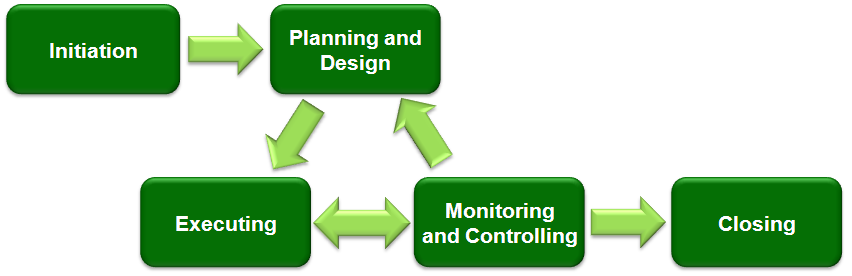
Project closure is the final phase of the project life cycle where all project activities are formally concluded. This is governed by Close Project or Phase, which is a process within the Project Integration Management knowledge area.
Think of closure as the orderly dismantling of the temporary organization you built to execute the project. Even if a project fails and is canceled prematurely, the rules apply: early project termination requires the project manager to execute formal project closure procedures for the completed work.
1. Formal Acceptance and Hand-off
During project closure, the project manager formally transfers the final deliverables to the customer or operations team. However, you cannot transfer what has not been approved.
- Written Acceptance: The project manager must obtain formal written acceptance of the project deliverables from the customer during project closure. Similarly, the project manager must obtain formal written acceptance of the project deliverables from the sponsor.
- Requirements Verification: Project closure procedures include confirming that all project requirements have been fully met.
- The Transition: To ensure the organization can actually use what you built, a project transition plan outlines the steps required to move the project deliverables into active operational use. During this transition, an operational hand-off occurs to ensure the receiving team can fully support the new project deliverables.
2. Contracts and Finances
A project manager is a steward of organizational funds, meaning all ledgers must be balanced. During project closure, the project manager ensures that all project contracts are formally closed, and ensures that all procurement agreements are formally closed. You must ensure vendors are paid, invoices are settled, and project closure includes finalizing all financial records related to the project.
3. Releasing Resources
Your project team and equipment are expensive assets. Project closure requires the formal release of all project team members so they can be reassigned to new organizational initiatives. Furthermore, project closure requires the formal release of all physical project resources, returning servers, office space, or construction equipment to the enterprise pool.
4. Administrative Closure and Knowledge Transfer
A project is an experiment that produces immense operational knowledge. Administrative closure ensures this knowledge is preserved.
- Administrative closure involves gathering all project records and archiving project information for future use.
- To capture the wisdom gained, the project team conducts a final lessons learned session during the project closure phase. The project manager updates the lessons learned repository during project closure to benefit future organizational projects.
- More broadly, organizational process assets (OPAs) are updated during project closure to save project files, templates, and historical data.
5. Final Evaluation
Finally, we must look in the rearview mirror to judge our success. A project manager evaluates the final project performance against the original project business case during project closure. Did the project deliver the return on investment ($) that was promised on day one? The results of this analysis are captured in the final report, an output of the project closure process that provides a summary of the overall project performance.
A Note on Agile Closure
Predictive (Waterfall) projects close when the defined scope is delivered. In Agile environments, the philosophy is slightly different. In agile methodologies, final project closure occurs when the product vision is achieved. Alternatively, because Agile is highly responsive to business value, in agile methodologies, final project closure occurs when the project is no longer economically viable—meaning the backlog's remaining features cost more to develop than the value they would return to the business.
By mastering the stakeholder register, the risk register, and the definitive procedures of project closure, you transition from someone who merely reacts to project chaos, to a professional who methodically orchestrates project reality from initiation through to the final hand-off.