Lead the Project Team: Expectations and Empowerment
Not sure you’re ready?
Take the ~3-minute readiness diagnostic and see where you stand.
In classical mechanics, predicting the trajectory of an object requires defining the initial conditions of the system. Without a defined frame of reference, any calculation of momentum or velocity is meaningless. The same principle governs cross-functional project teams. A project manager cannot expect predictable delivery, high performance, or innovation without first calibrating the environment in which the team operates. This calibration involves establishing clear explicit expectations, transferring operational authority to those closest to the work, and rigorously defending the team's capacity to execute.
The Project Management Professional (PMP) standard approaches team leadership not as a rigid command structure, but as a system of engineered alignment. Whether you are leading a predictive infrastructure build or an Agile software release, your primary function is to design an environment where brilliant people can do their best work without unnecessary friction.
Friction in a project team rarely comes from a lack of technical skill; it arises from unstated assumptions. When individuals assume different definitions of "complete," or hold conflicting views on acceptable communication delays, energy is wasted on internal friction rather than project execution.
To eliminate this friction, we must establish explicit rules of engagement early in the project lifecycle.
The Team Charter and Ground Rules
During the very beginning of a team's lifecycle—specifically, ground rules are typically established during the forming phase of team development—the team must agree on its operational physics. We document these agreements in a team charter, which is a collaborative document establishing foundational team values.
The team charter documents the operating guidelines for a project team, acting as a constitution that governs group behavior. Crucially, establishing team norms early reduces friction during the execution phase of a project. When disagreements inevitably arise regarding architectural choices or schedule pressures, the team does not fracture; instead, they refer back to their charter, because the team charter contains established guidelines for resolving internal team conflicts.
Within this charter, we embed ground rules, which set clear expectations for acceptable behavior within a project team (e.g., "core working hours are 10 AM to 3 PM," or "all code must be peer-reviewed within 24 hours").
A Critical PMP Distinction: The project manager does not act as a schoolteacher policing these rules. Project team members share the ongoing responsibility for enforcing team ground rules. The team polices itself, which is the first step toward true autonomy.
Agile Specifics: Working Agreements, DoR, and DoD
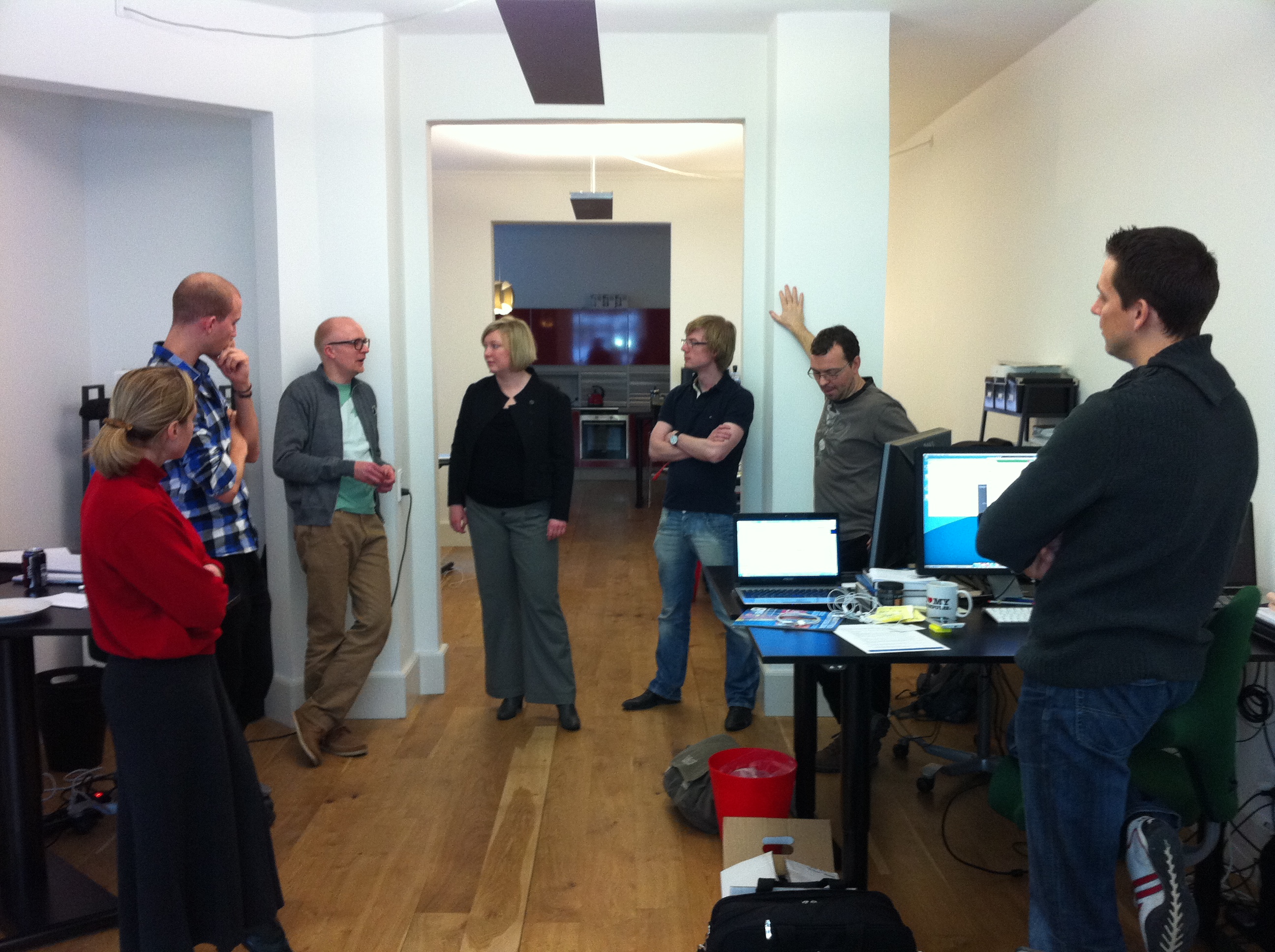
In Agile and hybrid environments, expectations must be ruthlessly granular. Working agreements define the daily operational guidelines for an Agile team, establishing how the team will interact in daily standups, manage iteration planning, and handle emergent blockers.
Furthermore, expectations surrounding the work itself must be formalized into two distinct criteria:
- The Definition of Ready (DoR): This establishes the criteria a user story must meet before the team begins work on that story. If a story lacks acceptance criteria or technical dependencies are unresolved, it is rejected by the team. This prevents the "garbage in, garbage out" phenomenon.
- The Definition of Done (DoD): This establishes the criteria a product increment must meet before being considered complete. It is the ultimate quality gate, ensuring no hidden technical debt is passed to the customer.
You cannot scale a complex project if every decision must bottleneck at the project manager's desk. Empowering a project team involves granting team members the authority to make specific project-related decisions.
The Engine of Self-Organization
In predictive environments, project managers often utilize direct delegation. However, effective delegation requires matching task complexity with the appropriate skill level of a specific team member. You would not assign a complex database migration to a junior developer without a senior architect's oversight.
Agile frameworks fundamentally flip this dynamic. Agile methodologies rely on self-organizing teams to determine the optimal execution of project work. Rather than a top-down assignment, the team analyzes the iteration goal and pulls work accordingly.
Understand these absolute rules of Agile execution:
- Self-organizing teams allocate specific daily tasks internally.
- Self-organizing teams do not receive task-level assignments from a traditional project manager.
- Allowing team members to estimate their own work effort is a key technique for team empowerment.
Why do we let teams estimate their own work? Because the people performing the work possess the highest-fidelity data regarding its complexity. Stripping them of this right destroys accountability.
| Dimension | Predictive / Traditional PM | Agile / Self-Organizing Team |
|---|---|---|
| Work Assignment | PM delegates tasks matching skill to complexity. | Team members pull tasks from the iteration backlog. |
| Effort Estimation | Often historically driven or calculated by leads. | Team estimates its own work (e.g., using Planning Poker). |
| Daily Execution | PM monitors schedule variance. | Team determines the optimal execution of daily tasks. |
Servant Leadership and Psychological Safety
To lead an empowered team, a project manager must adopt a posture of Servant Leadership. A traditional manager focuses on driving the schedule; a servant leader focuses on the system. Servant leadership focuses on removing team impediments to facilitate optimal performance. Furthermore, a servant leader prioritizes the professional growth of the project team members, recognizing that human capital is the project's most vital asset.
However, servant leadership is ineffective without psychological safety.
Psychological Safety: An environment that allows project team members to share ideas without fear of punishment.
If an engineer discovers a critical flaw in a server deployment they just executed, they must feel safe enough to pull the alarm immediately. Psychological safety encourages team members to openly admit mistakes for continuous improvement. Without it, teams hide risks, bury failures, and deliver catastrophic surprises late in the project lifecycle.
When complex projects encounter reality, problems arise. A highly functioning team does not just patch the symptoms; they dissect the system.
Collaborative problem solving engages the entire project team to identify complex project issues. By leveraging cross-functional expertise—bringing the database administrator, the UX designer, and the business analyst into the same room—you prevent localized solutions that cause cascading downstream failures.
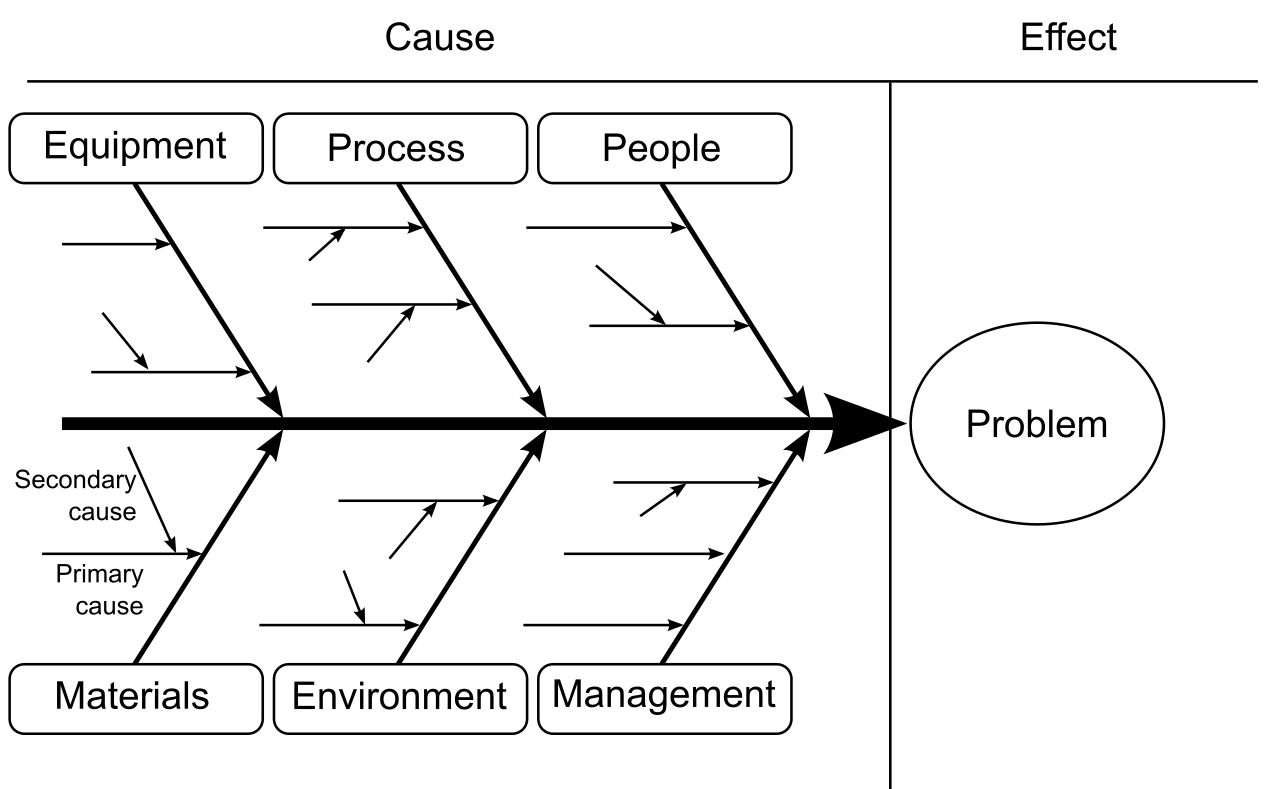
To solve problems permanently, teams utilize Root cause analysis, which identifies the underlying source of a problem to prevent future occurrences. We employ two primary tools to achieve this:
- The Ishikawa Diagram (Fishbone Diagram): A tool of breadth. An Ishikawa diagram visually maps potential causes to a specific project problem. If a software deployment fails, the diagram categorizes potential causes across branches like Methods, Machines, Materials, and People, ensuring no variable is overlooked.
- The 5 Whys Technique: A tool of depth. The 5 Whys technique involves repeatedly asking why a problem occurred to discover the root cause.
- Why did the server crash? (Memory overload).
- Why was there a memory overload? (The new query was inefficient).
- Why was the query inefficient? (It lacked a specific index).
- Why was the index missing? (It wasn't in the deployment script).
- Why wasn't it in the script? (Our peer-review checklist doesn't include index verification). Root Cause Identified.
To systematize this problem-solving mindset, Agile frameworks utilize retrospectives, which provide a structured forum for the project team to identify process improvements. Held at the end of an iteration, the retrospective is where the team analyzes their own operational data to iterate on their working agreements for the next cycle.
A highly empowered, self-organizing team still exists within a broader, often bureaucratic, enterprise organization. The project manager serves as the vital semi-permeable membrane between the team and the enterprise.
Advocating and Securing Resources
Representing the voice of the team involves advocating for the team needs to external project stakeholders. When the team identifies a critical constraint—such as needing an upgraded cloud environment to run machine-learning models—they cannot stop coding to navigate organizational procurement politics. It is your job to translate that technical need into a business case. The project manager secures necessary project resources by clearly presenting the team requirements to project sponsors.
A primary forum for this advocacy is executive oversight. The project manager represents the project team during steering committee meetings to report progress, ensuring the executives understand the reality on the ground. Simultaneously, the project manager represents the project team during steering committee meetings to request necessary organizational support, leveraging executive power to break through enterprise red tape.
Shielding and Clearing the Path
While the team handles internal execution, they are incredibly vulnerable to context-switching. If a sales vice president drops in to ask a developer for a "quick favor" or an unapproved feature tweak, productivity plummets.
To maintain velocity, the project manager or Scrum Master shields the Agile team from external interruptions during an active iteration. Think of yourself as a Faraday cage protecting sensitive electronics from external noise.

Furthermore, while the team is expected to solve local technical problems, the project manager is responsible for removing systemic organizational impediments. If the team's progress is continuously blocked by a legally mandated, three-week compliance review process, the team cannot fix that. The PM must engage the legal department, restructure the workflow, and alter the systemic constraint.
Building Morale through Visibility
Finally, advocacy is not just about solving problems; it is about amplifying victories. Too often, project teams work in the shadows of the organization, visible only when something breaks. The project manager builds team morale by communicating the team successes to the wider organization. By highlighting individual brilliance and collective milestones in organizational newsletters, town halls, or stakeholder readouts, the PM validates the team's hard work and cements their reputation as a high-performing unit.
Summary for the PMP Exam: Lead the team by establishing clear rules of engagement early (Charters, Ground Rules, DoD/DoR). Transfer power to the team through servant leadership, allowing them to estimate and organize their own work. Create a psychologically safe environment where problems are solved collaboratively at their root cause. Finally, act as the team's fiercest advocate: shield them from noise, secure their resources, and broadcast their success.