Lead the Project Team: Leadership and Roles
Not sure you’re ready?
Take the ~3-minute readiness diagnostic and see where you stand.
When a hospital system transitions its critical care software across dozens of wards, the project manager does not command the senior database architects the same way they direct the junior data-entry clerks. The database architects, holding decades of specialized experience, require a leader who clears institutional roadblocks and steps aside. The junior clerks, faced with an unfamiliar interface, require exact instructions and immediate oversight. This is the fundamental reality of project management: leadership is not a static personality trait, but a dynamic, calculated response to the maturity of the team, the structure of the work, and the environment in which the project operates. To deliver value consistently, a professional must abandon the idea of a "one size fits all" management approach and instead master a toolkit of leadership styles, role definitions, and team-building frameworks.
Before we can organize a team, we must understand the forces we can exert upon it. Project managers operate along a spectrum of leadership styles. Choosing the correct style requires reading the room, understanding the organizational culture, and recognizing the nature of the project.
The Foundational Styles
There are several fundamental ways a leader can influence a team:
- Transactional leadership focuses on goals and uses a system of rewards and penalties to drive performance. Think of a standard vendor contract in a predictive construction project: you deliver the foundation on time, you receive a financial bonus; you deliver it late, you pay a penalty. It is effective for straightforward, well-understood tasks but rarely inspires innovation.
- Transformational leadership inspires project teams through a shared vision and enthusiasm. This leader paints a picture of a compelling future—such as launching a medical device that will save lives—rallying the team to push past their perceived limits.
- Charismatic leadership relies on the leader's high energy and persuasiveness to motivate the project team. While effective in the short term, over-reliance on charisma can create a single point of failure if the leader leaves.
- Laissez-faire leadership allows the project team to make their own decisions with minimal interference from the leader. Translated from French as "let it do," this hands-off approach is disastrous for a junior team, but highly effective for an R&D lab of PhD researchers who know their highly specialized work better than anyone else.
- Interactional leadership is a hybrid approach. It combines transactional, transformational, and charismatic leadership characteristics, allowing a project manager to adapt their energy, reward structures, and vision-casting to the present moment.
Servant Leadership: The Engine of Agile
As industries shifted toward knowledge work and complex, iterative product development, traditional command-and-control leadership began to fail. A new paradigm emerged.
Servant leadership prioritizes the needs of the project team members over the leader's own needs. Rather than asking, "What can my team do for me to hit my milestones?" the servant leader asks, "What is preventing my team from doing their best work, and how can I remove it?"
Servant leaders actively identify and remove impediments to facilitate team progress. Because of its focus on empowering the people actually doing the work, servant leadership is the primary leadership style recommended for Agile and Scrum project environments.
You cannot lead a brilliant but unmotivated engineer the same way you lead an enthusiastic but entirely inexperienced intern. Situational leadership requires the project manager to adapt their leadership style based on the team's maturity and competence.
Key Fact: The Situational Leadership Model was originally developed by Paul Hersey and Ken Blanchard. It provides a mathematical-like framework for adjusting your behavior based on the specific person and task at hand.
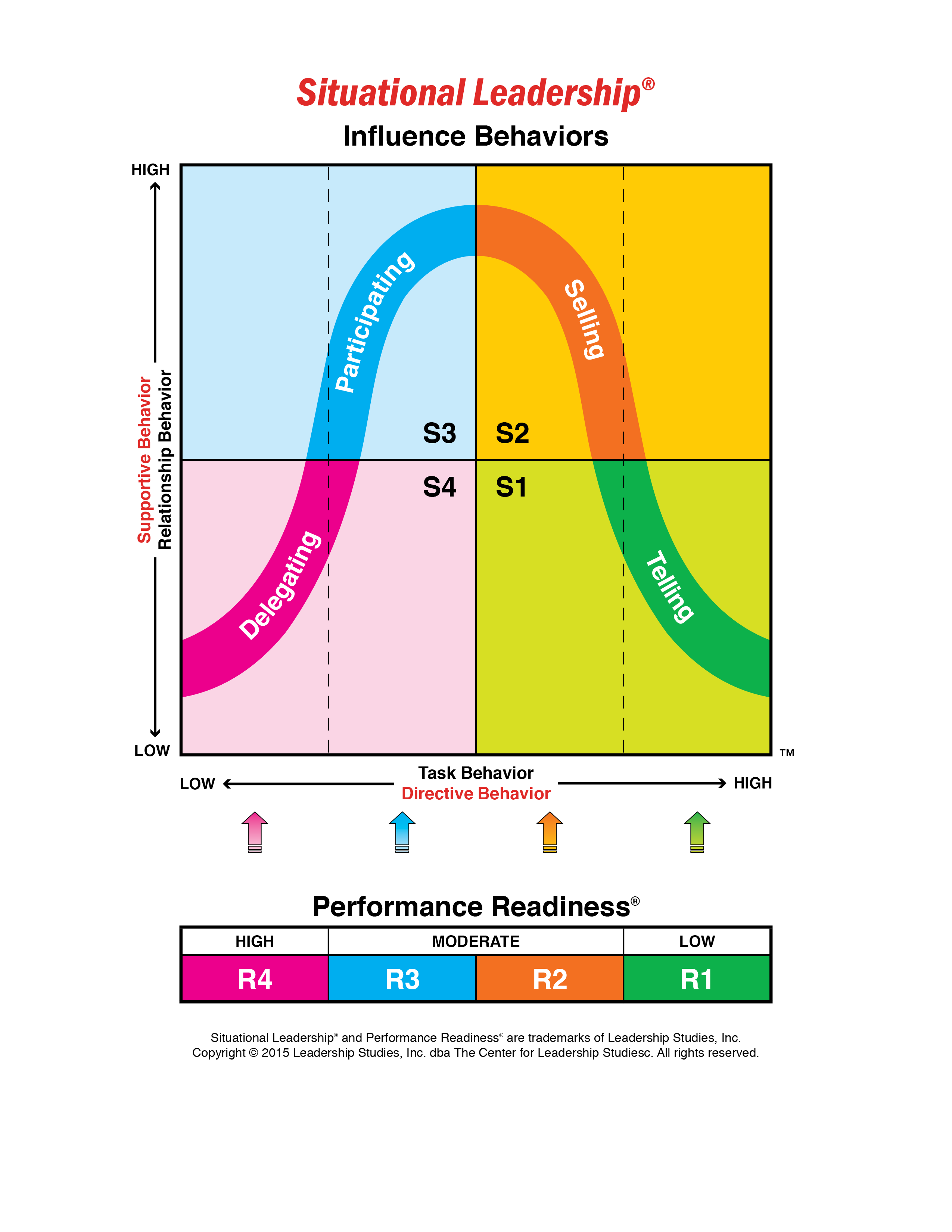
The Hersey-Blanchard model divides leadership responses into four distinct quadrants based on the team member's competence (skill) and commitment (will):
| Competence & Commitment Profile | Situational Leadership Style | How It Operates |
|---|---|---|
| Low Competence / High Commitment | Directing | The enthusiastic beginner. They don't know what they are doing, but they are eager. The leader must provide highly specific instructions and closely supervise the work. |
| Some Competence / Low Commitment | Coaching | The frustrated learner. They have hit a wall and lost motivation. The leader must explain why tasks are done and provide encouragement while still offering direction. |
| Moderate to High Competence / Variable Commitment | Supporting | The capable but hesitant contributor. They have the skills but lack confidence or consistency. The leader steps back from task direction and focuses on facilitating and encouraging. |
| Highly Competent / Highly Committed | Delegating | The seasoned veteran. They know exactly what to do and possess the drive to do it. The leader hands over the reins, sets the broad objective, and gets out of the way. |
How are decisions actually made? The answer dictates the structure of your project.
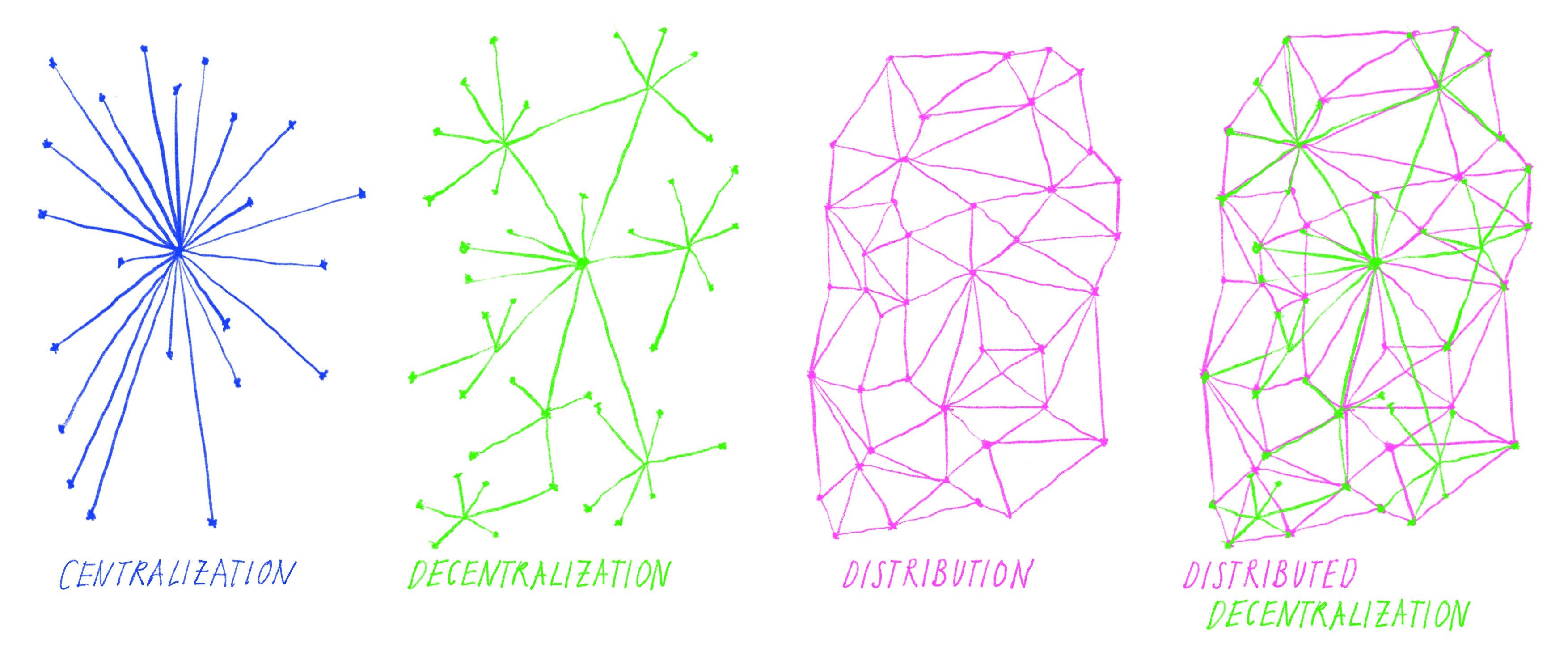
A centralized leadership model assigns decision-making authority primarily to a single individual. This is the traditional model: the project manager reviews the data, consults the experts, but ultimately holds the authority to decide the project's direction. It is highly efficient for predictive, tightly constrained projects where rapid, authoritative choices are required.
In contrast, a distributed leadership model shares decision-making authority among multiple team members. Instead of one bottleneck, the people closest to the problem make the decisions regarding how to solve it. Because it fosters rapid adaptation and deep ownership, distributed leadership is highly utilized in self-organizing Agile project management environments.
A project fails when everyone assumes "someone else" is handling a critical task. To prevent this diffusion of responsibility, project managers map the work to the humans performing it.
A Responsibility Assignment Matrix (RAM) links project work packages to the specific team members responsible for performing the work. It is the wiring diagram of your project team.
Key Fact: A RACI chart is a specific and widely used type of Responsibility Assignment Matrix.
RACI stands for four distinct levels of involvement. Understanding the exact difference between them—especially the first two—is critical for the PMP exam and real-world execution.
- Responsible (R): The 'Responsible' designation in a RACI chart indicates the person who actively performs the work task. They are the ones writing the code, pouring the concrete, or drafting the legal document. There can be multiple 'R's for a given task.
- Accountable (A): The 'Accountable' designation indicates the single individual who ultimately owns the work outcome. They are the one who signs off on the work and answers to stakeholders if it fails. A core rule of RACI charts mandates that only one person can hold the Accountable role for any specific task. If more than one person is accountable, no one is.
- Consulted (C): The 'Consulted' designation identifies subject matter experts who provide input before the work is done. Communication with a 'C' is two-way.
- Informed (I): The 'Informed' designation identifies individuals who receive updates on work progress or completion. Communication with an 'I' is one-way. They do not have veto power over the work.
Traditional (Predictive) Project Roles
In a standard predictive (Waterfall) environment, the hierarchy is clearly delineated:
- Project Manager: A project manager in a predictive environment leads the team responsible for executing the project plan. They monitor baselines, manage the schedule, and integrate the diverse pieces of the project.
- Project Sponsor: The Project Sponsor provides financial resources and high-level organizational support for the project. When a project manager faces an insurmountable organizational roadblock, they escalate to the sponsor. Ultimately, the Project Sponsor holds ultimate organizational accountability for enabling project success.
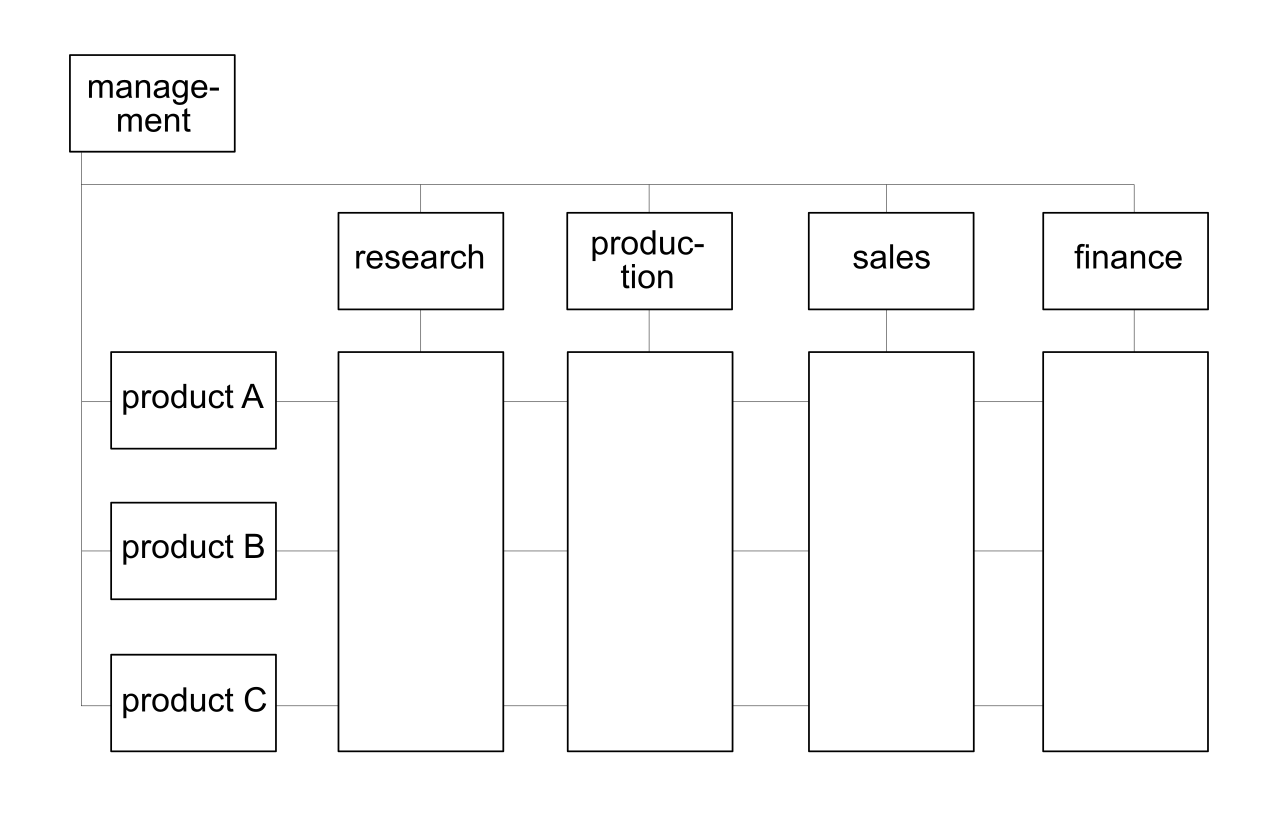
- Functional Manager: A functional manager directs the operational work of individuals within a specific department of an organization (e.g., the VP of Engineering or the Head of HR). In matrix organizations, project managers must carefully negotiate with functional managers to secure the resources they need.
Agile Project Roles
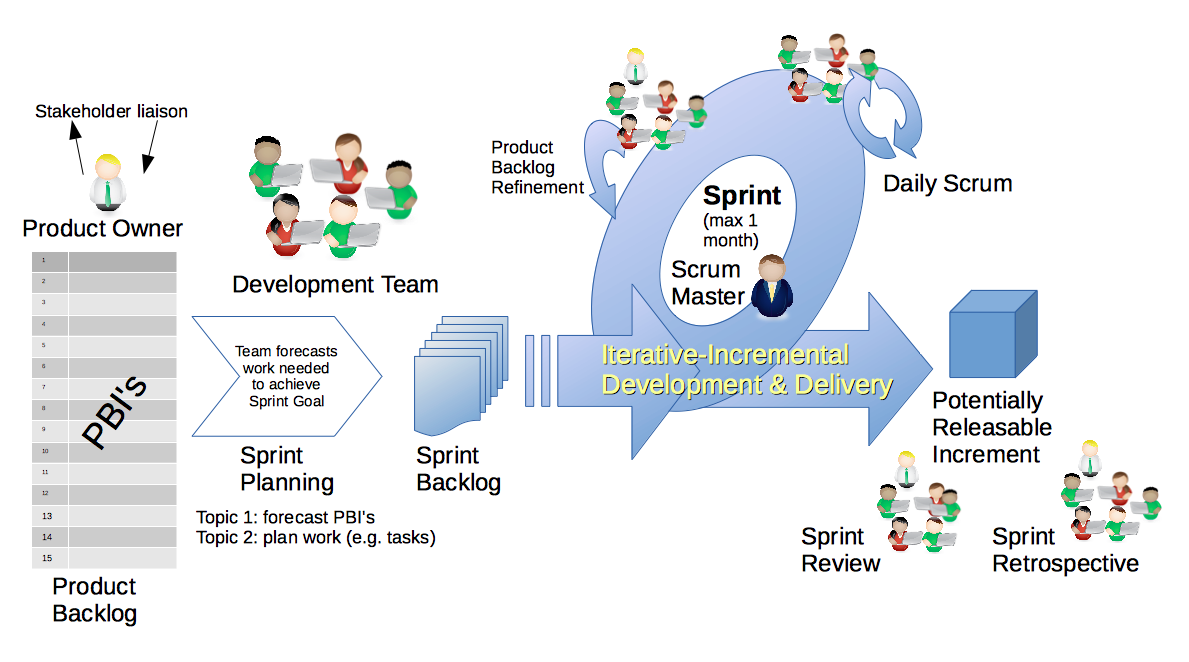
Agile frameworks, particularly Scrum, strip away traditional titles in favor of a lean, distributed model. There is no "project manager" title in pure Scrum; instead, the responsibilities are split:
- Agile Product Owner: The Agile Product Owner role is singularly responsible for maximizing the business value of the product. They are the voice of the customer. Consequently, the Agile Product Owner manages and prioritizes the items within the Product Backlog, deciding what gets built and in what order.
- Scrum Master: The Scrum Master role acts as a dedicated servant leader to the Agile team. They do not assign work. Instead, the Scrum Master facilitates team events and focuses on removing organizational impediments so the team can perform optimally.
- Developers: Agile team Developers operate as a cross-functional and self-organizing unit to deliver increments of value. The term "Developer" applies broadly to anyone building the product—whether they are writing software, designing hardware, or drafting marketing copy. Crucially, self-organizing teams determine the best way to accomplish their work without being directed by outside managers. The Product Owner tells them what is needed; the self-organizing Developers figure out how to build it.
A perfect RACI chart and a flawless Scrum framework mean nothing if the team cannot communicate. The machinery of project management is lubricated by human connection.
Emotional Intelligence and Empathy
Emotional Intelligence (EQ) involves recognizing and managing personal emotions as well as the emotions of others. A project manager with high EQ knows when a team member is burning out, even if they claim everything is fine. High emotional intelligence in a project manager directly improves team communication and conflict resolution capabilities. It allows the leader to de-escalate tension and address the root causes of disputes rather than just the symptoms.
A core component of EQ is empathy, which allows a project manager to genuinely understand the feelings and perspectives of diverse team members. Empathy is not about agreeing with everyone; it is about comprehending their reality. Coupled with empathy is active listening, which requires a project manager to fully concentrate on the speaker to understand their message without interruption. If you are formulating your reply while the other person is still speaking, you are not actively listening.
Culture and Inclusion
Modern projects span borders and demographics. Cultural awareness helps project managers navigate diverse team norms, communication styles, and expectations effectively. What is considered a polite suggestion in one culture might be interpreted as a firm directive in another.
To leverage this diversity, leaders must practice inclusive leadership, which deliberately encourages contributions and psychological safety from all team members regardless of their backgrounds. When people feel psychologically safe, they are willing to admit mistakes early—saving the project from catastrophic late-stage failures.
To establish these baselines early, successful teams create a Team Charter. A Team Charter defines the working agreements, core values, and communication guidelines for a project team. It is a social contract built by the team, for the team, detailing how they will handle conflict, when they will hold meetings, and what their shared definition of "done" looks like.
Finally, a well-led team must be resilient to bottlenecks. If only one person on a team knows how to configure a critical server, that person becomes a massive risk to the project schedule.
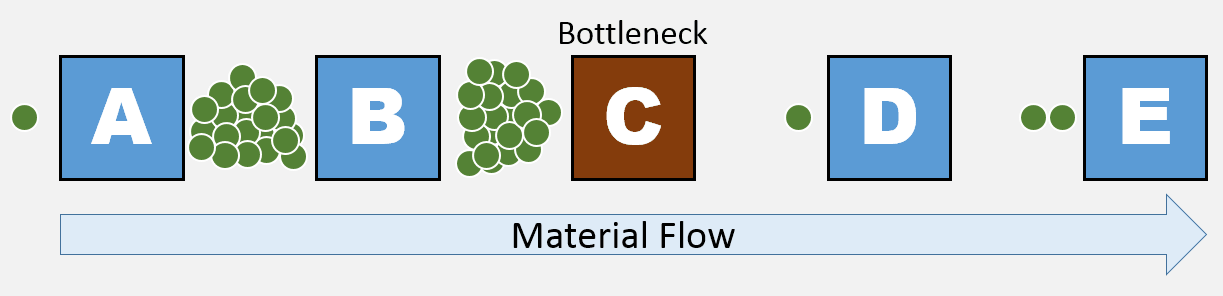
To mitigate this, leaders utilize cross-training to build a cross-functional team capable of handling multiple distinct types of project tasks. The goal is not to make everyone a master of everything, but to create overlap.
This gives rise to the concept of the "T-shaped" professional. T-shaped skills describe a professional with deep expertise in one technical area (the vertical bar of the 'T') and broad knowledge across other disciplines (the horizontal bar of the 'T'). For example, an engineer who writes brilliant back-end code (deep expertise) but also understands enough about front-end design and automated testing to help out in a pinch (broad knowledge).
Why does this matter? T-shaped skills increase work flexibility within Agile teams by reducing dependency bottlenecks. When a critical task requires immediate attention, multiple T-shaped team members can swarm the problem, rather than waiting days for the sole specialist to become available.
Leading a project team is a continuous act of calibration. By mastering the spectrum of leadership styles, deploying precise situational awareness, strictly defining roles, and intentionally cultivating emotional intelligence and robust skill profiles, the project manager transforms a disparate group of individuals into a unified engine of value delivery.