However, this constitutional privilege comes with strict parameters. Most notably, licensees drafting legal documents under Article XXVI of the Arizona Constitution cannot charge a fee for drafting those documents. You are compensated for your services as a broker or salesperson, not as a legal scrivener.
Historical scriveners were paid a direct fee to write or copy legal documents. In contrast, under Article XXVI, Arizona real estate licensees may not charge a separate fee for drafting contracts; they must act incident to their role in a property transaction.
Because the state constitution grants you the authority to legally bind citizens in high-stakes financial transactions, the state legislature rigorously regulates who you are and how you operate. This brings us to the operational rulebook of your profession: Arizona Revised Statutes (ARS) Title 32, Chapter 20, which contains the statutory framework governing real estate in Arizona.
To enforce ARS Title 32, the state requires a dedicated administrative apparatus. The Arizona Department of Real Estate (ADRE) regulates real estate, cemetery, and membership camping brokers and salespersons. At first glance, the inclusion of cemetery plots and membership camping might seem out of place, but fundamentally, these all involve the long-term transfer and strict accounting of localized property rights.
Large-scale burial grounds act as massive subdivisions of real property. The strict accounting of these localized property plots is why cemetery sales are regulated by the Arizona Department of Real Estate alongside traditional housing.
The Real Estate Commissioner
The ADRE is managed by a single executive authority: the Arizona Real Estate Commissioner. The Governor of Arizona appoints the Arizona Real Estate Commissioner, making this a highly visible, accountable executive position.
To ensure the Commissioner understands the intricate machinery of property transfer, the statute requires that the Arizona Real Estate Commissioner must have at least five years of experience in the real estate, banking, title, or legal profession. However, to prevent conflicts of interest and regulatory capture, the Arizona Real Estate Commissioner cannot hold an active real estate license while serving as the Commissioner. They must step completely out of the market to regulate it impartially.
As the chief enforcer of ARS Title 32, the Commissioner wields significant investigative and punitive authority:
The Arizona Real Estate Commissioner has the authority to investigate complaints against real estate licensees.
During an investigation of a licensee, the Arizona Real Estate Commissioner can issue subpoenas for records, compelling brokerages or individuals to produce transaction files, emails, and bank statements.
Ultimately, the Arizona Real Estate Commissioner can suspend or revoke a real estate license for violations of Arizona Revised Statutes Title 32.
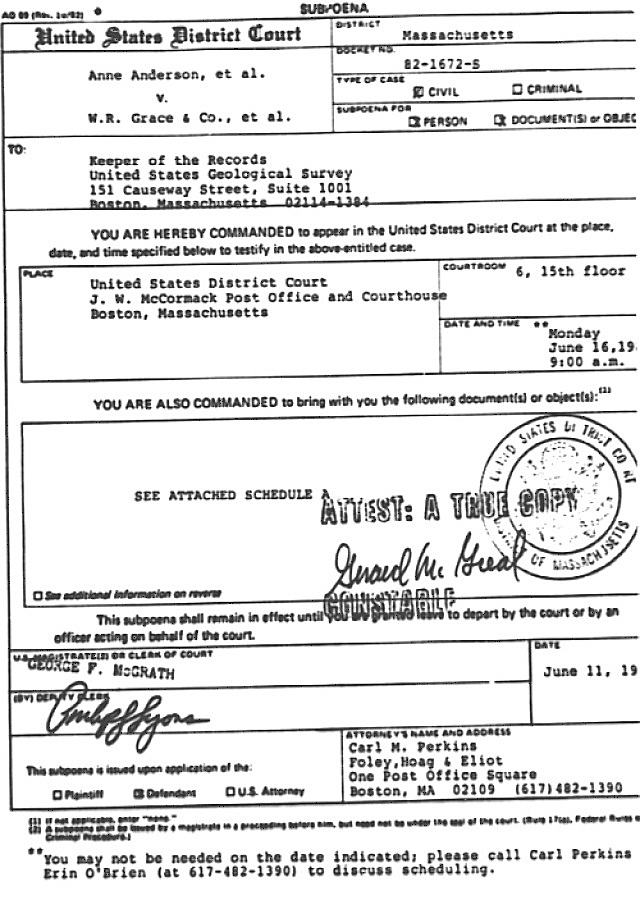
A subpoena is a formal legal document compelling the production of evidence. The Arizona Real Estate Commissioner uses subpoenas to force brokerages to hand over transaction files, emails, and financial records during an investigation.
Crucial Distinction: While the Commissioner regulates conduct affecting the public trust, they are not a referee for internal industry squabbles. The Arizona Department of Real Estate does not handle disputes between licensees over commission payments. If you and another agent disagree on a commission split, that is a civil contract matter or an issue for your local association’s arbitration panel—not a regulatory matter for the ADRE.
The Real Estate Advisory Board
The Commissioner does not operate in an intellectual vacuum. They are supported by the Arizona Real Estate Advisory Board, which consists of ten members appointed by the Governor of Arizona.
Members of the Arizona Real Estate Advisory Board serve six-year terms, providing institutional memory and long-term stability that outlasts typical political election cycles. The primary function of the board is to provide recommendations and evaluations to the Arizona Real Estate Commissioner, ensuring that regulatory decisions are grounded in the practical realities of the market and the public interest.
The state does not grant Article XXVI drafting powers lightly. Earning your license requires demonstrating baseline competency and ethical standing. All applicants for an Arizona real estate license must obtain a valid state fingerprint clearance card. This ensures that the applicant’s background is thoroughly vetted for history of financial crimes or moral turpitude before they are ever granted the authority to handle a client's life savings.
Applicants for an Arizona real estate license must submit to biometric fingerprint scanning. This allows the state to conduct thorough background checks for past financial crimes or moral turpitude prior to licensure.
The requirements to enter the profession depend heavily on the level of responsibility you intend to assume.
Requirement
Salesperson License
Broker License
Minimum Age
An applicant for an Arizona real estate salesperson license must be at least 18 years old.
Implied 18+ (due to experience prerequisite).
Experience
None required.
An applicant for an Arizona real estate broker license must have three years of actual real estate experience within the past five years.
Core Education
An Arizona real estate salesperson candidate must complete 90 hours of state-approved pre-license education.
An applicant for an Arizona real estate broker license must complete 90 hours of state-approved broker pre-license education.
Furthermore, because you will be authorized to draft contracts under the Arizona Constitution, there is a specialized practical requirement: an Arizona real estate salesperson candidate must complete a 6-hour contract writing course prior to license activation. This bridges the gap between passing a multiple-choice exam and practically filling out a legally binding residential purchase contract.
A standard machine-readable bubble sheet used for multiple-choice exams. Because real estate practice requires drafting complex written agreements, Arizona mandates an additional 6-hour contract writing course to bridge the gap between theoretical exam knowledge and practical execution.
A real estate license is not a lifetime appointment; it is a temporary, conditional privilege. Arizona real estate licenses must be renewed every two years.
To renew, you must continually refresh your understanding of law, ethics, and market practices:
An Arizona real estate salesperson must complete 24 hours of continuing education to renew the salesperson license every two years.
An Arizona real estate broker, who holds higher liability and supervises agents, must complete 30 hours of continuing education to renew the broker license every two years.
The 10-Day Notice Rules
The ADRE relies on accurate, real-time data to protect the public. If your operational status changes, you are legally obligated to proactively inform the state.
An Arizona real estate licensee must notify the Arizona Department of Real Estate within ten days of any change to the licensee's personal information (such as a legal name change or a new home address).
More severely, an Arizona real estate licensee must notify the Arizona Department of Real Estate within ten days of any misdemeanor or felonyconviction.
Expiration and the Grace Period
If you fail to complete your continuing education or pay your renewal fee, your license expires. An expired Arizona real estate license enters a grace period of one year.
This grace period allows you to complete your missing requirements and pay a late fee to reinstate your license without having to retake the 90-hour course and state exam. However, understand the strict boundary: during the one-year grace period for an expired Arizona real estate license, the licensee cannot conduct any real estate business requiring a license. If you draft a contract or negotiate a deal while in your grace period, you are practicing real estate without a license—a severe violation of ARS Title 32.
Even with fingerprint clearance, stringent exams, and continuing education, human nature ensures that a small fraction of licensees will commit fraud. If an agent embezzles a buyer's earnest money and immediately flees or goes bankrupt, the aggrieved consumer could win a lawsuit but never recover their stolen funds.
To maintain public confidence in the real estate market, the state created a financial shock absorber: The Arizona Real Estate Recovery Fund compensates members of the public who suffer out-of-pocket losses due to the fraudulent conduct of an Arizona real estate licensee.
Statutory Limits and Claims
The Recovery Fund is a last resort, not an endless well. The statutes place strict caps on how much the public can recover:
The maximum payout from the Arizona Real Estate Recovery Fund is $30,000 per transaction.
The maximum payout from the Arizona Real Estate Recovery Fund is $90,000 per licensee regardless of the number of claims. (If an agent defrauds ten different clients, the fund will only pay out a maximum of $90,000 total across all victims combined).
The public cannot simply ask the ADRE for a refund. Due process is required. A claimant seeking compensation from the Arizona Real Estate Recovery Fund must file a civil lawsuit against the offending licensee within five years of the fraudulent action, win a judgment, and prove they have exhausted all other means of collecting the debt from the agent's personal assets.
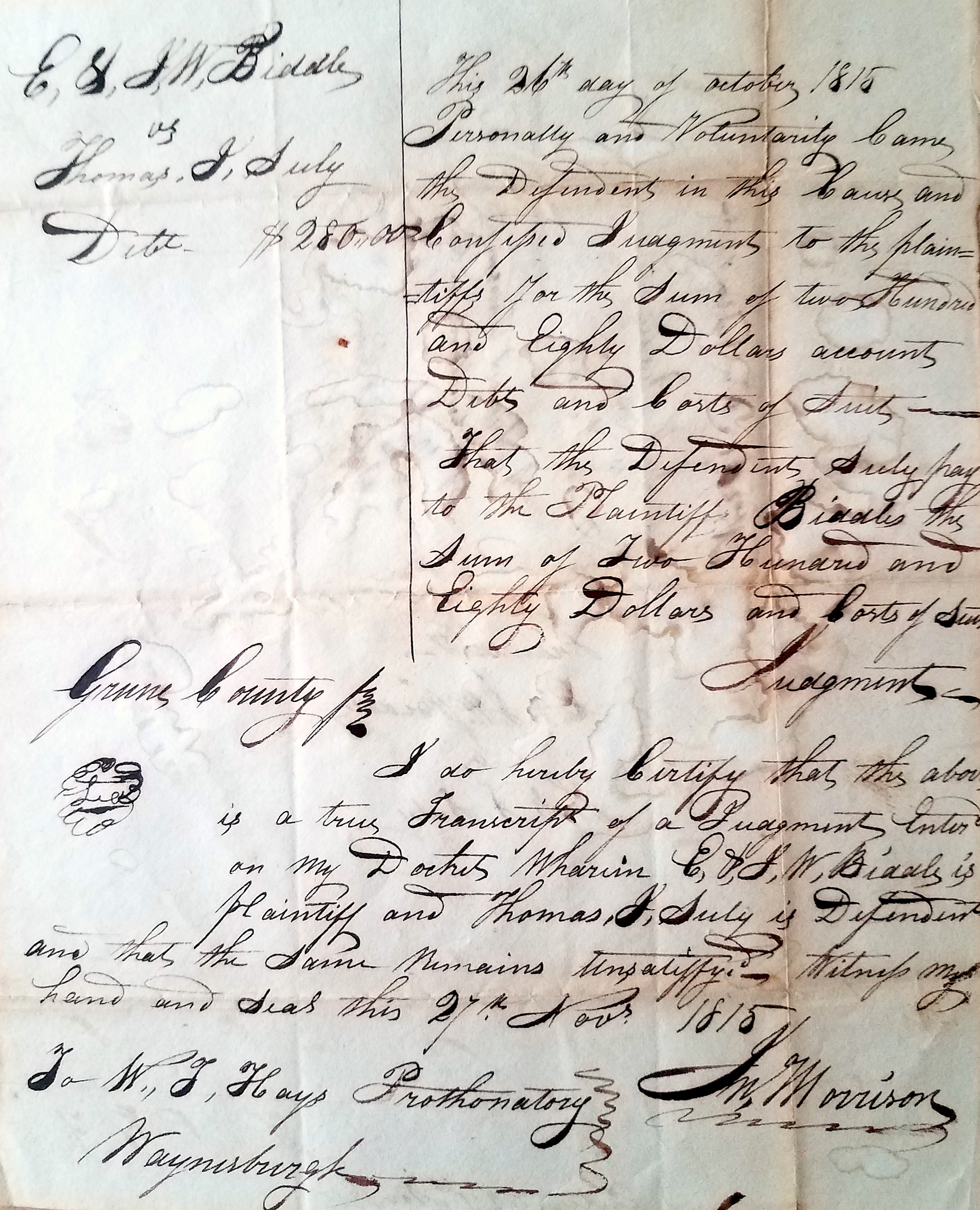
A historical judicial judgment of debt. To collect from the Arizona Real Estate Recovery Fund, a defrauded consumer cannot simply ask the state for a refund; they must first navigate the legal system to win a formal civil judgment against the licensee.
Consequences for the Licensee
If the state is forced to pay a consumer out of the Recovery Fund because of your actions, your career in Arizona real estate comes to an immediate halt.
When a payout is made from the Arizona Real Estate Recovery Fund, the offending real estate agent's license is automatically terminated. There is no hearing or probation; the termination is immediate. To reinstate a license terminated due to an Arizona Real Estate Recovery Fund payout, the agent must repay the fund in full plus interest. Only after making the state entirely whole can they even petition to re-enter the profession.
The Arizona Real Estate Recovery Fund is capitalized through a fee charged to licensees upon initial application.
The state constantly monitors the health of this fund. If the balance of the Arizona Real Estate Recovery Fund drops below $600,000 on June 30 of any year, renewing licensees must pay an additional fee to replenish the fund.
This $600,000 threshold guarantees that the state always has adequate liquidity to compensate victims of fraud, ensuring that the immense power granted to you by Article XXVI of the Arizona Constitution is always balanced by a robust, fully funded safety net for the Arizona consumer.