California Community Property, Vesting & Water Rights
Not sure you’re ready?
Take the ~3-minute readiness diagnostic and see where you stand.
To sell real estate in California is to sell two distinct realities simultaneously: the physical dirt beneath your feet and the invisible, highly regulated legal architecture that dictates who truly owns it. Imagine a house as a secured vault. The physical structure is obvious, but the mechanics to open that vault—who can legally sell it, who automatically inherits it, and who controls the natural resources flowing across it—are completely dictated by how the title is held and the marital status of the buyers. Understanding these rules is not merely an academic hurdle for passing the Department of Real Estate (DRE) licensing exam; it is the fundamental machinery of every transaction you will manage. If you allow a spouse to sign a contract incorrectly, or fail to recognize the implications of a severed joint tenancy, the vault snaps shut, your deal collapses, and litigation begins.
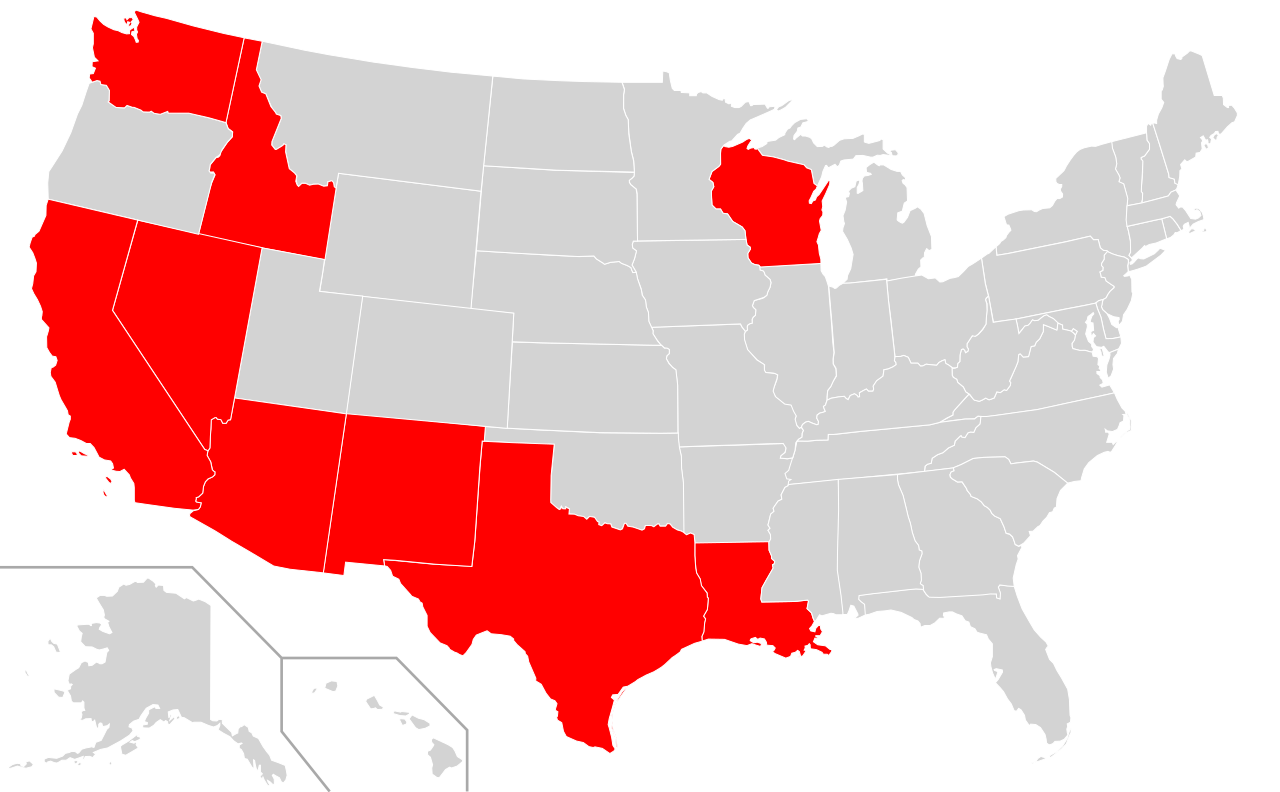
In the eyes of the law, marriage in this state is treated like an automatic corporate merger. California operates as a community property state. This framework fundamentally shapes how married individuals acquire, manage, and dispose of assets.
To navigate this, you must understand the dividing line between what belongs to the "marital corporation" and what belongs strictly to the individual.
Defining the Divide
By default, property acquired by a married couple in California is legally presumed to be community property.
Community property is any property acquired by a married couple during their marriage while domiciled in California.
However, not everything an individual touches during marriage is absorbed into the community pool. The law carves out strict exceptions for what constitutes separate property. Separate property is any property owned by a spouse prior to marriage.
Furthermore, the law protects property that comes into an individual's hands through specific, personal avenues even after the wedding day. Therefore, separate property includes property acquired during marriage by gift, will, or inheritance. If a client’s grandfather leaves them a $500,000 cabin in Lake Tahoe, that cabin is theirs alone, despite their marital status.
The protection extends to the fruits of those separate assets as well: separate property includes the income and profits derived from existing separate property. If your client rents out that inherited Tahoe cabin, the monthly rent checks remain their separate property.
The Danger of Commingling
Here is where real estate transactions get messy. As an agent, you will frequently see clients mix their separate funds with community funds—for instance, using inherited money to pay the mortgage on a home bought jointly during the marriage.
Commingling separate property with community property can change the legal status of the separate property to community property. If the funds become so intertwined that a court cannot trace the original separate money, the separate property loses its shield and is absorbed into the community estate.
Management, Control, and the Real Estate Agent's Duty
The rules governing how spouses manage their property depend entirely on whether the property is real or personal.
For personal belongings, bank accounts, or vehicles, the law allows for unilateral action: either spouse has the legal authority to independently manage and control community personal property. One spouse can sell a jointly owned couch or trade in a jointly owned car without the other's signature.
Real estate is a different beast entirely. Both spouses must sign a deed to transfer or encumber community real property. If you are listing a home held as community property, you must secure signatures from both spouses on the listing agreement and the purchase contract.
What happens if you fail? A contract to sell community real property signed by only one spouse is voidable by the non-signing spouse. The law gives the wronged spouse a strict statute of limitations to undo the damage: a non-signing spouse has one year from the recording date of a community real property transfer to file a lawsuit to void the transfer.
Death and Disposing of Assets
When a married person dies, what happens to their half of the community property?
- By Will: Each spouse holds the right to dispose of exactly one-half of the community property by will. They can leave their half to a child, a charity, or anyone else.
- Intestate (Without a Will): If a married person dies intestate in California, their half of the community property automatically passes to the surviving spouse.
Before a buyer closes on a property, escrow will ask them how they want to take title. Vesting is the specific legal manner in which a person or entity holds title to real estate. You cannot give tax or legal advice, but you absolutely must understand what these terms mean, as vesting dictates liability, inheritance, and control.
Severalty
Despite sounding like "several" people, ownership in severalty represents sole ownership of real property by a single person or a single corporate entity. Think of the word sever—the owner is severed from all others. If a single individual or a corporation buys an office building, they hold title in severalty.
Tenancy in Common (TIC)
When multiple unmarried people buy property together, the default vesting is Tenancy in Common. Tenancy in common is a form of concurrent ownership by two or more individuals possessing undivided interests in a single property.
This form of ownership has highly specific characteristics:
- Equal Possession: Regardless of who paid more for the house, tenants in common share the fundamental right of equal possession of the entire property. You cannot lock a 10% owner out of the master bedroom.
- Unequal Shares: Tenants in common are permitted to hold unequal ownership percentages in the shared property. (e.g., Owner A holds 60%, Owner B holds 40%).
- No Survivorship: Tenancy in common does not include a right of survivorship.
- Probate Required: Upon the death of a tenant in common, the deceased owner's interest passes to their heirs or devisees through probate. The surviving co-owners do not automatically inherit the deceased's share.
Joint Tenancy
Joint tenancy is the heavy-duty alternative to Tenancy in Common. Joint tenancy is a form of concurrent ownership distinguished by the right of survivorship.
Because of this survivorship right, upon the death of a joint tenant, the deceased owner's interest automatically passes to the surviving joint tenants. This bypasses probate entirely, saving the survivors time and legal fees.
To create this powerful form of ownership, the law requires strict mathematical and temporal symmetry known as the four unities. Joint tenancy requires four unities: time, title, interest, and possession (TTIP).
- Time: All owners must acquire their interest at the exact same moment.
- Title: All owners must be named on the exact same deed.
- Interest: Joint tenants are legally required to hold equal ownership shares in the property. (If there are 4 owners, each must own exactly 25%).
- Possession: Like TIC, all share equal right of possession.
The Fragility of Joint Tenancy
Joint tenancy can be easily broken. A joint tenant can sell or transfer their individual interest in the property without the consent of the other joint tenants.
When they do this, what happens to the title? The transfer of a single joint tenant's interest severs the joint tenancy exclusively for that specific share. Because the new buyer did not acquire their interest at the same time or on the same title as the original owners, the new owner of a severed joint tenancy share holds title as a tenant in common with the remaining joint tenants.
Example: A, B, and C hold property as Joint Tenants. A sells their share to D. Result: D is a Tenant in Common with a 1/3 share. B and C remain Joint Tenants with respect to their combined 2/3 share. If B dies, C gets B's share automatically. D gets nothing.
Crucial Corporate Rule: A corporation is prohibited from holding title to real estate as a joint tenant due to the entity's perpetual existence. Because a corporation practically never "dies," allowing them to hold joint tenancy would legally disadvantage a human co-owner whose lifespan is finite.
Specialized California Vesting
California offers tailored vesting options for specific relationships:
Community Property with Right of Survivorship: Historically, married couples had to choose between Community Property (great tax benefits, but goes to probate) or Joint Tenancy (bypasses probate, but loses tax benefits). California fixed this. Community property with right of survivorship provides a surviving spouse automatic title transfer while preserving stepped-up tax basis benefits. This allows the surviving spouse to sell the property later without massive capital gains tax penalties on the property's appreciated value.
Tenancy in Partnership: When a real estate syndicate or business venture buys property, they use this vesting. Tenancy in partnership occurs when two or more individuals, acting as business partners, own property specifically for partnership purposes. The property belongs to the business, not the individual partners.
Real estate isn't just static dirt. Land borders water, and water moves. As a licensee, you must understand who controls the water rights on a property, how the state allocates resources, and exactly where a client's property line ends.
The Rights to Adjacent Water
If your client buys property on a waterway, they gain specific usage rights based on the type of water.
| Right Type | Description |
|---|---|
| Riparian Rights | Riparian rights apply exclusively to landowners whose property borders a flowing body of water such as a river, stream, or watercourse. |
| Littoral Rights | Littoral rights apply exclusively to landowners whose property abuts a static body of water such as a lake, sea, or ocean. |
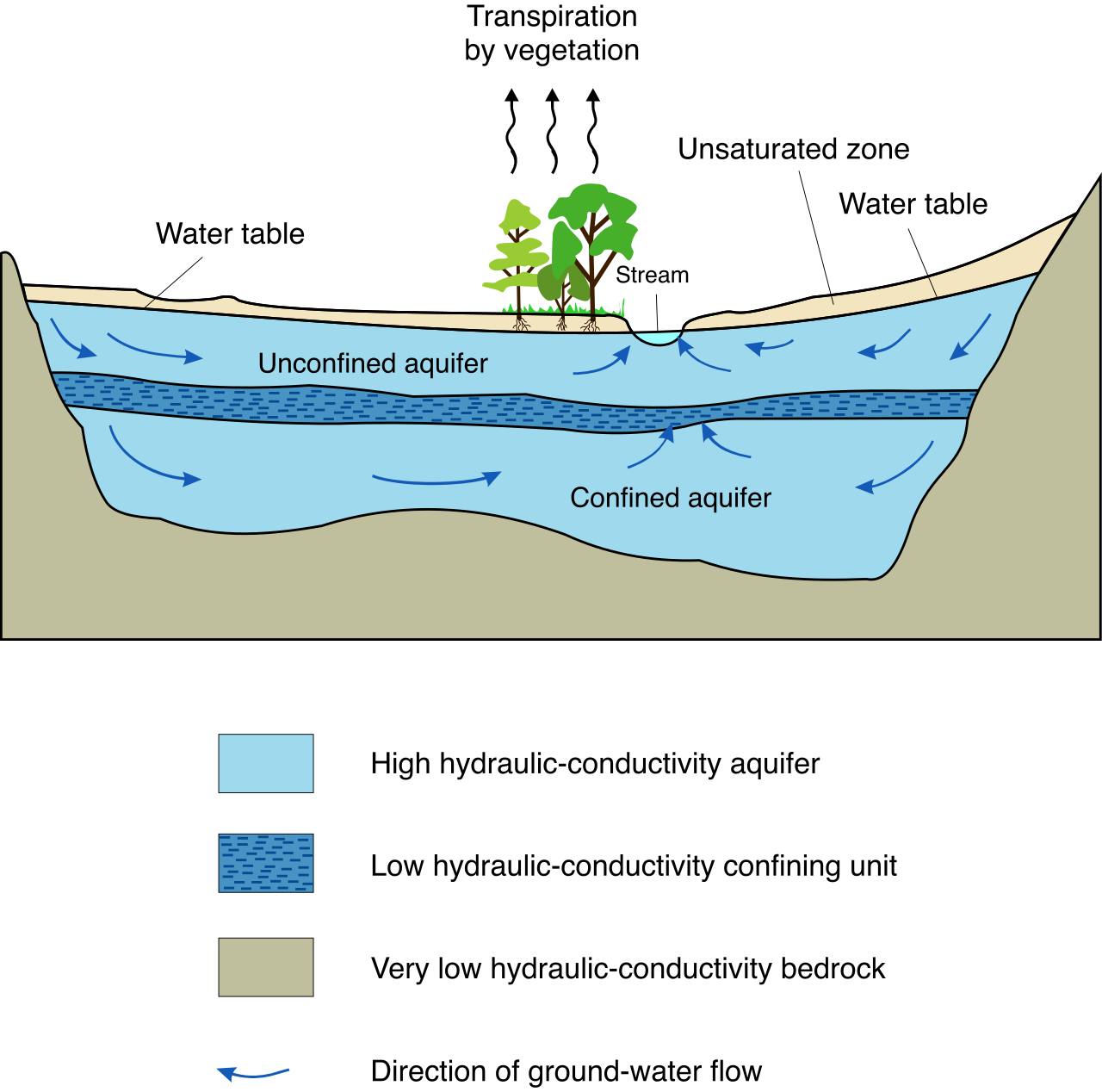
Here is the vital limitation: Riparian and littoral rights allow landowners to make reasonable use of the adjacent water without owning the water itself. Your client can pump water to irrigate their crops or water their cattle, but they cannot dam the river to deprive their downstream neighbors, because they do not own the molecules of water.
Scarcity and State Control
California is frequently in a state of drought, and water is heavily regulated. When landowners pump groundwater from a shared aquifer beneath their properties, they hold correlative water rights, which require landowners overlying a common groundwater basin to share the available water proportionally during times of shortage.
For surface water unattached to a specific property's riparian boundaries, the state steps in. The doctrine of prior appropriation dictates that the state allocates water rights based on historical beneficial use rather than adjacency to the water. This means an agricultural operation miles away from a river might have superior rights to that water compared to someone living right on the bank, simply because the agricultural operation established a historical, beneficial use first.
To enforce this, the California State Water Resources Control Board issues permits for the appropriation of surface water in California.
The Shifting Earth
When water moves, it changes the physical boundaries of real estate. You must know these specific geological terms:
- Accretion: The slow, natural growth of land. Accretion is the gradual and imperceptible accumulation of land along a waterway caused by the natural action of water.
- Alluvium: The physical dirt resulting from accretion. Alluvium is the soil or earth deposited on a shoreline by the process of accretion. (The landowner gets to keep this new land).
- Avulsion: The violent, immediate loss of land (e.g., a flash flood tearing away a riverbank). Avulsion is the sudden and violent loss or addition of land caused by the action of water.
- Reliction: When water permanently retreats, leaving new usable land behind. Reliction is the creation of new, dry land resulting from the permanent withdrawal or recession of a body of water.

Drawing the Line: Water Boundaries
When selling waterfront property, buyers will invariably ask: "Exactly where does my land end?" The legal boundaries depend precisely on the nature of the watercourse.
- Navigable Rivers: If commercial boats can traverse the river, the public has an interest in it. Therefore, the legal boundary line for private land abutting a navigable river or stream is the average low-water mark.
- Non-Navigable Rivers: If the stream is too small for commercial navigation, private ownership extends further. The legal boundary line for private land abutting a non-navigable river or stream is the center of the watercourse.
- Oceanfront Property: The California coast is intensely protected. The legal boundary line for oceanfront property in California is the ordinary high-water mark.
To ensure the public always has access to the beach and the ocean, the State of California retains ownership of all tidelands located seaward of the ordinary high-water mark. You can sell a client a Malibu beach house, but you cannot sell them the wet sand touched by the daily tides; that belongs to the people of California.