Common-Interest, Trusts, and Business Ownership
Not sure you’re ready?
Take the ~3-minute readiness diagnostic and see where you stand.
To map the landscape of modern real estate ownership, you must first stop looking at property solely as two-dimensional patches of dirt. When a developer builds a fifty-story high-rise, they are slicing thin air into hundreds of distinct legal cubes. When an investor wishes to shield their assets from public view, they conjure legal arrangements that mask the true owner. And when a group of developers buys a fifty-acre tract, the purchaser on the deed is often an invisible, artificial person created entirely by state law. As a real estate professional, you are not merely selling physical structures; you are selling highly abstract legal structures. You must master how ownership is sliced geographically (condominiums and cooperatives), temporally (timeshares), chronologically (trusts), and corporately (business entities).
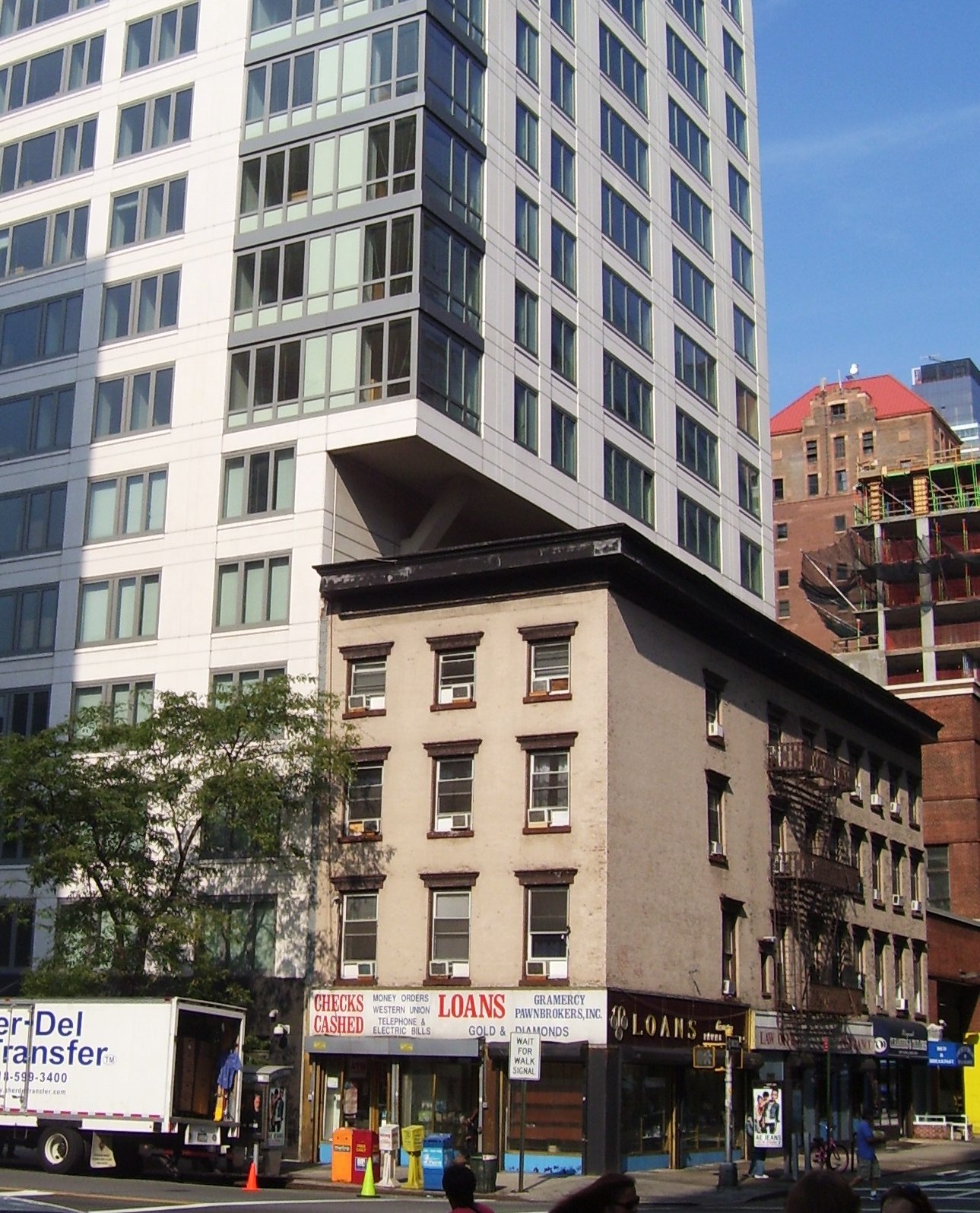
When humans cluster into high-density living spaces, the traditional rules of single-family home ownership warp. We have to divide the rights to the private spaces while sharing the burden of the communal infrastructure. How the law achieves this creates the distinct categories of common-interest ownership.
Condominiums: Owning the Paint Inward
Think of a condominium as a suspended box of airspace. A condominium owner holds a fee simple absolute title to the interior space of the individual residential unit. They own the air, the interior walls, and the floorboards.
But a floating box of air is useless without a foundation, an elevator, and a roof. These are the common elements. By definition, common elements in a condominium include the underlying land, hallways, elevators, and recreational facilities.

How does the condo owner interact with these communal spaces? A condominium owner holds an undivided fractional interest in the common elements as a tenant in common. "Undivided" means you cannot physically carve out your 2% of the swimming pool; you share the use of the entire pool equally with your neighbors, but you hold a 2% ownership stake in it.
Creation & Governance: Condominiums do not exist naturally. Condominiums are created by recording a legal document called a declaration or master deed under state laws. This document effectively submits the land to the state's condominium laws.
Once created, a homeowners association (HOA) manages the common elements and enforces the bylaws of a condominium complex.
Because elevators break and pools require chlorine, condominium owners must pay regular assessments to the homeowners association for the maintenance of common areas. What happens if an owner refuses to pay? The consequences are severe. Failure to pay condominium homeowners association dues can result in a foreclosure lien against the individual owner's unit.
Sometimes, a space exists outside the physical unit but is meant for one specific owner. A limited common element is a condominium common area reserved for the exclusive use of one or more specific unit owners. For instance, an assigned parking space or a private balcony in a condominium building is an example of a limited common element. The HOA generally owns and maintains the physical balcony, but only the owner of Unit 4B is allowed to stand on it.
Cooperatives: Owning Shares, Not Bricks
If a condominium is slicing real estate into cubes, a cooperative (co-op) is placing the entire real estate into a corporate bucket and selling pieces of the bucket.
In a cooperative ownership structure, a corporation holds the fee simple title to the entire real estate property. The building, the land, the units—everything belongs to the corporation.
Therefore, a cooperative owner does not hold a direct real estate interest in the physical unit. Instead, a cooperative purchaser buys shares of stock in the corporation that owns the residential building. Because they are buying stock, not a deed, shares of stock in a cooperative corporation are legally classified as personal property, not real property.
But if you just own stock, how do you get a place to sleep? A cooperative shareholder receives a proprietary lease granting the right to occupy a specific unit.
To keep the building running, cooperative shareholders pay a pro-rata share of the corporation's property expenses through monthly maintenance fees. This covers the building's underlying mortgage, property taxes, and maintenance.
The Ripple Effect of Default: In a condominium, if your neighbor doesn't pay their mortgage, it is their problem. In a co-op, if a cooperative shareholder defaults on monthly maintenance fees, the financial burden falls on the remaining shareholders. The corporation still owes its property tax bill; if one shareholder doesn't pay, the others must cover the shortfall to prevent the entire building from being foreclosed on.
Because of this shared financial vulnerability, a cooperative board of directors frequently holds the right to approve or deny prospective buyers of corporate shares. They are fiercely protective of who they let into their financial ecosystem.
Planned Unit Developments (PUDs)
A Planned Unit Development (PUD) bridges the gap between traditional subdivision housing and condominium living. In a planned unit development, an individual owner holds fee simple title to their unit and the land directly beneath the unit.
This differs fundamentally from a condominium, where the condo owner only owns the interior space and shares the land as a tenant in common. In a PUD, however, the individual owner does not hold an undivided interest in the common areas. Instead, in a planned unit development, the homeowners association holds direct title to the common areas, and the homeowners simply pay dues to the HOA for the right to use them.
Timeshares: Slicing Time
If condos slice property geographically, timeshares slice it chronologically. A timeshare allows multiple parties to purchase the right to use a single property for a specific period each year.
You must distinguish between the two legal frameworks used to create timeshares:
- A timeshare estate conveys a fee simple interest in the real estate for a specified time period. (e.g., You literally own the property for the 14th week of every year, forever. You can will it to your heirs).
- A timeshare use conveys a leasehold interest granting the right to use the property for a specified number of years. (e.g., You have the right to visit the resort for two weeks every summer for the next 20 years, after which your rights terminate).

Property does not always move directly from Seller A to Buyer B. Sometimes, a property is placed into a legal "lockbox" called a trust.
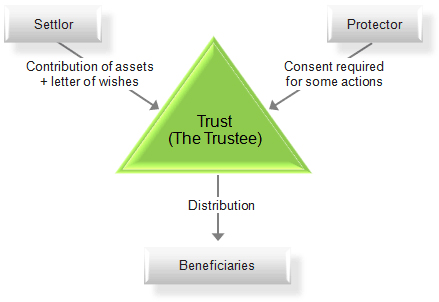
A trust is a legal arrangement where a property owner transfers legal title to a third party to manage for another person.
Think of a trust as a tripartite relationship:
- The trustor is the individual who creates the trust and transfers property into the trust. (The creator).
- The trustee is the party who holds legal title to the trust property and manages the trust assets. (The manager).
- The beneficiary is the person or entity who receives the financial benefits of the trust. (The receiver).
The Fiduciary Anchor: The trustee wields incredible power over the real estate, but they are legally restrained. The trustee acts as a fiduciary and must manage the trust assets in the best financial interest of the beneficiary. If a trustee sells a trust-owned property to their cousin for pennies on the dollar, they have breached this fiduciary duty and face severe legal penalties.
Types of Trusts
The timing and the contents of a trust define its classification:
- Living Trust: A Living Trust is created and takes effect during the trustor's lifetime. (Often used to avoid probate court upon death).
- Testamentary Trust: A testamentary trust is created by a will and takes effect only after the trustor's death.
- Land Trust: A land trust is a specific type of trust where real estate constitutes the only asset.
Land trusts have a fascinating quirk. In a land trust, the trustor is typically also the primary beneficiary. Why would you create a trust just to manage your own property for yourself? Anonymity. A land trust allows the identity of the true property owner to remain anonymous in public records. When a nosy neighbor looks up the tax records, they won't see "Jane Doe"; they will see "The 123 Main Street Trust." Walt Disney famously used land trusts to secretly purchase thousands of acres of Florida swamp without tipping off the public to his theme park plans.
Real estate is exceptionally expensive. Frequently, a single human being cannot—or does not want to—bear the financial risk of a massive transaction alone. To solve this, humans invent business entities.
Here is the fundamental rule of entity ownership: A legally formed business entity can own real estate in severalty because the law treats the entity as a single legal person. ("Severalty" means sole ownership, derived from the word "sever" — all others are severed from the title). Even if a corporation has one million shareholders, the corporation itself owns the deed as a single, solitary legal entity.
Corporations: The Artificial Person
A corporation is an artificial person created under state law. Because a corporation has no physical hands to sign a deed or brain to make decisions, a board of directors manages the business affairs and real estate decisions of a corporation.
The primary advantage of a corporation is liability protection. Shareholders in a corporation have limited liability for the corporation's debts and obligations. If a corporation goes bankrupt, creditors can seize the corporate real estate, but they cannot seize the personal home of a shareholder.
There are two primary ways corporations are taxed, which heavily impacts real estate investment:
- C-Corporation: The default format. A C-Corporation is subject to double taxation on corporate profits. The corporation pays taxes on its rental income. When the remaining profits are distributed to shareholders as dividends, the shareholders pay income tax again on that money.
- S-Corporation: A special tax designation. An S-Corporation avoids double taxation by passing corporate profits and losses directly to the shareholders. The corporation itself pays no federal income tax. However, this perk comes with strict rules: An S-corporation is legally restricted to a maximum number of shareholders (currently 100, and they must be U.S. citizens or resident aliens).
Partnerships: General vs. Limited
A partnership is an association of two or more persons carrying on a business as co-owners for profit.
- General Partnership: A true shared enterprise. In a general partnership, all partners possess the right to participate in the management of the business. However, this control comes at a steep price: In a general partnership, all partners share full personal liability for the partnership's debts. If the partnership's real estate deal collapses, creditors can liquidate every general partner's personal bank accounts to satisfy the debt.
- Limited Partnership: A tiered system designed to attract passive investors. A limited partnership consists of at least one general partner and one or more limited partners.
- In a limited partnership, only the general partners manage the business and hold full personal liability.
- The limited partners are the silent money. In a limited partnership, limited partners do not participate in daily management decisions. Because they have no control, they enjoy safety: A limited partner's liability is strictly restricted to the amount of the partner's original investment. If they invest $50,000, they can lose exactly $50,000—not a penny more.
Limited Liability Companies (LLCs)
The Limited Liability Company is the modern darling of real estate investors. Why? Because a limited liability company combines the limited liability of a corporation with the tax advantages of a partnership.
Terminology matters heavily on the exam: Owners of a limited liability company are legally referred to as members (not shareholders, not partners).
Like a corporation, members of a limited liability company are not personally liable for the company's business debts. Like a partnership, the LLC enjoys pass-through taxation, avoiding the double-tax penalty of a C-Corp, without the strict 100-investor limit of an S-Corp.
Syndicates and Joint Ventures: Pooling Power
Finally, we look at how entities scale up for specific goals.
When you hear about a multi-million dollar apartment complex being purchased, it's rarely a single person. Usually, it is a syndicate. A real estate syndicate is a group of investors pooling capital to finance a specific real estate project. A syndicate isn't a legal entity itself; it is a business strategy. The syndicate will typically legally organize itself as an LLC or a Limited Partnership to actually hold the title.
Sometimes, two existing massive entities will team up. A joint venture is an arrangement where parties combine resources for a single specific business transaction.
How is this different from a partnership? Time and scope. A joint venture differs from a general partnership because the joint venture is created for a single project rather than an ongoing business. If Developer A and Developer B team up to build one specific shopping mall, and agree to part ways once it is leased up, they have formed a joint venture. If they agree to build, buy, and manage shopping malls together for the next thirty years, they have formed a partnership.
Why This Matters in Your Daily Practice
As an agent, you will routinely walk into listing appointments where the seller on the tax record is "The Smith Family Trust," or "Main Street Holdings LLC," or you will deal with buyers trying to purchase a Co-op. If you treat an LLC like a general partnership, or a Co-op like a Condominium, contracts will fail, liability will be breached, and your clients will be exposed. Real estate is fundamentally the transfer of rights. To be an elite practitioner, you must deeply understand exactly who holds those rights, and what specific slices of the property those rights entail.