California Financing & Credit Laws
Not sure you’re ready?
Take the ~3-minute readiness diagnostic and see where you stand.
The mechanics of real estate financing operate on a fundamental duality: the personal promise to repay a debt, and the physical collateral pledged to secure that promise. In California, the laws governing this relationship balance the free flow of capital with strict consumer protections to prevent predatory lending, fraud, and discrimination. To master California financing and credit laws, you must understand not only the financial instruments used to secure real property but the precise statutory boundaries placed on interest rates, broker commissions, and loan originators.
Every real estate financing transaction requires two primary instruments: one to establish the debt, and another to secure it.
A promissory note is the primary evidence of a debt and represents the borrower's personal promise to repay the loan. However, a promissory note alone is merely an unsecured "IOU." If the borrower defaults, the lender would have to file a standard civil lawsuit to recover their funds. To avoid this, lenders require collateral.

California is a trust deed state where the deed of trust is the primary security instrument used to pledge real property as collateral. While some states use mortgages, California relies on the deed of trust, which dramatically changes the foreclosure process by involving a third party.
The Parties to a Deed of Trust
A deed of trust involves three distinct parties:
- The Trustor: In a California deed of trust, the borrower is the trustor. They are placing their property in trust as security.
- The Beneficiary: In a California deed of trust, the lender is the beneficiary. They benefit from the security instrument.
- The Trustee: In a California deed of trust, a neutral third party holds bare legal title and is known as the trustee.
Bare Legal Title: This means the trustee does not own the property in any functional sense; they merely hold the legal authority to take one of two actions: sell the property at a foreclosure auction if the borrower defaults, or return the title cleanly to the borrower once the debt is paid.
The Lifecycle of a Trust Deed
When the underlying promissory note is fully satisfied, the legal encumbrance must be removed from the property's title. The law dictates a strict timeline for this uncoupling:
- First, when a deed of trust is paid in full, the beneficiary must deliver the request for full reconveyance to the trustee within 30 days.
- Second, after receiving the request for full reconveyance from the beneficiary, the trustee must record the full reconveyance within 21 days.
Crucial Loan Clauses
The terms governing the life of the loan are dictated by specific clauses within the financing agreements:
- An acceleration clause is a provision in a loan agreement that allows the lender to demand immediate repayment of the entire loan balance upon a specific event like a borrower default.
- An alienation clause is a provision in a loan agreement that allows the lender to demand immediate repayment of the entire loan balance if the borrower sells or transfers the property. Because it is triggered by transferring title, an alienation clause is also commonly known as a due-on-sale clause.
- A subordination clause is a loan provision that allows a recorded senior trust deed to voluntarily take a lower lien position than a subsequently recorded trust deed. This is frequently used in land development, where a seller agrees to subordinate their lien so the buyer can obtain a first-position construction loan.

Usury is the practice of charging an interest rate on a loan that exceeds the legally permitted maximum. It is the financial equivalent of a speed limit, designed to protect consumers from loan sharking and predatory extraction.

The California Constitution caps the maximum interest rate on non-exempt personal consumer loans at 10 percent per year.
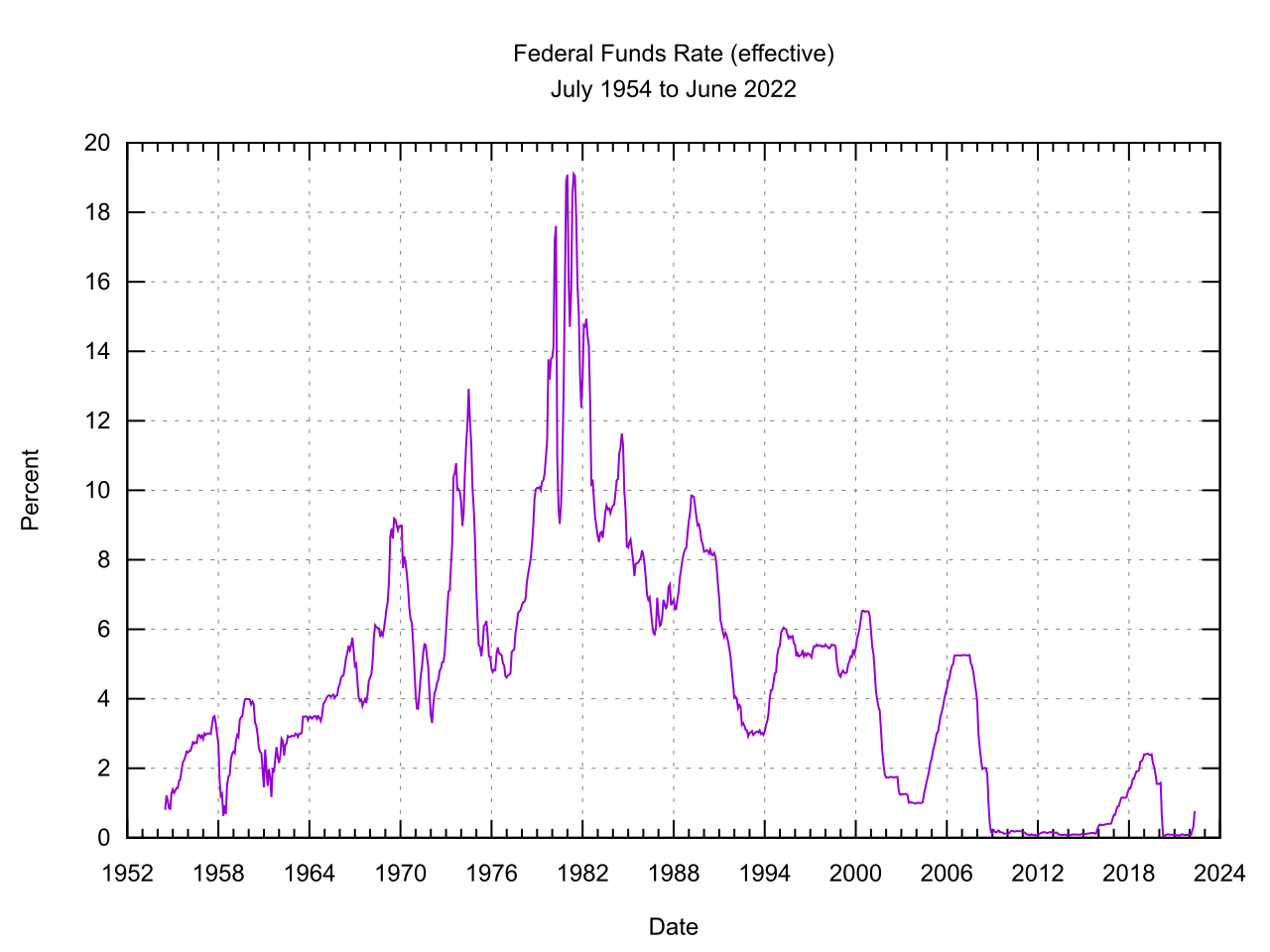
However, a modern real estate market cannot function if all capital is artificially capped at 10 percent, especially in high-inflation environments. Therefore, the law carves out massive exemptions that effectively remove usury limits from the vast majority of real estate transactions.
Real estate loans originated by standard institutional lenders like banks and credit unions are entirely exempt from California usury laws. Furthermore, real estate loans made or arranged by a licensed California real estate broker are completely exempt from state usury limits. The legislative logic is simple: state-licensed banks and brokers are subject to heavy regulatory oversight, reducing the risk of predatory abuse without choking off the capital supply.
The Seller Carryback Exemption & Disclosure
When a property seller acts as the lender to the buyer—often called seller carryback financing—a unique legal principle applies. Seller carryback financing is completely exempt from California usury laws under the time-price differential doctrine.
The Time-Price Differential Doctrine: This doctrine classifies seller carryback financing as an installment sale rather than a standard loan. Legally, the seller is not "lending money"; they are simply agreeing to accept a higher total price for the property in exchange for receiving payments over time.
Because seller financing occurs outside the purview of institutional banking, California enacted the Seller Financing Disclosure Law. This law applies to transactions involving a 1-to-4 unit residential property where an arranger of credit is involved.
An arranger of credit is defined as a real estate licensee or attorney who negotiates the terms of a seller carryback loan for compensation. (Note: A property seller is never legally considered an arranger of credit under the California Seller Financing Disclosure Law, even if they negotiate the terms themselves).
To ensure transparency, the seller financing disclosure statement must be delivered to both the buyer and seller before the execution of any note or security document.
While standard institutional loans are heavily regulated by federal authorities, private loans secured by real estate require strict state-level guardrails. This brings us to Article 7 of the California Real Estate Law, commonly known as the Mortgage Loan Broker Law or the Real Property Loan Law.
Article 7 primarily regulates the origination of hard money loans. A hard money loan is an independent cash loan secured by real estate rather than an extension of credit to finance the initial purchase of the property (a purchase-money loan). Borrowers often seek hard money loans to extract equity from their homes rapidly, making them vulnerable to predatory fees.
The Mortgage Loan Disclosure Statement (MLDS)
Under Article 7, transparency is mandatory. A mortgage loan broker must provide the borrower with a completed Mortgage Loan Disclosure Statement within three business days of receiving a completed written loan application. Crucially, a mortgage loan broker must provide the Mortgage Loan Disclosure Statement before the borrower becomes obligated to complete the loan.
If the broker collects funds from the borrower that are not immediately remitted to the lender, a California mortgage loan broker must deposit those borrower funds into a trust account or neutral escrow depository to prevent commingling.
Article 7 Strict Commission and Cost Limits
To prevent predatory equity stripping, Article 7 places absolute mathematical caps on commissions and fees for small hard money loans. You must memorize where these thresholds apply:
- Article 7 commission and cost limits apply strictly to first trust deed loans of less than $30,000.
- Article 7 commission and cost limits apply strictly to junior trust deed loans of less than $20,000.
If a loan exceeds these amounts, the strict statutory limits do not apply, and commissions are entirely negotiable. For loans under these thresholds, the following commission maximums apply:
| Lien Position | Loan Term | Maximum Commission Allowed |
|---|---|---|
| First Trust Deed (<$30k) | Under 3 years | 5 percent of the principal |
| First Trust Deed (<$30k) | 3 years or more | 10 percent of the principal |
| Junior Trust Deed (<$20k) | Under 2 years | 5 percent of the principal |
| Junior Trust Deed (<$20k) | 2 to less than 3 years | 10 percent of the principal |
| Junior Trust Deed (<$20k) | 3 years or more | 15 percent of the principal |
Loan Costs: Beyond commissions, brokers charge fees for processing, appraisals, and notary services. Under Article 7, a mortgage broker cannot charge the borrower for loan costs that exceed the actual costs incurred to negotiate the loan. When calculating permitted borrower-paid loan costs, Article 7 limits them to 5 percent of the loan amount or $390, whichever is greater. However, Article 7 restricts borrower-paid loan costs to an absolute maximum of $700 regardless of the loan size.
Article 7 Balloon Payments and Late Charges
A balloon payment is an unusually large payment due at the end of a loan term. These can trap borrowers into foreclosure if they cannot refinance in time.
- Article 7 prohibits balloon payments on loans secured by an owner-occupied dwelling if the loan term is six years or less.
- Article 7 prohibits balloon payments on loans secured by non-owner-occupied properties if the loan term is less than three years.
- Exception: Article 7 balloon payment restrictions do not apply to seller carryback financing notes.
If a borrower falls behind, Article 7 limits punitive fees. The maximum late charge allowed on a hard money real estate loan is 10 percent of the installment due. Furthermore, a late charge on an Article 7 real estate loan can only be imposed if the installment payment is more than 10 days past due.
In the wake of the 2008 financial crisis, the federal government stepped in to standardize the quality of the professionals originating mortgages. The federal SAFE Act requires all states to implement minimum standards for licensing and registering mortgage loan originators.
In California, holding a standard real estate salesperson or broker license is not enough to originate loans. A California real estate licensee must hold a Mortgage Loan Originator (MLO) endorsement to make, arrange, or service residential mortgage loans for compensation.
- The California Department of Real Estate (DRE) issues the Mortgage Loan Originator endorsement to qualified real estate licensees.
- California Mortgage Loan Originators must register with the Nationwide Multistate Licensing System and Registry (NMLS).
- To obtain the endorsement, a licensee must complete 20 hours of NMLS-approved pre-license education.
- A California Mortgage Loan Originator endorsement must be renewed annually by December 31.
- Renewal of the endorsement requires the completion of 8 hours of NMLS-approved continuing education.
Handling Advance Fees
An advance fee is an upfront payment collected by a broker for performing services like soliciting lenders or modifying a loan. Historically, unprincipled operators would charge desperate borrowers thousands of dollars upfront to "secure a loan modification," only to disappear.
To combat this, the DRE regulates advance fees heavily. A broker must submit all advance fee agreement materials to the California Department of Real Estate at least 10 calendar days before using them.
Once collected, a broker must deposit collected advance fees into a trust account immediately upon receipt. Crucially, advance fee funds cannot be withdrawn from the broker's trust account until the specific services have actually been performed.
(Note: Advance fees do not include upfront screening fees collected specifically to pay for credit reports or property appraisals. Those are standard out-of-pocket transactional costs).
The allocation of credit determines the demographic and economic destiny of communities. When lending is based on prejudice rather than math, markets fail. California strictly enforces anti-discrimination laws in lending and business practices.
The Housing Financial Discrimination Act of 1977 is commonly known as the Holden Act. The Holden Act prohibits California financial institutions from engaging in discriminatory lending practices based on neighborhood demographics.
Before the Holden Act, lenders engaged in redlining—the illegal practice of denying loans or altering loan terms based solely on the geographic location of a property. Lenders would quite literally draw red lines on maps around minority neighborhoods and refuse to lend within those borders, regardless of an individual borrower's wealth or reliability.
Today, the Holden Act requires lenders to evaluate a loan applicant's creditworthiness without considering neighborhood demographic trends. If a borrower has the income, credit score, and down payment to afford a home, the demographic makeup of the street they are buying on is legally irrelevant to the underwriting decision.
Broadening out from housing finance to all commercial interactions, the Unruh Civil Rights Act prohibits discrimination in all business establishments in California. Because real estate brokerages and lending institutions are considered business establishments subject to the Unruh Civil Rights Act, any discriminatory behavior by a licensee in the course of real estate finance is not just an ethical violation—it is a direct violation of state civil rights law.