ECOA, Lending Process, and Risky Loan Features
Not sure you’re ready?
Take the ~3-minute readiness diagnostic and see where you stand.
In real estate, capital is the lifeblood of every transaction, and the lending process is the cardiovascular system that pumps that capital from institutional reserves into the hands of homebuyers. As a real estate professional, you are not merely matching buyers with properties; you are navigating them through a highly regulated financial labyrinth. A homebuyer’s ability to reach the closing table depends entirely on the rigorous mechanics of underwriting, the federal laws that guarantee fair access to credit, and the avoidance of predatory traps hidden in the fine print. Understanding the exact anatomy of real estate finance is not just a matter of passing a licensing exam—it is the structural engineering of your daily practice.
Before a single financial calculation is made, the federal government establishes the boundaries of who gets access to capital and how those decisions are communicated. Historically, the lending industry allowed subjective biases to dictate creditworthiness. The Equal Credit Opportunity Act (ECOA) was enacted to fundamentally eliminate these systemic biases; it strictly prohibits lenders from discriminating against credit applicants.
The law is put into practice through an administrative rule. Specifically, the Equal Credit Opportunity Act is implemented at the federal level by Regulation B. To ensure these rules have teeth, the Consumer Financial Protection Bureau (CFPB) enforces the Equal Credit Opportunity Act.

Protected Classes Under ECOA
To grasp ECOA, you must memorize the specific categories of people it protects. The protected classes under the Equal Credit Opportunity Act include race, color, religion, national origin, sex, marital status, and age.
Notice how "marital status" and "age" are included here (they are famously absent from the Fair Housing Act). Furthermore, the law recognizes that income is income, regardless of its source. Therefore, the Equal Credit Opportunity Act prohibits lenders from discriminating against applicants who receive income from public assistance programs. If a buyer uses Section 8 housing vouchers or Social Security disability payments, the lender must treat that revenue exactly as they would treat a corporate salary.
ECOA also governs what a lender is legally allowed to ask. Because family planning has historically been used to illegally project a female applicant's future income stability, under the Equal Credit Opportunity Act, lenders are prohibited from asking applicants about their intentions to have children.
The 30-Day Clock and Adverse Action
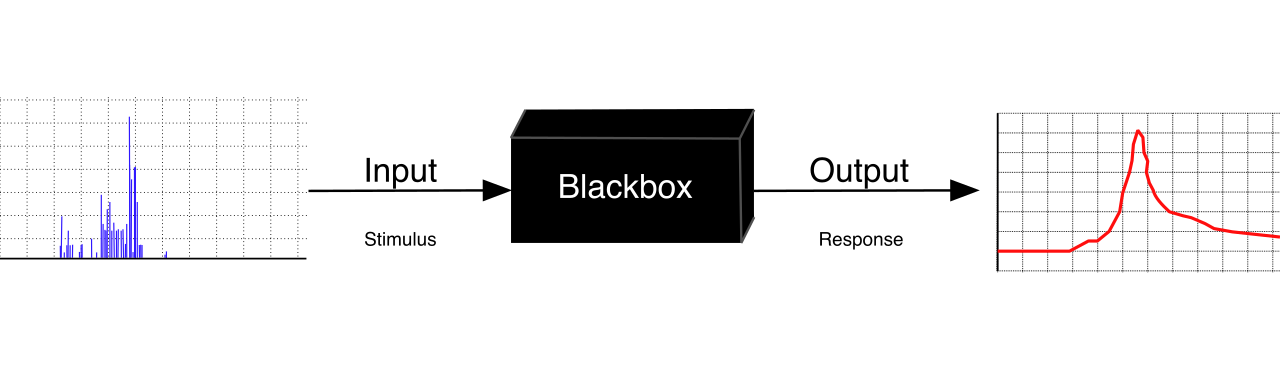
The credit process cannot be a black box where applications vanish indefinitely. The Equal Credit Opportunity Act requires lenders to notify applicants of the credit decision within 30 days of receiving a completed application.
If the lender decides the applicant represents too great a risk, they cannot simply say "No" and walk away. They must issue an Adverse Action Notice, which is a written disclosure required by the Equal Credit Opportunity Act when a lender denies a credit application.
Crucially, this notice cannot rely on vague excuses like "poor financial standing." An Adverse Action Notice must state the specific, principal reasons for the denial of credit. Whether the rejection was due to a high debt-to-income ratio or a recent bankruptcy, the applicant has a federally protected right to know the exact mathematical or historical reason they were denied.
When a prospective buyer walks into your office, they need money to buy the house you intend to show them. The journey to obtaining those funds follows a strict, sequential pipeline.
Step 1: Pre-Qualification vs. Pre-Approval
As an agent, you must never confuse these two terms. They dictate how seriously a seller will view your buyer's offer.
| Metric | Pre-Qualification | Pre-Approval |
|---|---|---|
| Definition | A preliminary, informal estimate of how much money a prospective buyer can borrow. | A formal process where a lender verifies a borrower's income, assets, and credit history. |
| Verification | Does not require the lender to independently verify the borrower's income or credit history. (Self-reported data). | Requires hard evidence: W-2s, tax returns, bank statements, and hard credit pulls. |
| Result | An educated guess; carries very little weight in a competitive real estate market. | Results in a conditional commitment from the lender to grant a mortgage for a specific amount. |
Step 2: The Application
Once the buyer finds a property and has an accepted purchase contract, the formal origination begins. The Uniform Residential Loan Application is the standard form used by borrowers to apply for a mortgage. In the industry, you will frequently hear this document referred to by its bureaucratic designation: the Uniform Residential Loan Application is also known as Fannie Mae Form 1003.
Step 3: Underwriting and Risk Assessment
Submitting Form 1003 drops the buyer's financial life onto the desk of an underwriter. Underwriting is the detailed process a lender uses to evaluate the risk of a proposed loan.
The Dual Analysis: A mortgage underwriter analyzes the borrower's creditworthiness and the collateral property's value. They are answering two fundamental questions: Can the borrower pay us back? and If they don't, is the house worth enough for us to recoup our losses via foreclosure?
To answer the first question, the underwriter relies heavily on math. A debt-to-income (DTI) ratio is a primary metric used by underwriters to assess a borrower's ability to repay a loan.
Worked Example: If your buyer earns $6,000 a month in gross income, and their total proposed monthly debt payments (including the new mortgage, car loans, and credit cards) equal $2,580, the calculation is straightforward: $2,580 ÷ $6,000 = 0.43. The buyer has a 43% DTI ratio.
To answer the second question regarding collateral, a property appraisal is required during the lending process to ensure the property value sufficiently covers the loan amount. If the house appraises lower than the purchase price, the loan-to-value ratio breaks down, and the lender will halt the process.
Step 4: Commitment and Closing
If the underwriter is satisfied with both the borrower's DTI and the property's appraised value, the lender issues a loan commitment. This is a formal, written agreement by a lender to provide a mortgage under specified conditions.
With the commitment in hand, the transaction proceeds to the finish line. The final step of the lending process is closing, where the loan funds are disbursed.
At this table, the buyer signs a mountain of paperwork, but two documents are structurally paramount: at the loan closing, the borrower executes the promissory note and the security instrument. The promissory note is the literal "IOU" outlining the promise to repay the debt; the security instrument (the mortgage or deed of trust) is what pledges the physical real estate as collateral.
Not all loans are structurally sound. Certain loan features act as financial landmines, and understanding them is essential to protecting your clients. The national exam heavily tests your ability to identify these hazards.
Structural Hazards in Amortization
Negative Amortization Amortization is the gradual killing off of debt through scheduled payments. But what happens if the payment isn't large enough? Negative amortization occurs when a borrower's monthly payment is insufficient to cover the accrued interest on the loan.
Instead of vanishing, the unpaid interest in a negative amortization loan is directly added to the principal balance. As a result, negative amortization causes the total amount owed by the borrower to increase over time rather than decrease.
Worked Example: Imagine a borrower has a $300,000 loan. In month one, the accrued interest is $1,500, but their required monthly payment is artificially capped at $1,000. They pay the $1,000, leaving $500 of unpaid interest. That $500 is added to the principal. In month two, they now owe $300,500. They are swimming against a current moving faster than they can paddle.
Balloon Payments In standard mortgages, the loan is fully amortized by the end of the term. However, balloon payments are a standard feature of partially amortized loans.
Because the monthly payments do not fully extinguish the principal by the end of the term, the remaining balance comes due all at once. A balloon payment is a disproportionately large lump-sum payment due at the end of a loan term. This is exceptionally risky because balloon payments force a borrower to either pay the remaining loan balance in cash or refinance the debt. If interest rates have spiked or the borrower has lost their job, they will likely face foreclosure.
The Illusion of Cheap Money: ARMs and Teaser Rates
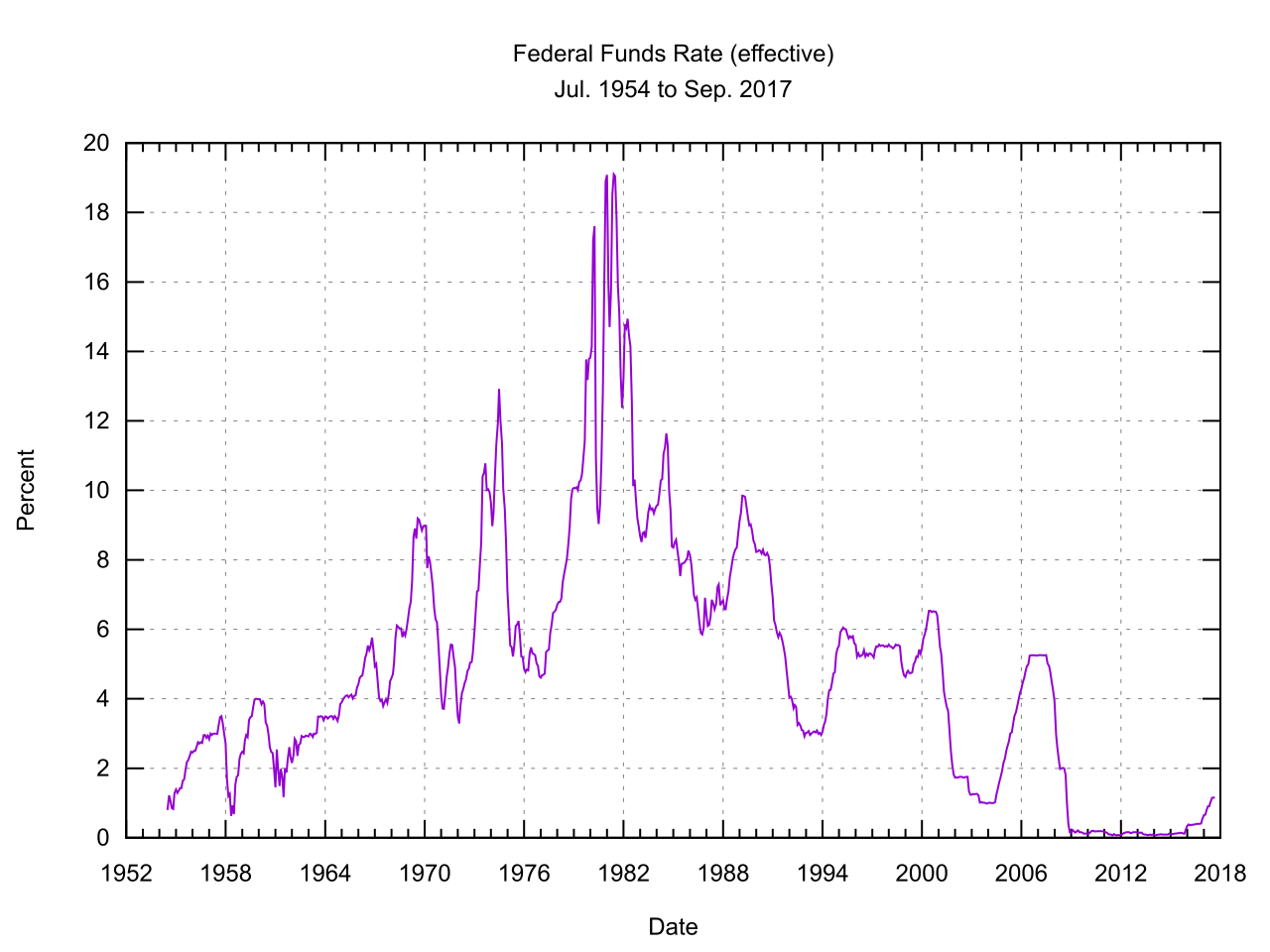
Adjustable-Rate Mortgages (ARMs) shift the risk of fluctuating interest rates from the lender to the borrower. To lure borrowers in, lenders often utilize a teaser rate, which is an artificially low initial interest rate on an adjustable-rate mortgage designed to attract borrowers.
The danger arrives when the teaser period expires. Teaser rates expose borrowers to payment shock when the interest rate adjusts to the fully indexed rate.
Definition: Payment shock is a significant, unexpected increase in a borrower's monthly mortgage payment.
Furthermore, you must look for rate caps. Caps limit how much an interest rate can rise in a single year and over the life of the loan. Adjustable-rate mortgages without rate caps expose borrowers to potentially unlimited interest rate increases, turning what seemed like an affordable home into a catastrophic financial burden.
Artificial Barriers and Predatory Acts
Even if a borrower secures a seemingly standard loan, predatory lenders often weave invisible nets into the contract.
Prepayment Penalties If a borrower wants to pay off their loan early to save on interest, some lenders punish them for it. A prepayment penalty is a fee assessed by a lender if the borrower pays off the mortgage before the end of the term. Ultimately, prepayment penalties create a financial barrier for borrowers attempting to refinance or sell the property early, trapping them in sub-optimal financial products.
Predatory Actions at the Desk Beyond the structural math of the loan, rogue lenders engage in outright abusive behavior:
- Loan Flipping: This is a predatory lending practice involving the frequent refinancing of a borrower's loan solely to generate lender fees. The borrower gains no tangible economic benefit from the new loan; their equity is simply slowly bled dry to pay origination costs.
- Packing: This is a predatory practice where a lender adds unnecessary products, like credit life insurance, into the loan amount without consent. The buyer unknowingly finances these junk products over thirty years, paying immense amounts of interest on items they never explicitly requested.
By mastering the protections of ECOA, the rigorous timeline of the lending process, and the specific mechanics of predatory loan features, you elevate yourself from a mere property shower to a true transactional professional, capable of guiding consumers safely through the greatest financial transactions of their lives.