California Real Estate Practice, Advertising & Specialties
Not sure you’re ready?
Take the ~3-minute readiness diagnostic and see where you stand.
A signed real estate contract is merely the visible surface of a transaction. Beneath it lies a rigorous, inescapable framework of regulatory physics governed by the California Department of Real Estate (DRE). If you want to survive and thrive as a real estate salesperson, you must understand the mechanics of this underlying structure. A misplaced advertisement, an overeager assistant, or a sloppy deposit does not just kill a deal; it threatens the very license that allows you to operate.

The DRE does not view public protection as an abstract ideal. It enforces it through highly specific rules dictating how you present yourself, who is allowed to speak on your behalf, and exactly where every single penny must go.
Whenever you reach out to the public, you are acting under the authority of your responsible broker. The state demands that the public knows exactly who they are dealing with at the exact moment you attempt to generate business.
California Business and Professions Code 10140.6 requires real estate licensees to include three critical pieces of information on all first-point-of-contact solicitation materials:
- Your name.
- Your license identification number.
- The responsible broker’s identity.
A first-point-of-contact material is broadly defined. It includes traditional mediums like business cards, stationery, and flyers, but also extends to email signatures and any print or electronic media ads used to solicit business. If it reaches out to grab a client's attention, the required identifiers must be attached.
Blind Advertising An advertisement by a real estate licensee that fails to disclose that the party is a licensee, or fails to include the responsible broker's name. Blind advertising is strictly prohibited in California under DRE rules.
You might wonder how this applies to the most ubiquitous form of real estate marketing: the yard sign. There is a strict, conditional exemption. "For Sale," "For Rent," and Directional signs are exempt from the licensee identification number requirement only if no licensee identifying information is on the sign. However, the moment an agent’s name appears on a For Sale sign, both the agent’s license number and the responsible broker’s identity must also be displayed.
This requirement for transparency extends to how you brand yourself. A team name or a doing-business-as (DBA) name used in marketing must always be accompanied by the responsible broker's identity. You cannot allow a client to mistakenly believe your sub-team is an independent brokerage.
Furthermore, the DRE continuously updates rules to reflect modern technological realities. As of January 1, 2026, California law mandates a clear disclosure on real estate advertising images that have been digitally modified to change the appearance of the property. If you edit an image to add virtual staging, erase a power line, or alter a skyline, the public must be explicitly notified that the image does not represent the literal, physical reality of the property.

To scale your business, you will inevitably rely on leverage—specifically, assistants. However, an unlicensed assistant is legally distinct from a licensed salesperson, and crossing the boundary between the two is a severe violation.
Unlicensed assistants may perform non-discretionary clerical and administrative tasks. They can act as your organizational machinery, but they cannot act as your real estate brain.
| Permitted (Unlicensed Activities) | Prohibited (Requires a License) |
|---|---|
| Answering phones and scheduling appointments. | Discussing price, contract terms, or property conditions with prospective buyers or sellers. |
| Preparing documents for a broker’s review. | Negotiating lease terms or purchase contracts. |
| Placing "For Sale" signs on properties. | Providing comparative market analyses (CMAs). |
| Hosting an open house (only if they do not answer questions regarding the property's price or condition). | Explaining the implications of an inspection report. |
If an unlicensed assistant prepares an advertisement, it must be reviewed and approved by a real estate licensee prior to publication or distribution.
The Automation Trap: Artificial Intelligence
In the modern era, software acts as an invisible assistant. But be warned: using Artificial Intelligence tools to perform licensed real estate activities without human broker oversight is treated by the DRE as equivalent to using an unlicensed assistant to perform licensed acts. If an AI chatbot negotiates terms with a buyer on your website while you sleep, you have committed an unlicensed activity violation.
You are never a lone wolf in California real estate. Under California law, a licensed real estate broker must reasonably supervise the activities of all affiliated salespersons and broker-associates. A broker’s failure to supervise an agent’s activities can lead to DRE disciplinary action directly against the broker.
If the brokerage is a corporation, it must designate a licensed individual broker as the Designated Officer. This individual absorbs the ultimate responsibility for the supervision and control of all corporate real estate activities.
To enforce this supervision, the DRE dictates specific operational checkpoints:
- Commissioner's Regulation 2725 requires brokers to establish formal policies and procedures to review transactions, trust fund handling, and any documents that materially affect the rights of parties.
- California Business and Professions Code Section 10148 requires a supervising broker (or designated branch manager) to review and initial all contracts prepared by salespersons within 5 business days of execution.
If you mishandle advertising, you might get a warning or a fine. If you mishandle trust funds, you are practically begging the state to revoke your license.
Trust Funds Monies or items of value received by a broker on behalf of a principal. This includes cash, checks, promissory notes, and tenant security deposits. It is not your money; you are merely its custodian.
Commissioner's Regulation 2832 establishes the fundamental law of trust funds: A broker must deposit trust funds into the hands of the principal, a neutral escrow depository, or a trust account within three business days of receipt.
If a broker chooses to maintain their own trust account, it must meet rigorous standards:
- It must be held in a California bank or recognized depository.
- It must be explicitly designated as a trust account.
- It generally must be non-interest-bearing.
Commingling: The Ultimate Sin
Commingling occurs when a broker mixes personal or business operating funds with client trust funds. Think of a trust account as a sterilized surgical environment; introducing even a drop of your own business revenue contaminates the entire space. Commingling is a strict violation of California real estate law and a major trigger for broker discipline.
There is exactly one highly controlled exception to this rule: A broker is permitted to keep up to $200 of personal funds in a trust account strictly to cover bank service charges without committing commingling.
To prove that no client funds have vanished or blended, brokers must maintain columnar records or equivalent GAAP-compliant (Generally Accepted Accounting Principles) accounting that clearly tracks all trust fund receipts and disbursements to prevent shortages.
A real estate license unlocks more than just single-family homes. However, stepping into specialty transactions introduces new regulatory physics.
1. Property Management
Property management activities—such as soliciting tenants, negotiating leases, and collecting rent for compensation—require a California real estate broker license.
There are vital exceptions:
- The Resident Manager Exemption: The resident manager of an apartment building or complex who lives on-site is legally exempt from the requirement to hold a real estate license. However, this exemption applies only to the specific property where the manager resides. Managing off-site rental properties for compensation requires a valid real estate license.
- Clerical Employees: Employees of a licensed property management company may perform purely clerical tasks without a license, provided they are directly supervised by a broker.
- Short-Term Rentals: Short-term rental management for transient occupancies of 30 days or less does not require a real estate broker license in California.

2. Business Opportunities
In California, negotiating the sale, purchase, or lease of a "business opportunity" for compensation requires a real estate license. A business opportunity transaction typically involves the sale of a business's stock-in-trade, fixtures, and goodwill. Even selling all the stock of a corporation as a mechanism to transfer the underlying business enterprise requires a real estate broker license.
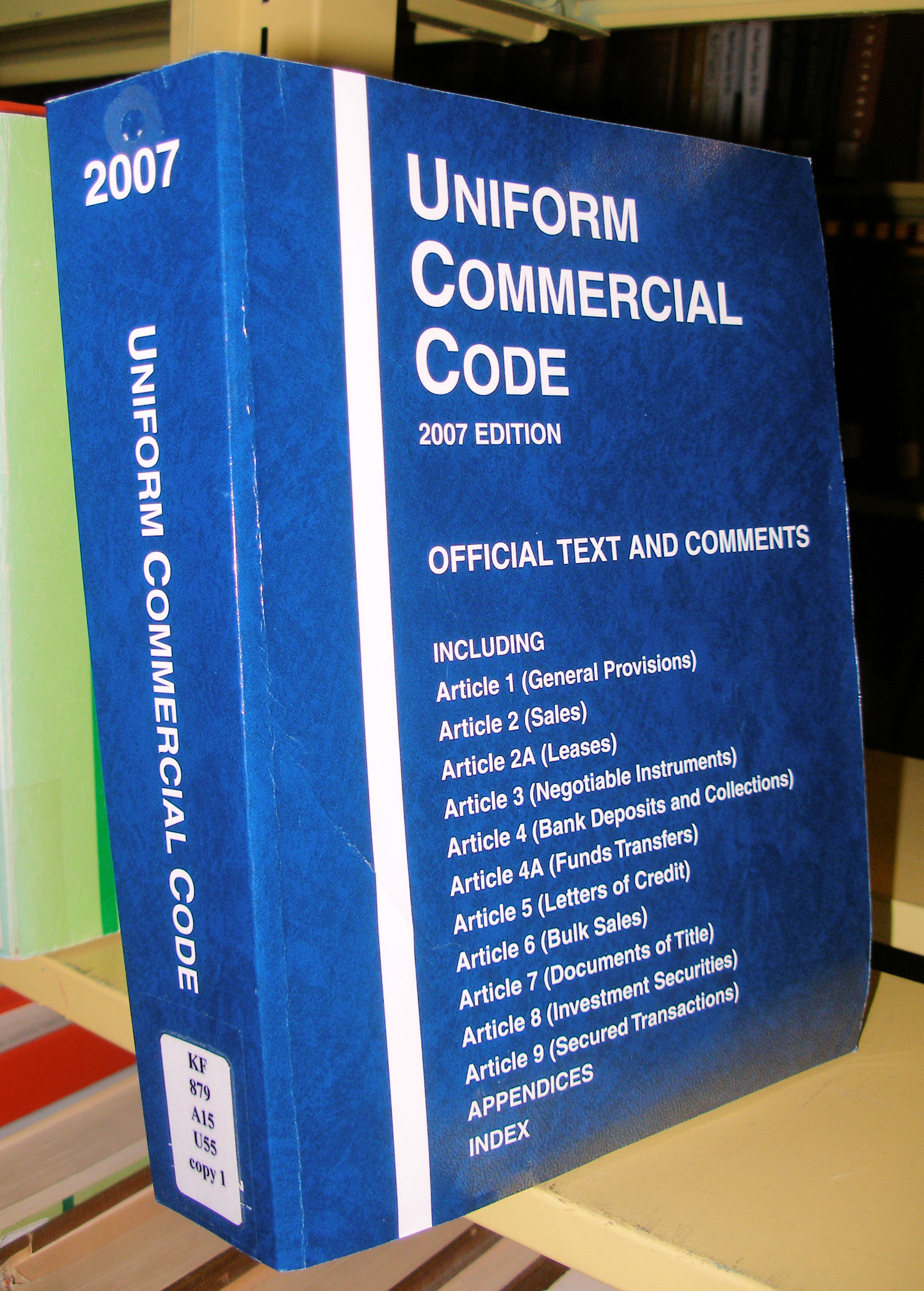
When businesses are sold, a unique danger arises: a business owner could quietly sell off all their inventory, pocket the cash, and vanish, leaving their suppliers and creditors unpaid. To prevent this, the Uniform Commercial Code (UCC) regulates bulk sales to protect the transferor's unsecured creditors.
Bulk Sale: The transfer of more than one-half (50%) of a business's inventory and materials to someone other than a retail customer.
Under the UCC bulk sale rules, the buyer must record and publish a Notice of Intention to Sell at least 12 business days before the bulk transfer occurs. This 12-day window acts as a flare in the night sky, giving creditors time to step forward and stake their claim on the proceeds. Furthermore, in a retail business opportunity sale, the buyer should obtain a certificate of clearance from the State Board of Equalization to ensure all the seller's sales taxes have been paid; otherwise, the buyer might inherit the seller's tax liability.
3. Mobile Homes
Real estate licensees may handle the sale of a mobile home only if the mobile home has been registered and is being sold as a used mobile home.
You cannot act as a retailer for brand-new inventory. A real estate licensee may face disciplinary action for selling a brand-new, unregistered mobile home. Selling a brand-new mobile home requires a specific dealer license from the California Department of Housing and Community Development (HCD).

4. Commercial and Income Properties
Commercial and income property transactions introduce a radically different valuation and due diligence framework compared to residential sales. The property’s value is inherently tied to its income stream, requiring the broker to handle additional complexities such as rent rolls and estoppel certificates.
In California commercial transactions, buyers routinely request tenant estoppel certificates. An estoppel certificate is a signed document from a tenant confirming the exact terms of their existing lease (rent amount, security deposit, expiration date, and whether the landlord is in default). Why does this matter? Because a written lease provided by a seller is meaningless if the seller secretly promised the tenant three months of free rent or a specialized build-out. The estoppel certificate legally binds the tenant to the stated facts, preventing them from claiming different terms after the buyer takes ownership.