Georgia Property Disclosures
Not sure you’re ready?
Take the ~3-minute readiness diagnostic and see where you stand.
When a buyer stands in the foyer of a prospective home, they are evaluating a physical structure, but they are also navigating a complex matrix of unseen risks. In Georgia, the rules governing who bears those risks—and what must be spoken aloud versus what can remain unsaid—hinge on a centuries-old legal doctrine colliding with modern consumer protection laws. As a real estate professional, you are the crucial intermediary in this exchange of information. If you do not intimately understand exactly what you are required to disclose, what you are forbidden to disclose, and where the boundaries of your liability lie, you risk not just your commission, but your license and your livelihood.
To understand Georgia property disclosures, we must begin with the bedrock of the state’s real estate law: Georgia operates as a caveat emptor state for real estate transactions.
Translated from Latin, caveat emptor is a legal principle meaning "buyer beware." In its purest historical form, this doctrine meant that the buyer alone was responsible for assessing the quality of a purchase; if they bought a house with a collapsing roof, it was their own fault for not inspecting it properly. However, modern jurisprudence has recognized that real estate is wildly asymmetric when it comes to information. A seller who has lived in a home for a decade knows its secrets; a buyer walking through for fifteen minutes does not.

Therefore, Georgia has placed necessary guardrails on caveat emptor, specifically by distinguishing between two types of physical flaws: patent defects and latent defects.
Patent vs. Latent Defects
The epistemological boundary of disclosure law rests entirely on what a buyer can reasonably see.
Patent Defect: An obvious property flaw that can be discovered by a reasonable inspection.
Latent Defect: A hidden property flaw that cannot be easily discovered by a reasonable inspection.
A shattered window in the living room is a patent defect. The buyer can see it. Therefore, Georgia sellers do not have a statutory duty to disclose patent defects. The burden rests entirely on the buyer's shoulders to open their eyes during the walkthrough.
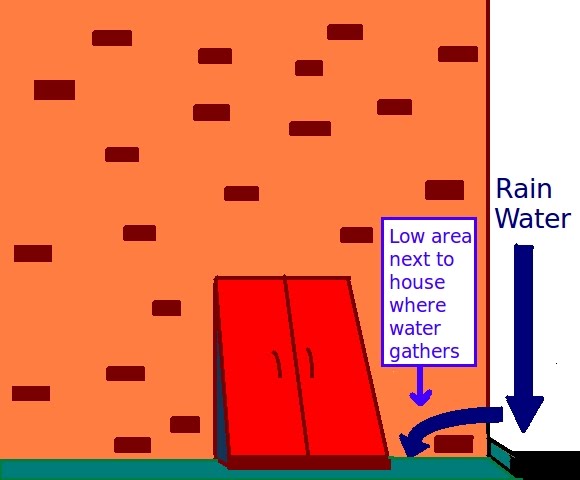
Conversely, consider a foundation that cracks and floods the basement every time it rains heavily, but which the seller has temporarily masked with fresh drywall. The buyer cannot reasonably discover this during a standard sunny-day inspection. Because of this information asymmetry, Georgia law requires property sellers to disclose known latent defects to buyers.
Passive Concealment and Fraud
What happens when a seller simply keeps their mouth shut about that flooding basement? They haven't actively lied, but they haven't disclosed the truth, either.
In Georgia, passive concealment occurs when a Georgia seller or agent remains silent about a known latent defect. Do not mistake silence for safety. The law treats this omission with severe consequences: passive concealment of a latent defect is considered fraud under Georgia law.
Furthermore, if a real estate professional is complicit in this silence, the penalty extends to them. A Georgia real estate broker who intentionally conceals a known latent defect commits fraud.
You might logically assume that, to avoid committing fraud, a seller must fill out a massive government-mandated checklist detailing every flaw in the home. This is a common misconception.
Georgia law does not mandate the use of a formal Seller Property Disclosure Statement.
A seller can legally sell a property in Georgia without ever handing the buyer a standardized disclosure form, provided they still independently disclose any known latent defects. However, standard practice dictates that utilizing a formal disclosure statement is the safest way to ensure all latent defects are communicated.
If a seller decides to use the form, a new obligation arises: A Georgia seller who chooses to complete a Seller Property Disclosure Statement must fill out the form truthfully. You cannot hand a buyer a half-completed or deliberately misleading document and claim caveat emptor.
While the seller is governed by general Georgia statutes and case law regarding fraud, real estate brokers and their affiliated licensees are governed by a highly specific framework. The Brokerage Relationships in Real Estate Transactions Act is commonly known as BRRETA.
Think of BRRETA as the operating system for your real estate license. It strictly defines your duties of disclosure regarding both the physical property and the surrounding area.
Duties Regarding the Property's Physical Condition
As an agent, you traffic in information, not engineering. BRRETA carefully balances what you must tell a buyer against what you cannot possibly be expected to know.
BRRETA requires Georgia real estate brokers to disclose known adverse material facts about a property's physical condition. Specifically, Georgia brokers must disclose known adverse material facts that a buyer could not discover through a reasonably diligent inspection.
Notice the phrasing: known adverse material facts. BRRETA respects the limits of your professional expertise.
- Georgia real estate brokers are not required to independently discover hidden physical defects in a property.
- Georgia real estate brokers are not required to independently inspect properties to find physical defects.
If you are the listing agent, you are not expected to climb onto a three-story roof to check for missing shingles, nor are you expected to rip up floorboards to look for termites. Your duty is to disclose what you already know, not to play amateur home inspector.

The Safe Harbor Provision
Suppose your seller tells you, "The roof is brand new and in perfect condition," and they provide a forged invoice to prove it. You pass this information along to the buyer. Six months later, the roof collapses from severe, pre-existing rot. Are you liable?
No. BRRETA protects a Georgia broker from liability for passing along false information provided by a seller if the broker did not know the information was false. The law requires you to be honest; it does not require you to be omniscient.
Duties Regarding the Neighborhood (The One-Mile Rule)
A property does not exist in a vacuum. Its value is inextricably linked to its immediate environment. Therefore, BRRETA’s disclosure requirements extend beyond the property lines.
BRRETA requires brokers to disclose known material adverse facts pertaining to the physical condition of the neighborhood within a one-mile radius of the property.
If you know a municipal waste processing plant is scheduled to be built a half-mile down the road, and the buyer could not easily discover this through their own reasonable inspection, you must disclose it. The one-mile radius is a hard metric to remember for your exam—it is an absolute boundary of your geographic disclosure obligations regarding physical neighborhood conditions.
We now move from the physical to the psychological. Houses are structures of wood and stone, but they are also homes where human dramas—some tragic, some violent—unfold.
A stigmatized property is a property that buyers or tenants may shun for reasons unrelated to the property's physical condition.
Does a violent history affect the structural integrity of a roof? No. Does it affect a buyer's willingness to pay $500,000 for the house? Absolutely. Because stigmas are psychological, Georgia law treats their disclosure very differently than it treats physical latent defects.
The "Don't Volunteer, Do Answer Truthfully" Rule
When dealing with a property's dark history, Georgia protects the seller's ability to market the property by limiting what the agent must spontaneously reveal.
- Georgia law does not require real estate licensees to volunteer information about a property being the site of a death.
- Georgia law does not require real estate licensees to volunteer information about a property being the site of a homicide.
- Georgia law does not require real estate licensees to volunteer information about a property being the site of a suicide.
- Georgia law does not require real estate licensees to volunteer information about a property being the site of a felony.
If you are hosting an open house at a property where a high-profile felony took place, you are under absolutely no obligation to stand in the kitchen and announce this fact to every prospective buyer who walks through the door.
However, the moment a buyer looks you directly in the eye and asks a specific question, the legal paradigm shifts instantly.
- A Georgia licensee must answer truthfully to the best of the licensee's knowledge if a buyer directly asks whether a death occurred on the property.
- A Georgia licensee must answer truthfully to the best of the licensee's knowledge if a buyer directly asks whether a homicide occurred on the property.
- A Georgia licensee must answer truthfully to the best of the licensee's knowledge if a buyer directly asks whether a suicide occurred on the property.
You cannot lie. You cannot plead ignorance if you know the truth. You must answer truthfully based on your actual knowledge.
Comparison: Physical Defects vs. Property Stigmas
| Aspect | Latent Physical Defects | Stigmatized Events (Death, Crime) |
|---|---|---|
| Must the Agent Volunteer it? | Yes. Failure to do so is passive concealment (fraud). | No. No duty to volunteer psychological stigmas. |
| Must the Agent Answer Truthfully if Asked? | Yes. | Yes. |
| Does it affect physical property utility? | Yes. (e.g., structural failure, water damage) | No. Strictly psychological/emotional impact. |
There is one major exception to the "answer truthfully if asked" rule, and it sits squarely at the intersection of public health, privacy, and civil rights.
Federal and Georgia fair housing laws prohibit disclosing that a prior occupant of a property had HIV or AIDS.
People living with HIV/AIDS are a protected class under the handicap/disability provisions of the Fair Housing Act. Disclosing this information is viewed legally as a discriminatory act that harms the seller/occupant. If a buyer directly asks you, "Did the previous owner die of AIDS?", you cannot confirm it. Your legal duty is to explain that fair housing laws prohibit you from answering any questions regarding the medical history or disabilities of prior occupants.
Furthermore, this protection is broad: Georgia licensees must not disclose if a previous occupant had a disease highly unlikely to be transmitted through property occupancy. A physical structure cannot catch or transmit a non-environmental human disease, and agents are strictly forbidden from entertaining buyer paranoia regarding such matters.
Finally, we address a common, highly charged question buyers often ask: "Are there any dangerous people living nearby?"
Buyers frequently want agents to do the legwork of analyzing neighborhood crime statistics or tracking local sex offenders. As an agent, doing so exposes you to tremendous liability, and thankfully, Georgia law removes this burden from your shoulders.
Georgia brokers are not required to disclose the presence of registered sex offenders in the property's neighborhood.
Because this information is a matter of public record, it falls under the purview of what a buyer can—and must—discover for themselves. Real estate buyers in Georgia are responsible for researching the local sex offender registry themselves. If a buyer asks you to check the registry for them, your professional response should be to provide them with the link to the Georgia Bureau of Investigation (GBI) registry website and advise them to perform their own due diligence.
Mastering Georgia property disclosures requires understanding the precise boundaries of your knowledge and your duty. You are an agent of the transaction. You must aggressively disclose hidden physical dangers (latent defects) and neighborhood physical realities within one mile (BRRETA). You must remain silent about things you are forbidden to discuss (HIV/AIDS and fair housing protections). And you must navigate the psychological gray areas (stigmatized properties) by letting the buyer's direct questions dictate your answers.
Internalize these distinctions, and you will not only pass your licensing exam—you will safeguard your professional integrity in every transaction you touch.