Georgia Trust Accounts, Conduct & Discipline
Not sure you’re ready?
Take the ~3-minute readiness diagnostic and see where you stand.
Imagine a containment vessel in a nuclear reactor. The material inside is highly reactive; if it breaches its designated boundaries and interacts with the external environment, the resulting meltdown is catastrophic. In real estate, the public’s money—earnest money, security deposits, rent payments—is this reactive material. When consumers hand over thousands of dollars, they are transferring their economic stability to a stranger. The Georgia Real Estate Commission (GREC) views this transfer not as a casual business transaction, but as a rigid fiduciary covenant. Understanding the exact mechanics of trust accounts, the absolute boundaries of fair trade practices, and the architecture of GREC disciplinary hearings is about grasping the structural engineering that prevents the real estate market from collapsing into chaos.
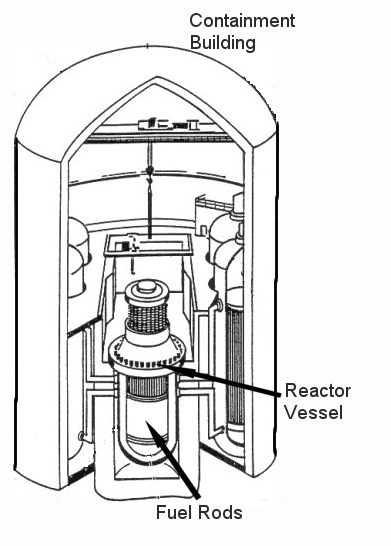
Whenever a Georgia real estate broker accepts trust funds, they must maintain a separate, federally insured trust or escrow account. This account cannot be a general repository; a real estate trust account must be designated specifically for holding funds belonging to others. This designation is critical. If a brokerage goes bankrupt, creditors cannot attach a lien to a properly designated trust account because the money inside legally belongs to the public, not the firm.
To ensure absolute transparency, a broker must notify the Georgia Real Estate Commission within one month of opening a real estate trust account. This notification is not merely a formality. A broker must register the name of the financial institution holding the trust account with the Georgia Real Estate Commission, and simultaneously, a broker must register the trust account number with the Georgia Real Estate Commission.
Because brokerages often manage distinct streams of revenue—like property management deposits versus residential earnest money—a Georgia real estate broker is legally permitted to maintain more than one trust account. There is no statutory limit, provided each account is properly registered and rigorously managed.
The Salesperson's Fiduciary Trajectory
As a salesperson, you do not hold the public’s money. You are a conduit. When you are handed an earnest money check, the clock starts ticking. A real estate salesperson must turn over all received trust funds to the affiliated broker as soon as practically possible.
But what happens when you step out of your role as an agent for others and act as an investor? Suppose you own rental properties. A non-broker real estate licensee may open a separate trust account for properties the non-broker licensee personally owns. However, you are still operating under the ultimate umbrella of your broker's license. Therefore, a non-broker real estate licensee must obtain approval from the holding broker before opening a trust account for personally owned property. Furthermore, to ensure compliance, a non-broker real estate licensee who holds a personal trust account must provide the holding broker with regular accounting reports.
The Physics of Interest-Bearing Accounts
Can trust money generate yield while sitting in escrow? Yes. Georgia real estate trust accounts may be interest-bearing. However, money cannot generate secret profits. Since the principal does not belong to the broker, the natural law of finance dictates that the interest does not automatically belong to the broker either. Before a single cent of interest is generated, all parties to a real estate transaction must give written consent specifying who receives the interest from an interest-bearing trust account.
The most fatal error a licensee can make is breaching the containment vessel. A broker is strictly prohibited from commingling personal or firm operating funds with trust funds. Commingling is the exact moment the public’s money touches the firm's money.
To prevent this from happening by accident, the law permits precisely two exceptions where a broker's own money may sit in a trust account:
- To keep the account alive: A broker may keep personal funds in a trust account solely to maintain minimum balance requirements.
- To cover the friction of commerce: A broker may keep personal funds in a trust account solely to pay bank service charges.
Beyond those strictly limited operational necessities, the firm’s money and the trust money must remain universally distinct.
The Entitlement Threshold Earnest money is potential energy; it has not yet converted into the kinetic energy of a paid commission. Therefore, a broker is not entitled to any portion of earnest money as a commission until the real estate transaction has been consummated (closed). But what if the deal falls apart? Even then, the funds are frozen. A broker is not entitled to any portion of earnest money as a commission until the real estate transaction has been formally terminated and all disbursement agreements are resolved.
GREC does not wait for a crisis to verify compliance. The Georgia Real Estate Commission possesses the authority to audit a broker's trust account at any time. This omnipresent oversight ensures that brokers do not treat trust accounts as short-term, interest-free loans.
If a broker prefers to handle this oversight privately, the Commission offers an alternative: a broker may elect to provide a report from a Certified Public Accountant in lieu of a trust account examination by the Georgia Real Estate Commission.
Furthermore, oversight is an internal mandate as well as an external one. A qualifying broker must notify the Georgia Real Estate Commission of any known license law violation committed by an affiliated licensee. Brokers are the frontline regulators; concealing an agent's malfeasance makes the broker complicit.
In physics, there are laws of thermodynamics that govern what is physically impossible. In Georgia real estate, unfair trade practices are defined and prohibited under O.C.G.A. Section 43-40-25. This statute is the definitive boundary of ethical behavior.
Violating O.C.G.A. 43-40-25 generally falls into three categories of professional manipulation:
1. Financial and Document Malfeasance
Money and paperwork must be handled with absolute fidelity.
- Missing Money: Failing to account for money belonging to others in a real estate transaction is an unfair trade practice.
- Delayed Money: Even if the money is accounted for, dragging your feet is illegal. Failing to promptly remit money belonging to others in a real estate transaction is an unfair trade practice.
- Hidden Yields: Accepting a secret profit in a real estate transaction is an unfair trade practice. Every dollar you earn must be transparent to your client.
- Forgery and Fraud: Falsifying a document involved in a real estate transaction is an unfair trade practice. The integrity of the contract is the integrity of the market.
- Unlicensed Compensation: You cannot circumvent licensing laws by paying a commission to an unlicensed person for performing real estate brokerage acts.
2. Agency and Disclosure Violations
Information asymmetry is dangerous in real estate. Clients make decisions based on the facts you present.

- The Undisclosed Conflict: Acting as an undisclosed dual agent is an unfair trade practice in Georgia. You cannot serve two masters with competing interests (buyer and seller) unless both explicitly know and consent.
- The Hidden Licensee: If you are buying or selling your own home, you possess market knowledge the average consumer lacks. Failing to disclose active status as a real estate licensee when buying or selling personal property is an unfair trade practice.
- The Communication Blockade: You are a messenger, not a gatekeeper. A licensee must promptly present all written offers and counteroffers to the client up until the transaction closes. You do not have the authority to decide a client "won't like" an offer.
- The Saboteur: Inducing a party to break an existing agency agreement for the purpose of substituting a new agreement is an unfair trade practice. You cannot steal another agent's active client by encouraging a breach of contract.
3. Marketing and Fair Housing Manipulations
How you interact with the public square is heavily regulated.
- Phantom Listings: Offering real estate for sale without the knowledge and consent of the owner is an unfair trade practice.
- Trespassing via Signage: Placing a for sale or for rent sign on a property without the written consent of the owner is a prohibited unfair trade practice.
- The Perpetual Trap: Failing to include a fixed expiration date in a real estate listing agreement is an unfair trade practice. Agency relationships cannot be open-ended; the consumer must always have a clear, defined exit.
- Crystal Ball Guarantees: Markets fluctuate. Therefore, guaranteeing future profits from the resale of a real estate property is an unfair trade practice.
- Societal Manipulation: The real estate market must be open to everyone equally. Blockbusting based on protected classes is an unfair trade practice under Georgia license law. (This is the act of inducing panic selling by claiming minorities are moving into a neighborhood). Similarly, steering buyers based on protected classes is an unfair trade practice under Georgia license law. (Directing buyers away from or toward specific neighborhoods based on race, religion, etc.).
When the boundaries of O.C.G.A. Section 43-40-25 are breached, the enforcement mechanism is activated. The Georgia Real Estate Commission investigates formal complaints against licensed brokers and salespersons. Their jurisdiction is broad but strictly tied to the license. For instance, the Georgia Real Estate Commission investigates complaints against approved real estate schools and instructors to ensure the educational pipeline remains pure.
However, they do not possess infinite jurisdiction over the general public. The Georgia Real Estate Commission cannot take disciplinary action against unlicensed individuals acting solely as property owners or builders. If a builder who does not hold a license breaches a contract, that is a matter for the civil courts, not GREC.
The Ignition of an Investigation
Investigations do not require a media scandal to begin. The Georgia Real Estate Commission can initiate a formal investigation based on a sworn written request from the public. Furthermore, they don't even need a public complaint to act: the Georgia Real Estate Commission has the authority to initiate an investigation upon the Commission's own motion.
If the investigators uncover a paper trail of malfeasance, the next step is formal adjudication. The Georgia Real Estate Commission may initiate an administrative hearing if an investigation yields sufficient evidence of a violation.
The Rules of Engagement
A GREC hearing is not a kangaroo court; it is a structured legal proceeding. Disciplinary hearings for Georgia real estate licensees are held in accordance with the Georgia Administrative Procedure Act. This act ensures constitutional due process.
Under these procedures, a real estate licensee has the right to present evidence during a Georgia Real Estate Commission administrative hearing. Furthermore, you are allowed to challenge the accusations against you: a real estate licensee has the right to cross-examine witnesses during a Georgia Real Estate Commission administrative hearing.
If you are found guilty at an administrative hearing, the consequences are severe. Because the license law was passed by the state legislature, a licensee's violation of the Georgia real estate license law is classified as a misdemeanor offense.
It is vital to understand who GREC is designed to protect. GREC exists to protect the public at large from incompetent or unethical licensees, not to act as a debt collector for a specific aggrieved party. Therefore, the Georgia Real Estate Commission does not award punitive damages to parties filing complaints against real estate licensees. Similarly, the Georgia Real Estate Commission does not award monetary restitution to victims of license law violations. If a consumer wants their stolen $10,000 back, they must sue the licensee in civil court. GREC’s job is to pull the dangerous driver off the road, not pay for the dented bumper.
The Spectrum of GREC Discipline
When applying discipline, GREC acts to rectify the licensee's behavior or remove them from the market entirely. They have a vast arsenal of sanctions:
| Disciplinary Action | The Mechanics |
|---|---|
| Fines | The Georgia Real Estate Commission may impose an administrative fine of up to $1,000 per single violation. If you commit multiple offenses, the Georgia Real Estate Commission caps administrative fines at a maximum of $5,000 for multiple violations in a single hearing. |
| Education | If the violation stems from ignorance rather than malice, the Georgia Real Estate Commission can require an offending licensee to complete compulsory real estate education courses. |
| Reprimand | The Georgia Real Estate Commission has the formal authority to reprimand a licensee. This places a permanent public mark on your professional record. |
| License Modification | The Commission controls your right to work. The Georgia Real Estate Commission has the authority to suspend a real estate license temporarily, or the Georgia Real Estate Commission has the authority to revoke a real estate license entirely. |
| Downgrades | If a broker proves incapable of managing a firm but can still function as an agent, the Georgia Real Estate Commission has the authority to downgrade a license from a broker level to a salesperson level. |
| Financial Shackles | For severe trust account violations, the Georgia Real Estate Commission may require a disciplined broker to submit the broker's trust account to third-party auditing at the broker's own expense. |
| Denial | Ultimately, the state holds the keys to the kingdom. The Georgia Real Estate Commission can refuse to grant or renew a real estate license as a form of disciplinary action. |
Your real estate license is not a right; it is a highly conditional privilege granted by the state. The rules governing trust accounts and fair trade practices form the exact conditions of that privilege. Master these mechanics, respect the boundaries of your fiduciary duties, and you will not only pass your exam—you will build a career of unassailable integrity.