Leases, Lease-Purchases, and Rental Agreements
Not sure you’re ready?
Take the ~3-minute readiness diagnostic and see where you stand.
Imagine owning a skyscraper in Manhattan, a sprawling agricultural tract in the Midwest, or a single-family home in the suburbs. In real estate, ownership is not merely a physical state; it is a legal framework—a "bundle of rights." When a property owner decides they do not currently need to occupy their real estate, they can extract one specific right from that bundle—the right of possession—and temporarily trade it for a steady stream of income. This profound mechanism is the lease. It splits the legal atom of property rights, cleanly separating the ultimate ownership of the land from the daily, physical use of it.
To understand a lease, you must view it through two distinct legal lenses simultaneously. A lease is both a contract and a conveyance of an interest in real estate. As a contract, it binds two parties to a set of mutual promises. As a conveyance, it actively transfers a portion of the owner's legal rights to another person.
The cast of characters in this transaction is fundamental:
- The lessor is the property owner or landlord who grants the lease to a tenant.
- The lessee is the tenant who receives the right to occupy the property from the landlord.
When these two parties execute a lease, a legal transfer occurs. A lease transfers the right of exclusive possession and use of the property to the tenant for a specified period. During this time, the tenant’s right to possess the space is paramount—even over the landlord.
However, this transfer is strictly temporary. The lessor retains a reversionary right to possess the property after the lease term expires. Like a boomerang, the right of possession inevitably flies back to the owner. Because transferring an interest in real estate is a serious matter, the law requires a paper trail for extended agreements: the Statute of Frauds requires leases longer than one year to be in writing to be legally enforceable.

When the lessor hands over the keys, two vital, unwritten guarantees automatically accompany them, serving to protect the lessee's temporary dominion.
First is the protection against interference. The covenant of quiet enjoyment is an implied lease term guaranteeing the tenant will not be evicted or disturbed by the landlord. "Quiet" does not mean a literal absence of noise; rather, it means undisturbed, legally secure possession. A landlord cannot lease you a storefront and then continuously enter the premises to disrupt your business.
Second is the protection of basic living conditions. The implied warranty of habitability requires landlords to keep residential properties in safe and livable conditions. The lessor must ensure the roof does not collapse, the water runs, and the heating functions. If the space is meant for human dwelling, it must remain fundamentally fit for that purpose.
When the conveyance takes place, the tenant receives a leasehold estate, which is defined as a tenant's legal right to occupy real estate during the term of a lease.
The law classifies leasehold estates based entirely on how they measure time. Understanding these four categories is vital for mastering lease mechanics:
| Estate Type | Defining Characteristics | Termination Mechanics |
|---|---|---|
| Estate for Years | A leasehold estate that continues for a definite and specified period of time. (Note: It can be for days, months, or years, as long as there is an exact end date). | Automatically terminates at the end of the specified period without requiring advance notice. |
| Estate from Period to Period | A leasehold estate that automatically renews for indefinite periods until terminated by proper notice. (This is your standard month-to-month lease). | Requires advance notice from either party to terminate. |
| Estate at Will | Gives the tenant the right to possess property with the landlord's consent for an unspecified term. | Terminates upon proper notice, or terminates automatically upon the death of either the landlord or the tenant. |
| Estate at Sufferance | Occurs when a tenant remains in possession of the property without the landlord's consent after the lease expires. | The landlord can either evict or accept rent to create a new periodic estate. |
Note on Sufferance: A tenant residing in a property under an estate at sufferance is known as a holdover tenant. They are "suffered" (endured) by the landlord until legal action is taken.
If the leasehold estate dictates time, the type of lease dictates money and the allocation of financial risk. Commercial, residential, and industrial properties each demand distinct financial structures.
Standard Risk Allocations
- Gross Lease: The standard for residential apartments. A gross lease requires the tenant to pay a fixed base rent amount. In return, the landlord pays all property charges including property taxes, insurance, and maintenance. The landlord assumes the risk of rising property taxes or sudden roof repairs.
- Net Lease: The inverse of the gross lease, shifting the burden to the tenant. A net lease requires the tenant to pay rent plus some or all of the property operating expenses.
- Triple Net Lease (NNN): The ultimate expression of a net lease. A triple net lease requires the tenant to pay rent alongside property taxes, building insurance, and maintenance costs. Because the tenant shoulders the financial unpredictability of the building, net leases are most commonly used for commercial and industrial real estate properties.
Revenue-Driven and Inflation-Adjusted Leases
- Percentage Lease: Requires the tenant to pay a base rent plus a percentage of the gross business income generated on the premises. Because foot traffic is vital to retail success, percentage leases are most commonly utilized for retail business tenants in shopping centers. If the mall thrives, both the tenant and the landlord profit.
- Graduated Lease: Specifies predetermined rent increases at set future dates. (e.g., Year 1: $2,000/month; Year 2: $2,200/month).
- Index Lease: Allows rent changes based on fluctuations in a specific economic indicator like the Consumer Price Index. This acts as an automated hedge against inflation.

Specialized Property Leases
- Ground Lease: A long-term lease of unimproved land where the tenant typically constructs a building. If you see a fast-food franchise on a prime corner, they likely don't own the dirt beneath it. Because the tenant is investing heavy capital into the building, ground leases typically run for very long terms ranging from fifty to ninety-nine years.
- Proprietary Lease: Grants occupancy rights to a shareholder in a cooperative housing corporation. You do not own the real estate directly; you own shares in the corporation, and the proprietary lease provides your right to occupy your specific unit.
- Oil and Gas Lease: Allows an extraction company to explore for and remove subsurface minerals from a property.

Sometimes a lease is not just a mechanism for temporary possession, but a bridge to permanent ownership. Real estate professionals frequently structure these transitions using three distinct legal tools.
A lease-purchase agreement combines a standard rental lease with a contract to purchase the property. This is a finalized deal waiting for a clock to run out. In a lease-purchase agreement, both parties are legally bound to complete the property sale at the end of the lease term. Because it is a binding contract from day one, a lease-purchase agreement specifies the exact final purchase price at the time the initial lease is signed. To facilitate this, the agreement often applies a designated portion of the monthly rent toward the final purchase price.
Conversely, a tenant may want the opportunity to buy, without the rigid legal commitment. A lease with an option to buy gives the tenant the right to purchase the property at a predetermined price. The critical difference? In a lease with an option to buy, the tenant is not legally obligated to purchase the property. They hold the power of choice.
Finally, a right of first refusal gives a tenant the opportunity to match a third-party offer before the landlord sells the leased property. The tenant does not lock in a price upfront; they simply get to stand at the front of the line if the owner decides to sell.
When a tenant needs to vacate before the lease expires, they have two primary methods for transferring their leasehold estate. The difference lies in how much of their interest they transfer, and who remains on the hook for the rent.
- Assignment: An assignment of a lease transfers all remaining leasehold interests from the original tenant to a new tenant. The new tenant essentially steps fully into the shoes of the original tenant.
- Sublease: A sublease transfers only a portion of the remaining leasehold interest from the original tenant to a new tenant. The original tenant might sublease a single bedroom, or sublet the whole space for only the summer months.
The Sandwich Lease: In a sublease, the original tenant remains primarily liable for the rent payments to the landlord. The subtenant pays the original tenant, who in turn pays the landlord. Because of this middle-man position, a sublease creates a sandwich lease where the original tenant acts as both a lessee to the landlord and a lessor to the subtenant.
The natural lifecycle of most leases ends cleanly: A lease contract is discharged when the agreed-upon lease term expires. If both parties wish to part ways before that date, they can do so voluntarily. Mutual agreement to terminate a lease before its legal expiration date is called a surrender.
Interestingly, lease contracts are highly resilient and generally survive major changes in property ownership. The sale of a leased property to a new owner does not terminate an existing lease. Instead, the new owner of a leased property must honor the existing lease terms established by the previous owner. The tenant simply writes their rent check to a new name. Similarly, the death of the landlord does not terminate an estate for years or an estate from period to period. The landlord's heirs inherit the property, subject to the active leases.
When the Contract Breaks: Eviction
When the foundational promises of the lease are broken, the legal remedy is eviction. Eviction comes in two forms, depending on who committed the breach.
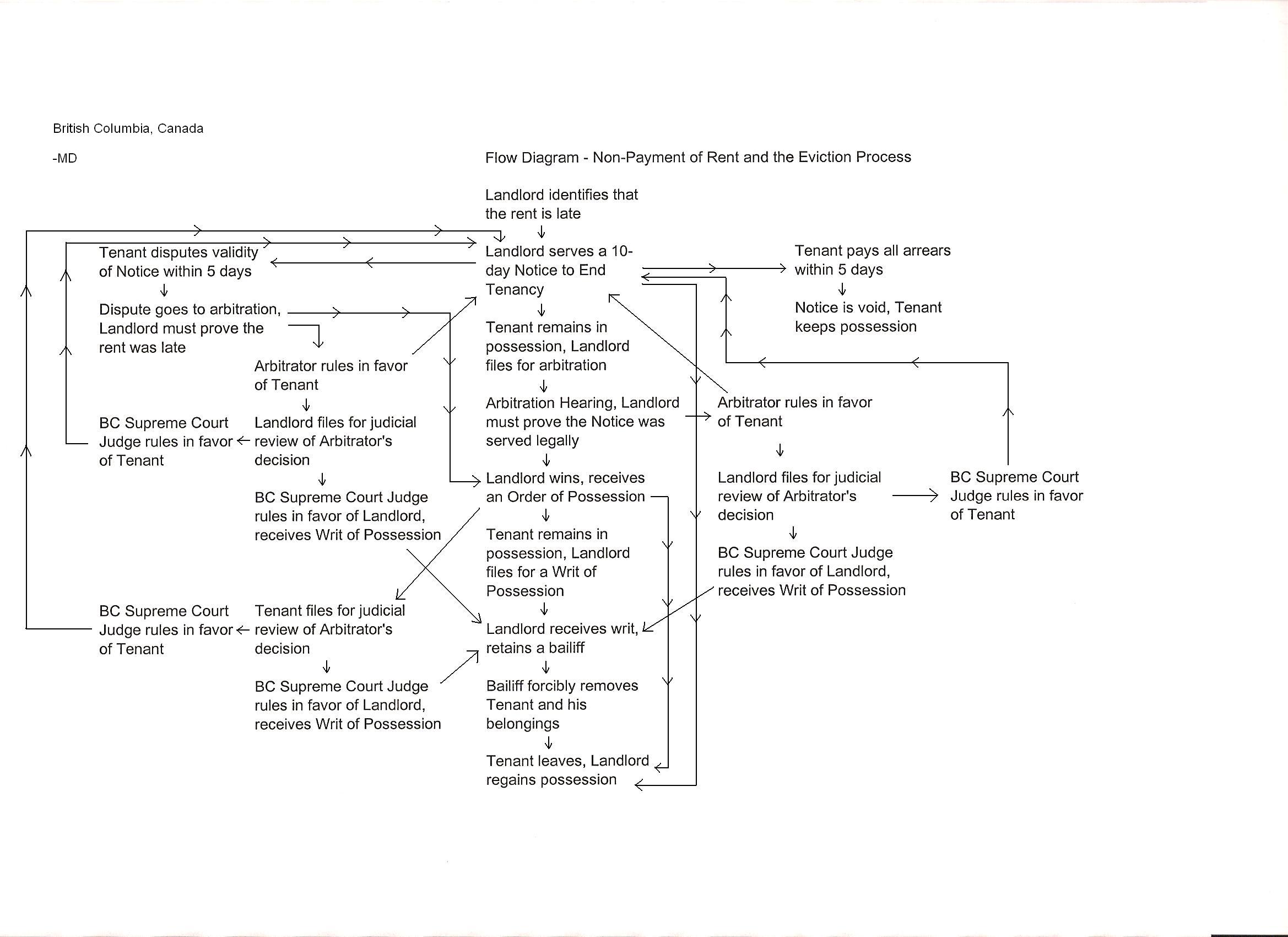
If the tenant breaches the lease—such as failing to pay rent or destroying the property—the landlord must use the judicial system. Actual eviction is the legal process used by a landlord to remove a tenant who has breached the lease terms. A landlord cannot engage in self-help; they cannot change the locks or shut off the water. Instead, a landlord must file a suit for possession in court to initiate an actual eviction against a non-compliant tenant.
If, however, the landlord commits the breach by failing to uphold the implied warranty of habitability, the tenant gains a powerful legal remedy. Constructive eviction occurs when a landlord's negligence makes the leased premises completely uninhabitable. For example, if a landlord refuses to fix a shattered roof in the dead of winter, the tenant is constructively evicted. This severe breach allows the tenant to abandon the property and terminate the lease without financial penalty. The tenant is freed from their contractual obligations because the landlord failed to provide the very essence of the conveyance: a usable space.