MA Environmental Issues: Lead Paint, Title 5 & Safety Disclosures
Not sure you’re ready?
Take the ~3-minute readiness diagnostic and see where you stand.
Consider a property not merely as a structure of wood and stone, but as a living node within a broader environmental and legal ecosystem. Every time real estate changes hands in Massachusetts, the transaction acts as a regulatory checkpoint. The state uses the moment of sale to enforce public health and environmental standards that might otherwise go completely unchecked in private hands. As a real estate salesperson, you are the navigator of this checkpoint. If you misunderstand the strict liabilities of lead paint, the underground mechanics of a Title 5 septic inspection, or the jurisdictional boundaries of a wetland, you expose your clients to catastrophic financial liability and yourself to severe legal penalties. Mastering these environmental disclosures is not about memorizing a regulatory checklist; it is about understanding the geometry of risk in a transaction.
The Massachusetts Lead Paint Law was engineered with a singular, uncompromising goal: it protects children from lead poisoning and encourages disclosure in real estate transactions. Lead disrupts neurological development in young children, and the law places the burden of preventing this entirely on property owners.
This law applies strictly to residential properties built before 1978, the year the federal government banned consumer lead paint.

The Mechanics of Liability and Deleading
The state does not care if an owner meant well or was unaware of the hazard. Under the law, property owners are strictly liable for lead injuries to children under six resulting from non-compliance. Strict liability means injured families do not need to prove negligence to hold a property owner liable for lead paint injuries. If the lead is there, and the child is injured, the owner is responsible.
Because of this severe liability, Massachusetts law mandates the deleading or interim control of lead hazards in any residence where a child under six lives.
What exactly must be deleaded? Owners deleading a home must remove or encapsulate dangerous lead levels on accessible surfaces up to five feet high (the physical reach of a small child). However, friction surfaces like doors and stair treads cannot be encapsulated and must be fully deleaded. Think of the physics: a door rubbing against a frame acts like a grinding stone, turning lead paint into microscopic, easily ingested dust. Paint over it, and the friction will just grind through the new layer. It must be entirely removed or replaced.

If a property owner cannot afford or complete full deleading immediately, they can utilize interim lead control, a temporary status that allows property owners up to two years to achieve full deleading compliance while keeping the premises safe in the short term.
Property owners must act quickly. The law dictates that property owners have exactly 90 days to comply with deleading requirements after acquiring a property with a resident child under six, or 90 days after a new child under six moves into the property.
Disclosure Over Eradication in Sales
A common misconception among buyers is that sellers must "fix" lead paint before a transaction. This is false. Sellers are not legally required to delead a property prior to a private sale. Instead, sellers of pre-1978 properties are only mandated to provide lead paint disclosures to buyers.
State law requires providing a Property Transfer Lead Paint Notification form to prospective purchasers of pre-1978 homes. The timing here is absolute: The buyer must sign the Property Transfer Lead Paint Notification form before signing a Purchase and Sale Agreement.
Once disclosed, a buyer receives a 10-day window to conduct a lead paint inspection before becoming bound by a Purchase and Sale agreement.
- A buyer may mutually agree with the seller to extend the standard 10-day lead paint inspection window.
- Conversely, buyers possess the right to waive the lead paint inspection entirely.
- If they waive it, a buyer's waiver of the right to a lead paint inspection must be formally documented in writing.
Exemptions and Fair Housing Traps
Vacation rentals lasting 31 days or less are exempt from full deleading requirements, provided no paint is chipping or peeling. However, disclosure is still required; tenants of short-term vacation rentals must receive a Short-Term Vacation Rental Notification regarding lead paint.
You might think a landlord or seller could avoid this entire headache by simply refusing to rent or sell to families with small children. Do not let your clients do this. Refusing to sell or rent to families with children to avoid deleading obligations violates the Massachusetts Fair Housing Law (MGL c.151B).
Licensee Penalties
Real estate agents who fail to comply with lead disclosure requirements face civil penalties under state law up to $1,000. Worse, non-compliance with lead paint disclosures exposes real estate licensees to triple damages under Massachusetts Chapter 93A (the Consumer Protection Act), which regulates unfair and deceptive business practices.
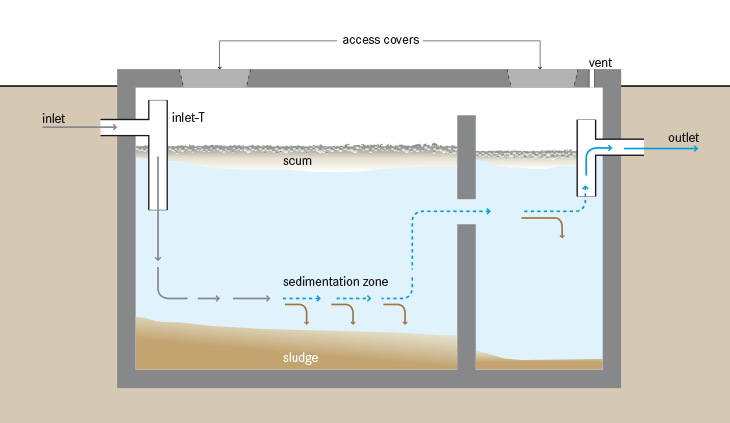
Municipal sewer systems are centrally managed, but out in the suburbs and rural areas, homes rely on private subsurface sewage disposal systems (septic systems). Title 5 of the Massachusetts Environmental Code regulates the inspection and operation of these systems.
Because septic failures can contaminate local groundwater, a Title 5 inspection of a private septic system must occur before the transfer of real estate to new owners.
The Inspection and Negotiation Mechanics
The seller is generally obligated to arrange the Title 5 inspection and provide the buyer with the inspection report. However, if the system fails, Title 5 regulations do not legally force the seller to pay for the repair of a failed septic system.
Instead, the financial responsibility for repairing a failed septic system is negotiated between the buyer and the seller. Often, sellers will credit the buyer the cost of a new system at closing, because failed septic systems must be repaired or upgraded within two years of the Title 5 inspection date. If the sale goes through without the seller fixing it, the legal responsibility to upgrade a failed septic system transfers to the buyer.
Not all systems immediately pass or fail:
- Conditional Pass: A conditional pass on a Title 5 report means the septic system requires localized repairs rather than a full replacement (e.g., replacing a broken baffle or distribution box).
- Cesspools: While largely obsolete, cesspools can pass a Title 5 inspection if functioning properly and meeting specific criteria (though they must be upgraded if they ever fail or if the home is expanded).
Timelines and Validity
| Title 5 Scenario | Timeline / Validity |
|---|---|
| Standard Validity | A standard Title 5 septic inspection remains valid for two years before the sale or transfer of the property. |
| Pumped System Validity | A Title 5 inspection remains valid for three years if the system has documented annual pumping service. |
| Weather Delays | If the ground is frozen solid in winter, weather-delayed Title 5 inspections must be completed within six months after the property transfer. |
| Failure Repair | Must be repaired or upgraded within two years of the inspection date. |
Exemptions to Title 5
The state recognizes that keeping real estate within a close family does not require the same regulatory trigger as a market sale. Therefore, the following real estate transfers are exempt from the Title 5 septic inspection requirement:
- Transfers between current spouses.
- Transfers between parents and children.
- Transfers between full siblings.
- Transfers into a trust where the beneficiary has a first-degree relationship to the grantor.
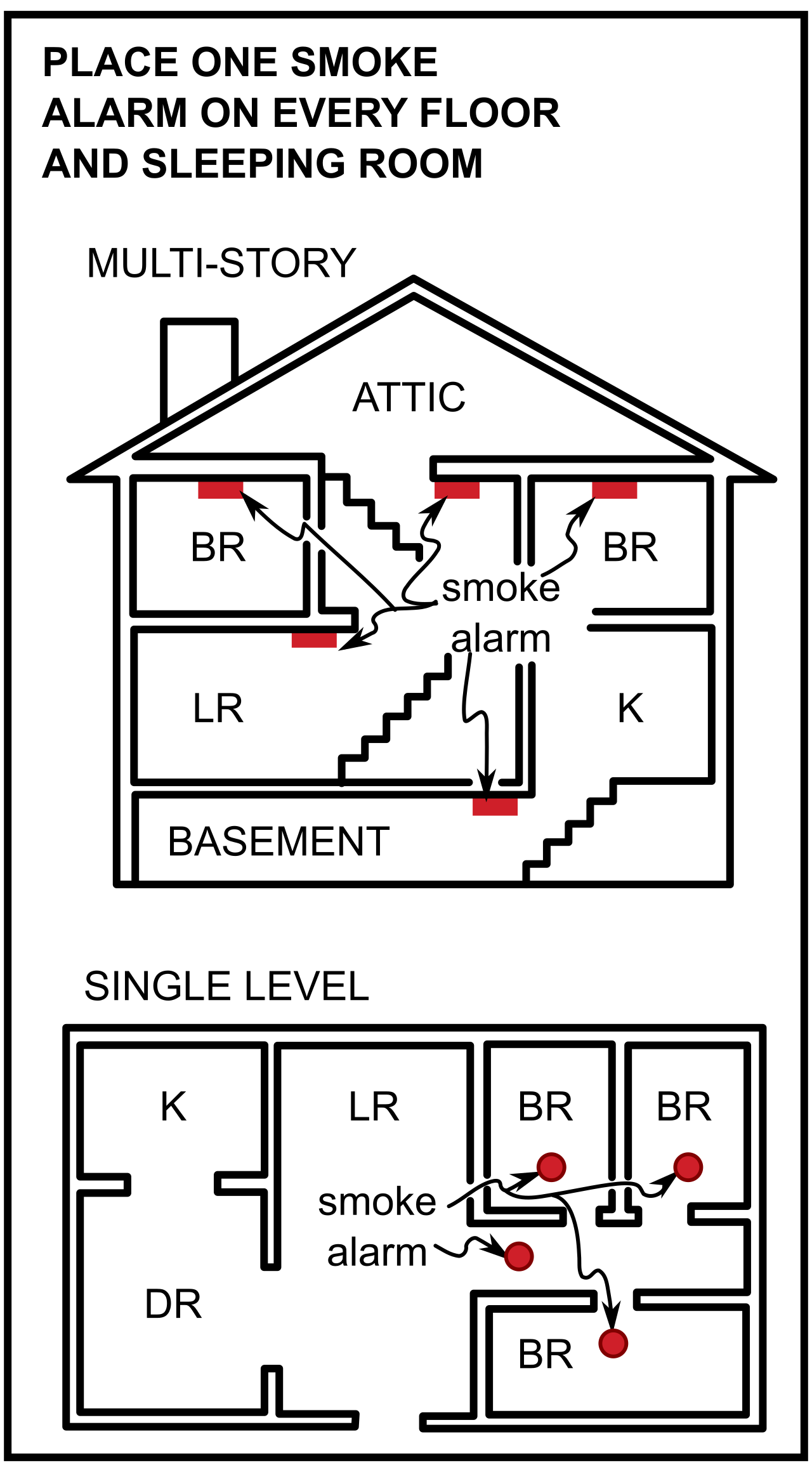
Fire safety in Massachusetts real estate transfers is governed primarily by Massachusetts General Law Chapter 148 Section 26F, which requires smoke detector certificates upon the sale of residential properties.
Before handing over the keys, sellers must install approved smoke and carbon monoxide alarms before selling or transferring a residential property. The local municipal fire department conducts inspections and issues the Certificate of Compliance for smoke and carbon monoxide alarms. Sellers must obtain this Certificate of Compliance prior to the real estate closing.
The Building Code Divide: 1975
Smoke alarm requirements vary based on the year the residence was constructed or substantially renovated. The Massachusetts State Building Code was created on January 1, 1975. Therefore, homes permitted before January 1, 1975 follow different smoke alarm guidelines (often allowing battery-operated alarms in certain locations) than homes built or modified after that date (which generally require hardwired, interconnected systems).
Furthermore, the state dictates the type of alarm used. Photoelectric smoke alarms are generally favored over ionization alarms because photoelectric alarms detect smoldering fires better (and are less prone to nuisance alarms from cooking, which often leads homeowners to dangerously disable them).

Carbon Monoxide (CO) Requirements
Carbon monoxide is a colorless, odorless gas produced by incomplete combustion. Recognizing this silent threat, carbon monoxide alarms have been mandatory in applicable Massachusetts residences since March 31, 2006.
CO alarms are legally required in residences if they meet either of two conditions:
- The residence features fossil-fuel burning equipment (e.g., oil furnaces, gas water heaters, wood stoves).
- The residence has an attached enclosed garage (where car exhaust could seep into the home).
Placement Rules for CO Alarms:
- They must be located on every habitable level of the residence.
- They must be installed in finished basements.
- Critically, a carbon monoxide detector must be installed within ten feet of every bedroom door.
Land is not a blank canvas. It interacts with the local hydrology. The Massachusetts Wetlands Protection Act (codified at Massachusetts General Laws Chapter 131, Section 40) regulates any activity that alters, dredges, or fills wetlands or wetland buffer zones.
At the municipal level, the local Conservation Commission administers the Wetlands Protection Act at the town or city level.
Navigating Development Near Water
If a property owner wants to build, landscape, or alter land near a wetland, they cannot simply break ground. Property owners must file a Notice of Intent with the Conservation Commission before conducting work in a wetland or buffer zone. If the project is approved, the Conservation Commission issues an Order of Conditions detailing how permitted work must be performed to protect wetland areas.
To ensure construction runoff and human activity don't suffocate these ecosystems, the Wetlands Protection Act establishes a 100-foot buffer zone around protected inland and coastal wetlands.
Furthermore, the Massachusetts Rivers Protection Act extends wetland protections to areas alongside year-round rivers and streams. This Act establishes a 200-foot buffer zone around perennial rivers and streams. This expanded 200-foot buffer zone established by the Rivers Protection Act is legally referred to as the riverfront area.

Municipal Power and Licensee Duties
State law is only the baseline. Local municipalities hold the authority to enact wetland bylaws that impose stricter regulations than the state laws. For instance, municipal wetland bylaws can establish strict "no build" zones that exceed the state baseline buffer zone requirements.
Because these restrictions severely limit what an owner can do with their land, real estate licensees must advise buyers to investigate potential wetland restrictions before purchasing land for development. Failing to point out a visible wetland to a buyer who explicitly wants to build an addition is a fast track to a lawsuit.
Finally, do not underestimate the strictness of the Conservation Commission. Activities like dumping grass clippings or cutting trees within a wetland buffer zone violate the Wetlands Protection Act. If a buyer assumes they can just chop down a few trees in the buffer zone to improve their river view, warn them: the Conservation Commission possesses the authority to mandate the restoration of illegally altered wetland areas to their original state, an incredibly expensive penalty for the property owner.