MI Licensing Requirements, Renewal & Education
Not sure you’re ready?
Take the ~3-minute readiness diagnostic and see where you stand.
The regulation of real estate transactions in Michigan is an exercise in managing asymmetry—specifically, the asymmetry of information, financial leverage, and legal understanding between property owners and the professionals they hire. When a citizen entrusts their largest financial asset to an agent, the state demands a structural guarantee of competence and accountability. In Michigan, the Department of Licensing and Regulatory Affairs (LARA) acts as the architect and enforcer of this guarantee, administering the Occupational Code Article 25.

To master the Michigan PSI exam, you must not merely memorize Article 25; you must understand the underlying physics of how it governs agency, liability, and consumer protection.
The fundamental rule of real estate licensure in Michigan is straightforward: performing real estate activities for another person for a fee requires an active real estate license.
If you strip away the complexity, the state is looking for two triggering elements: action on behalf of another, and expectation of compensation. If both exist, LARA requires a license. Specifically, you must hold a license if you are:
- Negotiating the sale of real property for compensation.
- Negotiating the lease of real property for compensation.
- Managing property for a fee on behalf of another individual.
Because the state aggressively protects the public from unlicensed brokering, the line is drawn firmly at the very inception of a transaction. Consequently, a Michigan real estate licensee cannot pay a finder's fee or commission to an unlicensed individual for a real estate lead. You cannot circumvent the licensing law by paying someone merely to "point" a client in your direction.
The Exemptions: Logic in the Carve-Outs
Why does the state exempt certain people from licensure? The exemptions exist where the public is already protected by other legal frameworks, or where the individual is acting on their own behalf (removing the fiduciary risk).
| Exemption Category | Who is Exempt? | Why They Are Exempt |
|---|---|---|
| Personal Interest | An individual selling or leasing their own personally owned real estate. | You cannot owe a fiduciary duty to yourself. The state allows you to dispose of your own property. |
| The Builder Carve-Out | A licensed builder selling a one-to-four family residential structure they built. | The builder is already regulated by the state under a different licensure, and they are selling their own product. |
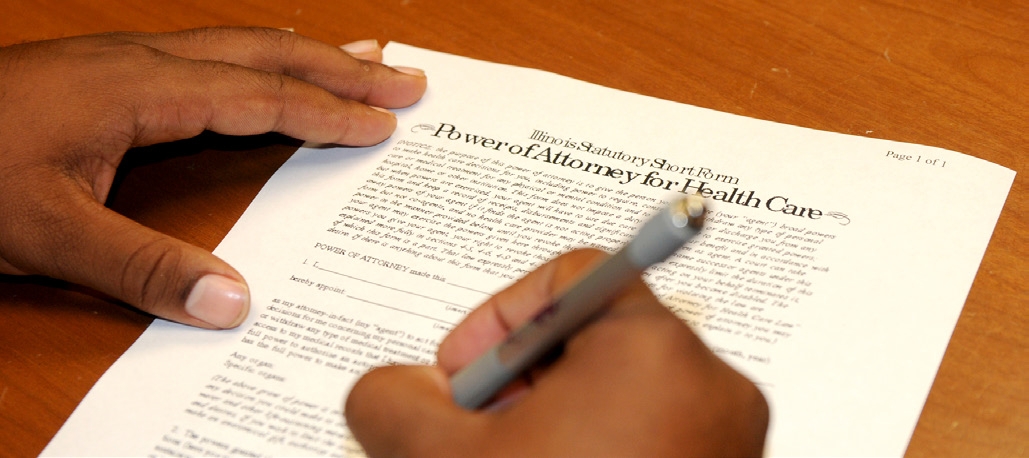
| Legal & Fiduciary | An attorney-at-law performing legal duties, or an attorney-in-fact acting under a duly executed power of attorney to consummate a specific transaction. | Attorneys are regulated by the Bar. An attorney-in-fact is bound by the strict legal boundaries of the Power of Attorney. |
| Court-Appointed | An individual acting as a receiver or trustee in a bankruptcy proceeding, or an executor acting under a court order to manage an estate. | These individuals are under direct judicial supervision. The court protects the consumer. |
| The Tenant Referral | An existing tenant of a rental property receiving a referral fee of one-half month's rent or less. | A pragmatic exception. Offering a tenant a small credit (up to 1/2 month's rent) for referring a neighbor is treated as a routine property management promotion, not an unlicensed real estate practice. |
To enter the profession, the state requires proof of baseline maturity, integrity, and foundational knowledge.
An applicant for a Michigan real estate salesperson license must be at least 18 years of age and of good moral character (a legal standard meaning the applicant operates with honesty, fairness, and respect for the rights of others).
Before you can sit for the PSI exam, you must complete 40 clock hours of approved pre-licensing education. Michigan places a heavy, specific emphasis on historical injustices in housing.
The Civil Rights Mandate: Within your 40 hours of pre-licensing education, exactly 4 hours must be dedicated to instruction on civil rights law and equal opportunity in housing. This ensures every agent understands the Elliott-Larsen Civil Rights Act and the federal Fair Housing Act.
Once your education is complete, the clock starts ticking. A candidate must pass the Michigan real estate salesperson exam administered by PSI, and critically, must apply for their license within 36 months of completing the 40-hour pre-licensing course. If you wait three years and a day, your educational credit evaporates.
Think of the Michigan real estate industry as a solar system. The employing broker is the sun; the salespersons are the planets in orbit. A planet cannot exist in this system without the gravitational pull of the sun.
A Michigan real estate salesperson must be sponsored by a licensed employing broker to practice real estate. You cannot exist in a vacuum. Consequently, a salesperson cannot operate a real estate practice independently, and is legally prohibited from managing their own real estate firm.

Custody of the License
Because the broker is legally responsible for your actions, the state requires the broker to hold your leash. A Michigan real estate salesperson's license is issued directly to the employing broker, not mailed to the agent's home. The employing broker retains custody and control of the salesperson's license for the duration of the employment.
While the broker holds the actual license wall certificate, the agent needs proof of authority in the field. Therefore, a Michigan real estate licensee must carry a state-issued pocket identification card while conducting real estate activities. If a buyer asks, "Are you licensed?" you must be able to produce this card on the spot.
Compensation and Agency Exclusivity
Because you are an extension of your employing broker, you may only accept compensation from your current employing broker. A title company, a seller, or another brokerage cannot hand you a check directly at closing.
Furthermore, representing a real estate broker other than your employing broker without express consent is a direct violation of Michigan law. You are a single-agent asset of your broker.
The Domino Effect and Branch Offices
If a brokerage expands and operates out of more than one location, each secondary location must possess a branch office license. The regulatory oversight must blanket every physical desk.
This hierarchy means that if the head is cut off, the body dies. If a Michigan employing broker's license is suspended or revoked, the licenses of all affiliated salespersons are automatically suspended. Your ability to practice is inextricably tied to your broker's good standing.
What happens when an agent leaves a broker, either voluntarily or involuntarily? The state demands a strict chain of custody to prevent "rogue" agents from practicing without supervision, while also preventing vindictive brokers from holding an agent's career hostage.
When a salesperson terminates employment:
- The Return: The employing broker must return the salesperson's license to LARA.
- The 5-Day Rule: The former broker has exactly 5 days to deliver or send the terminated salesperson's license to the state by certified mail. (Certified mail provides the tracking proof that the broker complied).
- The Notification: The former broker must notify the terminated salesperson in writing that the license was returned to the state.
The Void: From the moment your termination date hits, you enter a regulatory void. A real estate salesperson cannot perform any licensed activities after their termination date until their license is successfully transferred to a new broker.
To escape the void and resume practicing, your new employing broker must submit a license transfer application to LARA on your behalf.
Michigan real estate licenses do not last forever. They are valid for a three-year cycle.
All Michigan real estate licenses expire on October 31 of the expiration year. LARA aligns everyone to the same Halloween deadline to simplify regulation.

The 60-Day Grace Period
If you fail to renew by October 31, your license expires. However, Michigan offers a safety net: a 60-day grace period from November 1 to December 31 to renew an expired license by paying an additional late fee.
Here is the critical distinction for the PSI exam: Grace period for renewal does not mean grace period for practicing. A Michigan real estate agent is prohibited from practicing real estate under an expired license during the 60-day late renewal grace period. You can pay the fee to save your license, but you cannot negotiate a contract on November 15th.
If you miss the December 31 deadline and the license remains expired for more than 60 days, the simple renewal window closes. The individual must now formally apply for relicensure to reactivate the license, a more arduous process.
The real estate market evolves, laws change, and systemic biases require constant vigilance. Therefore, a Michigan real estate licensee must complete 18 total hours of continuing education per three-year license cycle.
LARA does not let you cram all 18 hours into the last week of your third year. They force you to stay current annually.
The Annual Minimums:
- You must complete two hours of legal update continuing education courses each calendar year.
- You must complete one hour of fair housing continuing education each calendar year.
If you do this for three years (3 hours × 3 years), you accumulate 9 mandatory hours. To reach the required 18, you must complete nine hours of elective continuing education courses during the three-year license cycle.
CE Rules of Engagement:
- The Deadline: Continuing education hours must be completed by October 31 of each year to meet the Michigan annual requirement.
- No Echo Chamber: To ensure broad learning, a Michigan real estate licensee cannot receive credit for taking the exact same continuing education course more than once in a single renewal cycle.
By structuring the law this way, Michigan ensures that the agent who represents the public tomorrow is just as educated, supervised, and accountable as the day they first passed the exam. Mastery of these rules isn't just about passing the PSI—it's about understanding the legal guardrails that keep your future career safe.