MI Statutory Requirements Governing Licensees
Not sure you’re ready?
Take the ~3-minute readiness diagnostic and see where you stand.
Imagine stepping into a laboratory where the primary elements are not hydrogen and carbon, but human shelter, vast sums of capital, and profound legal liability. In Michigan real estate, an entry-level Salesperson license grants you the authority to orchestrate transactions that dictate the financial trajectories of families and businesses. Yet, this authority is tightly bound by the Michigan Occupational Code (Article 25) and its General Rules. These statutes form the governing physics of the profession. They ensure that every drop of capital is tracked, every allegiance is documented, and the asymmetry of information between the real estate professional and the consumer is meticulously balanced.

In real estate, advertising is the mechanism by which you broadcast your services to the market. But to the State of Michigan, an advertisement is a declaration of accountability. Consumers must always know exactly which legal entity is responsible for the transaction.
Because a salesperson must be sponsored by an employing broker, the broker is the ultimate authority. Therefore, a real estate salesperson cannot advertise real estate solely under the salesperson's own name. The consumer isn't technically hiring you; they are hiring your broker.
To maintain this chain of accountability, Michigan enforces strict advertising parameters:
- Broker Identification: All real estate advertising in Michigan, including internet advertising, must clearly identify the employing broker's business name.
- Prominence: In any advertisement, the employing broker's name must be displayed at least as prominently as the salesperson's name. You cannot hide the broker's name in microscopic font at the bottom of a billboard.
- Contact Protocols: All advertising must include either the employing broker's telephone number or street address.
Crucial Definition: A blind ad is an illegal real estate advertisement that fails to identify the employing broker's business name. It obscures the accountable party and is strictly prohibited.

Furthermore, you cannot simply advertise any property you wish. A real estate licensee must obtain the written consent of a property owner before advertising a specific property for sale.
Promotions, Games, and Inducements
Real estate marketing often employs creative incentives, but Michigan draws a hard line based on whether an incentive relies on chance and what exactly is being promoted.
- Specific Properties: A Michigan real estate licensee shall not use a plan involving a lottery, contest, game, prize, or drawing for the direct promotion of a specific piece of real estate. You cannot raffle off a house, nor can you offer a lottery ticket to anyone who tours 123 Main Street.
- General Promotion: You may use a game promotion or drawing for general business promotion, provided it does not directly promote a specific property. (e.g., "Drop your business card at my booth to win a TV!").
- Gifts without Chance: A licensee is legally permitted to offer a premium or gift to a client, provided the gift does not involve a game of chance. Giving a guaranteed $50 gift card to anyone who lists with you is perfectly legal.

Compensation is the lifeblood of the industry, but the state heavily regulates its flow to prevent unlicensed individuals from practicing real estate.
As a salesperson, you operate under the umbrella of your broker. Therefore, a Michigan real estate salesperson may only accept a commission or valuable consideration from the salesperson's employing broker. A grateful seller cannot slip you a bonus check directly; it must flow through your broker.
Michigan strictly isolates compensation to licensed professionals:
- No Unlicensed Sharing: A real estate licensee is prohibited from sharing a real estate commission with an unlicensed individual.
- No Finder's Fees: You are prohibited from paying a finder's fee to an unlicensed individual. If your neighbor refers you a buyer, you can say thank you, but you cannot hand them $500 at closing.
- Interstate Referrals: A Michigan broker can pay a commission to an out-of-state licensed broker, but only as long as the out-of-state broker does not conduct business within Michigan.
Finally, while you are facilitating complex transactions, you are not acting as an attorney. Consequently, a real estate licensee cannot charge a separate, additional fee for preparing standard real estate contracts. The preparation of standard forms is considered incidental to your commission.
When a buyer writes an earnest money deposit (EMD) check, they are handing over collateral. Handling other people's money requires an absolute segregation of funds.
Crucial Definition: Commingling is the illegal practice of mixing client funds with a real estate broker's personal or business funds.
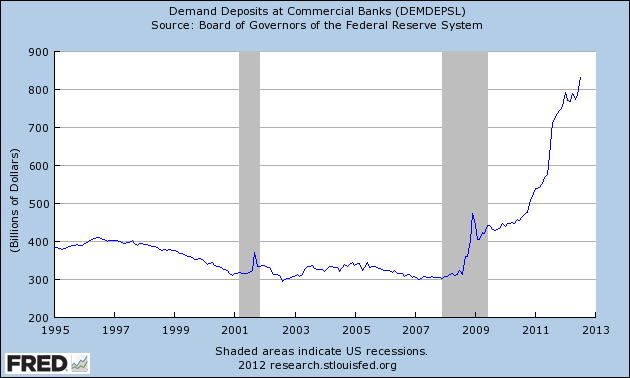
Because commingling is illegal, brokers must utilize specialized trust accounts, which in Michigan must be non-interest-bearing demand accounts. This ensures the principal remains exactly intact and liquid. Checks drawn from a Michigan real estate broker's trust account must be signed by a broker or an associate broker—never a salesperson.
The Timeline of Deposits
Imagine a buyer hands you an earnest money check on a Friday evening. What is the precise timeline?
- Immediate Transfer: A Michigan real estate salesperson must turn over any earnest money deposit to the employing broker immediately upon receipt.
- The Trigger Event: The broker holds the check safely. The clock for depositing the funds does not start until there is an accepted contract.
- The Deposit: A Michigan real estate broker must deposit earnest money into a trust account within two banking days after receiving notice that all parties have signed the purchase agreement.
If the transaction uses a non-licensee third party to hold funds (like a title company acting as an escrow agent), the rule is similar: a real estate licensee must deliver the earnest money check to the third party within two banking days of receiving notice of an accepted offer.
Note on Commingling Exception: To maintain these accounts, banks sometimes charge monthly fees. To prevent these fees from eating into client funds, a Michigan real estate broker is legally permitted to keep up to $2,000 of personal funds in a trust account to cover bank service charges.
Information asymmetry—where one party knows more than another—causes market failure. Michigan enforces documentation rules to ensure total transparency.
Executing and Delivering Documents
When a client signs a document, they must immediately receive proof of what they committed to. A Michigan real estate licensee must deliver a true copy of any signed document to the signer at the exact time of signing. Once a deal is struck, you must provide a copy of the accepted purchase agreement to both the buyer and the seller.
The Duty to Present Offers
As a fiduciary, you do not have the authority to decide which offers a seller should see.
- A Michigan real estate licensee must submit all written offers to a seller immediately upon receipt.
- You must continue presenting all written offers to a seller until closing, unless the seller provides written instructions to stop presenting offers.
Recordkeeping and LARA Inspections
The paper trail must survive the transaction. A Michigan real estate broker must maintain all transaction records and trust account records for a minimum of three years.
The Michigan Department of Licensing and Regulatory Affairs (LARA) acts as the state's auditor. LARA has the authority to inspect a real estate broker's records during normal business hours. You cannot refuse them entry on a Tuesday afternoon.
The closing table is where theoretical contracts become physical reality. Because of the sheer legal weight of this moment, Michigan limits who can orchestrate it.
A Michigan real estate salesperson is legally prohibited from closing a real estate transaction independently without the direct supervision of the employing broker.
At the closing, a real estate broker or associate broker must be directly involved. They must furnish a complete and detailed closing statement to both the buyer and the seller. This statement must meticulously detail all receipts and disbursements involved in the transaction, ensuring that every dollar accounted for in the purchase agreement matches the final transfer of funds.
When you are a licensee, you possess specialized knowledge. If you attempt to buy or sell property for yourself, you have an inherent advantage over an unrepresented consumer. Michigan law mandates that you neutralize this advantage through total disclosure.
- Acquiring Interest: A Michigan real estate licensee must disclose their licensed status in writing before acquiring any interest in real property.
- Buying for Personal Use: If purchasing property for personal use, you must provide written disclosure of your licensed status to the owner before the owner is asked to sign a purchase agreement.
- Selling Personal Property: When selling your own personal property, you must disclose your licensed status to the prospective buyer.
Agency Arrangements
When representing clients, your allegiance must be entirely clear.
- Dual Agency: You cannot act as a dual agent (representing both buyer and seller) without obtaining the prior written consent of both parties.
- Designated Agency: In a large brokerage, representing both sides can happen accidentally. In a Michigan designated agency arrangement, an employing broker names specific licensees to act as the exclusive agents for a buyer or seller, walling them off from the rest of the brokerage to avoid default dual agency.
Crucial Definition: A transaction coordinator is a real estate licensee who facilitates a transaction but does not have an agency relationship with either the buyer or the seller. They act as neutral administrative guides rather than fiduciaries.
What must a seller reveal about a property, and what is a licensee liable for?
Under the Michigan Seller Disclosure Act, sellers of one-to-four family residential properties are required to provide a completed condition disclosure form to prospective buyers. This covers the physical realities of the home—plumbing, roof, foundation. But as the licensee, what if the seller lies? A Michigan real estate licensee is not legally liable for errors in a Seller's Disclosure Statement unless the licensee knew the information was false.
Stigmatized Property
Real estate intersects with the messy reality of human life.
Crucial Definition: A stigmatized property is a property that carries psychological impacts, such as being the site of a homicide, suicide, or illegal activity.
Does a ghost or a tragic past affect the structural integrity of the roof? No. Because these events do not alter the physical universe of the property, Michigan law does not require a real estate licensee to disclose that a property is stigmatized.
- You cannot be held liable for failing to disclose that a property was the site of a homicide or suicide.
- You cannot be held liable for failing to disclose an occurrence at a property that has no material effect on the physical condition of the real estate.

The Absolute Prohibition: HIV/AIDS
There is one disclosure that is not merely optional, but strictly forbidden. Under Michigan and federal law, a real estate licensee is strictly prohibited from disclosing if a former occupant of a property had HIV or AIDS. This falls under severe fair housing and medical privacy protections. Disclosing this information is a massive violation of the law.
Housing is a fundamental human need. The legal architecture protecting access to it in Michigan is built on two primary acts.
First, the Michigan Persons with Disabilities Civil Rights Act legally protects individuals with physical or mental disabilities from housing discrimination, mirroring federal protections for the disabled.
Second, the Michigan Elliott-Larsen Civil Rights Act forms the bedrock of state-level fair housing. It prohibits housing discrimination based on a comprehensive list of traits. It is critical for the exam to understand exactly where Michigan law goes further than the federal Fair Housing Act.
| Protected Class | Federal Fair Housing Act | Michigan Elliott-Larsen Act |
|---|---|---|
| Race / Color | Protected | Protected |
| Religion | Protected | Protected |
| National Origin | Protected | Protected |
| Sex | Protected | Protected |
| Familial Status | Protected | Protected |
| Age | Not Protected | Protected |
| Marital Status | Not Protected | Protected |
| Height | Not Protected | Protected |
| Weight | Not Protected | Protected |
As a real estate professional, you must memorize this distinction: Age, height, weight, and marital status are protected classes under the Michigan Elliott-Larsen Civil Rights Act but are not protected classes under the federal Fair Housing Act.

By internalizing these statutes—understanding not just what the rules are, but why they exist to preserve financial safety, transparency, and human dignity—you will not only master the Michigan PSI exam, but you will step into the field as a precise, elite, and highly capable professional.