NC Real Estate License Law, the Commission & License Categories
Not sure you’re ready?
Take the ~3-minute readiness diagnostic and see where you stand.
Imagine handing a stranger the keys to a vault containing your life savings, trusting them completely to negotiate its contents on your behalf. Real estate transactions represent the largest financial movements in the lives of most citizens, and the state of North Carolina does not leave this transfer of wealth to chance. The mechanism that protects the public from incompetence and fraud is a highly specific statutory framework outlined in Chapter 93A of the General Statutes. Understanding this framework is not merely about passing a licensure exam; it is about grasping the operational boundaries of your entirely new professional reality.
To understand the rules, you must first understand the rule-makers. The entire real estate apparatus in this state is overseen by the North Carolina Real Estate Commission (NCREC). They are not a trade association, and they are not your union; they are a regulatory body designed to protect the public interest.
The North Carolina Real Estate Commission consists of nine members. To ensure a balance of public accountability and industry expertise, the seats are carefully distributed:
- The Governor of North Carolina appoints seven members to the North Carolina Real Estate Commission.
- The North Carolina General Assembly appoints two members to the North Carolina Real Estate Commission.
Furthermore, the statutory makeup demands that at least three members of the North Carolina Real Estate Commission must be licensed real estate brokers. You need practitioners who understand the mechanics of the job. But crucially, at least two members of the North Carolina Real Estate Commission must be unconnected to the real estate brokerage business. These public members ensure the Commission doesn't simply become a protective guild for brokers. To maintain a steady rotation of oversight, North Carolina Real Estate Commission members serve three-year terms.
The Limits of Commission Power
When you get into the field, you will inevitably hear arguments about commission splits and listing fees. It is vital to recognize what the NCREC cannot do.
The North Carolina Real Estate Commission does not have the authority to regulate real estate commissions. The market dictates those. The North Carolina Real Estate Commission does not have the authority to dictate real estate fees, nor does the North Carolina Real Estate Commission have the authority to arbitrate compensation disputes between brokers. If you and a cooperating broker disagree over a commission split, you take it to civil court or your local REALTOR® association—not the Commission.

What the Commission does possess is the statutory authority to discipline licensees for violations of License Law. However, there is a fascinating quirk in how they apply this discipline: The North Carolina Real Estate Commission cannot fine licensees for violations of standard brokerage license law. They will not take your money; instead, they will take your livelihood by suspending or revoking your license.
The One Exception: The North Carolina Real Estate Commission has the specific statutory authority to fine registered time-share developers. Unless you are developing a time-share project, fines are off the table—but your license is always on the line.
Why do you need a license in the first place? In North Carolina, an individual must hold an active North Carolina real estate license to list real estate for others for compensation. The same applies to the rest of the transaction spectrum: an individual must hold an active North Carolina real estate license to sell real estate for others for compensation, to lease real estate for others for compensation, or to auction real estate for others for compensation.
If you are performing any of those actions—Listing, Leasing, Buying/Selling, or Auctioning (think of the acronym LLBE)—for another person, and you are getting paid for it, you need a license.

The Statutory Exemptions
The law recognizes that certain people possess inherent rights or legal mandates to deal with property without a broker license. The following entities and individuals are entirely exempt from licensure:
- The Property Owner: Property owners are exempt from holding a real estate license when selling their own property, as well as when leasing their own property. You can always sell your own dirt.
- Corporate/Entity Employees: W-2 employees of a property owner are exempt from real estate licensure when managing their employer's property.
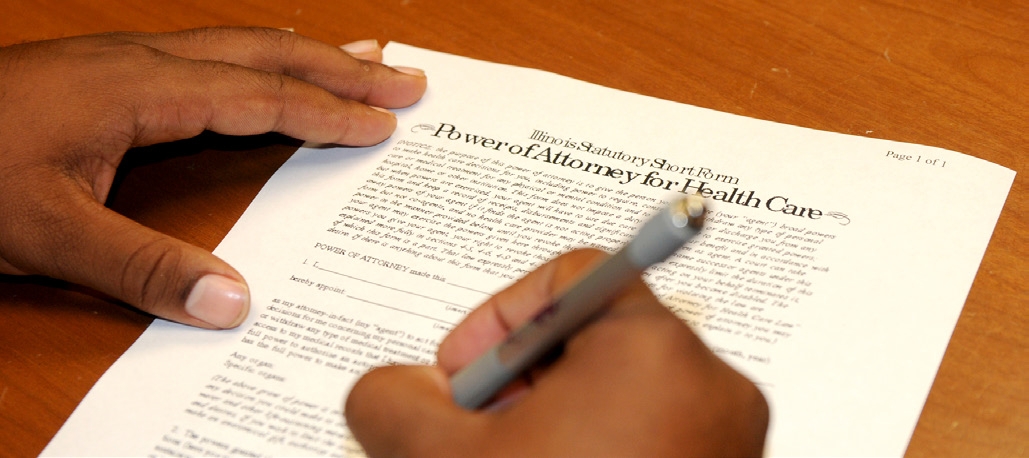
- Legal Proxies: An attorney-in-fact acting under a valid power of attorney is exempt from holding a real estate license to complete a real estate transaction. Similarly, an attorney-at-law is exempt from real estate licensure when performing legal services that constitute real estate practices (such as settling an estate).
- Court Appointees: Trustees acting under a court order, as well as executors acting under a court order, are exempt from holding a North Carolina real estate license.
The Boundary of Unlicensed Assistants
As a broker, you will likely rely on administrative help. Salaried employees of a broker-manager are exempt from licensure when performing purely administrative tasks. They can type up a listing agreement or answer the office phone.
However, the line is drawn at fiduciary and negotiatory acts. Unlicensed salaried employees of a broker-manager cannot legally negotiate lease terms, nor can unlicensed salaried employees of a broker-manager legally show properties for sale. If your assistant crosses that line, they are practicing real estate without a license, and you may be disciplined for permitting it.
If you are coming from another state, you must erase the concept of a "salesperson" from your mind. North Carolina is a broker-only state that does not issue real estate salesperson licenses. Everyone is a broker. However, there are four distinct statuses of a broker license.
1. The Provisional Broker (PB)
To obtain an initial provisional broker license in North Carolina an applicant must complete a 75-hour prelicensing course and pass the state exam. In fact, all individuals who pass the North Carolina real estate license exam are initially issued a provisional broker license.
Think of this status as having a learner's permit. A provisional broker cannot operate independently in North Carolina. By law, a provisional broker must be actively affiliated with a designated Broker-in-Charge to perform brokerage activities. If your relationship with your Broker-in-Charge ends, your ability to legally practice real estate pauses immediately.
2. The Full Broker
The provisional status is a temporary proving ground. A provisional broker must complete 90 hours of postlicensing education to remove their provisional status. The full broker status is achieved when a provisional broker successfully completes this 90-hour postlicensing requirement.
The Ticking Clock: You do not have forever to finish these classes. A provisional broker must complete the 90-hour postlicensing education within 18 months of initial licensure. Failure to complete the 90-hour postlicensing requirement within 18 months places a provisional broker license on inactive status, immediately halting your ability to earn a living.
3. The Broker-in-Charge (BIC)
A real estate office without a Broker-in-Charge is just a room full of desks; it cannot legally operate. A broker-in-charge is required to supervise all provisional brokers within a real estate office. Furthermore, they hold immense financial responsibility: a broker-in-charge is responsible for the proper maintenance of the real estate firm's trust accounts.
Because of this heavy burden, a broker-in-charge must have at least two years of full-time real estate experience within the previous five years. Once designated, a broker-in-charge must complete a 12-hour Broker-in-Charge course within 120 days of designation.
4. Broker-in-Charge Eligible
A broker-in-charge eligible licensee meets all broker-in-charge requirements without actively serving in the management role. They have the experience and have taken the courses, but they are essentially "on deck."
The fastest way to derail your real estate career is to ignore the calendar. North Carolina separates the deadline to renew your license from the deadline to educate yourself.
| Deadline | Requirement | Details |
|---|---|---|
| June 10 | Continuing Education (CE) | The annual deadline to complete real estate continuing education in North Carolina is June 10. |
| June 30 | License Renewal | Every North Carolina real estate license expires on June 30 of each year. |
To keep your license alive—whether you are currently practicing or just holding onto it—you must renew it. The annual North Carolina real estate license renewal fee is $45, and licensees must pay the annual license renewal fee by June 30 to maintain an active or inactive license.
The Continuing Education Puzzle
To keep that license active (meaning you can legally practice and get paid), North Carolina real estate licensees must complete eight hours of continuing education each year to maintain an active license.
This is split cleanly in half: The North Carolina annual continuing education requirement includes one four-hour update course, and one four-hour elective course.
The update course you take depends entirely on your license status:
- A full broker must take the four-hour General Update (GENUP) course as part of their annual continuing education requirement.
- A Broker-in-Charge must take the four-hour Broker-in-Charge Update (BICUP) course instead of the General Update course.
- A Broker-in-Charge Eligible licensee must take the four-hour Broker-in-Charge Update course to maintain their eligible status.
Special note for rookies: A provisional broker must complete continuing education prior to their second license renewal to maintain an active license.
The Danger of Inactive Status
What happens if you ignore June 10? Failure to complete required annual continuing education by June 10 places an active license on inactive status on July 1.
An inactive license permits a broker to retain their licensure without fulfilling continuing education requirements. This is perfectly fine if you want to take a few years off from the industry. But understand the absolute reality of this status: a broker with an inactive license cannot legally perform any real estate brokerage activities. No listing, no selling, no referral fees.
If you wish to return to the arena, a broker must submit a reactivation form to the North Carolina Real Estate Commission to change a license from inactive to active status, which will require catching up on missing education.
The NCREC exists to shield the public from danger, and they wield considerable power to strip licensees of their privileges if that public trust is violated.
What triggers the Commission's wrath?
- Lying and Concealment: The North Carolina Real Estate Commission may revoke a license if a broker makes a willful misrepresentation of a material fact (e.g., intentionally hiding the fact that a home's foundation is failing).
- Mishandling Client Money: Trust accounts are sacred. The North Carolina Real Estate Commission may suspend a license if a broker fails to properly account for trust funds.
- General Incompetence: The Commission does not need proof of malice to act. The North Carolina Real Estate Commission may discipline a broker for demonstrating unworthiness or incompetence in practice. If you are drafting contracts so poorly that your clients suffer financial harm, your license is at risk.
- Aiding Unauthorized Practice: You cannot share your professional spoils with those who haven't earned the right to them. The North Carolina Real Estate Commission may discipline a broker for paying compensation to an unlicensed person.

Mandatory Self-Reporting
Your behavior outside of the real estate transaction also matters. If you run afoul of the law or another regulatory body, you cannot hide it.
A North Carolina real estate licensee must report any criminal conviction to the Commission within 60 days of the final judgment. Driving under the influence, tax evasion, or fraud—the NCREC must be notified. Furthermore, if you hold another professional license (like a CPA or an appraiser credential) and face discipline there, a North Carolina real estate licensee must report any professional license disciplinary action to the Commission within 60 days.

Mastering this regulatory framework isn't just about passing the provisional broker exam. It's about respecting the immense power you are about to hold. By understanding the Commission's authority, maintaining strict adherence to licensure requirements, and respecting the hard deadlines of your profession, you ensure that you are a protector of the public and a master of your craft.