Appraisal, Valuation and Evaluation
Not sure you’re ready?
Take the ~3-minute readiness diagnostic and see where you stand.
Four professionals stand on the sidewalk looking at a mixed-use building in Manhattan: a municipal tax assessor, a fire insurance adjuster, a private equity investor, and a state-certified appraiser. If you ask each of them what the building is worth, you will receive four entirely different numbers, and every single one of them will be legally and technically correct. This paradox lies at the heart of real estate economics. A property does not possess a single, inherent worth suspended in a vacuum. Instead, value is a fluid metric, dictated entirely by the purpose of the measurement and the methodology applied. For the aspiring New York real estate professional, mastering the distinct frameworks of appraisal, valuation, and evaluation is not merely an academic exercise—it is the foundational grammar used to price listings, advise clients, and navigate the rigid legal boundaries of real estate transactions.

To operate effectively in real estate, we must first clean up our vocabulary. Clients will frequently use words like "appraisal" and "valuation" interchangeably. Legally and functionally, they are entirely different instruments.
Think of valuation as the broad, overarching category. Valuation is the broad process of determining the financial worth of a property. Under this massive umbrella, you will find a variety of distinct tools and methods. The valuation process includes formal appraisals, comparative market analyses (CMAs), and broker price opinions (BPOs). If you are attempting to attach a dollar sign to a piece of real estate, you are engaging in valuation.
However, not all valuation is created equal.
The Formal Appraisal
When a lender is risking a $1.5 million mortgage on a Brooklyn townhouse, they do not want an educated guess; they require empirical rigor.

An appraisal is an objective, formal estimate of a property's value as of a specific given date.
It is a highly regulated snapshot in time. In our jurisdiction, formal appraisals in New York must be prepared by a state-licensed or state-certified real estate appraiser. A real estate salesperson cannot simply print out a spreadsheet and declare it an appraisal. Furthermore, real estate appraisers must adhere to a strict set of ethical and performance guidelines known as the Uniform Standards of Professional Appraisal Practice. You will hear this critical regulatory framework commonly abbreviated as USPAP (pronounced yoo-spap).
The Evaluation
What if an investor does not need to know the specific dollar value of a vacant lot, but rather whether it is structurally and legally viable to build a 10-unit condo building on it? This is where we shift from valuation to evaluation.

An evaluation is a study of the nature, quality, or utility of a property interest. Unlike an appraisal, an evaluation does not necessarily yield a specific monetary estimate of property value. Instead, evaluations focus on property utility and marketability rather than providing a strict numerical valuation.
If you are trying to understand how a property can be used rather than exactly what it will sell for, you are looking at an evaluation. Feasibility studies (can we profitably build here?) and highest-and-best-use analyses (what is the most legally and financially optimal use of this land?) are common types of property evaluations.
As a New York real estate salesperson, you are not an appraiser, but you are still deeply involved in the valuation process on a daily basis.
When a homeowner invites you into their living room and asks, "What should we list this house for?", you utilize a comparative market analysis (CMA). A comparative market analysis is a valuation tool used by real estate licensees to help sellers determine listing prices by comparing their home to similar, recently sold properties.
New York real estate salespersons are legally permitted to perform comparative market analyses for clients. However, the Department of State enforces a rigid legal boundary here: a comparative market analysis is not legally considered a formal appraisal. Because of this, New York real estate salespersons are legally prohibited from referring to a comparative market analysis as an appraisal. Doing so misrepresents your credentials and violates licensing law.
You may also encounter a broker price opinion (BPO). A broker price opinion is a brief estimate of property value frequently requested by lenders for distressed properties. When a bank needs a quick, inexpensive check on a property's worth—perhaps before initiating a short sale or a foreclosure—they often order a BPO from a real estate broker rather than a full, USPAP-compliant appraisal.

One of the most profound hurdles you will face when managing client psychology is untangling the concepts of cost, price, and value. To the layman, these mean the same thing. To the professional, confusing them is disastrous.
Cost represents the total past dollar expenditure required to construct a property improvement. If your client spends $150,000 importing Italian marble for a basement renovation, that is their cost. But the monetary cost to construct a property does not necessarily equal the property's market value. A buyer might view a marble basement as an eccentric liability rather than a feature. Cost is a matter of historic fact; it does not automatically translate to present worth.
Market price is the actual amount of money a buyer pays and a seller accepts for a specific property. It is the number printed on the final closing disclosure.
Wait, isn't the final price the same as the market value? Not necessarily. Market price can differ significantly from market value due to specific transaction circumstances like a forced sale. If a seller is going through a bitter divorce and liquidates a brownstone to the first buyer who offers cash within 24 hours, the price might be $800,000. But that does not mean the true value of the property is $800,000.
Market value, by contrast, is a theoretical ideal. Market value is the most probable price a property will bring in a competitive and open market. For a transaction to represent true market value, it must meet several strict assumptions:
- It assumes an arm's-length transaction between an unrelated buyer and seller (no sweetheart deals between family members).
- It assumes neither the buyer nor the seller is acting under undue pressure (no looming bankruptcies or ticking clocks).
- It assumes both the buyer and seller are fully informed about the property's condition and uses.
Price is what happens in the messy reality of the moment. Market value is what should happen in a perfectly balanced economic environment.
Because value is dictated by its purpose, the real estate industry relies on several distinct definitions of value depending on who is asking the question.
The Investor’s Lens: Investment Value
While market value looks at the "typical" buyer, investment value is the specific worth of a property to a particular investor based on individual investment goals. Two investors can look at the identical apartment building and arrive at completely different investment values. Why? Because investment value calculations incorporate an individual investor's specific tax situation and required rate of return. An investor with heavy capital gains to offset will value a depreciable asset entirely differently than a cash-poor investor seeking immediate high-yield income.
The Insurer’s Lens: Insurable Value
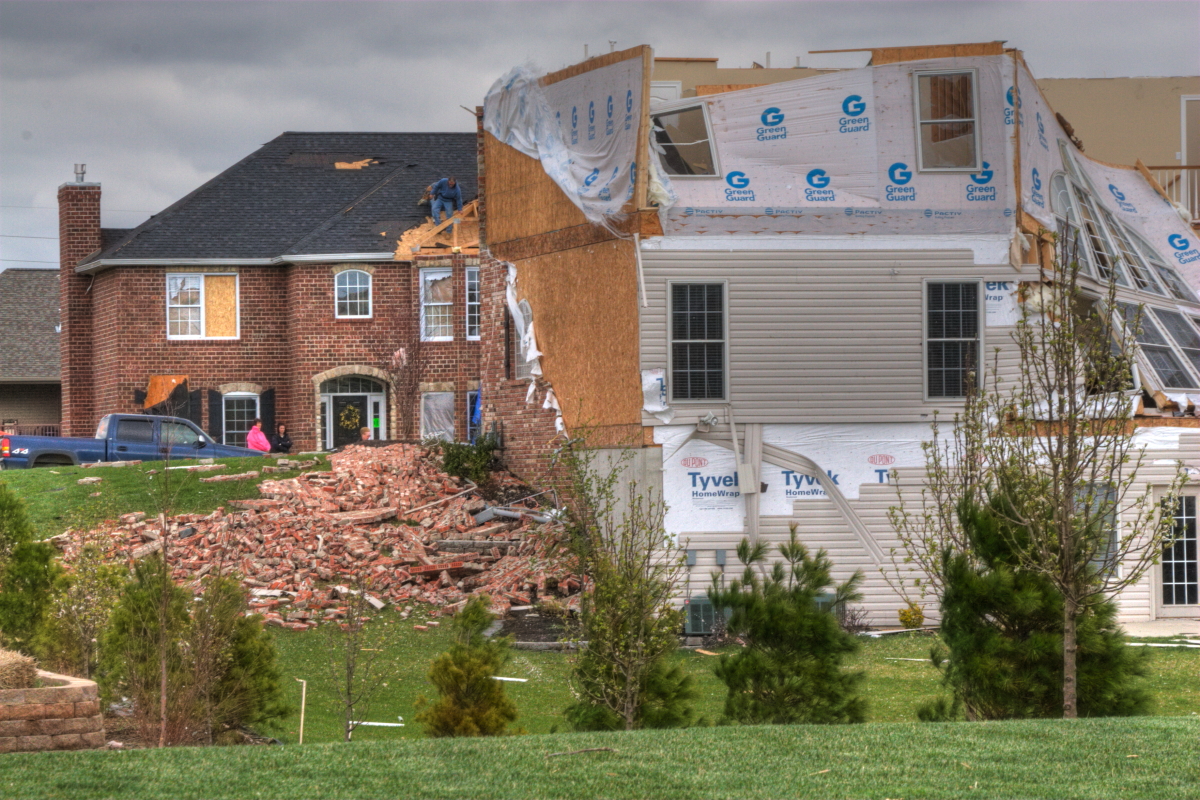
If a property burns to the ground, the insurance company does not care what the market value was; they care about the cost of reconstruction. Insurable value is the monetary cost to replace the destructible parts of a property in the event of a total loss. Crucially, you cannot burn dirt. Therefore, insurable value explicitly excludes the value of the underlying land.
The Municipality’s Lens: Assessed Value
The government has its own entirely separate metric for extracting revenue. Assessed value is the dollar amount assigned to a property by a municipality for the purpose of calculating property taxes. This number is generated by local assessors and frequently operates on a different fractional scale than actual market value.
The Crisis Lens: Liquidation Value
When time is the enemy, value drops. Liquidation value is the likely price a property will bring during a forced or rapid sale. When a bank seizes an asset, they do not want to act as a landlord; they want the asset off their books immediately. Consequently, foreclosure sales are typical real estate scenarios that rely on liquidation value.
The Current Operator's Lens: Value in Use vs. Going-Concern
Sometimes a property is highly specialized. Value in use is the value of a property based strictly on its current specific use by the current owner. Crucially, value in use ignores any potential alternative highest and best use for a property. For example, a custom-built, family-run bowling alley sitting on prime Manhattan real estate might have a certain "value in use" to the family operating it, even if the "highest and best use" of that land is actually to tear the bowling alley down and build a high-rise.

Finally, when real estate is inextricably tied to an active enterprise, we measure going-concern value. Going-concern value is the total financial value of an established, operating business. It is a holistic metric. Going-concern value includes the business's real estate, tangible assets (like commercial ovens or manufacturing equipment), and intangible assets like brand goodwill. When you sell a famous, long-standing restaurant, you aren't just selling the brick walls and the kitchen; you are selling the reputation, the ongoing cash flow, and the clientele.
By distinguishing between the subjective desires of a client and the objective reality of the market, you protect your fiduciary duty. You now possess the analytical vocabulary to confidently explain to a seller why their construction costs don't equal the market value, why an evaluation of the property's utility might be needed before listing, and why the CMA you prepare is a distinct, vital tool wholly separate from the formal appraisal a bank will ultimately demand.