Mortgage and Tax Rate Calculations
Not sure you’re ready?
Take the ~3-minute readiness diagnostic and see where you stand.
The physical reality of real estate—the brick, the mortar, the lot lines—is only half of the profession. The other half is entirely mathematical. Before a buyer can cross the threshold of a property, their financial capacity must be translated into an exact loan limit, and the transaction itself must satisfy a complex web of state and local taxation. For a New York real estate professional, mastering the arithmetic of mortgages and taxes is not merely a requirement for passing an exam; it is the fundamental mechanism of the closing table. A client does not buy a house solely with enthusiasm; they buy it with meticulously calculated debt ratios, precise allocations for transfer taxes, and mathematically defined borrowing limits.
To understand how much house a client can afford, you must look at their finances through the precise lens used by underwriters. Lenders do not look at bank account balances in a vacuum; they look at the continuous flow of income versus debt.
The foundation of all these calculations is monthly gross income. This represents a borrower's total earned income before any taxes or deductions are removed. It is the absolute maximum cash flow a buyer has available before the government or any other obligations take their share.
From this gross income, lenders measure risk using two distinct stress tests. Think of these as two separate bottlenecks in a pipe. The water (the loan amount) can only flow as fast as the narrowest bottleneck allows.
The Front-End Ratio
The first bottleneck is the housing expense ratio, commonly referred to in the real estate industry as the front-end ratio. This metric isolates the property itself. It compares a borrower's projected monthly housing costs (principal, interest, taxes, and insurance) directly to the borrower's monthly gross income.
Maximum Monthly Housing Payment = Monthly Gross Income × Required Housing Expense Ratio
The Back-End Ratio
The second bottleneck is the total debt ratio, commonly referred to in the industry as the back-end ratio. This is a broader, more realistic picture of the buyer's life. It compares all of a borrower's monthly debt obligations—including the projected housing payment, student loans, car payments, and credit card minimums—to the borrower's monthly gross income.
Maximum Total Monthly Debt Payment = Monthly Gross Income × Required Total Debt Ratio
The "Lower of the Two" Rule
How does a lender decide the final number? They calculate the maximum payments using both ratios. Then, lenders qualify borrowers for a mortgage based on the lower of the maximum payments calculated from the housing expense ratio and the total debt ratio. If a client has zero outside debt, their front-end ratio is usually the limiting factor. If they have hefty student loans, the back-end ratio clamps down on their buying power, drastically lowering what they can spend on housing.
The Three Benchmark Standards
Depending on the loan product, the size of these "bottlenecks" changes. You must know the exact thresholds for the three major loan types:
| Loan Type | Max Housing Expense (Front-End) | Max Total Debt (Back-End) |
|---|---|---|
| Conventional | 28 percent | 36 percent |
| Federal Housing Administration (FHA) | 31 percent | 43 percent |
| Department of Veterans Affairs (VA) | Not utilized | 41 percent (Single ratio) |
Notice that Department of Veterans Affairs (VA) mortgage loans typically utilize a single maximum total debt ratio of 41 percent, ignoring the front-end ratio entirely. This is a unique benefit designed to offer maximum flexibility to veterans.
When a deed moves from seller to buyer, the State of New York demands a toll. The New York State real estate transfer tax is based entirely on the final sale price of the real property, and it is customarily paid by the property seller at closing.
The base New York State real estate transfer tax rate is two dollars for every five hundred dollars of the purchase price.
However, the state does not deal in fractions. The law dictates that any fractional portion of five hundred dollars in a purchase price is treated as a full five hundred dollars when calculating the tax.
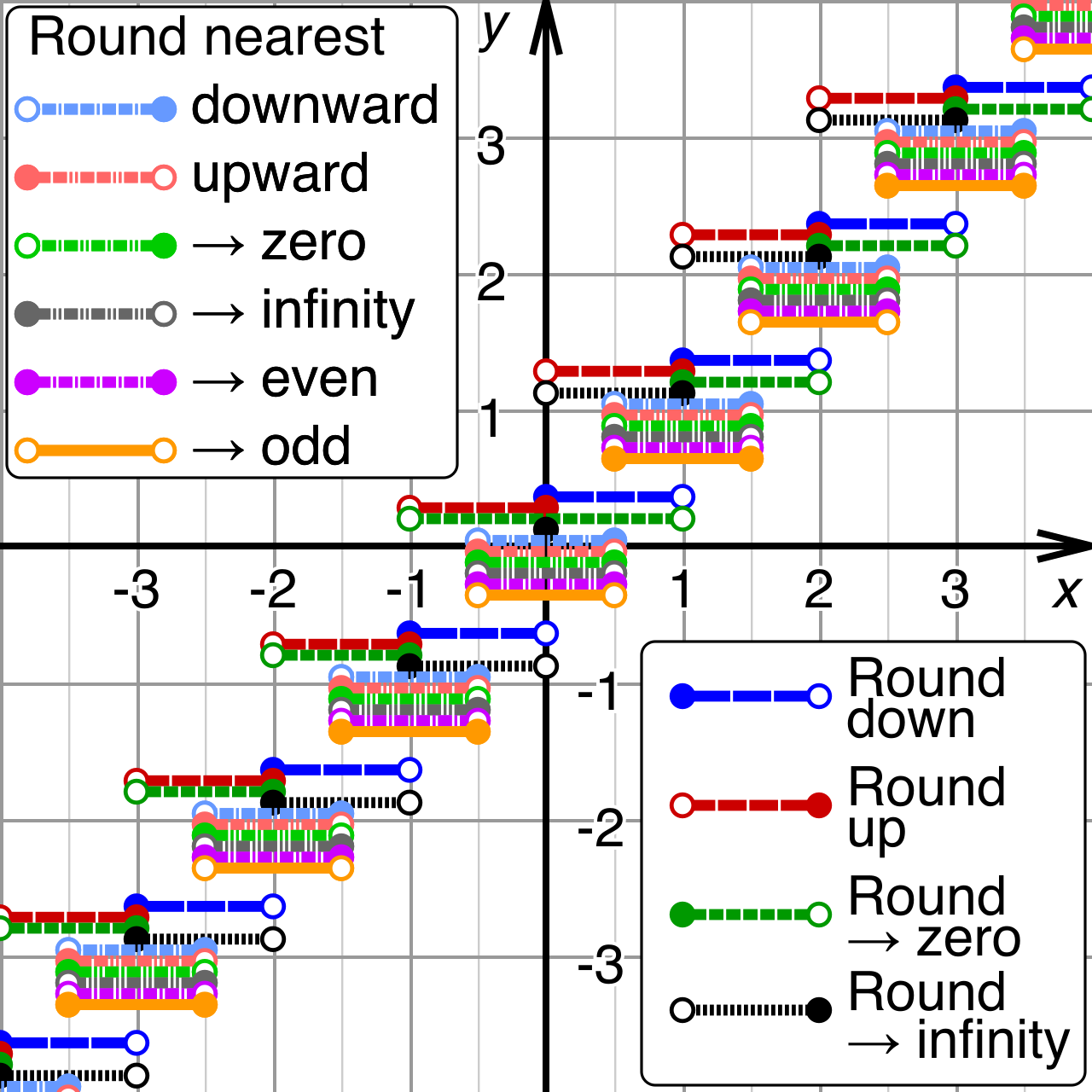
The Transfer Tax Formula: To calculate the New York State real estate transfer tax, an individual divides the purchase price by five hundred, rounds any decimal up to the next whole number, and multiplies that whole number by two dollars.
Imagine a seller closing on a property for $400,250.
- Divide $400,250 by 500 = 800.5.
- You cannot have half a unit. You must round up to the next whole number: 801.
- Multiply 801 by $2 = $1,602.
Understanding this rounding rule prevents you from quoting an incorrect net sheet to your seller.
New York has a famous behavioral economics anomaly at the million-dollar price point. This is the New York State mansion tax, an additional tax calculated as a percentage of the total purchase price. Unlike the transfer tax, the mansion tax is customarily paid by the property buyer at closing.
Three strict rules govern this tax:
- It applies exclusively to residential property sales. Commercial properties are exempt.
- It is triggered when a residential property sale price reaches exactly one million dollars or greater.
- The rate is exactly one percent of the entire purchase price.
This is why you will see an inordinate number of New York properties listed and sold at $999,000 or $999,999. If a buyer pays $999,999, their mansion tax is $0. If they bid one dollar more to reach $1,000,000, the tax is triggered on the entire amount, resulting in a sudden $10,000 tax bill at the closing table. As a professional, navigating this cliff with your buyers and sellers is critical to negotiating a successful deal.
While the transfer and mansion taxes are tied to the purchase price of the property, the state also taxes the creation of the debt itself. The mortgage recording tax is assessed exclusively on the principal loan amount rather than the property purchase price. Because this tax is a cost of borrowing, it is customarily paid by the borrower at closing.
New York's mortgage recording tax is actually an umbrella term for several overlapping taxes. You must master the two foundational layers:
- The Basic Tax: The basic New York State mortgage recording tax rate is fifty cents for every one hundred dollars of mortgage debt.
- The Special Additional Tax: New York State imposes a special additional mortgage recording tax of twenty-five cents for every one hundred dollars of mortgage debt.
The Exemption for Everyday Homeowners
To lessen the burden on standard homebuyers, New York State allows a $10,000 deduction from the principal loan amount when calculating the special additional mortgage recording tax.
Crucially, this ten thousand dollar deduction applies exclusively to one-family or two-family dwellings. It does not apply to commercial structures or larger multi-family buildings.

If your client is securing a $400,000 mortgage on a single-family home:
- The basic tax is applied to the full $400,000. ($400,000 / 100 × $0.50 = $2,000).
- The special additional tax is calculated after deducting $10,000. Therefore, it is applied to $390,000. ($390,000 / 100 × $0.25 = $975).
- (Note: Local counties and cities, like New York City, often add their own local mortgage recording taxes on top of these state baselines, but the state calculation remains the unshakeable foundation).
The transaction eventually closes. The buyer holds the keys. But the math does not stop. Real estate in New York is subject to perpetual taxation by the local municipality.
The annual real property tax is calculated by multiplying the assessed value of the property by the local tax rate.
But what is the assessed value? It is not necessarily what the buyer just paid for the house. Properties have a market value (what they are actually worth in the current market), but municipalities use an assessment ratio—a specific percentage of a property's market value—to determine the property's assessed value for tax purposes.
Assessed Value = Market Value × Assessment Ratio
If a home has a market value of $500,000 and the town uses a 40 percent assessment ratio, the assessed value is $200,000. The taxes are based only on that $200,000 figure.
The Mathematics of Mills
Municipalities do not usually express their tax rates in simple percentages. Instead, they use "mills".
A tax rate expressed in mills represents the required tax amount per one thousand dollars of assessed property value.
Mathematically, one mill is equal to 0.001 dollars. Expressed another way, one mill is mathematically equal to one-tenth of one cent. Why use such a strange unit? Because municipal budgets require tremendous precision, and dealing with a mill rate of "45 mills" is intuitively easier for a town board to discuss than "a 0.045 percent decimal rate."
Calculating Taxes with Mills: To calculate the annual property tax using mills, an individual must divide the assessed property value by one thousand and multiply the result by the mill rate.
If that $200,000 assessed property sits in a town with a mill rate of 50 mills:
- Divide the assessed value by 1,000: $200,000 / 1,000 = 200.
- Multiply by the mill rate: 200 × 50 = $10,000. The annual real property tax is $10,000.
By mastering these mechanics—from the bottleneck of gross monthly income to the exact mathematical trigger of the mansion tax, and the decimal precision of a mill—you transition from a mere salesperson to a true real estate professional. You provide the financial clarity that transforms an overwhelming process into a solvable equation for your clients.