Exemptions and Protests
Not sure you’re ready?
Take the ~3-minute readiness diagnostic and see where you stand.
A property tax bill is not an immutable law of physics; it is a mathematical proposition made by a municipality. Like any proposition, it can be tested, adjusted, or fundamentally challenged. For an aspiring real estate salesperson in New York, understanding the mechanics of property taxation is not just an academic exercise—it is an essential instrument in your professional toolkit. When a prospective buyer looks at a property listing and recoils at the staggering carrying costs, you must know whether that tax burden is absolute, whether it is artificially low because the current owner possesses a highly specific exemption, or whether the assessment itself is flawed and ripe for a challenge. The taxation system operates on two fundamental counterweights to municipal power: a system of exemptions that reflects the state’s social policy, and a formalized protest architecture that holds local assessors accountable to reality.
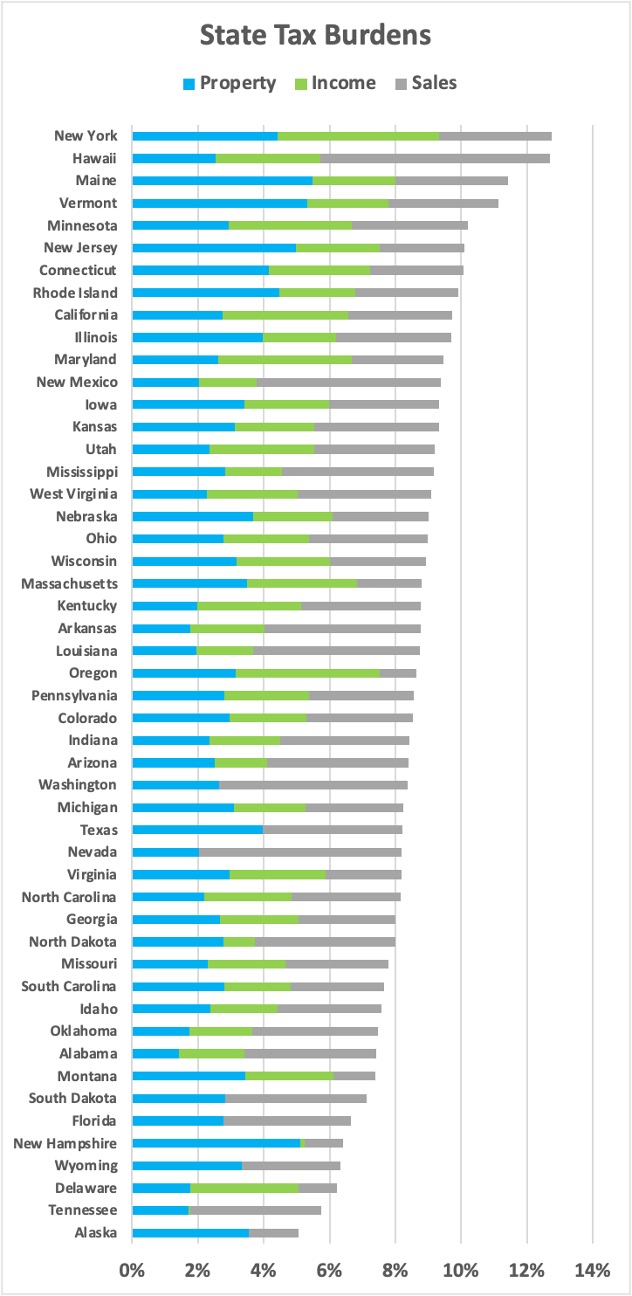
Think of a property’s full assessed value as the raw voltage coming from a power line. Left unchecked, it delivers a massive financial shock. Exemptions act as specialized transformers, stepping down the financial pressure before it reaches the homeowner. New York State and its local municipalities offer several categories of exemptions, each targeting specific demographics.
The STAR Program: Relieving the School Tax Burden
School taxes frequently make up the largest portion of a New York property owner's tax bill. To mitigate this, the state created the School Tax Relief (STAR) program, which provides a partial exemption from school property taxes. However, the state is highly particular about who receives this relief: a property owner can only claim the STAR tax benefit on a primary residence. It is absolutely inapplicable to investment properties, vacation homes, or commercial units.
The STAR program is bifurcated into two tiers:
- Basic STAR: This baseline tier is available to homeowners with an income below a specific state-mandated threshold. It shields a portion of the home's value from school taxes.
- Enhanced STAR: This tier provides a significantly larger property tax reduction for homeowners aged 65 and older. Because the benefit is so substantial, the Enhanced STAR exemption imposes strict income limits on qualifying senior citizen homeowners to ensure the relief is targeted at those who genuinely need it.
A Crucial Closing Detail: As a real estate agent, you will frequently hear buyers ask, "Why isn't the STAR exemption showing up as a reduction on my new tax bill?" This is because New York State fundamentally changed the delivery mechanism. The state transitioned the STAR program for new homeowners from a direct property tax exemption to a personal income tax credit. Therefore, your new buyers will pay the full school tax upfront and receive a check or credit when they file their state income taxes. The mathematical relief remains, but the cash-flow timing changes.
Honoring Service: Veterans Exemptions
New York provides a suite of exemptions to military veterans, acting as a permanent gesture of gratitude for their service. However, navigating these requires precision, as the criteria are highly specific.
- Alternative Veterans Exemption: This is the most common tier, offered to veterans who served during a designated time of war. The relief scales upward based on the intensity and cost of the veteran's service. For example, the Alternative Veterans Exemption provides an additional property tax reduction for veterans who served in a combat zone. Furthermore, veterans who sustained a service-connected disability receive a further property tax reduction under this program.
- Cold War Veterans Exemption: The state recognizes that military service during periods of high geopolitical tension, even without declared war, demands sacrifice. Thus, this exemption is available specifically for veterans who served in the United States armed forces during the Cold War period.
- Eligible Funds Veterans Exemption: This is an older, highly specific mechanism that reduces property taxes for property purchased with "eligible funds," such as a military pension or military insurance money.
The Opt-In Mechanic: There is a critical jurisdictional quirk you must understand regarding veterans' benefits. While towns and counties often readily adopt these, school districts must actively opt in to offer the Alternative Veterans Exemption to property owners. If a client relies on a veteran's exemption to afford a home, you must verify the specific school district's policy, as it drastically alters the final tax liability.
Protecting the Vulnerable: Seniors and Individuals with Disabilities
To prevent vulnerable populations from being priced out of their homes due to rising property values, New York law allows local governments to grant a property tax exemption to homeowners aged 65 or older. When adopted by the municipality, the senior citizens property tax exemption can be astonishingly powerful, reducing the assessed value of a residential property by up to 50 percent. Unsurprisingly, because a 50 percent reduction shifts a heavy burden onto other taxpayers, the senior citizens property tax exemption is subject to strict maximum income limits.
Similarly, recognizing the financial hurdles faced by those unable to participate fully in the workforce, local governments in New York can offer a property tax exemption for persons with documented disabilities and limited incomes.
Total Immunity: Wholly Exempt Properties
While residential homeowners fight for partial reductions, certain entities are removed from the tax rolls entirely because they provide foundational societal goods. Properties owned by governmental entities are completely exempt from local property taxes.
Furthermore, properties owned by religious organizations and used exclusively for religious purposes are completely exempt from property taxes. The same applies to education: properties owned by educational institutions and used exclusively for educational purposes are completely exempt. Notice the word exclusively. If a university buys a commercial strip mall and leases it to a corporate coffee chain, that specific parcel generates revenue and loses its wholly exempt status.

What happens when the municipality simply gets the math wrong?
In New York, a property owner has the right to file a formal complaint protesting a property tax assessment. But here is the golden rule of property tax grievances, one you must impress upon any client wishing to fight city hall: The burden of proof in a property tax assessment challenge rests entirely on the property owner. The municipality does not have to prove the assessment is right; the owner must mathematically prove the assessment is wrong.
The Timeline and the Opening Bid
The grievance process operates on a strict, chronological track. It begins when the municipality publishes the tentative assessment roll, a public document that lists the proposed assessed values for all properties in a municipality. Think of this as the assessor's "opening bid."
If an owner disagrees with this bid, they must submit Form RP-524 to officially file a complaint regarding a real property assessment. This form is submitted to the Board of Assessment Review (BAR), the local administrative body that reviews initial property assessment complaints.
The culmination of this administrative phase is Grievance Day, the specific date when the local Board of Assessment Review meets to hear assessment complaints. You must commit this to memory: Grievance Day in most New York towns occurs on the fourth Tuesday in May. After the BAR listens to the complaints and makes its decisions on all filed grievances, the municipality locks in the numbers and publishes the final assessment roll.
The Four Grounds for a Grievance
You cannot simply walk into the BAR and complain that your taxes are "too high." Taxes are a function of the municipality's budget. You can only complain that your assessment is mathematically or legally flawed. Under Form RP-524, there are four specific, testable grounds for complaint:
- Excessive Assessment: This occurs when a property's assessed value exceeds the property's actual full market value. If the town assesses a home at $500,000, but you, the agent, can prove via recent comparable sales that the home would only sell for $400,000 on the open market, the assessment is excessive.
- Unequal Assessment: This occurs when a property is assessed at a higher percentage of full market value than other properties in the same municipality. If every house in the neighborhood is assessed at 10% of its market value, but your client's identical house is assessed at 15%, it is unequal.
- Unlawful Assessment: This occurs when a wholly tax-exempt property is incorrectly placed on the taxable assessment roll. For example, if a church's exclusive sanctuary is accidentally billed for property taxes, the assessment is unlawful.
- Misclassification: This occurs when a property is assigned to the wrong property class on the assessment roll. For instance, if an owner-occupied single-family home is incorrectly classified as a commercial warehouse (which carries a different tax rate), it has been misclassified.
Let us say your client filed Form RP-524, argued their case on Grievance Day, and the Board of Assessment Review denied their claim. The fight is not over, but the path diverges based entirely on the type of property in question.
Small Claims Assessment Review (SCAR)
To prevent homeowners from having to hire an expensive corporate law firm just to save $1,500 on their tax bill, the state created SCAR, which stands for Small Claims Assessment Review.
Small Claims Assessment Review provides an inexpensive and informal alternative to formal legal proceedings for challenging a property assessment. A specialized hearing officer presides over a SCAR hearing, not a Supreme Court judge. Because of its informal nature, a property owner is not required to hire an attorney to participate in a Small Claims Assessment Review hearing.
The Prerequisites and Limits of SCAR: SCAR is a phenomenal tool, but its gates are heavily guarded by strict procedural rules:
- The BAR Prerequisite: A property owner must first file a grievance with the Board of Assessment Review before filing a Small Claims Assessment Review petition. You cannot skip Grievance Day and go straight to SCAR.
- The Strict Deadline: A Small Claims Assessment Review petition must be filed within 30 days after the filing of the final assessment roll. Miss this window by one day, and the assessment is locked for the year.
- Residential Limitation: Small Claims Assessment Review is only available for owner-occupied residential properties.
- Density Limit: SCAR eligibility is specifically limited to one-family, two-family, or three-family residential structures. A four-family building crosses the threshold out of SCAR jurisdiction.
- The Vacant Land Exception: Generally, SCAR requires a home. However, vacant land qualifies for Small Claims Assessment Review if the land is not large enough to contain a one-family, two-family, or three-family dwelling.
- The Commercial Ban: Commercial properties are strictly prohibited from using the Small Claims Assessment Review process.

Article 7 Certiorari: The Commercial and Formal Arena
If SCAR is forbidden to commercial properties, how does the owner of a strip mall, a 50-unit apartment complex, or an industrial warehouse fight an unfair assessment?
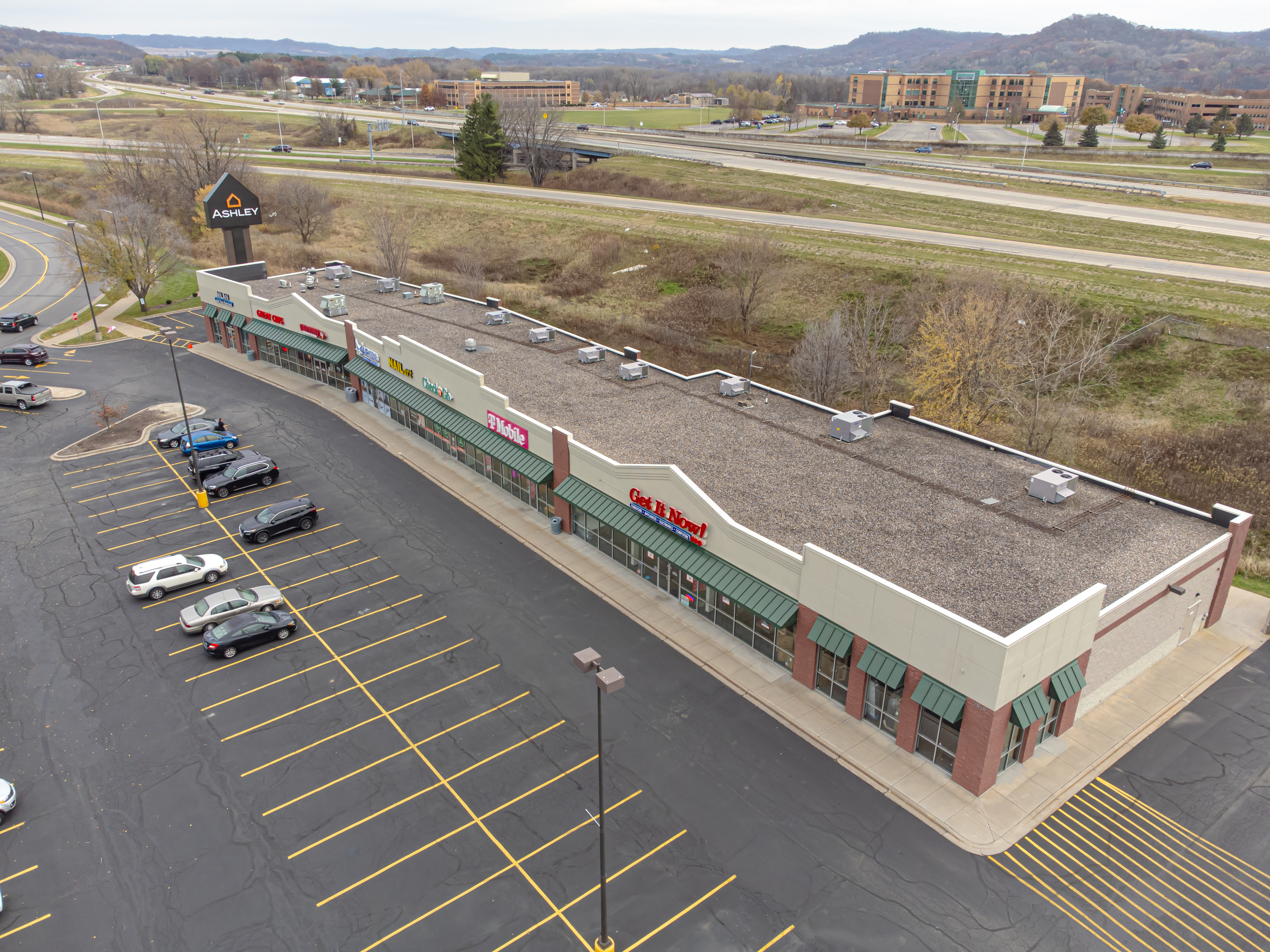
A property owner dissatisfied with a Board of Assessment Review decision regarding a commercial property must file an Article 7 Certiorari proceeding. Unlike the informal SCAR process, an Article 7 Certiorari proceeding is a formal legal lawsuit filed in the New York State Supreme Court to challenge a property assessment.

This is high-stakes litigation. It requires attorneys, expert appraisers, and significant capital. When you are representing investors or commercial buyers, understanding that an Article 7 Certiorari is their only mechanism for assessment appeal allows you to accurately advise them on the time and cost involved in fighting an inflated commercial tax bill.
Understanding exemptions and grievances elevates you from a simple property tour guide to a vital financial advocate. When you understand how these levers work, you demystify the carrying costs of real estate, empowering your clients to buy with confidence and structure their ownership efficiently.