Federal Fair Housing Laws
Not sure you’re ready?
Take the ~3-minute readiness diagnostic and see where you stand.
Imagine a complex real estate transaction—a commercial plaza acquisition or the lease of a high-end residential unit—where the financing, the title searches, and the escrow mechanics are executed flawlessly, only to unravel entirely due to a single, fatal variable: the arbitrary exclusion of a participant based on who they are. The architecture of American real estate is built on a framework of civil rights laws that dictates not merely how property transfers, but to whom it must be equitably available. Understanding Federal Fair Housing is not an exercise in memorizing historical trivia; it is the study of the unyielding laws of physics that govern every listing, showing, and closing you will negotiate in your career.
To understand modern housing law, we must look at the legal bedrock upon which all subsequent statutes were constructed. Immediately following the American Civil War, Congress enacted legislation to guarantee fundamental property rights.
The Civil Rights Act of 1866 prohibits discrimination in the sale or rental of property based on race. Furthermore, the Civil Rights Act of 1866 prohibits discrimination based on color in addition to race.

Why does a nineteenth-century statute matter to a modern New York real estate salesperson? Because of its unique, sweeping operational scope. First, the Civil Rights Act of 1866 applies to both residential and commercial real estate transactions. Second, there are absolutely no exceptions or exemptions to the Civil Rights Act of 1866 regarding racial discrimination. While modern housing laws contain narrow caveats for owner-occupied duplexes or private clubs, the 1866 Act recognizes no such boundaries.
This absolute standard was rigorously tested and ultimately cemented a century later. The 1968 United States Supreme Court case Jones versus Mayer upheld the Civil Rights Act of 1866. In a landmark ruling, the Jones versus Mayer decision affirmed that no property owner can legally discriminate on the basis of race, regardless of whether the transaction is entirely private or seemingly exempt from other local statutes.
While the 1866 Act was absolute regarding race and color, it left many other demographics vulnerable to systemic exclusion. During the civil rights movement of the 1960s, the federal government enacted a comprehensive statutory apparatus.
Title VIII of the Civil Rights Act of 1968 is commonly known as the federal Fair Housing Act.
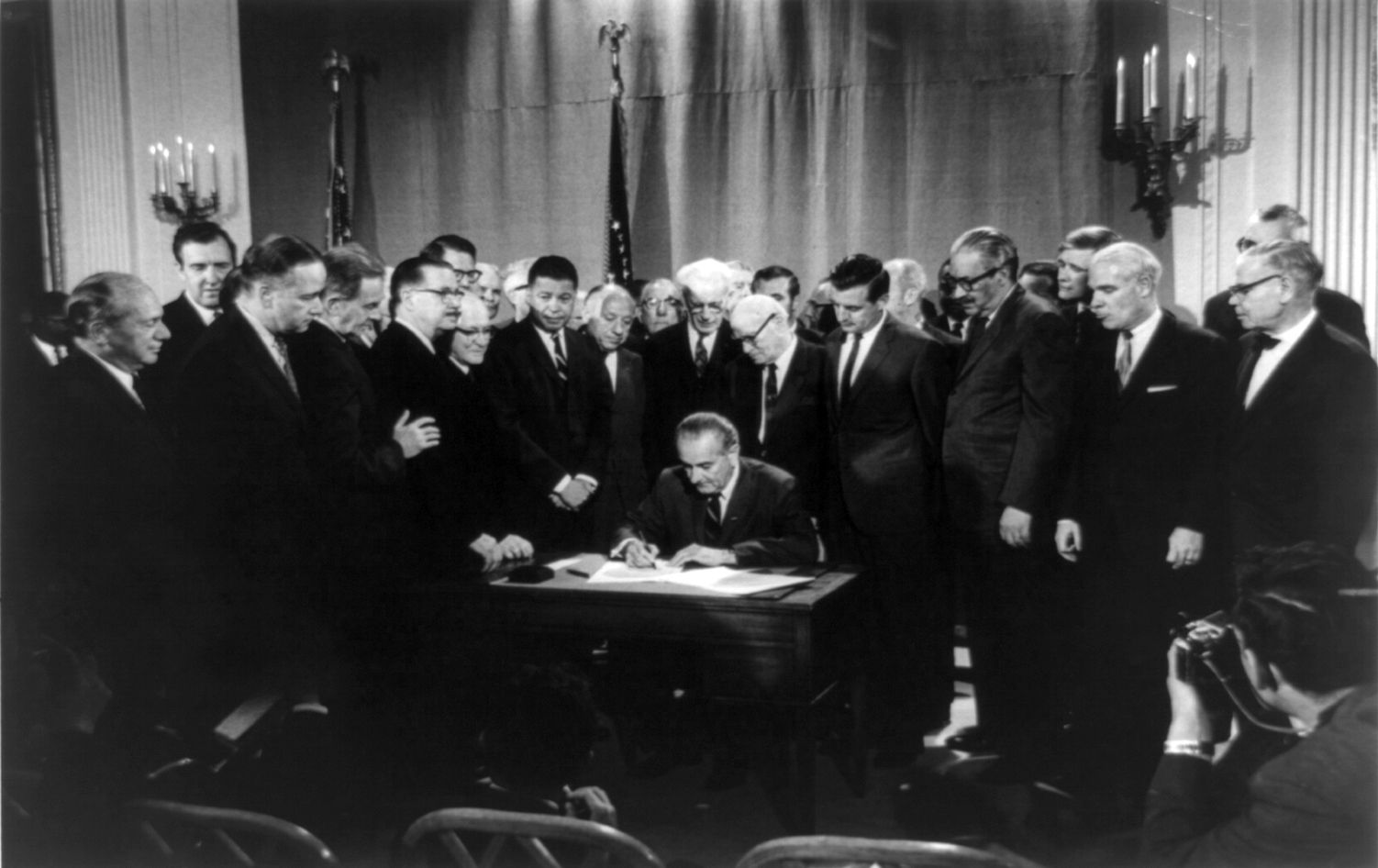
When it was passed, the original federal Fair Housing Act of 1968 prohibited housing discrimination based on four specific categories: race, color, religion, and national origin.
To ensure these protections translated from legislative text to the reality of the American housing market, Congress required an administrative body to oversee compliance. The Department of Housing and Urban Development (HUD) administers and enforces the federal Fair Housing Act, utilizing investigators, administrative law judges, and civil penalties to ensure property owners and brokers operate within the law.
Society evolves, and the legal framework governing property must adapt to reflect a more precise understanding of equality. Congress expanded the federal Fair Housing Act twice to capture demographics that were experiencing documented discrimination in lending and leasing.
- The 1974 Expansion: The Housing and Community Development Act of 1974 added sex to the list of federally protected classes.
- The 1988 Expansions: The Fair Housing Amendments Act of 1988 added familial status to the list of federally protected classes. Simultaneously, the Fair Housing Amendments Act of 1988 added disability to the list of federally protected classes.
Let us isolate the variables. Today, the federal Fair Housing Act protects exactly seven distinct classes of people. As an agent, you must commit this exact boundary to memory, because federal law does not cover every conceivable demographic.
The Federally Protected vs. Unprotected Variables
| The 7 Federally Protected Classes | Frequently Confused (NOT Federally Protected) |
|---|---|
| 1. Race | Age: Age is not a federally protected class under the federal Fair Housing Act. |
| 2. Color | Marital Status: Marital status is not a federally protected class under the federal Fair Housing Act. |
| 3. Religion | (Note: New York State and local city human rights laws often protect age, marital status, and sexual orientation, but on the federal exam, the baseline stops at seven.) |
| 4. National Origin | |
| 5. Sex | |
| 6. Familial Status | |
| 7. Disability |
The seven federally protected classes are race, color, religion, national origin, sex, familial status, and disability.
Understanding "familial status" requires precise definitional clarity. It is not merely a synonym for "families".
Familial Status: Familial status protections apply to households containing individuals under the age of 18 living with a parent or legal guardian.
This means a landlord cannot refuse to rent a property to a single father with a toddler simply because they prefer "quiet professionals." The law also anticipates attempts to circumvent this rule before a child is even born or officially in the home. Pregnant women are explicitly protected under the familial status provision of the federal Fair Housing Act. Furthermore, individuals in the process of securing legal custody of a minor are protected under the familial status provision of the federal Fair Housing Act.
The Exemption: Senior Housing
There is a specific, legally sanctioned carve-out to this rule. Because age is not a federally protected class, developers are permitted to create retirement communities. Housing designed specifically for older persons is legally exempt from the familial status protections of the federal Fair Housing Act.
However, a landlord cannot simply declare a building an "adults-only" facility to illegally ban children. To prevent abuse, the Housing for Older Persons Act of 1995 established the criteria for communities to qualify as exempt from familial status discrimination. To legally reject families with children, the property must meet strict statutory thresholds, such as requiring at least 80% of the occupied units to be inhabited by at least one person who is 55 years of age or older.

The addition of disability in 1988 radically changed property management and residential sales. Disability protections under the federal Fair Housing Act cover individuals with physical or mental impairments.
To prevent frivolous claims, the law establishes a threshold: an impairment must substantially limit one or more major life activities (such as walking, seeing, hearing, or caring for oneself) to qualify as a disability under the federal Fair Housing Act.
When a client meets this threshold, real estate professionals and housing providers must master two operational mechanics: accommodations and modifications.
- Rules and Policies: The federal Fair Housing Act requires housing providers to make reasonable accommodations in rules and policies for individuals with disabilities.

- Physical Alterations: The federal Fair Housing Act requires landlords to allow tenants with disabilities to make reasonable modifications to a dwelling at the tenant's expense.
- Example: If a tenant requires a wheelchair, the landlord must permit the tenant to widen a doorway or install bathroom grab bars. The tenant pays for this construction, and the landlord may legally require the tenant to restore the property to its original condition upon moving out (if reasonable to do so).

The Boundary of Protection: Addiction and Substance Use
The law draws a sharp, scientifically precise line regarding substance use. Individuals currently engaging in the illegal use of controlled substances are not protected under the disability provision of the federal Fair Housing Act. A landlord can legally evict a tenant for actively using or dealing illegal narcotics.
However, the statute recognizes the medical reality of recovery. Individuals recovering from drug addiction in an approved treatment program are protected under the disability provision of the federal Fair Housing Act. Past addiction is treated as a severe medical impairment that a person has overcome; therefore, denying a lease to an applicant solely because they are attending a methadone clinic or successfully participating in rehab is a direct violation of federal law.