Brokers and Salesperson's Responsibilities
Not sure you’re ready?
Take the ~3-minute readiness diagnostic and see where you stand.
The legal framework governing fair housing in New York is not merely a set of passive suggestions; it is an active, heavily enforced mechanism designed to dismantle historic barriers to property access. On June 20, 2020, a rigorous set of mandatory New York fair housing regulations went into effect, fundamentally altering the compliance landscape for real estate professionals. The state recognized that anti-discrimination laws are only effective when the public is acutely aware of their rights and professionals are held strictly accountable for communicating them. To achieve this transparency, the Department of State engineered a dual-document system that operates on two distinct levels: a public broadcast and an individual acknowledgment.
To understand your daily responsibilities as a real estate professional, you must first recognize a fundamental distinction: The Fair Housing Notice is a distinct and separate legal document from the New York State Housing and Anti-Discrimination Disclosure Form.
The New York regulations governing the display of the Fair Housing Notice differ entirely from the regulations governing the presentation of the Anti-Discrimination Disclosure Form. They serve different purposes, are triggered by different events, and carry different compliance protocols.
| Feature | The Fair Housing Notice | The Anti-Discrimination Disclosure Form |
|---|---|---|
| Function | A public declaration of consumer rights and broker policy. | A personalized, individual disclosure provided directly to a consumer. |
| Format | A poster, a web link, or a physical handout. | A specific form requiring signature acknowledgment (or proof of delivery). |
| Primary Duty | Displayed prominently at offices, open houses, and online. | Presented at the moment of first substantive contact. |
At the apex of this regulatory structure is the broker. In New York, a real estate broker is strictly responsible for ensuring that every licensed agent associated with the brokerage complies with all fair housing regulations. Ignorance or rogue behavior by a salesperson does not shield the broker from liability; the broker’s duty to supervise is absolute.
The Department of State’s Fair Housing Notice acts as a beacon. Its purpose is to ensure that before a consumer even speaks to a real estate professional, they understand they are stepping into an environment bound by strict anti-discrimination laws.
The Physical Office
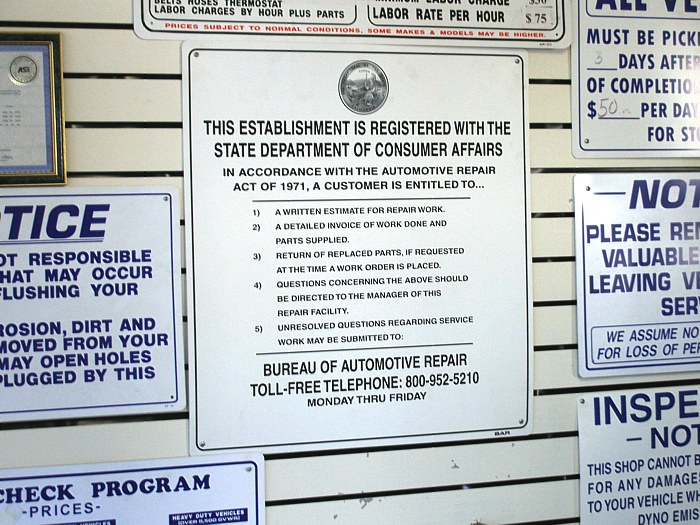
New York real estate brokers must display the Department of State's Fair Housing Notice at every operated office and branch office. But simply tacking it to a backroom bulletin board is insufficient. The law specifically dictates the geometry of its placement:
- Brokers must prominently display the Fair Housing Notice in the exterior window of their business office.
- This window display must be clearly visible to persons walking on the adjacent public sidewalk. The intention is clear—the promise of equal housing must be visible from the public square.
- The Exception: What if a brokerage operates on the 14th floor of a Manhattan high-rise, or in a suite without street-facing windows? Brokers whose offices lack window or sidewalk access must post the Fair Housing Notice in the exact location where the business license is displayed.

The Digital Office
Because modern real estate happens largely online, the physical requirement extends to the digital realm. Real estate brokers must display a link to the Fair Housing Notice on the homepage of their professional websites. This ensures that the digital "front door" offers the identical legal transparency as the physical front door.
In the Field: Open Houses and Showings
The broker's liability, and the agent's responsibilities, travel to the property itself.
- Posting at Events: Real estate brokers must physically post the Fair Housing Notice at all public open houses.
- Physical Distribution Availability: At these same events, real estate licensees must have physical copies of the Fair Housing Notice available for distribution at all open houses.
- Private Showings: The requirement does not vanish when the open house ends. Real estate licensees must also have physical copies of the Fair Housing Notice available for distribution at all property showings.
- On-Demand Delivery: If a consumer specifically asks about fair housing or requests the document, a real estate licensee must provide a physical copy of the Fair Housing Notice immediately if a consumer requests a copy during a property showing. You cannot promise to email it later; you must hand it over right then and there.
While the Notice is broadcast to the public, the New York State Housing and Anti-Discrimination Disclosure Form is handed directly to the individual. New York licensees must provide this form to every prospective real estate client or customer.
This form serves two critical educational functions for the consumer:
- It explicitly outlines the protected classes under federal and state fair housing laws (such as race, creed, color, national origin, sexual orientation, gender identity, military status, familial status, and more).
- It provides consumers with specific instructions on how to file a housing discrimination complaint directly with the New York State Department of State.
Scope of Application: Do not make the mistake of assuming this is only for residential home buyers. The Anti-Discrimination Disclosure Form is legally required during residential, commercial, condominium, and vacant land real estate transactions. Whether you are leasing a 500-square-foot retail space or selling a $5,000,000 commercial lot, the disclosure must be made.

The Mechanics of "First Substantive Contact"
When do you present this document? A real estate agent must present the Anti-Discrimination Disclosure Form at the time of first substantive contact with a consumer.
If this phrase sounds familiar, it should. The legal standard for 'first substantive contact' triggering the Anti-Discrimination Disclosure Form is identical to the standard used for the Agency Disclosure Form.
First substantive contact is the exact threshold where casual conversation turns into the exchange of meaningful real estate information.
- Not substantive: "Hello, welcome to the open house. Feel free to look around."
- Substantive: "I see you are looking at the kitchen. Are you looking to buy in this specific neighborhood? What is your budget?"
The moment you begin discussing a consumer's specific real estate needs, financial abilities, or the specific details of a property (beyond just answering a basic factual question like the price), you have crossed the threshold. You must pause, provide the Anti-Discrimination Disclosure Form, and provide the Agency Disclosure Form.
Navigating Electronic Delivery
Real estate is fast-paced, and contact often happens over email or text before you ever meet in person. Fortunately, real estate agents may legally provide the Anti-Discrimination Disclosure Form to consumers electronically via a hyperlink.
However, you cannot blindly send a naked URL and consider your job done. The state requires precise context.
Mandatory Electronic Language: Any electronic communication containing a link to the Anti-Discrimination Disclosure Form must explicitly state that the link contains information regarding the New York State Human Rights Law.
If you text a client: "Here is a required form: [Link]", you are in violation of the law. If you text a client: "Please click this link to review important information regarding the New York State Human Rights Law and fair housing: [Link]", you are fully compliant.
Client Hesitation and Multiple Offers
When you present a legal document to a consumer—especially one that discusses discrimination and complaints—they may become defensive or refuse to sign it. You must understand, and clearly communicate, that consumers are not legally obligated to sign the Anti-Discrimination Disclosure Form upon receiving the document from a real estate agent.
Your duty is presentation, not coercion. If they refuse to sign, you simply note their refusal, date it, and keep it in your records.
Furthermore, the law is designed to be efficient once the initial contact is established. Submitting multiple property offers for a single buyer does not require a real estate agent to present the Anti-Discrimination Disclosure Form multiple times to that specific buyer. Once the disclosure is properly made and documented at the outset of the relationship, it covers the duration of your representation of that client.
In real estate compliance, if it isn't documented, it didn't happen. The Department of State conducts random audits, and you must be prepared to prove your adherence to these rules.
The Three-Year Rule
Real estate agents must maintain records proving the presentation of the Anti-Discrimination Disclosure Form for a minimum of three years.
What constitutes an acceptable legal record of presentation? You have two primary avenues, depending on how the document was delivered:
- Physical Delivery: A signed consumer acknowledgment serves as an acceptable legal record of presenting the Anti-Discrimination Disclosure Form. (If they refused to sign, your dated declaration of their refusal serves this purpose).
- Digital Delivery: An affirmation from the real estate agent that the Anti-Discrimination Disclosure Form was provided electronically serves as an acceptable legal record of presentation. This means a copy of the email or text, complete with the mandatory explanatory language, kept safely in your transaction file.
Sharpening the Saw: Continuing Education
Because the nuances of fair housing are constantly evolving through new legal precedents and societal shifts, a real estate professional's education is never truly complete. To ensure agents remain sharp and legally compliant, New York real estate licensees must complete at least three hours of continuing education pertaining to fair housing and discrimination every two years as part of their license renewal process.
These three hours are not merely an administrative hurdle; they are the recurring calibration of your professional compass. By strictly adhering to the display of the Notice, masterfully integrating the Disclosure Form at first substantive contact, and meticulously maintaining your records, you do more than protect your license—you actively uphold the integrity of the real estate market.