Introduction and Management Agreement
Not sure you’re ready?
Take the ~3-minute readiness diagnostic and see where you stand.
A steel-and-glass high-rise or a pre-war brownstone does not govern itself. Left to the forces of entropy, a building decays, its tenants vacate, and its ledger bleeds capital. To understand property management is to understand the physics of real estate economics: you intervene in a physical structure to optimize a financial reality. Property management is the administration of residential, commercial, or industrial real estate to achieve the objectives of the property owner.

This discipline exists to satisfy two primary, interconnected objectives. First, one primary objective of a property manager is to maximize the property's financial return on investment for the owner. Second, one primary objective of a property manager is to preserve or increase the physical value of the real estate asset. You cannot achieve the first over the long term without rigorously executing the second. An unmaintained boiler eventually fails, taking the winter rent checks with it.
When you step into the role of a property manager, you are handling OPM—Other People's Money. Because the potential for financial harm is immense, the State of New York imposes strict regulatory boundaries on who can perform these duties.
If you step in as a third party to monetize a building, licensure is triggered. Specifically, collecting rent on behalf of a property owner for a fee requires a real estate license in New York. Similarly, the act of securing tenants—negotiating leases on behalf of a property owner for a fee requires a real estate license in New York.
But what level of license? Scale dictates the rule.
In New York, an individual who manages property for more than one owner for a fee must hold a real estate broker license. The state views the multi-client property manager as running a high-liability enterprise that demands the comprehensive education and accountability of a broker.
What if you are a newly minted agent? A New York real estate salesperson can perform property management duties only under the supervision of a licensed real estate broker. You cannot independently hang a shingle and offer management services; your actions are legally the actions of your supervising broker.
Exemptions to the Rule
The law recognizes that not everyone actively managing a building is doing so as a third-party enterprise. Two distinct groups operate outside this licensing perimeter:
- A property owner managing their own real estate is exempt from needing a real estate license in New York. (The state assumes owners have an inherent vested interest in protecting their own assets).
- A resident building manager who lives on the premises is exempt from needing a real estate license in New York. (The traditional live-in "superintendent" who collects checks and handles repairs for their specific building).
To understand the legal mechanics of this job, we must examine the contract that creates it. A property management agreement is a legally binding contract between a property owner and a property management firm.
This agreement is fundamentally different from a standard listing agreement. When an owner hires you to sell a house, they grant you special agency—the authority to perform one specific task. But property management is not a single task; it is the daily operation of a complex, living asset. Therefore, a property management agreement establishes a general agency relationship between the property owner and the property manager.
General Agency In a general agency relationship, the principal grants the agent broad authority to act on their behalf in a specific continuous business enterprise.
Why does this matter to you? Because with broad authority comes the power to alter the owner's legal reality. A property manager acting as a general agent has the authority to bind the property owner to contracts within the scope of the management agreement. If you sign a legitimate, twelve-month snow removal contract on behalf of the building, the property owner is legally obligated to pay that vendor. You are their proxy.
Because the property manager holds the formidable power to bind the owner to contracts, the management agreement must be a masterpiece of precision. A well-drafted agreement builds fences around your authority, protecting both you and the client.
Every valid agreement must contain the following core components:
1. Identity and Geography
There can be no ambiguity about who is bound and what is being managed.
- A property management agreement must clearly identify the legal names of the property owner and the property manager.
- A property management agreement must include a precise legal description or physical address of the real estate being managed.
2. Time Horizons
Agency cannot exist in a temporal vacuum.
- A property management agreement must state the exact duration of the contract.
- To achieve this precision, a property management agreement must outline the specific dates for commencement and termination of the management contract.
- Furthermore, no business relationship lasts forever. A property management agreement must contain a termination clause detailing how either the owner or the manager can end the relationship (e.g., a 30-day written notice requirement).
3. The Scope of Authority and Duties
This is the operational blueprint. It defines exactly what you must do, and exactly how far your power extends.
- A property management agreement must explicitly define the extent of the property manager's authority to make decisions. (For example, it might stipulate that the manager can authorize repairs up to $1,500 independently, but requires the owner's written consent for anything exceeding that threshold).
- A property management agreement details the property manager's responsibilities regarding tenant screening and leasing procedures.
- A property management agreement details the property manager's responsibilities regarding property maintenance and emergency repairs.
4. Compensation Structure
A manager is not a volunteer. A property management agreement must specify the method and amount of compensation for the property management services.
There are two dominant compensation models in the industry:
| Compensation Model | How it Works | Why it Matters |
|---|---|---|
| Percentage of Gross Rent | Property management compensation is frequently structured as a percentage of the gross rent collected from the property. | This aligns incentives perfectly. If the building has vacancies or tenants default, the manager's income drops. The manager is highly motivated to keep the building full and rent flowing. |
| Flat Fee | Property management compensation can be structured as a flat monthly fee. | Often used for highly predictable properties or single-family homes where the workload is steady and calculating percentages is unnecessarily complex. |
As a property manager, you are the chief financial officer of the building. Your day-to-day operations require a steady flow of capital.
Operating Budgets
Before a single dollar is spent, you must map the financial future. A property manager's core financial function includes creating an annual operating budget for the managed property.
What does this entail? An operating budget projects the anticipated income and required expenses for a property over a one-year period. It accounts for expected rental yields, predicted vacancy rates, tax liabilities, utility costs, and payroll for building staff.
Operating Reserves
When a pipe bursts at 3:00 AM on a Sunday, you cannot wait for the property owner to wire funds. You need immediate liquidity to stop the bleeding. Therefore, a property management agreement outlines the property owner's obligation to fund an operating reserve account.
An operating reserve account provides the property manager with available funds to pay for recurring expenses and emergency repairs. It is essentially the building's checking account, capitalized by the owner but accessible to the manager.
Accountability and Risk
Because you are spending the owner's money from the reserve, transparency is mandatory. A property management agreement dictates the frequency and format of financial reports the manager must provide to the property owner (usually via monthly statements detailing every cent collected and disbursed).
Finally, physical assets carry massive liability. Slip-and-falls happen; fires occur. The manager cannot personally shoulder the risk of the building's physical existence. Therefore, a property management agreement outlines the property owner's obligations regarding building liability and hazard insurance, ensuring the owner maintains the necessary legal and financial shield around the asset.
We return to the second objective: preserving physical value. A novice manager waits for things to break and then fixes them. An elite manager operates differently. A property manager is responsible for implementing preventive maintenance programs to extend the functional life of building systems.
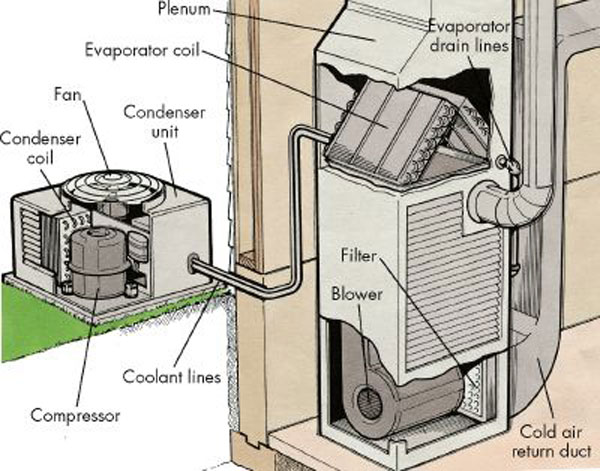
Cleaning gutters before the autumn rains, lubricating elevator cables, and servicing HVAC units before the summer heat are not just chores; they are fiduciary acts. Preventive maintenance delays the massive capital expenditures of system replacements, thereby protecting the owner's financial return. By mastering both the ledger and the boiler room, the property manager transforms a static structure into a thriving, profitable enterprise.