Property Analysis and Terminology
Not sure you’re ready?
Take the ~3-minute readiness diagnostic and see where you stand.
A commercial skyscraper in Manhattan operates exactly like a thermodynamic engine. It consumes raw inputs in the form of capital and tenant leases, loses energy to the friction of physical maintenance and taxation, and produces a final output of pure cash flow. As a real estate professional, your objective is not merely to sell physical bricks, but to dissect this financial engine, measure its mechanical efficiency, and translate that efficiency to an investor or tenant. If you cannot articulate exactly how a building transforms gross rent into post-tax profit, or precisely how much floor space a commercial tenant is actually paying for versus what they can literally walk on, you are selling a machine without understanding its schematics.
Here, we will dismantle this engine into its two fundamental components: the mathematics of property income, and the geometry of commercial space.
To determine what an income-producing property is truly worth, we track a single dollar from the moment it is theoretically billed to the tenant, down through the gauntlet of physical and financial realities, until it reaches the investor's pocket. This descent is known as the cash flow waterfall.
Theoretical Perfection vs. Operational Reality
We begin in a perfect world. Potential Gross Income is the maximum expected income a property can produce if fully leased at market rates. Think of this as the theoretical speed of light in a vacuum—a mathematical absolute assuming every unit is occupied, every tenant pays on time, and the building never sleeps.
But physical reality introduces friction. Properties suffer from vacancy and collection losses, which are estimated revenue reductions caused by unoccupied units and unpaid rent. Tenants break leases, units sit empty during renovations, and sometimes checks bounce.
When we subtract this friction from our theoretical maximum, we arrive at the reality of the street. Effective Gross Income is calculated by subtracting vacancy and collection losses from Potential Gross Income. Crucially, Effective Gross Income represents the actual anticipated rental income collected from a commercial property.
Formula: Potential Gross Income − Vacancy & Collection Losses = Effective Gross Income
Keeping the Engine Running: Operating Expenses
A building is not a static object; it is constantly decaying. To keep generating Effective Gross Income, capital must be spent. Operating expenses are the daily costs required to run and maintain an income-producing property.
As a professional, you must fiercely protect the definition of operating expenses. Standard operating expenses strictly exclude debt service payments and capital expenditures. Why? Because how a building is financed (its debt) or fundamentally upgraded (its capital improvements) has nothing to do with the day-to-day cost of running the physical structure.
Operating expenses fracture into two distinct categories:
| Expense Type | Definition & Behavior | Classic Examples |
|---|---|---|
| Fixed Operating Expenses | Costs that do not change regardless of how many tenants are in the building. | Property taxes, insurance premiums. |
| Variable Operating Expenses | Costs that fluctuate directly based on building occupancy and usage. | Maintenance, utilities, management fees. |
Furthermore, prudent property managers anticipate future decay. They establish capital reserves, which are funds set aside periodically for future major replacements or improvements to a property—like replacing a chiller unit or a roof. While essential, these reserves are distinct from daily operating expenses.
When we subtract the total operating expenses from the Effective Gross Income, we isolate the purest measure of a property's financial health. Net Operating Income is calculated by subtracting total Operating Expenses from Effective Gross Income. NOI is the holy grail of real estate valuation because it measures the performance of the property itself, utterly independent of who owns it or how they borrowed money to buy it.
Once the property has paid for its own existence (generating NOI), the investor must pay the bank and the government.
Most commercial real estate is leveraged. The investor pays annual debt service, which is the total yearly amount paid towards mortgage principal and mortgage interest.
If we subtract the bank's cut from our NOI, we find what goes into the investor's bank account before the government intervenes. Before Tax Cash Flow is calculated by subtracting Annual Debt Service from Net Operating Income.
Formula: Net Operating Income − Annual Debt Service = Before Tax Cash Flow
The Illusion of Cash vs. The Reality of Taxes
Here is where amateur investors stumble, and where you prove your value. You might assume you pay taxes on your Before Tax Cash Flow. You do not. The IRS does not care about your principal mortgage payments; they view them as a transfer of wealth, not an expense. Conversely, the IRS allows you to deduct the hypothetical deterioration of the building (depreciation), even if no cash actually left your pocket.
Therefore, taxable income for an investment property equals Net Operating Income minus mortgage interest and allowable depreciation.
Because of this profound difference in accounting, your income tax liability is calculated based on a property's taxable income rather than the Before Tax Cash Flow. This is why a property can technically generate positive cash flow but show a "loss" on paper for tax purposes—a beautiful reality of real estate investment.
Finally, we arrive at the absolute bottom line. After Tax Cash Flow is calculated by subtracting the income tax liability from the Before Tax Cash Flow. This is the exact amount of spendable yield the investor takes home.
If the cash flow waterfall teaches us how money moves through a building, our next step is to understand what generates that money: space. In commercial real estate, specifically in the dense verticality of New York, space is an abstract concept aggressively negotiated by landlords and tenants.
When a commercial client leases a suite, they expect to pay for the space they inhabit. But a high-rise requires immense supporting infrastructure. Common areas in a commercial building include lobbies, hallways, public restrooms, stairwells, and elevator shafts. Someone must pay to heat, cool, and clean these areas.
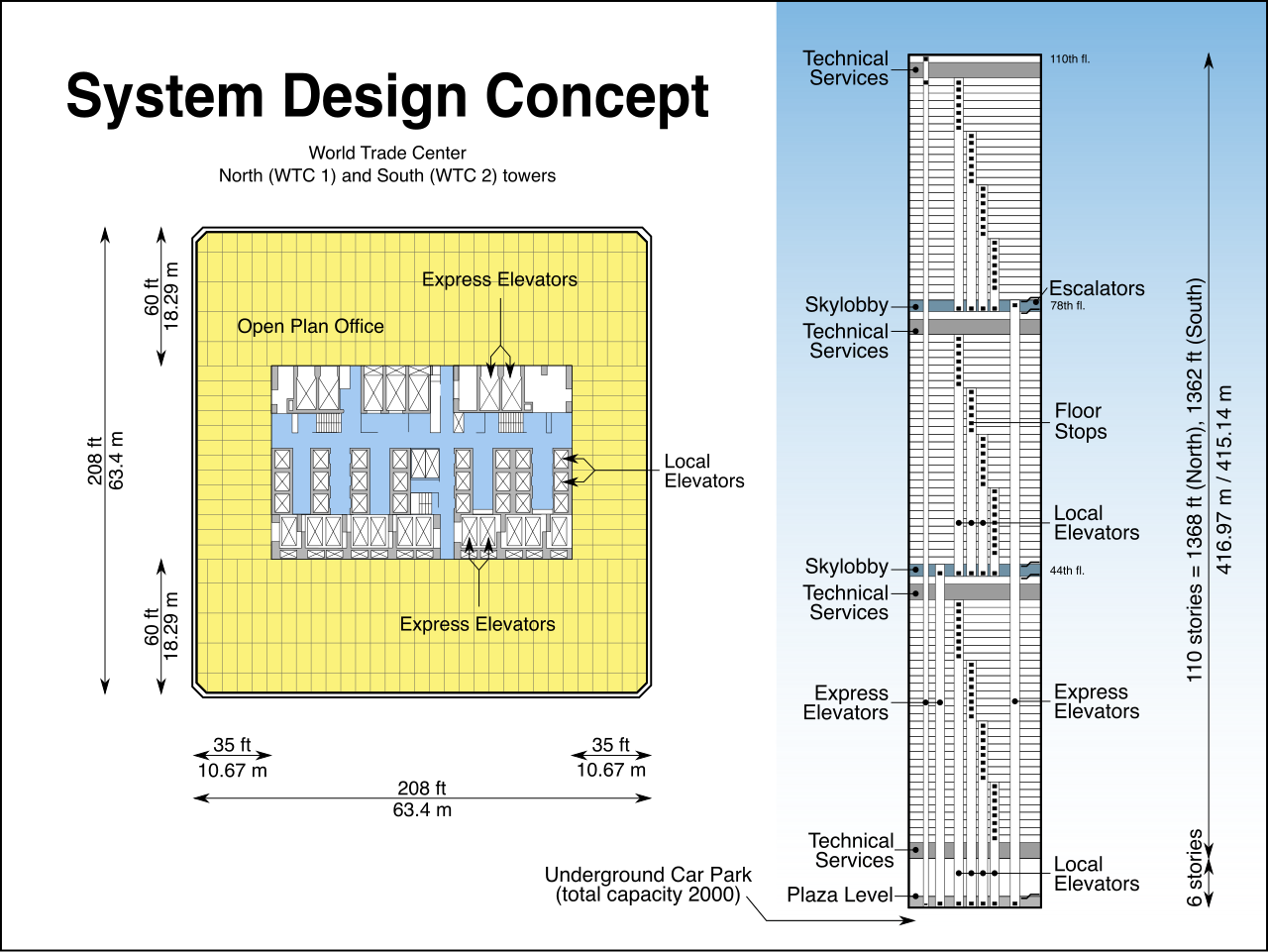
This creates a divergence in how floor space is measured:
- Usable Square Footage: This is the actual physical floor space a tenant exclusively occupies within a commercial building. If a tenant closes their office door, everything inside is usable space.
- Carpetable Square Footage: This takes usable space a step further into brutal reality. Carpetable square footage is the strictly usable floor space excluding structural components like columns and interior walls. It is the space where a tenant could theoretically roll out a continuous piece of carpet.
- Rentable Square Footage: This equals usable square footage plus a proportionate share of the building's common areas.
Why does this vocabulary matter to your day-to-day practice? Because commercial lease rent amounts are typically calculated and priced based on rentable square footage. When you present a lease for a "10,000 square foot office" at $100 per square foot, the tenant will not receive 10,000 square feet of exclusive office space. They are paying for their office, plus their mathematical share of the spectacular marble lobby downstairs and the shared restrooms on their floor.
To prevent chaos and deceptive marketing in this system, the Real Estate Board of New York (REBNY) establishes specific standardized guidelines for measuring commercial square footage and calculating loss factors in New York City.
To explain the disparity between what a tenant pays for and what they walk on, the real estate industry relies on two critical ratios: the Loss Factor and the Add-on Factor. These are two sides of the exact same mathematical coin, merely viewed from different perspectives.
The Tenant's Perspective: The Loss Factor
When a tenant realizes their actual office is smaller than the square footage listed on their lease, they perceive it as a loss. The loss factor represents the percentage of a commercial space that a tenant pays rent on but cannot physically occupy.
The Loss Factor is calculated by subtracting usable square footage from rentable square footage and dividing the result by rentable square footage.
Formula: (Rentable − Usable) / Rentable = Loss Factor %
If a tenant leases 10,000 rentable square feet, but only receives 7,500 usable square feet, the lost space is 2,500 square feet. Divide 2,500 by the 10,000 rentable square feet, and you have a 25% loss factor.
The Landlord's Perspective: The Add-On Factor
The landlord views this geometry in reverse. They measure the usable office space and then mathematically "add on" the tenant's share of the common corridors and lobbies to determine the final billable footprint.
The add-on factor is the multiplier applied to usable square footage to calculate the total rentable square footage for a tenant. In commercial leasing, you will hear this constantly; the add-on factor is frequently referred to as the load factor in commercial real estate leasing.
The Add-On Factor is calculated by subtracting usable square footage from rentable square footage and dividing the result by usable square footage.
Formula: (Rentable − Usable) / Usable = Add-On (Load) Factor %
Using the identical space from our previous example: the difference is still 2,500 square feet. But now, we divide that 2,500 by the usable square footage of 7,500. This yields an add-on factor of 33.3%.
By mastering these concepts, you elevate yourself from a tour guide to an indispensable financial advisor. You can explain to an irate client exactly why their $50,000 monthly rent is justified by a 30% load factor, just as effortlessly as you can prove to an investor that a property generating $2,000,000 in NOI still produces a tremendous After Tax Cash Flow despite the burden of debt. This is the language of the New York market. Speak it fluently.