The Agent as Fiduciary
Not sure you’re ready?
Take the ~3-minute readiness diagnostic and see where you stand.
When a homeowner hands over the keys to their property, they are not merely hiring a marketer or a tour guide; they are initiating a profound legal mechanism that transforms your actions into their own. A real estate agent owes strict fiduciary duties to the principal under the common law of agency. In the eyes of the law, you cease to be an independent actor pursuing your own ends. You become an extension of your client’s will, bound by a legal tether that mandates absolute fidelity, transparency, and care. This is not a casual professional courtesy. The fiduciary standard is the highest standard of care recognized in American jurisprudence, designed to protect individuals who must entrust their most significant financial assets to the expertise of another. To navigate real estate in New York, you must understand not just the mechanics of a transaction, but the precise legal geometry of this relationship, the boundaries of your authority, and the severe consequences that await those who distort the facts.

Before dissecting what an agent must do, one must understand what an agent is. Agency is not a monolith; it exists on a spectrum of authority.
When a property owner hires you to list their home, they are not granting you sovereignty over their life or their broad financial portfolio. A real estate broker acts as a special agent when hired to find a buyer for a specific property. The defining characteristic of a special agency is its narrow scope. A special agent has limited authority to perform a specific task for the principal. Your mandate is precisely drawn: market the property, locate a willing and able buyer, and facilitate negotiations.
Because your authority is strictly limited to this objective, your power to legally bind the client is non-existent. A common misconception among aspiring professionals is that representing the seller means you can accept an offer on their behalf. You cannot. A real estate agent lacks the authority to bind a principal to a contract unless granted a formal power of attorney. If a buyer offers full asking price, in cash, with no contingencies on a Friday night, you cannot sign the purchase agreement for your client. You are the conduit for the transaction, not the signatory.

The common law of agency prescribes a specific, non-negotiable framework for how a fiduciary must behave. To master this framework, the real estate industry relies on a precise mnemonic. The acronym OLD CAR represents the six common law fiduciary duties owed by a real estate agent to a principal.
OLD CAR stands for Obedience, Loyalty, Disclosure, Confidentiality, Accounting, and Reasonable Care.
Each of these duties addresses a distinct vulnerability the principal faces when handing their affairs over to an agent. Let us isolate and examine the mechanics of each.
Obedience: The Duty of Execution
The fiduciary duty of obedience requires a real estate agent to follow the lawful instructions of the principal. If your seller instructs you to require 24 hours of notice before any showing, or to only host open houses on Sunday mornings, you must comply, regardless of whether you believe a different strategy would yield a faster sale. The property belongs to them; the strategy belongs to them.
However, the law places a strict ceiling on obedience: legality. An agent is not a weapon for a client to wield against the public. A real estate agent must refuse to obey a principal's instruction if the instruction violates fair housing laws or other statutes. If a seller directs you to "only show the house to families without children," obeying that instruction constitutes illegal discrimination under the Fair Housing Act. In such scenarios, the fiduciary duty to the client is superseded by the rule of law. You must refuse the instruction, and if the client insists, you must terminate the agency relationship.
Loyalty: The Undivided Allegiance
The fiduciary duty of loyalty requires a real estate agent to place the principal's interests above all other interests, including your own. This is the bedrock of the fiduciary concept. When you negotiate, you must extract the maximum possible value for your client, even if a quicker, cheaper sale would secure your commission faster.
The most egregious violations of this duty occur through self-dealing. Consider a scenario where you list a property and realize the seller has drastically undervalued it. The temptation might arise to purchase the home yourself, perhaps through a shell LLC, to flip it for a swift margin. A real estate agent violates the duty of loyalty by secretly buying the principal's property for the agent's own profit. You cannot compete with your principal, nor can you extract hidden profits at their expense.
Full Disclosure: The Flow of Information
A principal cannot make rational, informed decisions if they are operating in the dark. The fiduciary duty of full disclosure requires a real estate agent to inform the principal of all material facts related to the transaction. A material fact is any piece of information that a reasonable person would consider important when deciding how to proceed.
This duty manifests daily in the handling of offers. A real estate agent must present all offers to the seller principal to fulfill the fiduciary duty of full disclosure. It does not matter if a property is listed at $1,000,000 and a buyer submits an offer for $400,000. While you might perceive the offer as frivolous or insulting, it is not your property, and you are not the ultimate arbiter of what the seller will accept. Failing to present a low offer to a seller principal constitutes a violation of the fiduciary duty of disclosure.
Disclosure also extends to conflicts of interest. The principal has a right to know if your loyalties might be subconsciously divided. Therefore, a real estate agent must disclose the agent's personal relationship to a buyer when presenting an offer to a seller principal. If the prospective buyer is your sibling, your business partner, or your close friend, the seller must be made aware before they decide to negotiate.
Confidentiality: The Iron Vault
While disclosure governs what you must tell your client, confidentiality governs what you must keep hidden from the world. The fiduciary duty of confidentiality prohibits a real estate agent from sharing the principal's sensitive personal or financial information.
When a client hires you, they reveal their vulnerabilities. They might tell you they are selling because of a pending divorce, an impending bankruptcy, or a sudden job relocation. If a buyer's agent learns of this desperation, they will weaponize it to drive the price down. Consequently, a real estate agent must not disclose the minimum price a seller principal will accept without explicit permission.
There is a singular, profound distinction that separates confidentiality from the other five duties. The fiduciary duty of confidentiality is the only fiduciary duty that survives the termination of the agency relationship. Long after the property has sold, or the listing agreement has expired, the vault must remain sealed. If the duty of confidentiality expired with the contract, agents could easily exploit former clients by weaponizing the secrets they learned during their tenure.
Accounting: The Sanctity of Funds
Real estate transactions involve vast sums of money moving in escrow, earnest money deposits, and down payments. The fiduciary duty of accounting requires a real estate agent to report the status of all funds received on behalf of the principal.
The mechanics of trust accounts are highly regulated to protect the public from theft and financial mismanagement. A stark boundary must exist between the client's money and the agent's money. A real estate agent is strictly prohibited from commingling client funds with the agent's personal or business bank accounts. Commingling destroys the audit trail. Even if an agent deposits a client's $10,000 earnest money check into their own operating account with the pure intention of holding it safely, the act itself is a severe violation of the law.
Reasonable Care and Skill: The Professional Standard
Clients do not pay commissions merely for access to a listing service; they pay for expertise. The fiduciary duty of reasonable care and skill requires a real estate agent to perform duties with the competence expected of a licensed professional. This means valuing properties accurately using comparative market analyses, utilizing the correct promulgated contract forms, and guiding the client safely through the transactional sequence.
However, exercising reasonable skill also requires recognizing the boundaries of your own license. You are an expert in real estate marketing and negotiation, not a legal scholar. A real estate agent violates the duty of reasonable skill and care by providing legal advice to a client without a law license. If a client asks you to interpret the legal implications of an easement, or whether they can break a lease without penalty, answering substantively crosses the line into the unauthorized practice of law. The correct exercise of reasonable care in that scenario is to advise the client to consult an attorney.
When the fiduciary structure fails—when an agent distorts reality rather than reflecting it—the legal consequences are devastating. In real estate law, this distortion is known as misrepresentation. Agent misrepresentation occurs when a real estate agent makes a false statement of material fact regarding a property or transaction.
Notice the requirement of a material fact. Expressing an opinion ("This is the most beautiful kitchen in the neighborhood") is considered "puffery" and is legally permissible. Stating as a fact that the roof is three years old when it is actually twenty years old is misrepresentation.
Misrepresentation generally fractures into two distinct categories based on the agent's intent:
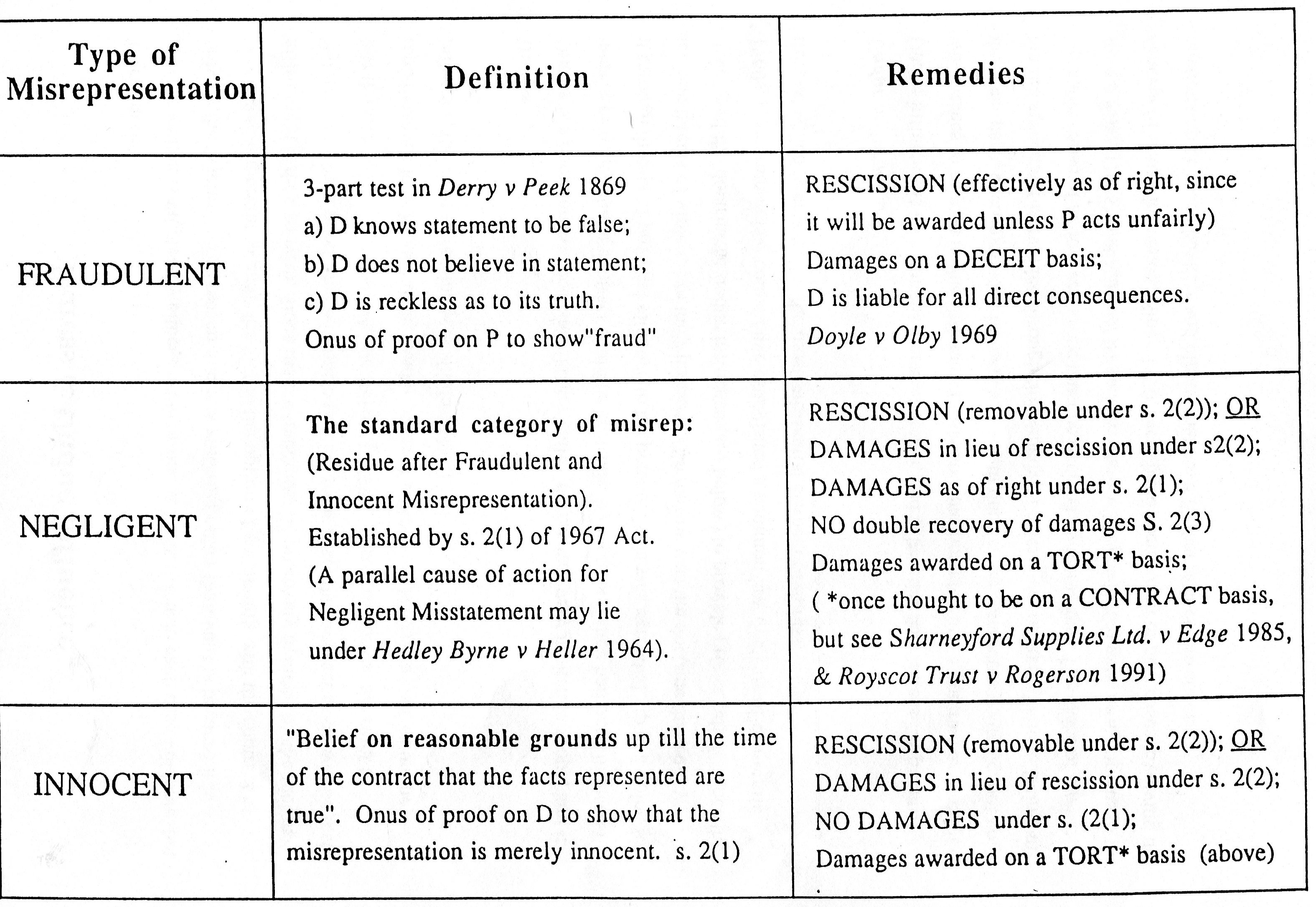
Fraudulent Misrepresentation Fraudulent misrepresentation is an intentional deception made by a real estate agent for personal or financial gain. This is active, knowing deceit. If you know a property sits on a toxic landfill and you deliberately conceal this fact, or actively forge documents to hide it to ensure your commission clears, you have committed fraud.
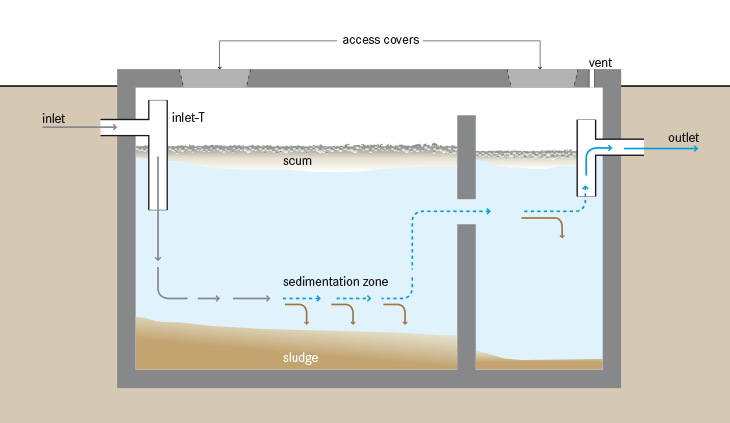
Negligent Misrepresentation Negligent misrepresentation occurs when a real estate agent fails to exercise reasonable care in verifying the accuracy of a statement made to a party. This is a failure of competence rather than a failure of morality. If a seller tells you the property is hooked up to the municipal sewer system, and you pass this information to the buyer without checking the tax records (where a reasonable agent would have discovered it operates on a septic tank), you are guilty of negligence. You did not intend to lie, but your failure to verify the facts caused harm.
The Cascading Consequences of Misrepresentation
The legal architecture of New York real estate is heavily armed against misrepresentation. When an agent lies or acts with severe negligence, the blast radius impacts the deal, the agent's livelihood, and the principal themselves.
1. The Collapse of the Transaction The immediate casualty of misrepresentation is the contract itself. Real estate contracts rely on a mutual meeting of the minds based on shared realities. If the reality was fabricated, the aggrieved party has a legal escape hatch. A buyer can seek rescission of a real estate contract if the seller's agent committed material misrepresentation. Rescission unwinds the transaction entirely, returning the buyer's earnest money and leaving the seller back at square one.
Naturally, if the deal collapses due to the agent's malfeasance, the right to compensation vanishes. A real estate agent who commits misrepresentation can lose the right to receive a commission for the transaction. You cannot profit from a deal built on a foundation of your own deceit.
2. Regulatory Annihilation The state government, acting as the guardian of the public trust, possesses formidable disciplinary powers. The New York Department of State can suspend a real estate license due to agent misrepresentation, temporarily stripping you of your ability to practice. In severe cases, particularly involving intentional fraud, the New York Department of State can revoke a real estate license due to agent misrepresentation, ending your career permanently.
Furthermore, the Department of State does not limit itself to license modification. The New York Department of State can impose financial fines on a real estate agent for breaching fiduciary duties.
3. Civil Liability Beyond the loss of a license and commission, the courts will hold the agent financially accountable for the damage caused. A real estate agent is personally liable for civil damages resulting from the agent's own fraudulent misrepresentation. If a buyer has to spend $50,000 to mitigate a foundational defect that you intentionally concealed, you can be forced to pay those damages out of your own pocket.
4. Collateral Damage to the Principal Perhaps the most terrifying aspect of the agency relationship for the client is the concept of vicarious liability. Because the agent acts as the principal's legal extension, the principal can be punished for the agent's actions. A principal can face civil liability for the misrepresentations made by their hired real estate agent. Even if the seller was completely innocent and unaware that their agent was lying to buyers about the property boundaries, the seller can still be sued by the buyer.
This brings us full circle. A principal facing a lawsuit because of an agent's lie highlights exactly why the fiduciary duties of OLD CAR exist. The principal's extreme vulnerability necessitates the agent's extreme responsibility. To hold a real estate license in New York is to operate within this matrix of high stakes, where competence, truthfulness, and absolute loyalty are not just professional ideals, but strict legal mandates.