The Real Estate Agent
Not sure you’re ready?
Take the ~3-minute readiness diagnostic and see where you stand.
When a property owner signs a listing agreement with a brokerage, they are doing much more than hiring a marketer to sell their home. They are legally extending their own identity to another professional. In the eyes of New York State law, the agent’s signature becomes the owner’s signature, the agent’s negotiations become the owner’s negotiations, and the agent’s knowledge becomes the owner’s knowledge. Agency is a legal relationship where one person authorizes another to act on their behalf in business transactions.
Understanding the precise architecture of this relationship is not merely a rote requirement for passing the New York Real Estate Salesperson exam. It is the invisible force field that governs every conversation you will have, dictates every disclosure you must make, and rigidly defines whose financial interests you are sworn to protect.
To understand real estate law, we must first establish the cast of characters. The legal mechanics of agency always begin with a transfer of power.
The person who authorizes another to act on their behalf in an agency relationship is called the principal. Conversely, the person authorized to act on behalf of the principal in an agency relationship is called the agent.
In the day-to-day trenches of real estate transactions, the principal is typically the buyer, seller, landlord, or tenant. When you are representing one of these parties, you are acting as their agent.
To make this practical, New York real estate law gives us a crucial vocabulary shortcut: In the context of real estate agency law, the term client is legally synonymous with the principal. Whenever the exam (or a seasoned broker) refers to your "client," they are referring to your principal—the person who has legally deputized you to fight for their interests.
The Dividing Line: Clients vs. Customers
The most dangerous mistake a newly licensed salesperson can make is treating everyone they meet as a client. You will interact with many people in a transaction, but your legal obligations to them vary drastically based on a single dividing line: representation.
A customer is an unrepresented third party in a real estate transaction.
If you are hired to sell a $1.5 million townhouse in Brooklyn, the seller is your client. When a buyer walks into your open house off the street without an agent, that buyer is a customer. The distinction matters because of the profound weight of legal duty. A real estate agent owes fiduciary duties exclusively to the client. You are legally bound to protect the client's interests with singular devotion.

Because you represent the seller, a real estate agent does not owe fiduciary duties to a customer. You do not negotiate for the buyer. You do not help the buyer strategize a lowball offer. However, the lack of fiduciary duty does not mean a lack of legal regulation. The law does not permit you to be predatory or deceptive.
When interacting with a customer, you have two strict, non-negotiable legal obligations:
- A real estate agent must treat a customer with fairness and honesty. You cannot lie to a customer to inflate a sales price.
- A real estate agent must disclose all known material defects about a property to a customer. If your seller casually mentions that the basement floods during heavy rain, you cannot hide this fact from the unrepresented buyer. The defect is a material fact, and hiding it violates your baseline duty of honesty to the customer.
| Obligation | The Client (Your Principal) | The Customer (Unrepresented 3rd Party) |
|---|---|---|
| Fiduciary Duties | Yes (Total devotion to their interests) | No |
| Strategic Advice | Yes (Negotiation, pricing strategy) | No |
| Fairness & Honesty | Yes | Yes |
| Disclose Material Defects | Yes | Yes |
Who actually owns the relationship with the client? New agents often believe that when they sign up a new seller, that seller is their client. Legally, this is an illusion.
The New York State Department of State requires an individual to hold a valid real estate license to represent a client in a real estate transaction for compensation. But the state draws a strict hierarchy regarding how that license is used.
By law, only a licensed real estate broker can directly enter into an agency agreement with a client in New York.
When you pass your exam, you will become a licensed real estate salesperson. A licensed real estate salesperson can only enter into an agency agreement on behalf of their sponsoring broker. You are an extension of the broker's legal entity. Therefore, a real estate salesperson acts as an agent of their sponsoring broker.
Because the client technically hired your broker, and you are acting as an agent for your broker, New York law categorizes your relationship to the buyer or seller very specifically: A real estate salesperson acts as a subagent to the broker's client.
The Chain of Command: The Client hires the Broker (Agency). The Broker authorizes the Salesperson to do the groundwork (Agency). The Salesperson is thus a subagent to the Client.
The Boundary of Unlicensed Assistants
Because agency is a solemn legal transfer of authority, it cannot be handed to just anyone. Many busy agents hire assistants to handle paperwork or marketing. However, unlicensed real estate assistants are strictly prohibited from performing any duties that require a real estate license.
If a buyer calls the office asking about how representation works, an unlicensed assistant must stop the conversation. Unlicensed real estate assistants cannot legally explain agency relationships to clients or customers. Doing so constitutes the unauthorized practice of real estate, which puts both the assistant and the agent's license in grave jeopardy.
When an agency relationship is formed, the agent is legally burdened with a set of fiduciary duties. "Fiduciary" comes from the Latin fiducia, meaning trust. You are entrusted with the financial well-being of another human being.
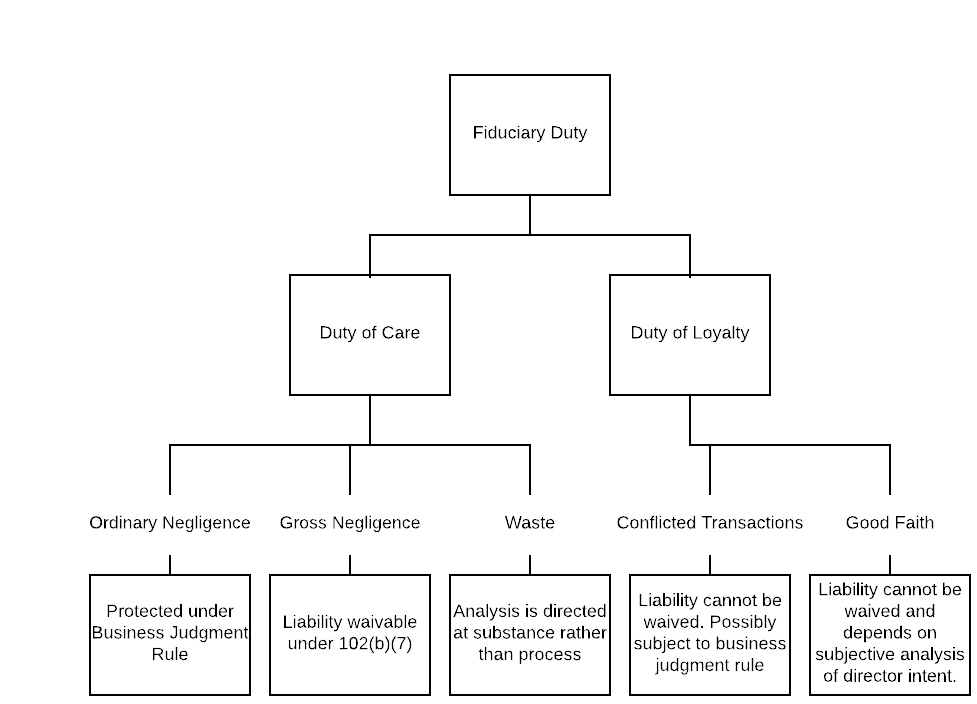
To remember these specific duties for the state exam, rely on a classic mnemonic. The fiduciary duties owed to a client are commonly remembered by the acronym OLD CAR.
- O is for Obedience: You must obey all lawful instructions from your client. If your seller says, "Do not show my house on Sundays," you do not show it on Sundays. (Note: You do not obey unlawful instructions, such as a request to violate Fair Housing laws).
- L is for Loyalty: The fiduciary duty of loyalty requires the real estate agent to place the client's interests above all other interests, including your own. If a client wants to buy a property that pays you a lower commission over one that pays a higher commission, you must facilitate the purchase of the property that best serves them.
- D is for Disclosure: You must disclose all relevant information that might affect your client's decisions. If you discover a buyer is desperate to close quickly because of an expiring lease, and you represent the seller, you must tell the seller. It is crucial negotiating leverage.
- C is for Confidentiality: You must keep your client's personal, financial, and motivational information secret. If your seller is facing foreclosure and desperately needs to sell, telling a buyer would destroy your client's negotiating position. Furthermore, the fiduciary duty of confidentiality extends indefinitely beyond the termination of the real estate agency relationship. Even ten years after the closing, you cannot reveal your former client's secrets.

- A is for Accountability: You are strictly accountable for all documents and funds entrusted to you, such as earnest money deposits.
- R is for Reasonable Care and Skill: You must act with the competence expected of a licensed professional. This means properly pricing properties, accurately writing contracts, and knowing when to advise a client to seek a lawyer or inspector.
Agency does not magically occur just because you are wearing a suit and showing houses. It must be created.
Express agency is created through an explicit agreement between the principal and the agent. The intentions are clearly stated. An express agency agreement can be created through a written contract or an oral agreement. (Though oral agreements are incredibly difficult to enforce if a dispute arises, they are legally valid to create the relationship).
In practice, express agency is usually codified in standardized paperwork:
- A listing agreement creates an express agency relationship between a seller and a real estate broker.
- A buyer representation agreement creates an express agency relationship between a buyer and a real estate broker.
However, you must be exceptionally careful about how you act in the field. You can accidentally create an agency relationship without a single piece of paper. Implied agency is created through the actions and behaviors of the principal and the agent. If a buyer asks for your advice on how much to offer, and you analyze the market and say, "Offer $500,000, and I'll push the seller's agent to accept it," you have just acted like an agent. The law will treat you as an implied agent, meaning you are now bound by OLD CAR fiduciary duties, whether you meant to be or not.
The Irrelevance of Money
A common myth is that you only represent someone if they are paying you. In real estate, the flow of money does not equal the flow of legal duty.
The payment of compensation does not determine the existence of a real estate agency relationship. You can represent a buyer fully and exclusively, even if the seller's broker is the one paying your commission at the closing table.
Taking this a step further, a real estate agency relationship can be created without the agent receiving any payment or commission. If you list your neighbor's house as a favor for free, you still owe them Obedience, Loyalty, Disclosure, Confidentiality, Accountability, and Reasonable Care. A real estate agency relationship where the agent receives no compensation is called a gratuitous agency. You may be working for free, but your legal liabilities are identical to a multimillion-dollar transaction.
Historically, real estate was a confusing landscape for consumers. Buyers used to spend weeks driving around with agents, assuming the friendly agent in the passenger seat worked for them, when legally, those agents were subagents of the seller! To fix this dangerous confusion, New York State law requires strict transparency.
Section 443 of the New York Real Property Law requires real estate licensees to provide a written agency disclosure form to consumers.
Timing is everything with this document. The New York agency disclosure form must be presented to a consumer at the first substantive contact. "First substantive contact" is the exact moment the conversation shifts from casual small talk to meaningful real estate strategy. If you meet someone at an open house and talk about the weather, that is not substantive. The moment they say, "We have a budget of $800,000 and really need to move by August," you have hit first substantive contact. You must present the disclosure form before they reveal anything else.
The New York agency disclosure form explains the different types of agency representation available to the real estate consumer. It defines seller's agents, buyer's agents, brokers' agents, and dual agents. It is the real estate equivalent of reading someone their rights.

It is vital to understand—and to explain to hesitant consumers—what this document actually is. The New York agency disclosure form is a statutory document and not a binding contract.
Consumers often recoil when asked to sign a document early in a relationship. They fear they are committing to hiring you or paying you. You must reassure them: Signing the New York agency disclosure form does not legally create an agency relationship between the agent and the consumer. It is simply a receipt, a legally mandated acknowledgment that you have explained how representation works in New York State.
Sometimes, the laws of physics and the laws of real estate collide. What happens when your seller client is selling a home, and your buyer client wants to purchase that exact home?
This creates a scenario known as dual agency. A dual agent represents both the buyer and the seller in the exact same real estate transaction.
Dual agency creates a profound legal paradox. Recall the "L" in OLD CAR: Loyalty. You are required to place your client's interests above all others. If you represent the seller, your job is to secure the highest possible price. If you represent the buyer, your job is to secure the lowest possible price.
Because it is impossible to negotiate against yourself, a dual agent cannot provide undivided loyalty to either the buyer or the seller. You become a neutral facilitator rather than a fierce advocate.
Because the clients are surrendering their right to your undivided loyalty, the state treats dual agency with extreme caution. Dual agency in New York requires the informed and written consent of both the buyer and the seller. They must explicitly understand what they are giving up. If you act as a dual agent without obtaining this written consent in advance, you are violating your fiduciary duties, which can result in the loss of your commission and the revocation of your real estate license.
Mastering the mechanics of the real estate agent is about mastering boundaries. Knowing exactly who you represent, what duties you owe them, and how to communicate those boundaries to the public is what separates an amateur showing houses from a licensed professional executing complex legal transactions.