Comparative Market Analysis and AVMs
Not sure you’re ready?
Take the ~3-minute readiness diagnostic and see where you stand.
To place a price tag on a piece of real estate is to attempt to quantify human desire, economic utility, and physical shelter in a single, static number. A property has no inherent price stamped on its foundation; its value is entirely relative, determined by what the market will bear at a specific moment in time. For the aspiring real estate professional, mastering valuation is not merely an exercise in filling out forms—it is the absolute foundation of your fiduciary duty. Whether you are guiding a family in extracting their life savings from a home or protecting a buyer from overpaying, you must understand the machinery of market valuation. In the United States, this machinery is categorized into four distinct tools, each varying in cost, regulatory rigor, and human judgment: the Comparative Market Analysis (CMA), the Broker Price Opinion (BPO), the Automated Valuation Model (AVM), and the formal appraisal.
When you sit down at a kitchen table with a client, the tool you will rely on most heavily is the Comparative Market Analysis (CMA). A CMA is an estimate of a property's likely selling price. It is the practical translation of market data into actionable advice.
Real estate licensees prepare Comparative Market Analyses (CMAs) to accomplish two primary goals:
- To help sellers determine an appropriate listing price so their property does not languish on the market.
- To help buyers formulate competitive purchase offers that are grounded in reality rather than emotion.
To build a CMA, you begin with the subject property—which is the specific property being evaluated for a potential listing or purchase. Think of the subject property as your scientific control. You cannot know its exact value in a vacuum, so a Comparative Market Analysis (CMA) relies on comparing the subject property to a carefully curated selection of comparable properties (often called "comps").
Selecting the Right Comparables
If you are trying to value a 1950s ranch-style home, comparing it to a newly constructed three-story townhome is statistically useless. Comparable properties in a Comparative Market Analysis (CMA) should closely match the subject property in physical size, age, and architectural style.

Furthermore, real estate is hyper-local. When preparing a Comparative Market Analysis (CMA), the licensee must select comparable properties located in the same geographic neighborhood. Crossing a major highway or entering a different school district can drastically alter land values, rendering the comparison invalid.
Time is your next constraint. Markets shift constantly due to interest rates and economic sentiment. Therefore, when preparing a Comparative Market Analysis (CMA), the licensee should prioritize comparable properties that sold within the last six months.
However, looking only at past successes gives you an incomplete picture. A robust CMA also examines two other categories of properties:
- Active Listings: A Comparative Market Analysis (CMA) relies on comparing the subject property to currently active listings to understand the immediate competition. This tells your seller what other options buyers have today.
- Expired Listings: A Comparative Market Analysis (CMA) analyzes expired listings to demonstrate prices at which similar properties failed to sell. This is highly effective in curbing a seller's unrealistic pricing expectations.
The Mathematics of the CMA: Adjustments
No two properties are perfectly identical. To arrive at a precise estimate, you must mathematically manipulate the prices of your comparables to make them "equal" to your subject property.
Here is the cardinal rule of real estate math, a concept that trips up thousands of exam-takers every year: In a Comparative Market Analysis (CMA), monetary adjustments are always applied to the comparable property's price. Monetary adjustments are never applied to the subject property's price.
Why? Because the subject property is fixed; it is reality. We cannot magically add a bedroom to the subject property on paper. Instead, we adjust the sales price of the comparable property to reflect what it would have sold for if it had the exact same features as the subject.
We use two foundational acronyms to govern these adjustments: CBS and CIA.
CBS: Comparable Better Subtract If a comparable property is superior to the subject property, the comparable property's price is adjusted downward in a Comparative Market Analysis (CMA). Example: Your subject property has no garage. The comparable property has a two-car garage and sold for $400,000. Because the comparable is better, you subtract the estimated value of the garage (e.g., $20,000) from the comparable's sale price. The adjusted price is $380,000.
CIA: Comparable Inferior Add If a comparable property is inferior to the subject property, the comparable property's price is adjusted upward in a Comparative Market Analysis (CMA). Example: Your subject property has a renovated kitchen. The comparable property has an outdated, inferior kitchen and sold for $350,000. Because the comparable is inferior, you add the value of the renovation (e.g., $25,000) to the comparable's price. The adjusted price is $375,000.
The Critical Disclaimer
Despite your expertise, a Comparative Market Analysis (CMA) is not a formal appraisal. Because of strict federal and state licensing laws, real estate agents must include a disclaimer in a Comparative Market Analysis (CMA) stating that the report is not an appraisal. Blurring this line is a severe violation of licensing law.
Moving up the ladder of institutional valuation, we encounter the Broker Price Opinion (BPO). A BPO is an estimated value of a property determined by a real estate broker or qualified real estate agent.
While a BPO utilizes similar logic to a CMA, the end user is different. Rather than a buyer or seller, lenders frequently request a Broker Price Opinion (BPO) to determine property values for short sales and foreclosures. When a borrower stops paying their mortgage, the bank needs to know how much the underlying collateral is worth, but they need this information quickly and cheaply.

Because speed is prioritized over granular detail, a Broker Price Opinion (BPO) is less comprehensive than a formal appraisal. In fact, a bank will often request a drive-by Broker Price Opinion (BPO), which typically relies on an exterior visual inspection of the property. The agent assesses the neighborhood, notes the exterior condition from the street, and combines that with local market data.
Real estate agents may legally receive a fee for performing a Broker Price Opinion (BPO). For many agents, completing BPOs for asset management companies is a lucrative side-stream of income.
However, there is a hard regulatory wall: A Broker Price Opinion (BPO) cannot be used as a formal appraisal for a federally related mortgage loan. For the origination of a standard primary mortgage, a BPO simply does not carry enough legal weight.
In our digital age, the first place a consumer looks for a property's value is not a professional, but a server. An Automated Valuation Model (AVM) is a computerized service that uses mathematical algorithms to estimate property values.
AVMs operate at incredible scale and speed. To function, an Automated Valuation Model (AVM) relies heavily on public record databases. It seamlessly utilizes historical sales data to calculate property value, tracking how prices in a zip code have trended over decades. Furthermore, an Automated Valuation Model (AVM) utilizes public tax assessments to calculate property value, tying market trends to municipal data.
You see AVMs every day. Consumer-facing real estate websites frequently use Automated Valuation Models (AVMs) to provide instant property value estimates (think of the "Zestimate" on Zillow or Redfin's automated pricing). Institutions use them too. Lenders use Automated Valuation Models (AVMs) to quickly verify property values for low-risk home equity loans where the cost of a full appraisal is unjustified. Lenders also use Automated Valuation Models (AVMs) for mortgage portfolio valuation management—allowing a bank to instantly calculate the total estimated value of 10,000 bundled mortgages on their balance sheet.
The Achilles Heel of the AVM
While powerful, algorithms have a fatal flaw: they cannot see reality. An Automated Valuation Model (AVM) does not involve any physical inspection of the subject property. Consequently, an Automated Valuation Model (AVM) cannot assess the interior condition or specific physical defects of a property.
If a homeowner spends $100,000 on imported Italian marble countertops, the AVM does not know. If a house is infested with black mold and has a cracked foundation, the AVM is completely blind to it. The AVM merely sees a 3-bedroom house on a 0.2-acre lot in a specific zip code. This is why AVMs are highly volatile in rural areas or neighborhoods with unique, non-uniform housing stock, and why the human element of a CMA remains indispensable.

At the absolute apex of the valuation hierarchy sits the formal appraisal. Unlike a CMA or a BPO, which are estimates or opinions, a formal appraisal provides an objective and unbiased opinion of a property's defined market value.
Appraisers are not advocates for the buyer, the seller, or the agent; they are impartial analysts protecting the lender and the integrity of the financial system. Because of the economic weight their reports carry, only licensed or certified appraisers are legally permitted to perform formal real estate appraisals.
The methodology of an appraiser is intensely scrutinized. Formal real estate appraisals must comply with the Uniform Standards of Professional Appraisal Practice (USPAP). USPAP is the stringent ethical and performance rulebook that governs exactly how an appraiser must gather, verify, and analyze data.
The necessity of the formal appraisal was forged in the fires of the 1980s Savings and Loan Crisis, where inflated property values caused massive banking failures. Congress stepped in to ensure that institutional money was protected by empirical truth. Today, federal law requires a formal appraisal by a licensed or certified appraiser for all federally related real estate transactions.
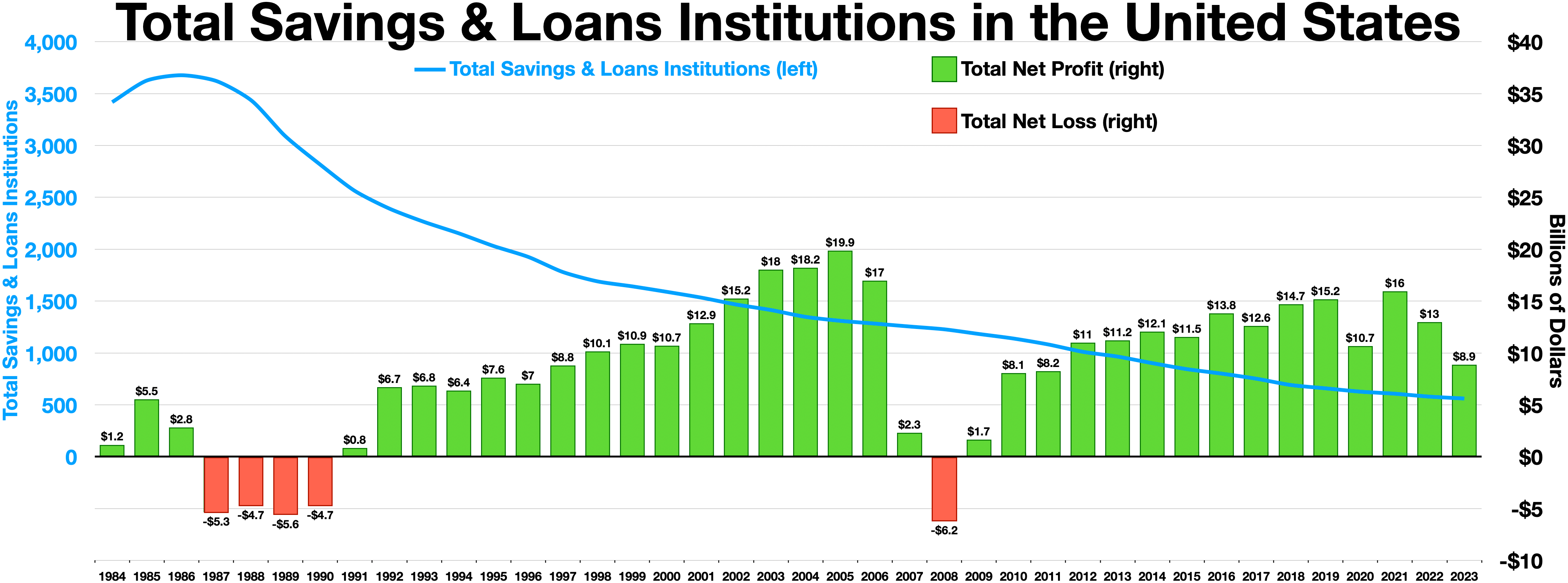
The specific legislation enforcing this standard is highly testable: The Financial Institutions Reform, Recovery, and Enforcement Act (FIRREA) dictates the requirements for formal appraisals in federally related transactions. If a buyer is obtaining an FHA, VA, or conventional loan backed by federal entities, a FIRREA-compliant appraisal is non-negotiable.
To cement these distinctions for your national exam, use the following matrix to categorize the four tools of valuation by their creator, their primary use, and their limitations:
| Valuation Type | Prepared By | Primary Use Cases | Key Rule / Limitation |
|---|---|---|---|
| CMA | Real Estate Licensee | Sellers setting list price; Buyers making offers. | Always adjust the comp (CBS/CIA). Must contain a disclaimer that it is not an appraisal. |
| BPO | Broker / Licensee | Lenders evaluating distressed properties (short sales, foreclosures). | Cannot be used to originate a federally related mortgage loan. Drive-bys are common. |
| AVM | Computer Algorithm | Instant consumer estimates; lender portfolio management; low-risk HELOCs. | Blind to interior condition and physical defects. Relies entirely on public/tax records. |
| Appraisal | Licensed/Certified Appraiser | Federally related real estate transactions (standard mortgages). | Must comply with USPAP. Dictated federally by FIRREA. Objective and unbiased. |
Master these boundaries. Your ability to distinguish between an algorithm's guess, an agent's calculation, and an appraiser's legal ruling is not just a requisite for passing your exam—it is what will make you an authoritative, trusted advisor in the field.