Loan Financing Concepts and Promissory Notes
Not sure you’re ready?
Take the ~3-minute readiness diagnostic and see where you stand.
At the core of every financed real estate transaction lies a fundamental separation between the physical property and the financial paper. When a buyer sits at a closing table, they are executing two distinct legal acts: pledging real estate as collateral, and making a personal, legally binding promise to repay a specific sum of money. While real estate professionals spend months analyzing the dirt and the structures built upon it, the mechanics of the financial paper dictate whether a transaction will actually survive to closing. Understanding how debt is structured, priced, and evaluated is not merely a matter of memorizing banking trivia; it is the physics of the real estate market.
To master real estate finance, we must isolate the engine of the debt—the promissory note—and examine the mathematical levers lenders use to manage their risk and return.
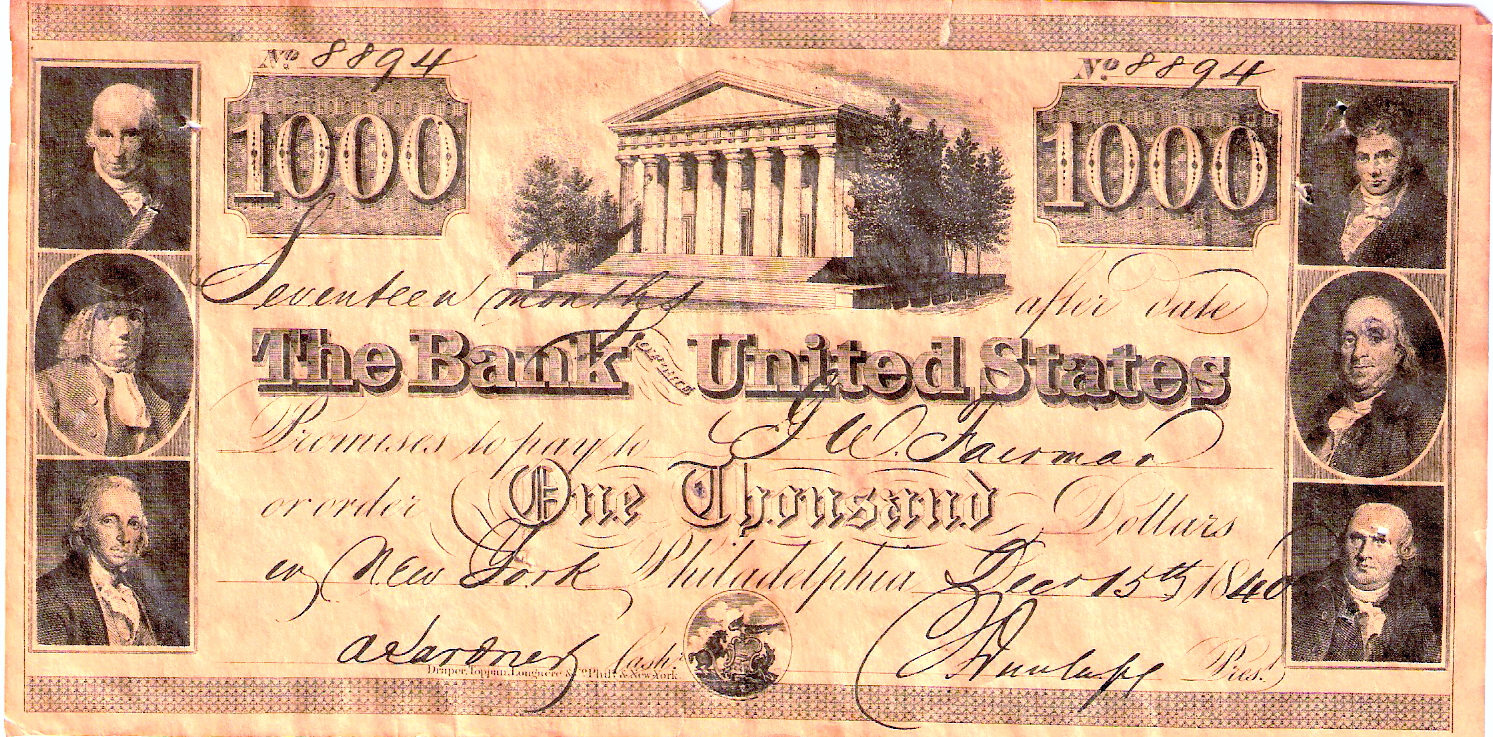
Before a lender will ever place a lien on a piece of property, they require a fundamental guarantee of repayment. A promissory note is a written promise to pay a specific amount of money.
In the eyes of the law, this document serves as the primary legal evidence of a debt. It is the core contract of the financing arrangement, existing distinctly from the mortgage or deed of trust. The distinction is crucial: a promissory note establishes personal liability for a debt without creating a lien on a property by itself. The mortgage is what creates the lien; the note is what creates the personal obligation. If a borrower defaults, it is the promissory note that gives the lender the right to sue the borrower for the money owed, regardless of what happens to the real estate.
The Actors and the Elements
In the language of the note, the roles are strictly defined:
- The Maker: The borrower who makes the promise to repay the debt.
- The Payee: The lender receiving the repayment.
For a promissory note to be legally valid and enforceable, it cannot be a casual IOU. It must contain the following essential elements:
- An unconditional promise to pay: The obligation cannot be contingent upon the borrower's satisfaction with the house or future financial success.
- A definite principal amount owed: The exact monetary debt must be explicitly stated.
- An explicit payment schedule or due date: The exact timeline for repayment must be clear.
- Signature by the maker: The borrower must sign the instrument.
- Delivery to and acceptance by the payee: The note must be physically or electronically delivered to the lender.
Crucial Concept: Note that the payee (the lender) does not need to sign the promissory note. Only the maker (borrower) signs it, as they are the one making the promise.
The Note as a Tradable Commodity
Lenders rarely hold mortgages for thirty years. They prefer to originate loans and immediately sell them on the secondary mortgage market to replenish their capital. This is possible because a promissory note is classified as a negotiable instrument.
Like a standardized check, a negotiable instrument can be sold or transferred to a third party by the payee. By endorsing the note, the original lender assigns their right to receive the borrower's monthly payments to an investor (such as Fannie Mae or Freddie Mac).
Money is a commodity, and renting it has a cost. The lender must be compensated for the risk of lending capital over time, and they structure this compensation through ongoing interest and upfront fees.
Simple Interest Paid in Arrears
Interest is the cost of borrowing money charged by a lender. In the consumer credit world, you might encounter complex compound interest, but interest on real estate mortgages is typically simple interest rather than compound interest.
Simple interest is calculated only on the remaining outstanding principal balance of the loan. Every time a borrower makes a payment, the principal balance drops slightly, meaning the next month's interest calculation will be based on that new, lower balance.
Furthermore, real estate mortgage interest is typically paid in arrears. To pay in arrears means that a monthly mortgage payment covers the interest accrued during the previous month.
- Real-World Application: If you live in a house for the month of October, using the lender's money for those 31 days, your November 1st mortgage payment pays the interest for October. You are paying for the time you have already used the capital.
State laws heavily regulate the cost of borrowing to protect consumers. Usury is the illegal act of charging an interest rate higher than the maximum limit established by state law. Lenders who cross this threshold face severe penalties, including the forfeiture of the right to collect any interest at all.
Upfront Fees: Origination vs. Discount Points
At closing, borrowers encounter two specific upfront fees, both calculated as percentages of the loan amount. They sound similar but serve entirely different economic functions.
1. The Loan Origination Fee To underwrite a loan, a lender must pay underwriters, process paperwork, verify employment, and manage logistics. A loan origination fee is a charge by the lender to cover these administrative costs of processing a new loan. Mathematically, a loan origination fee is typically calculated as one percent of the total loan amount. If your client is borrowing $300,000, expect a $3,000 origination fee.
2. Discount Points What if a borrower wants a lower interest rate than the current market offers? They can buy it down using discount points. A discount point is an upfront fee paid to a lender to lower the interest rate on a mortgage loan.
Because this money effectively buys a cheaper rate over the life of the loan, the IRS and the banking industry classify discount points as a form of prepaid interest.
- The Math: One discount point is mathematically equal to one percent of the total loan amount. (Do not confuse this with 1% of the purchase price).
- The Yield: By collecting cash upfront, paying discount points increases the lender's overall yield on the loan. As a general industry rule of thumb, one discount point increases a lender's yield by approximately one-eighth of one percent (0.125%).
| Concept | Purpose | Calculation |
|---|---|---|
| Origination Fee | Covers administrative overhead | 1% of the loan amount |
| Discount Point | Lowers the borrower's ongoing rate (Prepaid Interest) | 1% of the loan amount (per point) |
Lenders are inherently pessimistic. When they evaluate a loan application, they are constantly calculating their exposure if the borrower stops paying tomorrow. Their primary metric for this exposure is the LTV.
The Loan-to-Value Ratio (LTV)
The loan-to-value ratio is the percentage of a property's value that a lender is willing to finance. Lenders use this ratio to assess the risk of a mortgage loan. The logic is simple: a borrower with 40% equity in their home is highly unlikely to walk away and default. A borrower with only 3% equity is a much higher flight risk if property values drop. Therefore, a higher loan-to-value ratio indicates a higher risk of default for the lender.
The loan-to-value ratio is calculated by dividing the loan amount by the property value. However, real estate markets are subjective, so lenders apply a strict governor to this calculation: For loan-to-value calculations, lenders must use the lesser of the property's appraised value or the purchase price.
- Scenario: Your buyer agrees to purchase a home for $400,000. The appraiser decides it is only worth $380,000. The lender will base the LTV entirely on the $380,000 appraisal. If the borrower wanted an 80% loan, the lender will only lend $304,000 (80% of $380,000), forcing the buyer to bring the difference in cash.
Private Mortgage Insurance (PMI)
Historically, lenders demanded a 20% down payment (an 80% LTV) to originate a conventional loan. Today, borrowers can buy homes with much less down, but the lender requires a shield against that added risk.
Private Mortgage Insurance (PMI) is a policy that protects the lender in case the borrower defaults on a conventional loan.
- Lenders typically require PMI when the loan-to-value ratio exceeds 80 percent.
- Equivalently, lenders typically require PMI when a borrower makes a down payment of less than 20 percent.
Do not let your clients misunderstand what they are paying for. PMI does not protect the borrower from foreclosure. If the borrower defaults, they will lose the house. The PMI policy simply cuts a check to the lender to cover the lender's financial losses after the foreclosure sale.

Because borrowers detest paying for insurance that only protects the bank, federal law dictates how and when PMI is removed:
- Manual Cancellation: Borrowers can manually request the cancellation of PMI when the mortgage reaches an 80 percent loan-to-value ratio. (This usually requires paying for a new appraisal to prove the home's value hasn't dropped).
- Automatic Cancellation: The Homeowners Protection Act requires automatic cancellation of PMI when a conventional mortgage reaches a 78 percent loan-to-value ratio based on the original amortization schedule. (No appraisal required; it falls off automatically when the scheduled payments hit this milestone).
When qualifying a buyer, the lender doesn't just look at the principal and interest; they look at the total carrying cost of the asset. This total monthly obligation is known by the acronym PITI, which stands for Principal, Interest, Taxes, and Insurance.
A PITI payment represents the total monthly cost of homeownership required by a mortgage lender. Lenders use this comprehensive, proposed PITI payment to calculate debt-to-income (DTI) ratios during the loan qualification process. If the full PITI pushes the borrower's DTI too high, the loan is denied.
Let us dissect the four components of a PITI payment:
- Principal: This portion reduces the outstanding balance of the mortgage loan. In the early years of a 30-year loan, this amount is frustratingly small.
- Interest: This is the lender's fee for the borrowed money during that billing cycle. In the early years, interest consumes the vast majority of the payment.
- Taxes: This portion covers the borrower's annualized property tax liability. If the yearly property tax is $3,600, $300 is collected each month.
- Insurance: This portion covers the borrower's hazard insurance and any required mortgage insurance premiums (such as PMI).
Because local governments can foreclose on a property for unpaid taxes (wiping out the lender's mortgage lien in the process), lenders refuse to leave tax payments to chance. Lenders hold the taxes and insurance portions of a PITI payment in an escrow or impound account until the respective bills become due. The lender then pays the county tax assessor and the insurance company directly on the borrower's behalf.

A loan that requires the borrower to pay principal, interest, taxes, and insurance in one combined monthly payment is called a budget mortgage. This is the standard residential loan structure in the United States.
By mastering the mechanics of the promissory note, the calculation of points, the mitigation of risk through LTV and PMI, and the holistic impact of PITI, you transition from being a mere tour guide of houses to a highly competent advisor in real estate finance.