Basic Types of Ownership and Tenancy
Not sure you’re ready?
Take the ~3-minute readiness diagnostic and see where you stand.
Property ownership is rarely as simple as a name written on a deed. In the physical world, a house is made of wood, glass, and concrete, but in the legal world, real estate is an abstract bundle of rights. How those rights are distributed among people, and how long those rights last, fundamentally dictates what can be done with a piece of land. If you do not understand the mechanics of ownership and tenancy, you cannot accurately identify who has the authority to sign a listing agreement, who must approve a mortgage, or what happens to a transaction when a seller suddenly dies before closing.
To master real estate fundamentals, you must understand the architecture of title. We organize these ownership structures by asking two highly specific questions: How many people hold the rights, and how long do those rights last?
When you hear the word "severalty," your mind might automatically jump to the word "several," implying multiple people. In real estate law, you must discard that intuition. The term severalty is derived from the fact that the sole owner is severed or cut off from other owners.
Ownership in severalty occurs when real property is owned by one individual. It is the purest, simplest form of ownership. Because there are no co-owners to consult, the solitary owner has absolute discretion over the property, subject only to government powers.
This form of ownership is not restricted to living, breathing humans. Ownership in severalty occurs when property is owned by a single legal entity such as a corporation. Because the law views a corporation as a single "artificial person," a skyscraper owned by a massive multinational corporation is legally held in severalty.

What happens at death? Upon the death of an owner in severalty, the real property passes to the heirs or devisees of the deceased owner through probate. The property does not automatically transfer to a business partner or a spouse unless explicitly dictated by a will or state intestacy laws.
When the bundle of rights is shared, the dynamic shifts entirely. Concurrent ownership exists when two or more persons or entities hold title to the same property simultaneously. In your day-to-day real estate practice, you will frequently hear concurrent ownership also referred to as co-ownership.
The law recognizes different flavors of co-ownership, each engineered to solve specific human problems regarding inheritance, marriage, and investment.
Tenancy in Common
Tenancy in common is a form of co-ownership where each owner holds an undivided fractional interest in the property. "Undivided" is the operative word here. If two clients buy a 100-acre farm as tenants in common, they do not each own a distinct 50-acre half. Instead, each tenant in common has the right to occupy the entire property regardless of the size of their fractional ownership share.
This structure is highly flexible for investors. In a tenancy in common, the co-owners can hold unequal ownership shares. For instance, Investor A might hold a 75% interest because they provided the bulk of the capital, while Investor B holds a 25% interest. Despite this disparity in financial stake, Investor A cannot banish Investor B from 75% of the building.
Because each share is distinct and financially separate, a tenant in common can sell, mortgage, or transfer their fractional interest without the consent of the other co-owners.
The Rule of Default: When two or more unmarried people acquire real property without specifying the type of ownership on the deed, the law presumes a tenancy in common.
Crucially, tenancy in common does not include a right of survivorship. Upon the death of a tenant in common, the deceased owner's interest does not automatically jump to the surviving co-owners. Instead, it passes to their heirs according to a will or state intestacy laws.
Joint Tenancy and the Right of Survivorship
If tenancy in common is an investment vehicle, joint tenancy is a survivorship vehicle. Joint tenancy is a form of concurrent property ownership that inherently includes the right of survivorship.
The right of survivorship dictates that a deceased joint tenant's interest automatically transfers to the surviving joint tenants. This mechanism bypasses probate entirely. Because this transfer happens instantaneously upon the exact moment of death by operation of law, a joint tenancy interest cannot be passed to heirs through a will. A will is utterly powerless against a joint tenancy.
Because joint tenancy is a powerful legal mechanism that strips an individual's heirs of their inheritance, the law demands strict architectural perfection to create it. To create a valid joint tenancy, the four unities of possession, interest, time, and title must be present. You can remember this with the acronym PITT:
- Unity of Possession: Requires that all joint tenants have an equal right to possess the entire real property.
- Unity of Interest: Requires that all joint tenants hold equal ownership shares in the property (e.g., four joint tenants must each own precisely 25%).
- Unity of Time: Requires that all joint tenants acquire their ownership interests at the exact same time.
- Unity of Title: Requires that all joint tenants acquire their ownership interests through the same deed or legal document.
Breaking the Joint Tenancy What happens if three siblings own a cabin as joint tenants, and one sibling decides to sell their one-third share to a third party? The unity of time and the unity of title have been shattered for that specific share.
If a joint tenant sells their interest to a third party, the new owner becomes a tenant in common with the remaining joint tenants. However, the remaining joint tenants retain their joint tenancy relationship with each other after one joint tenant sells their share to a third party.
| Feature | Tenancy in Common | Joint Tenancy |
|---|---|---|
| Shares | Can be unequal | Must be perfectly equal |
| Survivorship | No. Passes to heirs. | Yes. Passes to surviving owners. |
| Creation | Default for unmarried co-buyers. | Requires four unities (PITT). |
| Transferability | Can sell/will without consent. | Can sell (breaks PITT), cannot be willed. |
Tenancy by the Entirety
The law frequently affords special protections to marriage. Tenancy by the entirety is a special form of joint property ownership recognized in some states and reserved exclusively for married couples. You can think of it as a joint tenancy plus a fifth unity: the unity of person. The law views the married couple as a single, indivisible legal entity.
Like a joint tenancy, tenancy by the entirety includes the right of survivorship for the surviving spouse. However, it provides far stronger protection against unilateral actions. In a tenancy by the entirety, neither spouse can sell or encumber the property without the consent of the other spouse. One spouse cannot take out a second mortgage on their "half" of the house, because legally, they do not own a half—the marriage owns the whole.
Because this tenancy relies entirely on the legal existence of the marriage, a tenancy by the entirety is automatically terminated by divorce. Upon divorce, a tenancy by the entirety typically converts into a tenancy in common, allowing the now-unmarried individuals to negotiate the sale or division of the asset.
Resolving Co-Ownership Disputes: The Partition Suit
What happens when co-owners go to war? Imagine three investors hold a property as tenants in common. Two want to hold the property for rental income; one wants to liquidate their share and cash out, but nobody wants to buy a messy 33% fractional share of a commercial building.
When the concurrent owners cannot agree on its division or sale, any owner can file a partition suit. A partition suit is a legal action to divide co-owned property.
A court-ordered partition can result in the physical division of the real estate among the co-owners (e.g., drawing a new property line down the middle of a 100-acre field, giving 50 acres to each). However, you cannot physically cut a single-family residential home in half. If physical division is impossible, a partition suit may force the sale of the property and division of the financial proceeds among the owners based on their fractional interests.
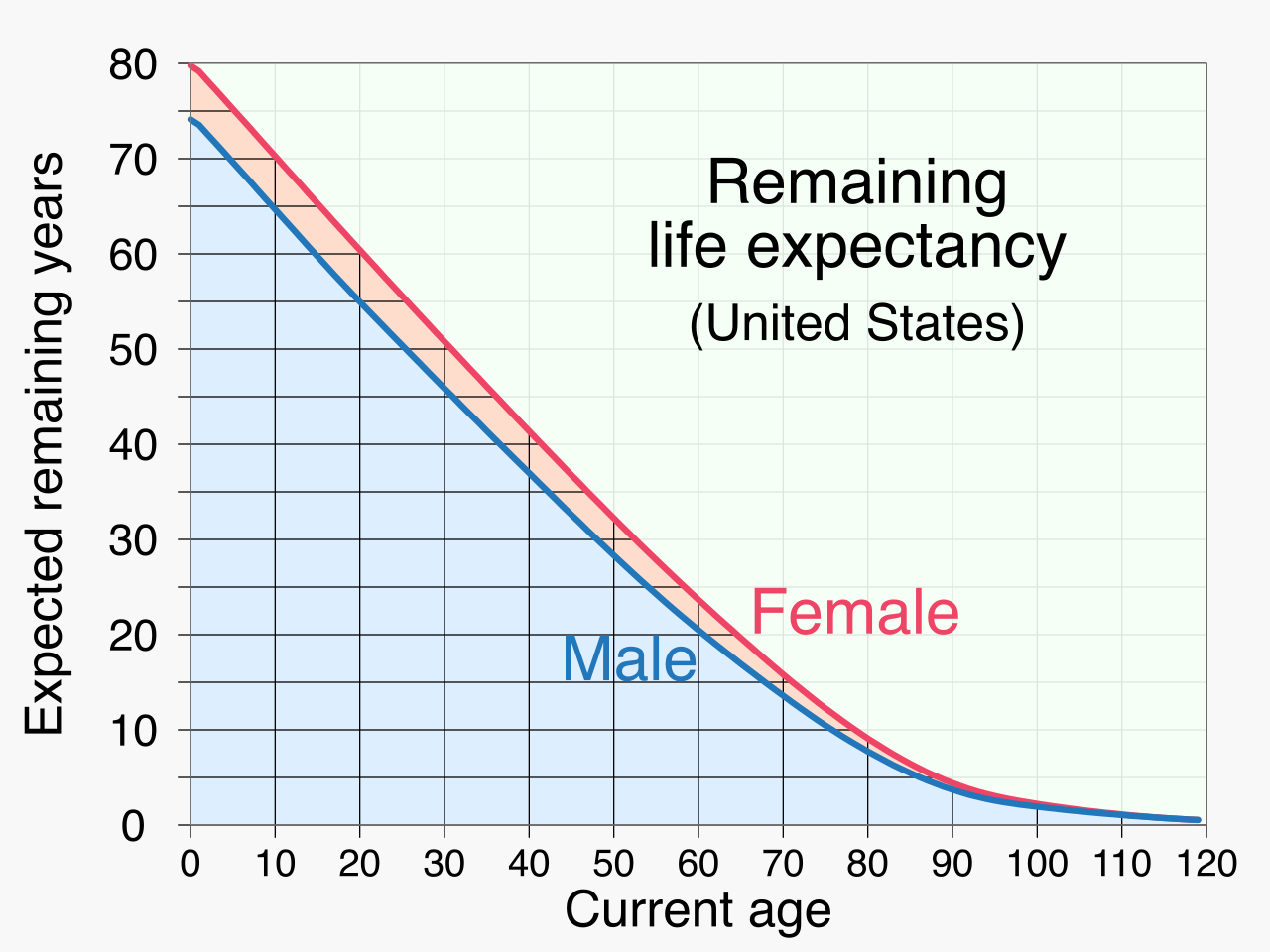
Up to this point, we have assumed that ownership lasts forever (a fee simple absolute estate). But ownership can be truncated by time—specifically, by the human lifespan.
A life estate is a freehold estate limited in duration to the life of a specific person. Because its expiration is guaranteed by human mortality, a life estate is not an estate of inheritance. It cannot be passed down through generations.
There are two primary ways to measure the duration of this estate:
- Ordinary Life Estate: An ordinary life estate is limited to the lifetime of the life tenant. For example, a man grants a house to his elderly mother for as long as she lives.
- Life Estate Pur Autre Vie: This is a life estate based on the lifetime of a person other than the life tenant. The term pur autre vie is a French legal phrase meaning "for the life of another." For example, a woman grants a property to a live-in nurse for as long as the woman's ailing uncle remains alive.
The Rights and Limitations of the Life Tenant
During the duration of the life estate, the life tenant is the true owner of the property. A life tenant has the full right to use the property and receive income from the property during the life estate duration. If the property is a multi-family duplex, the life tenant collects the rent.
However, because the property is destined to transfer to someone else when the measuring life ends, the life tenant's powers are restricted. A life tenant cannot commit waste or perform acts that permanently injure the property's future value. You cannot strip-mine the topsoil, sell off all the old-growth timber, or allow the roof to cave in from neglect, because doing so steals value from the future owner.

Because a life tenant holds a legitimate property interest, a life tenant can sell, lease, or mortgage their specific life estate interest. But buyer beware: you can only sell what you own. If a life tenant mortgages the property, or signs a ten-year lease with a tenant, that agreement is bound by the lifespan of the measuring life. Any lease or mortgage created by a life tenant terminates automatically upon the death of the measuring life. If you buy a life estate from an 85-year-old life tenant, your ownership of that property vanishes the moment they die.
Future Interests: Remainder and Reversion
Because a life estate is guaranteed to end, the law demands we know exactly where the property goes next. This creates a "future interest."
If the person who creates the life estate decides the property should pass to a third party when the estate ends, they create a remainder interest. A remainder interest is a future estate created to take effect immediately after the termination of a life estate. The person designated to receive the property after the life estate ends is called the remainderman. (For example, a father grants a life estate to his current wife, with his children from a prior marriage named as the remaindermen).
But what if the creator simply wants the property back? A reversionary interest exists when the property creator does not name a remainderman for a life estate. In a reversionary interest, the property ownership returns to the original grantor upon the termination of the life estate.
The life estates discussed above are created voluntarily by a property owner (usually via a deed or a will). However, state governments sometimes intervene to protect vulnerable citizens—specifically surviving spouses and families facing financial ruin.
A legal life estate is created automatically by state law rather than by the voluntary action of the property owner.
Historically, these took the form of gender-specific protections for surviving spouses, though modern courts and legislatures in many states have heavily modified or abolished them in favor of unified marital property laws. You must still know them for the national exam:
- Dower is a legal life estate that a wife has in the real estate of her deceased husband.
- Curtesy is a legal life estate that a husband has in the real estate of his deceased wife.
Finally, most states enforce some variation of a homestead exemption. Homestead laws create a legal life estate designed to protect the family home from certain types of unsecured creditors. If a homeowner falls into massive credit card debt or loses a civil lawsuit, homestead laws prevent those unsecured creditors from forcing the sale of the family's primary residence to satisfy the debt. (Note: This protection does not apply to secured debts like your mortgage or your property taxes; if you do not pay the bank or the government, they can and will foreclose).
Why this matters to your practice: When you sit down at a kitchen table to sign a listing agreement, you are translating these abstract concepts into reality. If a married couple owns a home as tenants by the entirety, and only the husband signs your listing agreement, you do not have a valid contract. If a client tells you they want to sell their deceased mother's home, but you discover the mother only held an ordinary life estate, your client has nothing to sell—the property already belongs to the remainderman. Grasping who holds the sticks in the bundle, and when those sticks snap, is the foundation of a successful real estate career.