Surface, Subsurface, Air, and Water Rights
Not sure you’re ready?
Take the ~3-minute readiness diagnostic and see where you stand.
When a client purchases a parcel of land, they rarely conceptualize their acquisition in three dimensions. Most buyers look at a two-dimensional plat map and believe they own a flat, neatly bounded polygon of dirt. In American property law, however, real estate is an inverted pyramid. The apex of this pyramid rests at the exact center of the Earth, radiating upward through the soil, encompassing the physical terrain, and extending indefinitely into the sky above.
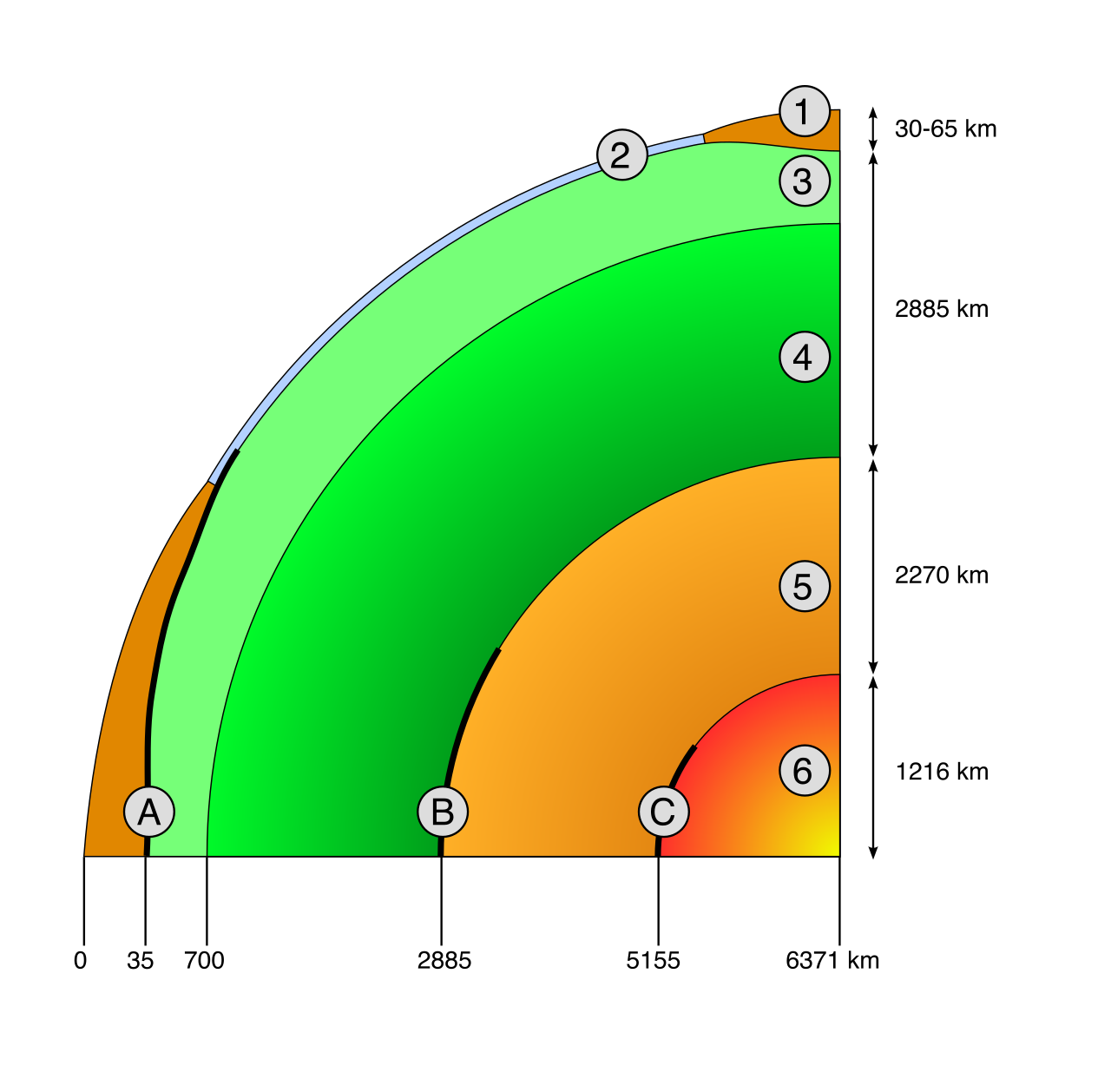
As a real estate professional, you must dismantle the illusion of the two-dimensional map. Property ownership is not a monolithic block; it is a bundle of independent rights that can be sliced horizontally, traded separately, and governed by entirely different sets of laws. You will routinely encounter properties where one individual owns the soil the house sits on, a corporation owns the minerals hundreds of feet below, and a developer owns the invisible column of empty space overhead.
To understand property rights, we must divide the physical world into horizontal layers. The law treats the surface, the subsurface, and the air above as distinct legally recognized territories.
Surface and Subsurface Rights
Surface rights govern the use of the physical surface of the earth. This includes the right to build a home, plant a garden, and pave a driveway. Below the topsoil, however, lies an entirely different domain. Subsurface rights govern the ownership and extraction of minerals, oil, gas, and water located below the earth's surface.
Because these rights are distinct, property owners can mix and match them. A property owner can sell surface rights while retaining subsurface rights. Conversely, a property owner can sell subsurface rights while retaining the surface rights. The legal act of transferring subsurface rights separately from surface rights is called severance.
Why this matters for your clients: If a client buys a 50-acre ranch, they assume they own everything beneath their boots. If a previous owner executed a severance fifty years ago, your client might be purchasing only the surface rights.
The Conflict of Severed Estates
When a property is severed, legal conflicts inevitably arise. Imagine you own the subsurface rights to a massive coal deposit, but another person owns the surface rights where you need to park your mining equipment. How do you extract your property?
The law anticipates this. Mineral rights are a specific, highly valuable type of subsurface right. When mineral rights are severed from surface rights, the law creates a hierarchy to ensure the minerals can actually be utilized. The mineral rights form a dominant estate, while the surface rights form a servient estate.
Because the mineral estate is dominant, the owner of severed mineral rights possesses an implied easement to access the surface of the land to extract the minerals. The surface owner cannot build a concrete bunker that permanently blocks the mineral owner from drilling or digging. The mineral owner has a legally protected right to reasonably disturb the surface to get to what is theirs.
The Rule of Capture for Liquid Minerals
Solid minerals like coal and copper stay exactly where they are. Liquid minerals, however, are migratory. Oil and natural gas flow through porous subterranean rock, completely ignoring the invisible property lines drawn by humans on the surface.
To manage this, liquid minerals like oil and gas are governed by the rule of capture. Think of this rule like sharing a massive, subterranean milkshake with your neighbors. The rule of capture allows a landowner to pump liquid minerals from beneath the property even if the minerals migrated from an adjacent property. If your client drills a well on their land and draws oil that originally sat under the neighbor's land, the neighbor cannot sue for theft. The oil belongs to whoever captures it first through lawful extraction on their own property.

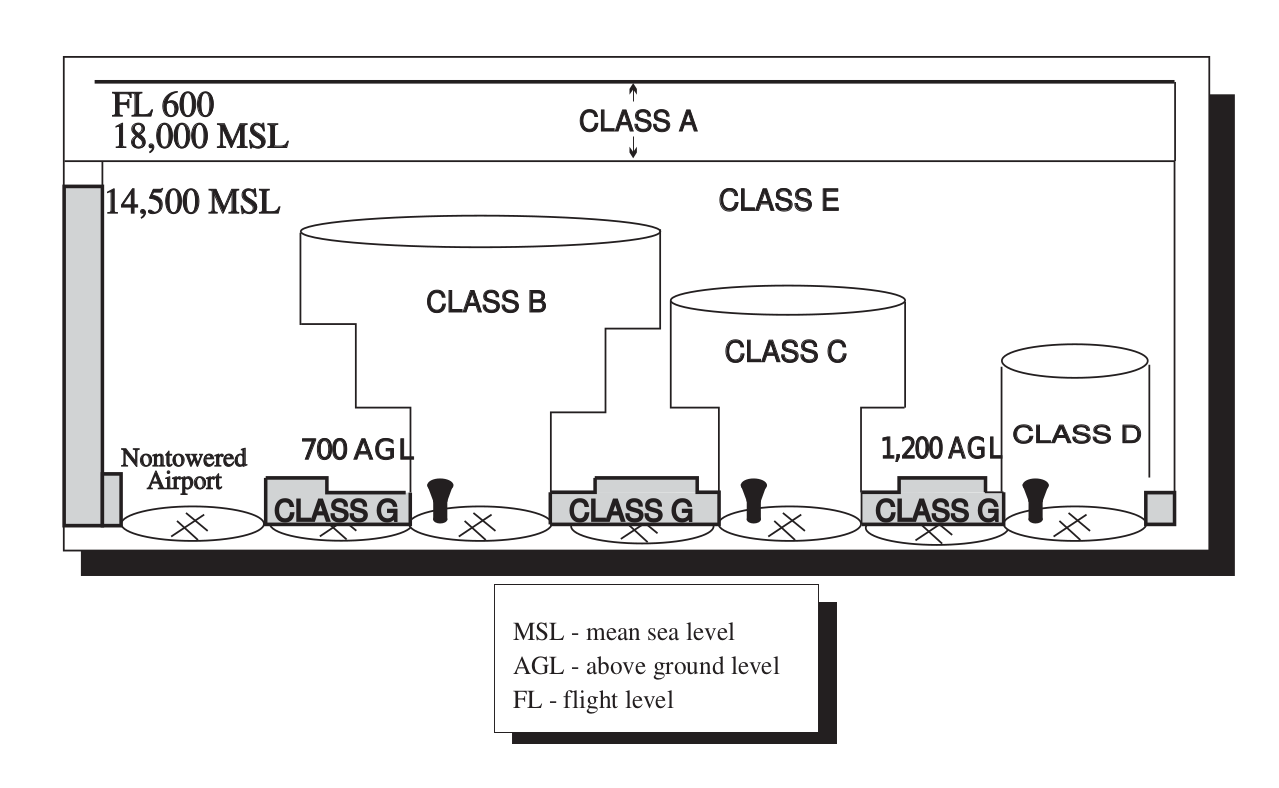
If we look upward from the surface, we enter the domain of air rights, which govern the use of the empty space above the physical surface of a property. Like subsurface rights, air rights can be sold or leased independently of the surface land.
Air rights are immensely valuable commodities in modern real estate. They are commonly transferred in dense urban areas to allow developers to build tall structures. If a developer wants to build a towering 80-story condominium but the local zoning only allows 50 stories, they can purchase the unused air rights from the historic two-story theater next door. The theater keeps its building on the surface, but sells its invisible column of sky to the developer for millions of dollars, allowing the new tower to legally cantilever or build higher into that transferred airspace.

The Limits of the Sky
Historically, common law stated that property owners owned the sky up to the heavens. The invention of the airplane shattered that legal doctrine.
Today, the Federal Aviation Administration (FAA) controls navigable airspace in the United States. While your client owns the immediate air rights necessary to enjoy their property (enough space to build a house or a skyscraper, subject to zoning), they do not own the sky infinitely upward. Property owners cannot prevent aircraft from flying in the navigable airspace above a property.
Solar Rights
With the rise of renewable energy, you will frequently field questions about sunlight. Solar rights involve the right of a property owner to have unobstructed access to sunlight. If your client spends $30,000 installing a premium solar array on their roof, what happens if the neighbor builds a three-story addition that plunges those panels into perpetual shadow?
Under US law, it is a hard truth: solar rights are generally not recognized as a guaranteed common law right in the United States. Unless there is a specific local ordinance or your client has negotiated a private easement for light and air with their neighbor, the neighbor is perfectly within their rights to build a structure that blocks the sun.
Water is arguably the most fiercely contested resource in real estate. Because water is fluid and vital for survival, the law classifies water rights based on whether the water is moving or standing still, and whether the state is wet or dry.
In eastern states with abundant rainfall, water rights are generally tied directly to the ownership of the adjacent land.
Riparian Rights (Flowing Water)
Riparian rights govern the use of flowing bodies of water such as rivers and streams. These rights belong exclusively to the owner of the land bordering the flowing water.
The exact boundary line of a riparian owner's property depends on whether you can navigate a commercial boat down the river:
- Non-Navigable Flowing Water: If a flowing water body is non-navigable (like a small babbling brook), a riparian landowner owns the land beneath the water to the exact center of the waterway.
- Navigable Flowing Water: If a flowing water body is navigable, a riparian landowner owns the land only up to the water's edge. The state owns the land beneath navigable rivers and streams, ensuring the waterway remains a public highway for commerce.
Littoral Rights (Stationary Water)
Littoral rights govern the use of commercially navigable, stationary bodies of water such as oceans, seas, and large lakes. Like riparian rights, littoral rights belong to the owner of the land bordering the stationary body of water.
Because tides rise and fall, the legal boundary line cannot be arbitrary. A littoral landowner owns the land adjacent to the stationary water up to the average high-water mark. Consequently, the state owns the land located below the average high-water mark of navigable lakes and oceans. The public beach below the high-tide line is not private property.
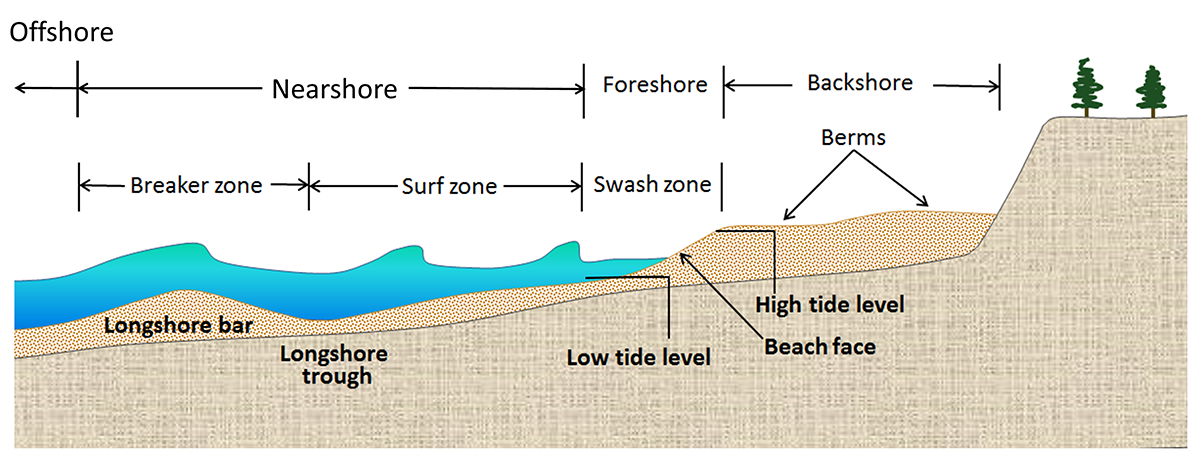
A crucial feature of both littoral and riparian rights is that they are appurtenant to the land. This means they are permanently legally attached to the real estate. When you sell a riverfront cabin, you don't need a separate contract for the water rights; littoral and riparian rights transfer automatically to the new owner when the associated property is sold.
| Right Type | Water Characteristics | Boundary Line |
|---|---|---|
| Riparian | Flowing, Non-Navigable | Exact center of the waterway |
| Riparian | Flowing, Navigable | Water's edge |
| Littoral | Stationary, Navigable | Average high-water mark |
The riparian system works beautifully in places where water is plentiful. But in arid regions—like Nevada, Arizona, or Colorado—tying water use strictly to land borders would leave vast tracts of the interior useless and barren.
To solve this, many arid western states use an entirely different legal framework: the Doctrine of Prior Appropriation.
Under the Doctrine of Prior Appropriation, water rights are disconnected from the ownership of adjacent land. You can buy a piece of property with a stream running right through the middle of it, and under this doctrine, you may not have the legal right to touch a single drop of that water.
Instead, the state government strictly controls all water rights. To secure water rights under the Doctrine of Prior Appropriation, an individual must obtain a permit from the state.
To be approved for this permit, a landowner must demonstrate a beneficial use for the water. The state will not let you hoard water just to look at it. Beneficial uses for water under the Doctrine of Prior Appropriation include:
- Agriculture (irrigation)
- Industrial use (mining, manufacturing)
- Household use (drinking, plumbing)

"First in Time, First in Right"
The defining characteristic of this doctrine is how it handles drought. The Doctrine of Prior Appropriation operates on a "first in time, first in right" basis.
When a river runs low, water is not shared equally among everyone on the riverbank. Instead, under the Doctrine of Prior Appropriation, the first person to obtain a water permit has priority over later applicants during water shortages. If Farmer A got their permit in 1890, and Farmer B got theirs in 1950, Farmer A is legally entitled to take their entire water allocation before Farmer B gets a single drop.
Because these rights are managed by state permit and disconnected from the physical land, water rights acquired under the Doctrine of Prior Appropriation can often be sold separately from the land. You can literally sell your water allocation to a neighboring farm while keeping your dirt.
We map real estate using coordinates and surveyor pins, assuming the earth stays put. But wind and water continually alter the physical landscape. As a real estate salesperson, you must know who owns the land when nature redraws the map. The law categorizes these natural changes based on speed and mechanism.
Gaining Land: Accretion and Reliction
When a property owner naturally gains land, they get to keep it.
- Accretion is the gradual and imperceptible addition of land through natural accumulation of soil by water action. For example, a slow-moving river might gently deposit silt on a riverbank over decades, extending the backyard. The newly created soil deposit resulting from accretion is called alluvion. A landowner automatically acquires legal title to new land created by accretion.
- Reliction is the gradual receding of water that leaves new land permanently exposed. If a lake slowly dries up over twenty years due to a changing climate, exposing fifty feet of new beachfront, the landowner automatically acquires legal title to new land exposed by reliction.
Losing Land: Erosion vs. Avulsion
When a property owner loses land, the legal outcome depends entirely on how fast the loss occurred.
- Erosion is the gradual loss of land due to natural forces like water currents or wind. Because this process is slow and imperceptible, a landowner permanently loses title to land that washes away through erosion. The boundary line officially moves.
- Avulsion is the sudden and violent loss of land due to rapid natural events like floods or mudslides. Unlike erosion, the law views avulsion as an acute traumatic event, not a permanent boundary shift. Therefore, a landowner does not lose the legal title to land lost through avulsion. Even if their topsoil was washed violently downstream in a flash flood, leaving their property line underwater, the landowner maintains the legal right to reclaim land lost through avulsion (for instance, by trucking in new dirt to fill the washed-out chasm).
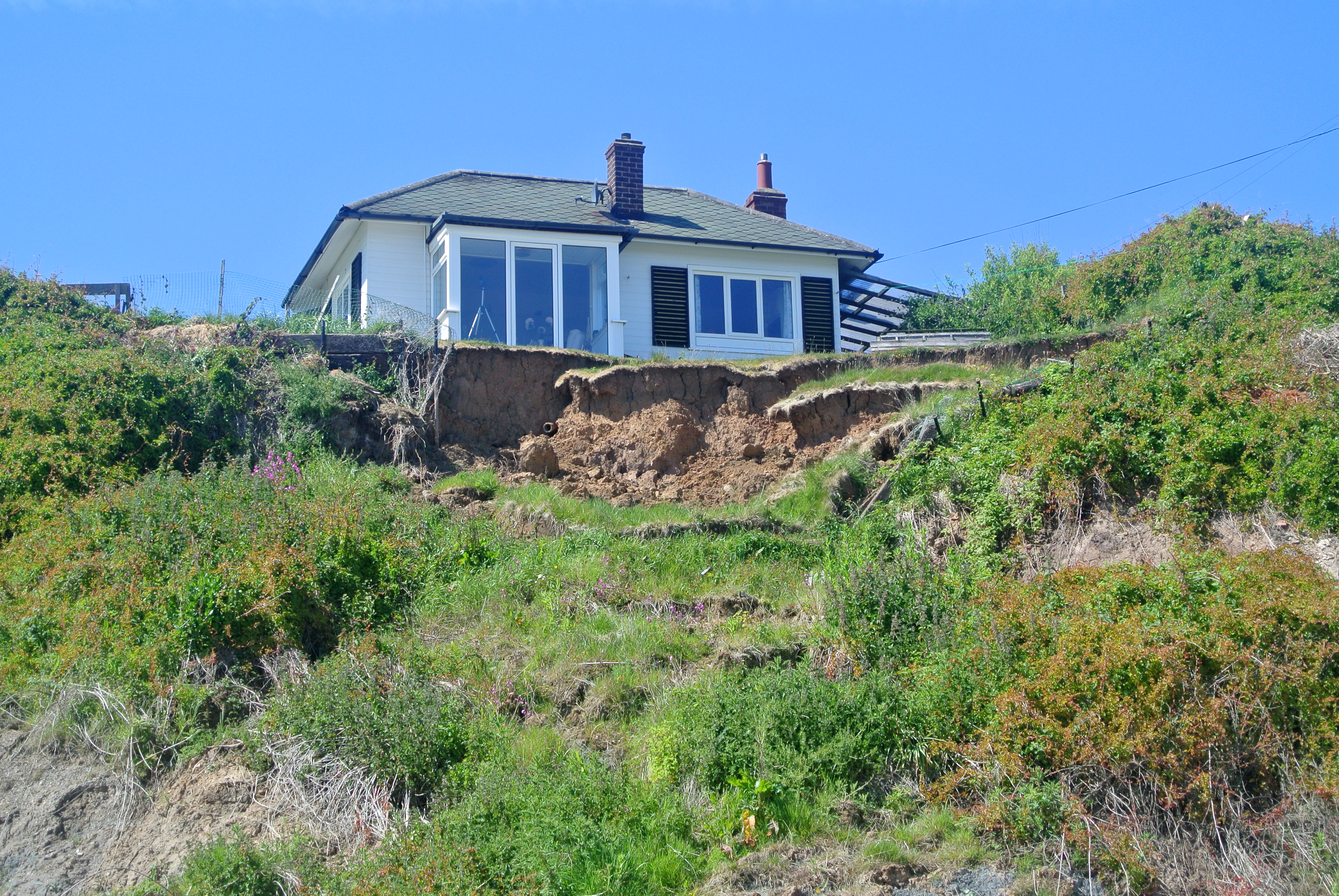
Summary Rule for the Exam: If the earth moves slowly (accretion, reliction, erosion), the legal property line moves with it. If the earth moves violently and suddenly (avulsion), the legal property lines stay exactly where they were on the map.
Understanding these physical and legal dimensions elevates you from a simple salesperson to a true real estate advisor. When you look at a property, you are no longer seeing just a plot of dirt—you are seeing the dominant mineral estates below, the FAA-regulated airspace above, the shifting boundaries of the water's edge, and the intricate bundle of rights that make American real estate law endlessly fascinating.