TREC Commission Duties, Powers & Disciplinary Process (Texas)
Not sure you’re ready?
Take the ~3-minute readiness diagnostic and see where you stand.
Imagine stepping onto the floor of a chaotic stock exchange where millions of dollars change hands in seconds, yet no one knows the rules, and there is no referee to verify the trades. Real estate in Texas would look remarkably similar without a governing body to stabilize the marketplace and shield the public from exploitation. A real estate license is not just a piece of paper; it is a profound grant of public trust. When consumers buy or sell a home, they are often moving their life savings across a table.

To ensure that table is level, the Texas legislature enacted The Real Estate License Act (TRELA). But a law is just words on a page without an architect to build its framework and a sheriff to enforce its boundaries. That dual role is filled by the Texas Real Estate Commission (TREC).

The primary statutory purpose of the Texas Real Estate Commission is clear and singular: to protect the public from unscrupulous real estate practitioners. TREC does not exist to protect real estate agents from the public; it exists to protect the public from you—or, more accurately, from the bad actors in your profession.
To achieve this, the Texas Real Estate Commission adopts administrative rules that have the full force and effect of the law to enforce the Real Estate License Act.
Who Sits on the Commission?
TREC is not a faceless bureaucracy; it is a carefully balanced panel of peers and citizens. The Texas Real Estate Commission consists of exactly nine appointed members:
- Six members must be licensed real estate brokers who have been engaged in the brokerage business as their major occupation for the five preceding years.
- Three members must be members of the general public who have no financial interest in real estate brokerage.
This 6-to-3 ratio ensures that while the commission possesses deep, practical industry expertise, the consumer's voice is structurally protected.
The governor of Texas appoints all nine members of the Texas Real Estate Commission, but they do not assume power unchecked. The Texas Senate must confirm all gubernatorial appointments. Furthermore, the governor designates one member of the Texas Real Estate Commission to serve as the presiding officer.

Why Staggered Terms? Texas Real Estate Commission members serve six-year staggered terms. The terms of three Texas Real Estate Commission members expire on January 31 of each odd-numbered year. This brilliant structural design ensures TREC never loses its entire institutional memory at once. There is always a veteran majority to guide newly appointed members.
Powers and Limitations
TREC wields immense investigative and enforcement authority, but it is not an all-purpose real estate court.
What TREC Can Do:
- The Commission has the power to issue subpoenas to compel the attendance of witnesses or the production of records.
- If a person ignores this authority and fails to comply with a subpoena, the Texas Real Estate Commission can file a suit through the Attorney General to enforce the subpoena.
- The Texas Real Estate Commission can seek an injunction from a district court to immediately halt unlawful real estate activities.
What TREC Cannot Do:
- The Texas Real Estate Commission is strictly prohibited from mediating or resolving commission compensation disputes between real estate licensees. If you and a cooperating broker are arguing over a commission split, do not call TREC. That is a civil matter for the courts or arbitration.
In real estate, unauthorized practice of law is a fatal error. Agents are not attorneys; we cannot write contracts from scratch. Yet, every transaction requires a legally binding contract. How does Texas solve this? Through a strict separation of powers involving the Texas Real Estate Broker-Lawyer Committee.
The Texas Real Estate Broker-Lawyer Committee consists of exactly thirteen members, balanced to bridge the gap between real estate practicality and legal precision:
- Six members are licensed brokers appointed by the Texas Real Estate Commission.
- Six members are attorneys appointed by the president of the State Bar of Texas.
- One member is a public member appointed by the governor.
Drafting vs. Promulgating
The primary duty of the Texas Real Estate Broker-Lawyer Committee is to draft and revise standard contract forms for use by real estate licensees. They write the contracts to ensure they are legally sound and practically viable.
However, the Texas Real Estate Broker-Lawyer Committee drafts real estate contract forms, but does not have the authority to mandate their use by licensees. They are simply the drafters.
The Texas Real Estate Commission holds the exclusive authority to promulgate (publish and make official) contract forms drafted by the Broker-Lawyer Committee, making the forms mandatory for licensees. The Committee writes the music; TREC forces you to play it.
When a transaction goes awry, consumers look to TREC for justice. However, TREC requires specific triggers to launch a formal inquiry.
Initiating an Investigation
A consumer must submit a signed, written complaint for the Texas Real Estate Commission to initiate a formal disciplinary investigation. Phone calls or anonymous tips do not trigger formal disciplinary proceedings. Furthermore, there is a statute of limitations: a formal complaint to the Texas Real Estate Commission must be filed within four years of the date the incident occurred to be eligible for investigation.
Interestingly, TREC does not need to wait for a consumer to complain. The Texas Real Estate Commission has the authority to investigate a licensee on its own motion without receiving a formal consumer complaint, often prompted by news reports or audit irregularities.
The Priority System
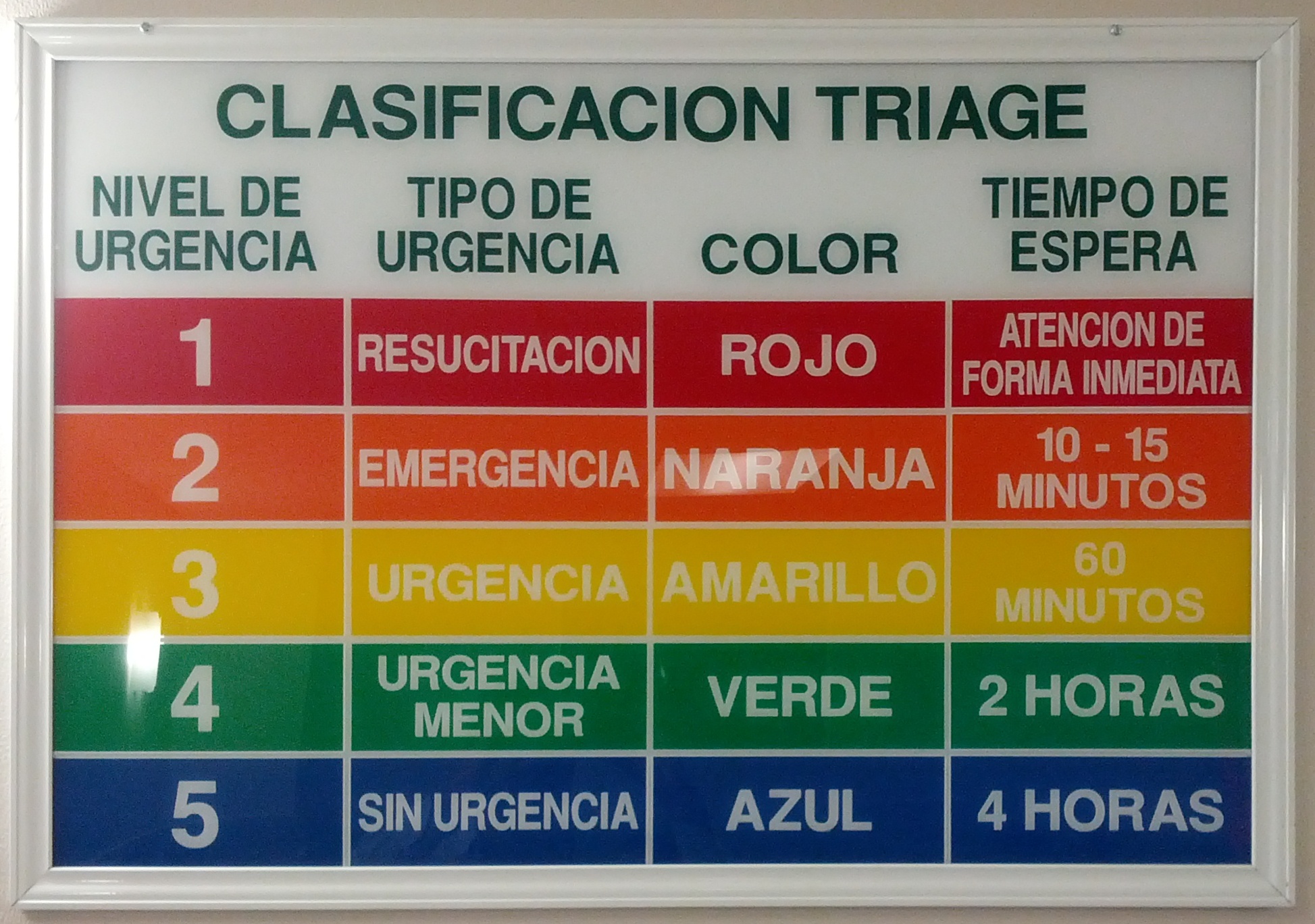
TREC does not investigate complaints purely on a first-come, first-served basis. They use a triage system. The Texas Real Estate Commission prioritizes investigating consumer complaints based on the risk of immediate harm to the public.
If someone complains that you used the wrong font on a yard sign, it goes to the bottom of the pile. Conversely, the Texas Real Estate Commission assigns higher investigative priority to complaints involving fraud, misrepresentation, or significant financial harm.
If an investigation uncovers evidence of wrongdoing, the licensee has a right to due process before losing their livelihood.
Hearings and Appeals
TREC does not act as the judge and jury in its own building. The Texas Real Estate Commission conducts formal administrative hearings for licensee disciplinary actions through the State Office of Administrative Hearings (SOAH).
An administrative law judge (ALJ) from the State Office of Administrative Hearings presides over formal disciplinary hearings against Texas real estate licensees. The ALJ hears the evidence and makes a recommendation to TREC, which then issues the final order.
If a licensee disagrees with the outcome, they are not out of options. A licensee has 30 days to appeal a Texas Real Estate Commission disciplinary decision to a district court.
Penalties: Administrative, Criminal, and Civil
The consequences for violating real estate law in Texas are severe and multi-layered. Let us look at what happens when individuals act unlawfully.
| Penalty Type | Details and Financial Impact |
|---|---|
| Administrative Penalties | The Texas Real Estate Commission can issue administrative penalties of up to $5,000 per day for each violation of the Real Estate License Act. Crucially, each day a violation continues can be considered a separate violation. If you run a deceptive ad for 10 days, that could be a $50,000 penalty. |
| Criminal Penalties (Unlicensed Activity) | Practicing real estate without a valid license in Texas is classified as a Class A misdemeanor. The criminal penalty includes a potential fine of up to $4,000 and a potential county jail sentence of up to one year. Furthermore, TREC has the authority to issue a cease and desist order against an unlicensed individual performing activities that require a real estate license. |
| Civil Liability (Illegal Commissions) | Any person who accepts an illegal real estate commission is liable in civil court for up to three times the amount of money received (treble damages). If an unlicensed assistant illegally takes a $10,000 cut of a commission, they could be sued for $30,000. |

Sometimes, an agent acts unethically, causes massive financial harm, gets their license revoked, and promptly declares bankruptcy. In a normal business dispute, the consumer would be entirely out of luck. But Texas real estate operates differently.

The Real Estate Recovery Trust Account exists to reimburse consumers who suffer financial damages due to the illegal or unethical acts of a licensed real estate agent.
Funding and Minimum Balances
The Texas Real Estate Commission administers the Real Estate Recovery Trust Account. It is funded by a $10 fee paid by every applicant for an original Texas real estate license. When you pass your exam and apply for your license, you are paying your "premium" into this public safety net.
To ensure the fund remains solvent, the statutory minimum balance for the Real Estate Recovery Trust Account is one million dollars. If the Real Estate Recovery Trust Account balance drops below one million dollars, the Texas Real Estate Commission can assess an additional pro-rata fee to all licensees upon renewal. In essence, if bad agents drain the fund, the entire profession pitches in to refill it.
Payout Limits and Professional Death
The fund is a safety net, but it is not a blank check.
- The maximum payout from the Real Estate Recovery Trust Account is $50,000 for damages arising out of a single real estate transaction.
- The maximum payout from the Real Estate Recovery Trust Account is $100,000 for all claims against a single real estate licensee over their lifetime.
The Ultimate Consequence What happens to the agent if TREC has to pay a consumer out of this account on their behalf? It is swift and decisive. A real estate license is automatically revoked or suspended if the Texas Real Estate Commission makes a payment from the Recovery Trust Account on behalf of that licensee.
There is no "forgive and forget." A licensee must repay the Real Estate Recovery Trust Account in full, including interest, before the Texas Real Estate Commission will even consider reinstating a revoked license.
Why This Matters for Your Career
Understanding TREC's authority is not just about passing a multiple-choice exam; it is about grasping the immense responsibility you are asking the state of Texas to grant you. TREC’s composition, the rigorous drafting by the Broker-Lawyer Committee, the swift prioritization of fraud investigations, and the uncompromising rules of the Recovery Trust Account all point to one undeniable reality: your highest duty is to the public. Master these mechanisms, respect the boundaries they set, and you will build a practice that is both highly lucrative and fundamentally bulletproof.