Government Controls: Zoning and Building Codes
Not sure you’re ready?
Take the ~3-minute readiness diagnostic and see where you stand.
Imagine standing on a bustling city street corner: to your left sits a quiet neighborhood of single-family homes, to your right a gleaming glass commercial tower, and beneath your feet runs a complex network of utility lines. What prevents the commercial tower from casting the homes into perpetual shadow, or an industrial factory from opening its doors in the middle of a school zone? The answer lies in the invisible, rigid framework of government controls—specifically, zoning laws and building codes. For the real estate professional, these are not mere bureaucratic hurdles; they are the fundamental DNA of property value, utility, and safety.
To understand real estate is to understand what a property is legally allowed to become. A parcel of land is only as valuable as the permissible structures it can support. Therefore, mastering the mechanics of municipal regulations is as critical to a real estate salesperson as understanding the laws of physics is to an engineer.

Every rule dictating how land can be used ultimately flows from a single constitutional wellspring: the police power of the government. In legal terms, police power is the inherent authority of a state (delegated to local municipalities) to enact regulations protecting public health, safety, morals, and general welfare.
Zoning regulations and building codes are direct applications of the government's police power. They exist to ensure that communities grow predictably, safely, and harmoniously.
Crucial Distinction for the Exam: The exercise of police power through zoning does not require the government to pay compensation to property owners for diminished property values.
Why this matters: If the city uses eminent domain to take your client's front yard to widen a highway, the government must pay for it. But if the city uses its police power to rezone the area, reducing the property's speculative value by half, the client is owed nothing. The restriction is a burden shared for the public good.
Before a city can draw lines on a map, it must decide what it wants to be when it grows up. This vision is codified in a municipal master plan—a comprehensive long-term guide for the physical growth and development of a local community. It anticipates future needs for housing, transportation, and infrastructure.
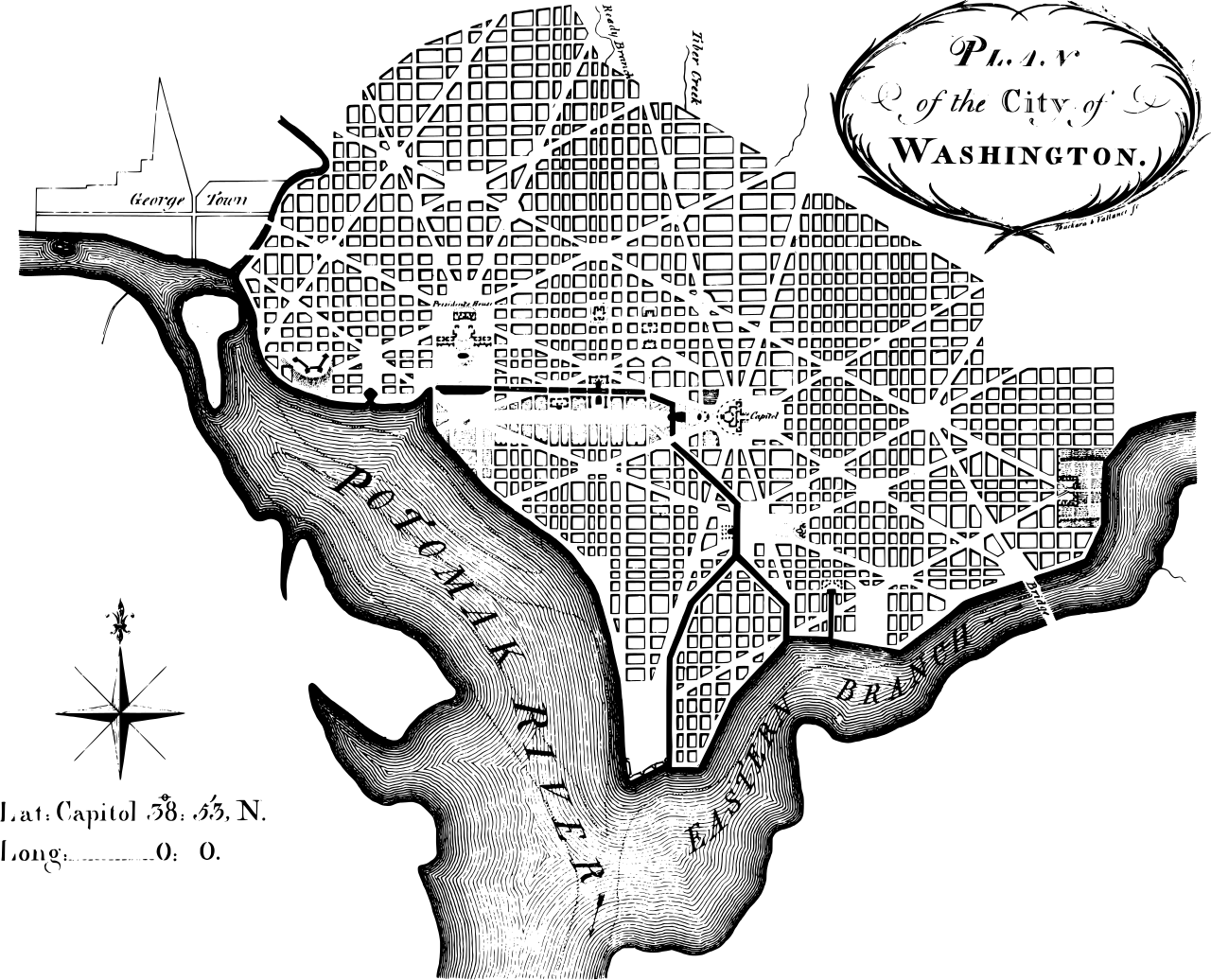
Zoning ordinances are the mechanical gears that implement the goals of a municipal master plan by dividing land into specific districts.
The Geography of Use: Zoning Classifications
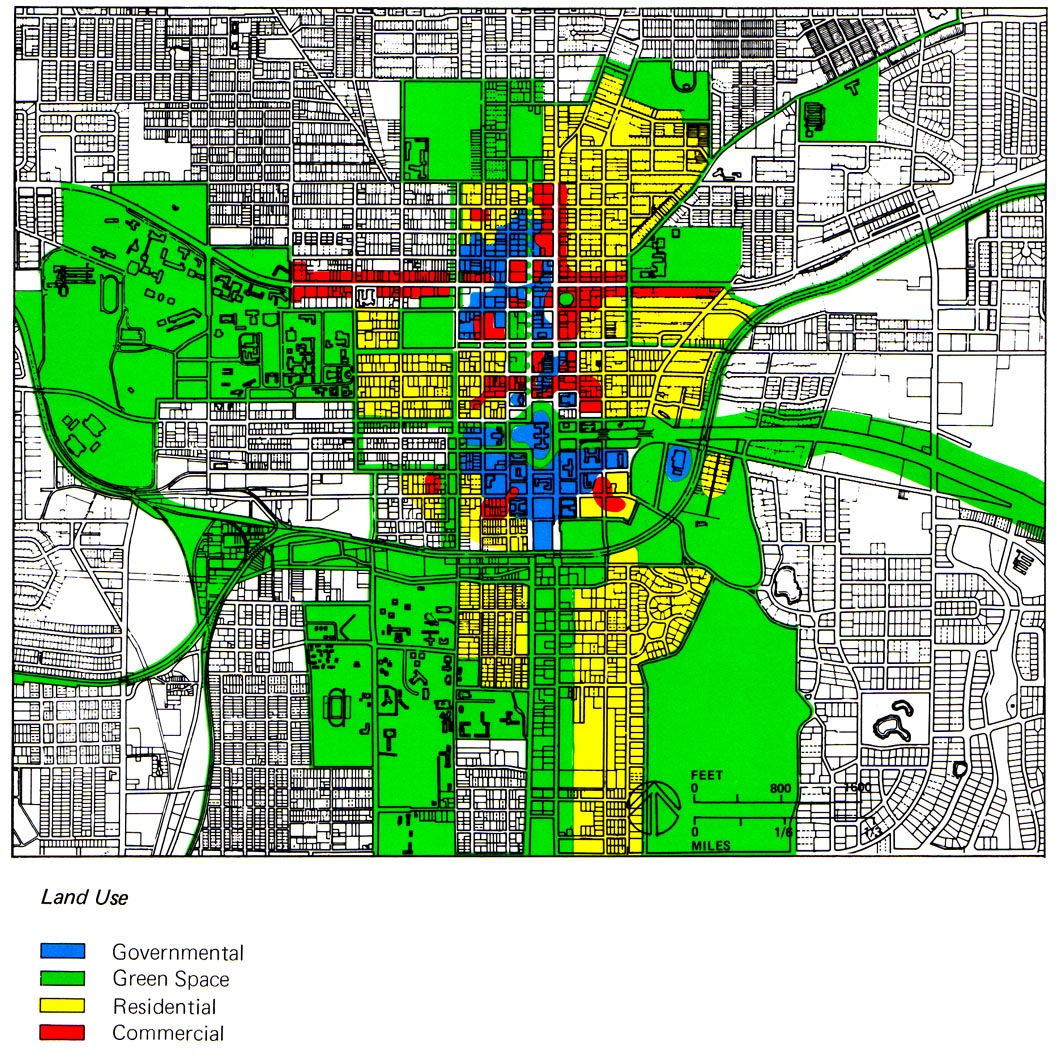
Municipalities categorize land into specific uses to prevent chaos. The most common zoning classifications include:
- Residential: Single-family homes, multi-family apartments.
- Commercial: Retail stores, office buildings.
- Industrial: Manufacturing plants, warehouses.
- Agricultural: Farming, livestock, timber.
But what happens when two radically different zones meet? You cannot simply place a chemical plant next to a subdivision. The solution is a buffer zone: a strip of land designed to separate and transition between two incompatible zoning districts.
- Real-World Example: A landscaped public park placed directly between a residential subdivision and a large industrial park is a classic example of a buffer zone, absorbing noise and providing visual relief.
Controlling Space: Density, Bulk, and Beyond
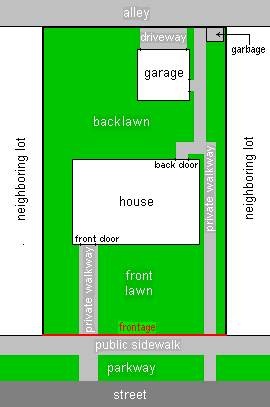
Zoning does not just dictate what can be built; it dictates how it can be built through specific dimensional rules.
- Density zoning regulates the maximum number of residential dwelling units permitted on a specific area of land (e.g., limiting a developer to four houses per acre).
- Bulk zoning regulates the size and placement of buildings on lots to avoid overcrowding and ensure adequate sunlight. It controls the geometric volume a building can occupy.
- Setback requirements dictate the minimum required distance between a structure and the property lines or adjacent streets. If your client wants to add a wraparound porch, the setback rules will dictate whether they have the legal room to do so.
- Aesthetic zoning requires new buildings to conform to specific architectural styles or color palettes to maintain neighborhood character (e.g., requiring terracotta roofs in a historic Spanish-style district).
- Incentive zoning allows developers to build larger structures in exchange for providing public amenities like pedestrian plazas, ground-floor retail, or affordable housing units.
Rewriting the Map: Changing Zoning Rules
As cities evolve, zoning must adapt. When a municipality alters its ordinances, property values shift instantly.
- Downzoning occurs when a municipality rezones a property from a higher-density use to a lower-density use (e.g., changing a high-rise apartment zone to a single-family home zone).
- Upzoning occurs when a municipality rezones a property from a lower-density use to a higher-density use, typically increasing property value.
However, municipalities cannot arbitrarily favor individuals. Spot zoning is the rezoning of a single parcel of land to benefit an individual owner while contradicting the surrounding municipal master plan. Because it undermines the fairness of the master plan, spot zoning is generally considered an illegal land use practice in most United States jurisdictions.
As a real estate agent, you will frequently encounter properties that violate current zoning laws. How do they survive? Through specific legal exceptions.
The Nonconforming Use (The "Grandfather" Clause)
A nonconforming use is a property use that was legally established before current zoning laws prohibited that specific use. For example, a small corner grocery store that has operated since 1950 in an area that was strictly rezoned to residential in 1990.
A legally existing nonconforming use is commonly referred to in real estate as being grandfathered into the current zoning regulations. The owner is allowed to stay, but the law places a tight leash on the property:
- No Expansion: A nonconforming use generally cannot be expanded beyond the original scope of the operation. The grocery store cannot add a massive new wing.
- Destruction: A nonconforming use is typically terminated permanently if the nonconforming structure is destroyed by fire or natural disaster. If the store burns down, it must be rebuilt as a house.
- Abandonment: A nonconforming use is typically lost if the owner abandons the nonconforming use for a specific continuous period of time (e.g., leaving the store vacant for a year).
Variances vs. Conditional Use Permits
When a property owner wants to do something currently against the rules, they must seek municipal permission. Students frequently confuse Variances and Conditional Use Permits on the exam.
| Exception Type | Legal Definition | The Burden of Proof | Example |
|---|---|---|---|
| Variance | Provides a property owner with a legal exemption to deviate from a specific zoning rule. | The owner must prove that current zoning regulations create an undue physical hardship. | A lot is steeply sloped, requiring the owner to build slightly over the setback line to have a stable foundation. |
| Conditional Use Permit | Allows a property use that is not strictly permitted by baseline zoning. Also known as a special-use permit. | Granted when the proposed land use is deemed highly beneficial to the public. | A hospital or school operating legally within a strictly residential zone. The zone is residential, but the community needs the school. |
While zoning dictates the use and location of a building, building codes dictate the structural integrity of the shelter itself.
Subdivision Regulations
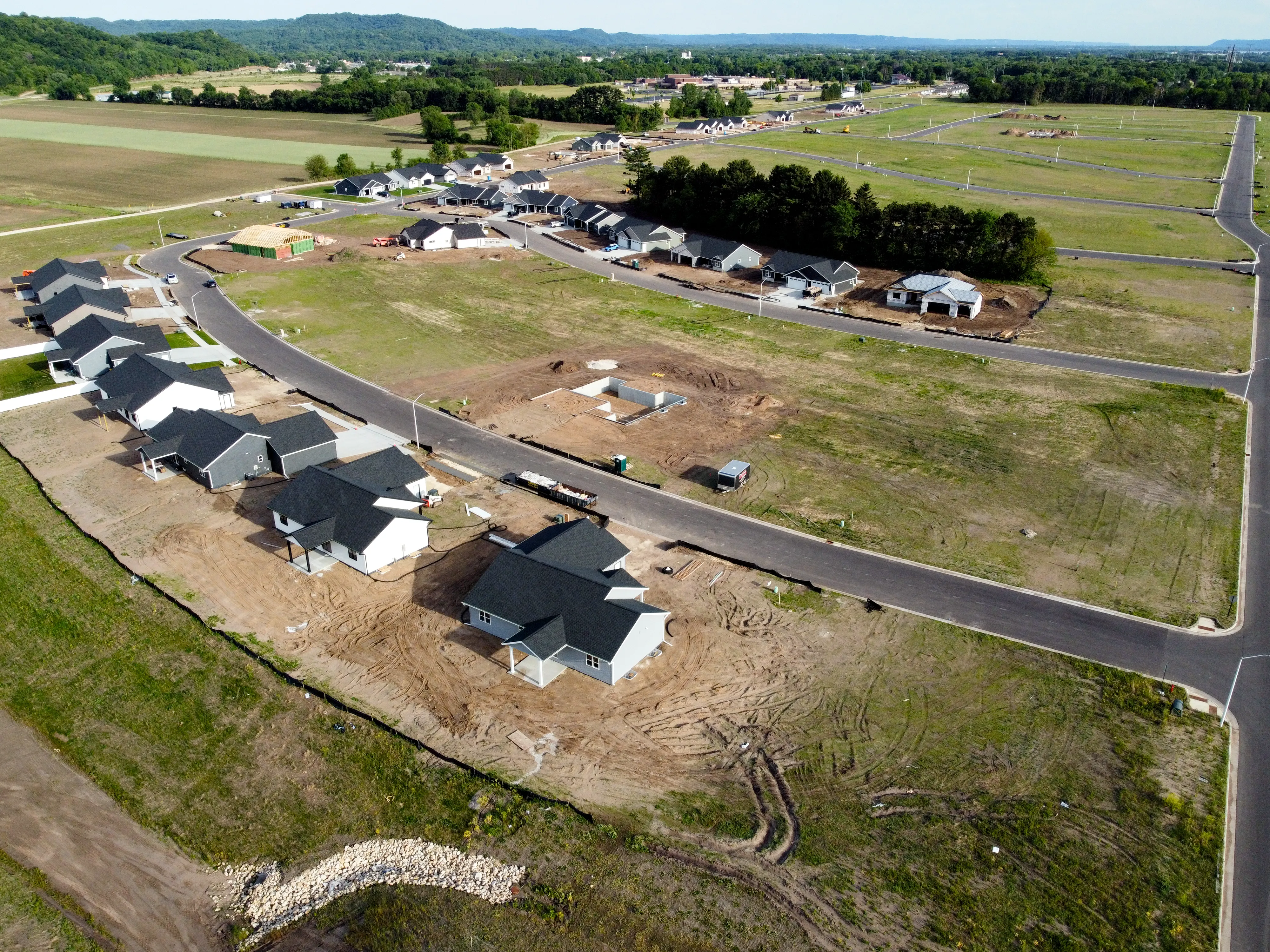
Before homes can be built, raw land must be prepared. Subdivision regulations are municipal controls governing the process of dividing a large tract of land into smaller individual building lots.
These regulations do not merely draw lines on a map; they ensure civil functionality. Subdivision regulations often dictate the required width of new streets and the mandatory placement of utility easements so that future homeowners have reliable access to water, power, and road services.
Building Codes and the Permit Process
Building codes set the minimum legal safety standards for construction methods, plumbing, electrical systems, and structural materials. The primary purpose of building codes is to protect the public against structural failures and fire hazards.
The enforcement mechanism for these codes is the permit process:
- Application: Municipal building permits are required before a property owner can begin new construction or undertake significant renovations. The building permit process ensures that proposed construction plans comply entirely with local building codes and zoning ordinances.
- Inspection: The municipality does not just take the builder's word for it. Municipal code inspectors visit construction sites during the building process to verify ongoing compliance with building codes (e.g., inspecting the framing before the drywall goes up).
- Certification: A Certificate of Occupancy is issued by a local government after a newly constructed building passes all final code inspections.
Transaction Imperative: A Certificate of Occupancy serves as official government proof that a structure complies with building codes and is safe for human habitation.
A real estate transaction for a newly built home often requires the seller to provide a Certificate of Occupancy before closing can occur. If you represent a buyer purchasing new construction, never allow the funds to disburse until this certificate is firmly in hand. Without it, your client legally cannot move into the house they just bought.
By mastering how municipal plans transition into zoning ordinances, and how zoning limits translate into building codes, you cease to be a mere tour guide of houses. You become an interpreter of the built environment—equipped to protect your clients, identify hidden property potential, and navigate the invisible regulatory grid that governs every inch of real estate in the United States.