Virginia Agency & Brokerage Disclosure
Not sure you’re ready?
Take the ~3-minute readiness diagnostic and see where you stand.
Consider the impossible physics of a single attorney attempting to passionately cross-examine their own client, or a referee trying to play centerfield while simultaneously calling balls and strikes. In any domain requiring fiduciary loyalty, serving two opposing masters at once strains the very fabric of the relationship. Real estate is no different. In Virginia, the precise moment you step into the role of a real estate professional, you are bound by a rigid, highly calibrated framework that dictates exactly who you represent, what you owe them, and what you must declare to the rest of the world.
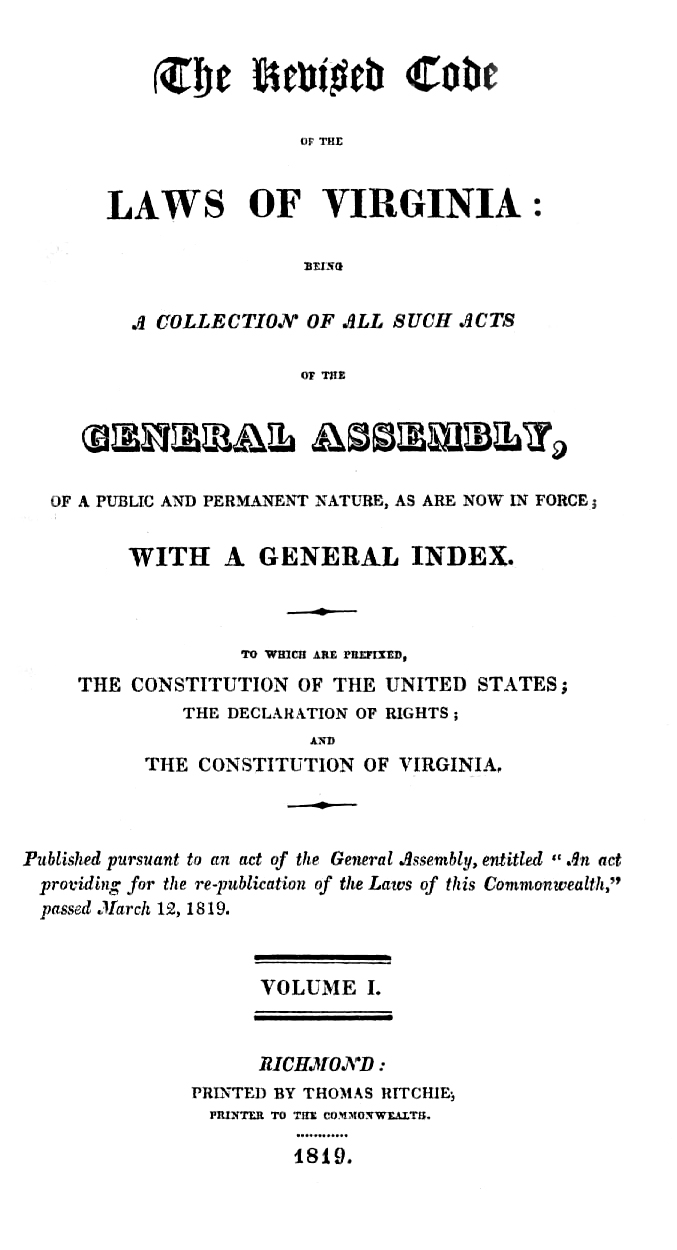
To understand Virginia agency law, you must first unlearn a fundamental assumption. Across much of the United States, real estate agents operate under the traditional common law of agency—a centuries-old collection of judicial precedents. Virginia has taken a different path. Virginia real estate agency law expressly abrogates the common law of agency to the extent the common law conflicts with Virginia statutory requirements. In other words, when Virginia's statutes speak, the old common law is silenced. You are operating in a uniquely engineered legal environment.
Let us dissect the mechanics of this system, piece by piece, so you not only memorize the rules for your exam, but understand the profound logic governing your daily professional life.
Every professional interaction in Virginia real estate hinges on the concept of a brokerage relationship.
A brokerage relationship in Virginia is the contractual relationship between a client and a real estate licensee who has been engaged to provide brokerage services.
When does this relationship actually begin? It does not wait for signatures on a dotted line or a handshake over coffee. A Virginia real estate brokerage relationship commences at the exact time the client engages the real estate licensee. However, to formalize this into a legally recognized standard agency relationship, Virginia law requires all real estate brokerage agreements to be in writing.
The Built-In Clock: Termination Dates
The law despises perpetual contracts that trap consumers. Therefore, every Virginia real estate brokerage agreement must include a definite termination date.
What happens if you, in a rush to secure a listing, forget to write in an expiration date? The law applies an automatic failsafe: If a Virginia real estate brokerage agreement lacks a specific termination date, the agreement will automatically terminate exactly 90 days after the execution date.
To ensure a paper trail of these commitments, Virginia real estate brokers must retain all executed brokerage agreements for a period of three years from the date of execution.
When you sit down with a client, you can wear one of three distinct hats. Each fundamentally alters the physics of your obligations.
1. The Standard Agent
This is the default, comprehensive level of representation. A standard agent in Virginia is a licensee who represents a client in an agency relationship and owes the specific statutory obligations provided in the Code of Virginia.
If you are a standard agent, you must perform the specific terms and conditions outlined in the written brokerage agreement. But the statute demands far more than just following the contract. You are mandated to:
- Promote the Client's Best Interests: You must actively seek a transaction at the price and terms acceptable to the client.
- Present All Offers: You must present all written offers and counteroffers to the client in a timely manner. Crucially, this Virginia standard agent duty to present all written offers to a client continues even after the subject property is already under a ratified contract. (Why? Because a backup offer could save a seller if the primary contract falls through).
- Maintain Confidentiality: You must maintain the confidentiality of all personal and financial information received from the client during the brokerage relationship. This is an unbreakable vow; the duty of confidentiality owed by a Virginia real estate licensee to a client survives the termination of the brokerage relationship permanently.
- Exercise Ordinary Care: You must act with the competence expected of a professional in the performance of all real estate brokerage services.
- Provide Timely Accounting: You must account in a timely manner for all money and property received in which the client holds an interest.
- Disclose Material Facts: You must disclose to the client all material facts related to the property or the transaction that are actually known by the licensee.
There is a pragmatic boundary to these duties. An agent cannot control the free market. Therefore, a Virginia standard agent representing a buyer does not breach their duty to the buyer client by showing the same properties to competing buyers. Likewise, a standard agent representing a seller does not breach their duty to the seller client by taking listings for competing properties.
2. The Limited Service Agent
Sometimes, a client only wants you to put their home on the MLS and do nothing else. They don't want you negotiating, advising, or holding open houses. Enter the limited service agent.
A limited service agent in Virginia is a licensee who acts under a brokerage agreement specifying that the agent will not provide one or more statutory standard agent duties.
Because this strips away the standard protections a consumer expects, the law requires transparency. The brokerage agreement for a Virginia limited service agent must include a prominent list detailing the exact standard agent duties the licensee will not perform.
Despite stepping back from full service, a Virginia limited service agent remains legally required to treat all parties honestly and to disclose all known adverse material facts regarding the physical condition of the property to unrepresented parties. You cannot contract away honesty.
3. The Independent Contractor
An independent contractor in Virginia real estate is a licensee acting under a brokerage agreement that explicitly defines the licensee as an independent contractor rather than an agent.
Here, the statutory duties of a standard agent vanish. The obligations owed by a Virginia independent contractor licensee are strictly limited to the specific terms written within the brokerage agreement. If a duty is not written in that contract, it does not exist.
In real estate, you have clients (whom you represent) and customers (unrepresented parties whom you do not represent).
Virginia real estate licensees do not owe unrepresented customers any duties of confidentiality, loyalty, or obedience. If a buyer customer tells you, the seller's agent, "I can afford to pay $20,000 more than my current offer," you are legally bound to immediately tell your seller client.
However, you are not allowed to be a predator. By law, Virginia real estate licensees must:
- Treat all parties to a transaction honestly.
- Not knowingly provide false information to any party in a real estate transaction.
The "As-Is" Illusion and Mandatory Disclosures
Virginia law is relentless regarding physical defects. Virginia real estate licensees must disclose to unrepresented customers all adverse material facts pertaining to the physical condition of the property that are actually known by the licensee. The Virginia statutory duty to disclose adverse physical conditions includes known material defects in the property, the physical condition, and the improvements.
Do not fall for the common trap: A Virginia real estate licensee's duty to disclose known adverse physical conditions to an unrepresented buyer applies even if the property is being sold completely as-is. "As-is" means the seller won't fix it; it does not give the agent permission to hide a rotting foundation or a collapsing roof they know about.

Ministerial Acts: Helping Without Representing
Can a seller’s agent help an unrepresented buyer fill out the blanks on a standard contract form without accidentally becoming their agent? Yes, through ministerial acts.
Ministerial acts in Virginia real estate are routine acts performed for a customer that do not involve the licensee's discretion or expert judgment.
Performing ministerial acts for an unrepresented party does not create a brokerage relationship between a Virginia real estate licensee and the unrepresented party. Because no agency is created, a Virginia real estate licensee representing a seller does not need dual agency consent to assist an unrepresented buyer through purely ministerial acts.
Imagine you are hosting an open house. Dozens of people walk through. You smile, hand out flyers, and talk about the beautiful weather. No disclosure is required.
But then, a visitor leans in and says, "We really love this house, but we've only been pre-approved for $400,000, and our current lease is up in three weeks."
The legal physics of the room have just fundamentally shifted. You have entered a substantive discussion.
A substantive discussion triggering agency disclosure in Virginia involves conversations regarding specific property details or the financial needs of an unrepresented party.
A Virginia real estate licensee conducting an open house is not required to provide a written agency disclosure to attendees until a substantive discussion about a specific property occurs. But once it does, the clock starts. In a Virginia residential real estate transaction, a licensee must disclose any existing brokerage relationship to an unrepresented party upon having a substantive discussion about a specific property.
The Rules of Disclosure
- Timing: The Virginia disclosure of brokerage relationship to an unrepresented party must be made in writing at the earliest practical time. Specifically, it must be provided before the licensee provides any specific real estate assistance to the unrepresented party.
- Format: Virginia law requires agency disclosures to be in writing but does not mandate the use of one specific state-issued disclosure form. As long as it clearly states who you represent in writing, it is compliant.
- Scope: Virginia brokerage relationship disclosure requirements apply equally to residential lease transactions as well as property sales.
- Retention: Virginia real estate brokers must retain all executed disclosures of brokerage relationships provided to unrepresented parties for three years from the date of provision.
What happens when two clients collide in the same transaction? This is where the law applies its strictest safety harnesses.
Dual Agency: The Fiduciary Paradox
A dual agency in Virginia occurs when a single real estate licensee represents both the buyer and the seller in the exact same transaction.
Undisclosed dual agency is illegal in Virginia and carries severe disciplinary penalties from the Virginia Real Estate Board. To operate as a dual agent legally, written consent for dual agency must be obtained from all clients prior to the licensee acting as a dual agent. Brokers must retain these executed consents for three years from the date of execution.
Even with consent, a dual agent becomes functionally neutralized. Because they owe equal loyalty to two opposing sides, they can essentially only act as an administrative conduit.
- A Virginia dual agent cannot advise either client regarding the terms, price, or conditions to offer or accept in the transaction.
- They cannot advise either client regarding property repairs.
- They cannot advise either client regarding the possibility of a dispute arising from the transaction.
The Refusal Scenario: What if a buyer client wants to buy your seller client's house, but the seller refuses to sign the dual agency consent? The law provides a clean escape hatch. If a Virginia real estate client refuses to consent to dual agency, the licensee may withdraw from representing that client without facing any liability. Furthermore, if a Virginia licensee withdraws from representing a client who refuses dual agency, the licensee may legally continue to represent the other consenting client in that same transaction.
Designated Agency: The Elegant Solution
Dual agency strips clients of their right to an active advocate. To solve this, Virginia law permits designated agency.
Designated agency in Virginia occurs when a principal or supervising broker assigns different licensees within the same firm to exclusively represent different clients in the same transaction.
| Aspect | Dual Agency | Designated Agency |
|---|---|---|
| Agent Role | One agent represents both clients. | Different agents in the same firm represent opposing clients. |
| Advocacy & Advice | Neutralized. Cannot advise on price, terms, or repairs. | Full Advocacy. A Virginia designated agent may provide real estate advice and advocate for their assigned client's best interests. |
| Duties Owed | Limited duties due to inherent conflict. | A Virginia designated agent owes full standard agent duties to their assigned client. |
Like dual agency, a Virginia real estate firm may only engage in designated agency with the prior written consent of all clients involved in the specific transaction. Brokers must retain these consents for three years.
The Information Firewall: The most critical mechanism in designated agency is the handling of secrets. In a Virginia designated agency transaction, the principal or supervising broker who oversees the transaction acts as a dual agent.
Because the agents sit under the same brokerage roof, a strict firewall must be maintained. In a Virginia designated agency, the assigned designated agents may not disclose their respective client's confidential information to each other. However, the assigned designated agents are legally permitted to share their respective client's confidential information with the supervising broker (who, acting as the dual agent, is sworn to maintain confidentiality from the opposing side).
By separating the agents but uniting them under one supervising broker, designated agency restores advocacy to the consumer while keeping the transaction safely housed within a single firm.
Mastering Virginia agency law is not merely about passing an exam; it is about learning the precise boundaries of your professional integrity. Every time you speak with a customer, negotiate for a client, or draft a disclosure, you are executing the exact legal algorithms designed to protect the public and yourself. Learn the boundaries, respect the disclosures, and you will navigate the complex physics of Virginia real estate with absolute confidence.