WA Supervision of Affiliated Licensees & Teams
Not sure you’re ready?
Take the ~3-minute readiness diagnostic and see where you stand.
In physics, when we study a complex system like a planetary orbit or a molecular bond, we look for the center of gravity—the central node to which everything is bound and around which everything revolves. In Washington real estate law, that center of gravity is the Designated Broker. A real estate firm is not a loose confederation of independent contractors casually sharing a photocopier; it is a strictly integrated legal structure. Authority flows downward from a single point, and liability flows upward to that exact same point. To master the Washington Real Estate Brokers Act for your licensing exam, you must first understand this physical flow of responsibility, supervision, and risk.

In Washington, a real estate firm is essentially a legal phantom—an entity on paper. Because a piece of paper cannot oversee a complex transaction or sign a check, in Washington, a real estate firm acts through the firm's designated broker.
To occupy this apex position, a designated broker must possess a Washington managing broker's license. This makes sense: the managing broker license is Washington’s supervisory tier, requiring additional experience and education beyond the entry-level broker license.
Because the firm acts through this individual, the designated broker holds ultimate responsibility for all real estate brokerage activities of the firm. Furthermore, the real estate firm is legally accountable for the professional conduct of all affiliated licensees operating under the firm's license. If a newly minted broker makes a catastrophic error on a purchase and sale agreement, the liability does not stop with them. It travels up the chain, resting squarely on the shoulders of the designated broker and the firm.
The Delegation Network
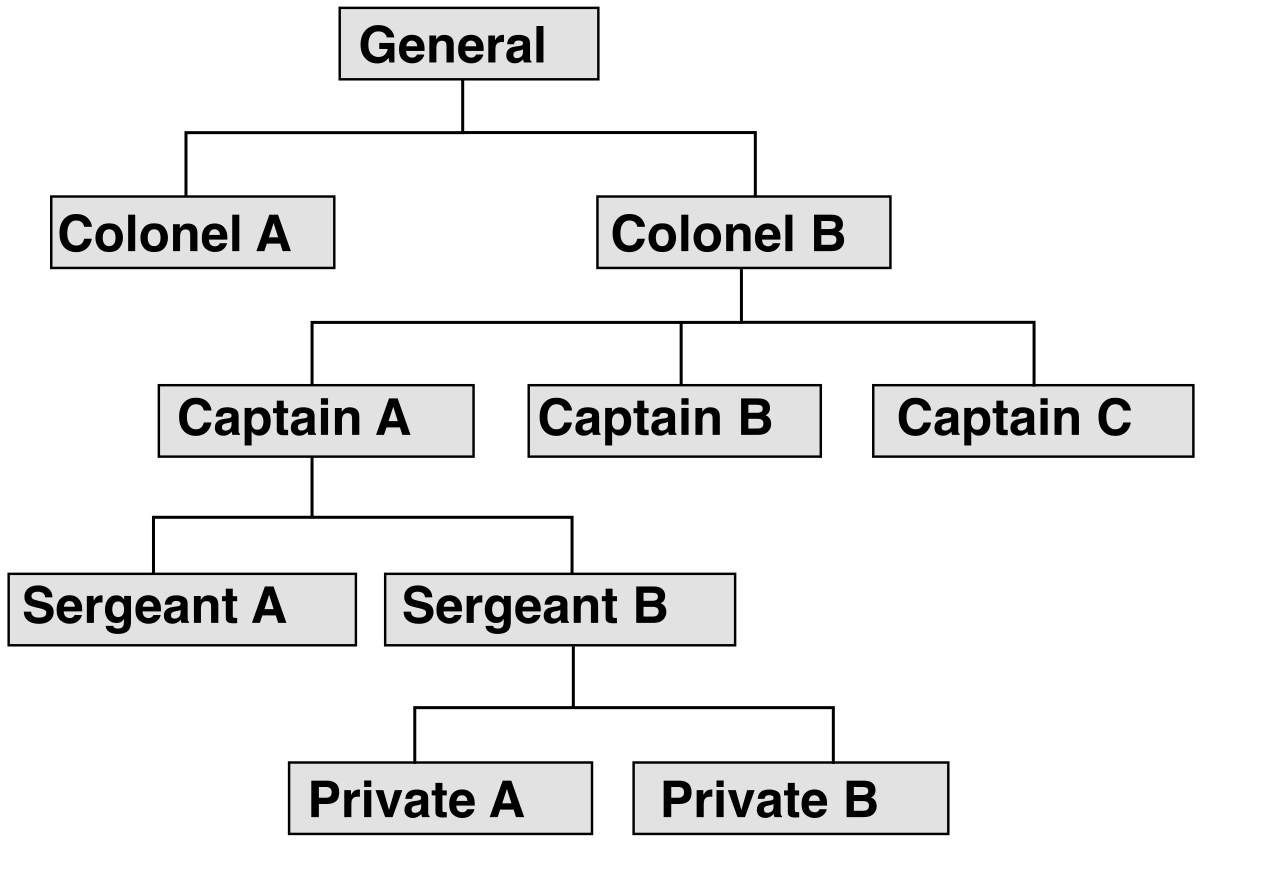
A designated broker overseeing two hundred agents cannot personally review every addendum or monitor every phone call. The law recognizes this limitation and provides a mechanism for the distribution of authority: delegation.
A designated broker may delegate specific supervisory duties to a managing broker. However, this transfer of power is not automatic simply because someone holds a managing broker's license.
Crucial Rule: A managing broker may only supervise affiliated licensees if explicitly delegated that authority by the designated broker. Furthermore, any delegation of supervisory duties by a designated broker to a managing broker must be documented in writing.
This creates a verifiable chain of command. If an auditor from the Department of Licensing walks into your firm, they must be able to pull a document explicitly showing exactly which managing broker is authorized to supervise which brokers.
This principle extends to physical locations. If a firm expands, a branch manager must hold a Washington managing broker's license, and just like any other supervisory role, a branch manager's supervisory authority is derived from authorization by the firm's designated broker. The branch manager's jurisdiction is geofenced; they are specifically responsible for supervising the affiliated licensees operating out of the branch manager's specific branch office.
The "Two-Day Rule" for Document Delivery
For the designated broker to bear ultimate responsibility, they must actually know what contracts their brokers are binding the firm to. You cannot supervise what you cannot see.
Therefore, Washington law dictates that affiliated licensees must deliver transaction documents to the designated broker or delegated managing broker within two business days of mutual acceptance.
Statistically, a licensee is most dangerous to the public—and to their firm's liability—when they are new. Washington real estate law mitigates this risk by imposing a heightened degree of supervision for newly licensed brokers.
Specifically, a broker is subject to heightened supervision for the broker's first two years of licensure.
During this 24-month crucible, the novice broker cannot operate in a vacuum. A newly licensed broker must participate in mandatory reviews of the broker's real estate brokerage agreements.
How does this work in practice? Let's look at the statutory clocks:
| The Timeline | The Requirement |
|---|---|
| Within 2 Business Days | The new broker must hand the contract file to their supervisor (Standard for all brokers). |
| Within 5 Business Days | The designated broker or a delegated managing broker must review all brokerage service contracts drafted by a broker licensed for less than two years. This clock starts at mutual acceptance. |
It is not enough for the managing broker to glance at the contract and give a thumbs up. Documented proof of the mandatory contract review for a new broker must be maintained at the firm's record location. If a transaction goes sideways a year later, the firm must be able to produce written evidence that a supervisory set of eyes reviewed the new broker's paperwork within that critical five-day window.
A major shift in modern real estate is the proliferation of "teams." To the consumer driving past a billboard, a team often looks like its own independent real estate company. Washington law aggressively polices this boundary.
A real estate team is simply a group of affiliated licensees operating together within the same brokerage firm. Crucially, a real estate team is not a separate legal entity from the team's umbrella real estate firm.
Because teams are not separate entities, state regulators are highly concerned with false advertising that misleads the public. The rules are absolute:
- Brand Visibility: All team advertising must clearly and conspicuously include the licensed name of the overarching real estate firm. If you are "The Summit Team" at "Apex Realty," the consumer must easily see that Apex Realty is the actual licensed brokerage.
- Approval: A licensee must receive advance written approval from the designated broker to use an unlicensed title or team brand in advertising. You cannot invent a team name on a Friday and order yard signs on a Saturday without your DB signing off.
- No Deceptive Corporate Terms: Real estate teams must not use terms in a team name that falsely imply the team is an independent business entity. Specifically, team names cannot include corporate abbreviations such as "Inc.," "LLC," or "Corp" in advertising.
- Restricted Industry Words: Team names cannot use the term "Realty" in a manner that suggests a standalone brokerage, and similarly, they cannot use the term "Real Estate" in a manner that implies a separate legal entity.
Why these strict linguistic rules? Because if a consumer sues "The Summit Team, LLC" thinking they are suing a brokerage, they will find an empty shell. The Department of Licensing ensures the public always knows exactly which legally accountable firm is handling their transaction.
High-producing brokers and teams rely heavily on assistants. But where does administrative support end and unlicensed real estate practice begin? The state draws a bright, unyielding line based on the definition of brokerage services.
An unlicensed assistant may perform clerical duties to support a real estate licensee. However, an unlicensed assistant is strictly prohibited from performing any task that requires an active real estate license.
In physics, an insulator cannot conduct an electrical current. In real estate, an unlicensed assistant cannot conduct the core functions of a broker: advising, interpreting, and negotiating.
What Unlicensed Assistants Cannot Do
- Negotiation: An unlicensed assistant cannot negotiate contract terms with prospective buyers or sellers, nor can they negotiate transaction terms with other real estate brokers.
- Interpretation: They cannot give advice. An unlicensed assistant cannot interpret or explain transaction documents to clients. If a buyer asks, "What does this contingency clause mean?", the assistant must reply, "I will have your broker call you to explain that."
- Property Access: An unlicensed assistant cannot independently show properties to prospective buyers. Giving an unlicensed person the lockbox code to walk a buyer through a home is a severe violation.
The Open House Exception
Can an unlicensed assistant sit at an open house? Yes, but their behavior is strictly curtailed.
- They may distribute pre-printed, broker-approved materials at an open house. (e.g., handing out flyers).
- However, an unlicensed assistant at an open house cannot answer questions regarding the property's condition (e.g., "Is that roof new?") and cannot answer questions regarding the terms of sale (e.g., "Will the seller take $500k?").
Compensation and Accountability
The way you pay an assistant also defines their role. Real estate brokers share in the financial risk of a transaction; they are paid a commission split only if a deal closes. Assistants cannot share this risk.
An unlicensed assistant must be paid on a basis that is not contingent upon the successful closing of a real estate transaction. They must be salaried or hourly. Consequently, an unlicensed assistant cannot receive a percentage of a broker's commission split. Paying an unlicensed person a percentage of a commission is legally construed as paying a commission to an unlicensed individual—a direct violation of the Brokers Act.
Finally, just as the firm is responsible for its brokers, a real estate firm remains responsible for the professional conduct of the firm's unlicensed assistants.
Transactions generate vast amounts of paperwork and handle significant sums of public money (earnest money). The integrity of these records is the bedrock of consumer protection.
The designated broker must ensure all transaction records are securely maintained in accordance with state regulations. Similarly, the designated broker must ensure all trust account records are securely maintained.
The magic number for the PSI exam regarding record retention in Washington is three years.
- Washington real estate brokers must retain transaction records for a minimum of three years.
A Critical Trap for the Unwary: What happens if a buyer backs out during the inspection period and the deal dies? Do you shred the file? Absolutely not. A broker's transaction files must be retained by the firm even if the transaction ultimately fails to close.
Why does this matter? Because lawsuits over mutual release forms, earnest money disputes, or alleged misrepresentations frequently arise from deals that never made it to the closing table. The three-year statutory clock applies the moment a broker creates a brokerage record, regardless of the transaction's final outcome.
As you sit for your exam, visualize the Washington brokerage not as a loose collection of salespeople, but as a structured hierarchy. The Designated Broker is at the top, managing liability through written delegation to Managing Brokers, enforcing the two-day document delivery and five-day new broker review rules, reigning in deceptive team names, strictly isolating the duties of unlicensed assistants, and meticulously archiving every piece of paper for three years. Master this framework, and you will master this portion of the state exam.