Administrative Powers of State Securities Administrators
The modern financial system operates on a foundation of trust, but trust alone is insufficient to protect investors from fraud, incompetence, or malice. State Securities Administrators act as the ultimate arbiters of this trust within their jurisdictions, wielding specific, statutory powers granted by the Uniform Securities Act (USA) to investigate, discipline, and regulate securities professionals. Understanding the precise boundaries of an Administrator’s authority—when they can demand records, issue orders, or strip a professional of their livelihood—is not merely an academic exercise. For a broker-dealer agent or investment adviser representative, the Administrator is the central regulatory reality. Their powers dictate the legal environment in which every trade is executed, every client relationship is managed, and every professional career is maintained.
Regulation cannot be purely reactive; it must be proactive. To this end, the State Securities Administrator acts as the principal investigator for state securities laws.
The core purpose of a State Securities Administrator investigation is to determine if any person has violated the Uniform Securities Act. Crucially, they do not have to wait for the damage to be done—the purpose is equally to determine if any person is about to violate the Uniform Securities Act.
To achieve this, Administrators possess expansive jurisdictional reach. The State Securities Administrator has the authority to conduct investigations inside the Administrator’s home state, and, recognizing that financial fraud rarely respects state borders, they also have the authority to conduct investigations outside of the Administrator’s home state.
Depending on the sensitivity of the probe, the State Securities Administrator may conduct investigations that are strictly private, shielding the reputations of those involved while facts are gathered. Conversely, if public awareness is deemed necessary, the State Securities Administrator may conduct investigations that are open to the public. Furthermore, to protect the marketplace, the State Securities Administrator has the authority to publish information concerning any violation of the Uniform Securities Act.
Tools of Compulsion: Subpoenas and Oaths
When an Administrator investigates, compliance is not optional. The State Securities Administrator has the power to administer oaths and affirmations during an investigation. They may require a person to file a written statement under oath regarding the facts of an alleged violation.
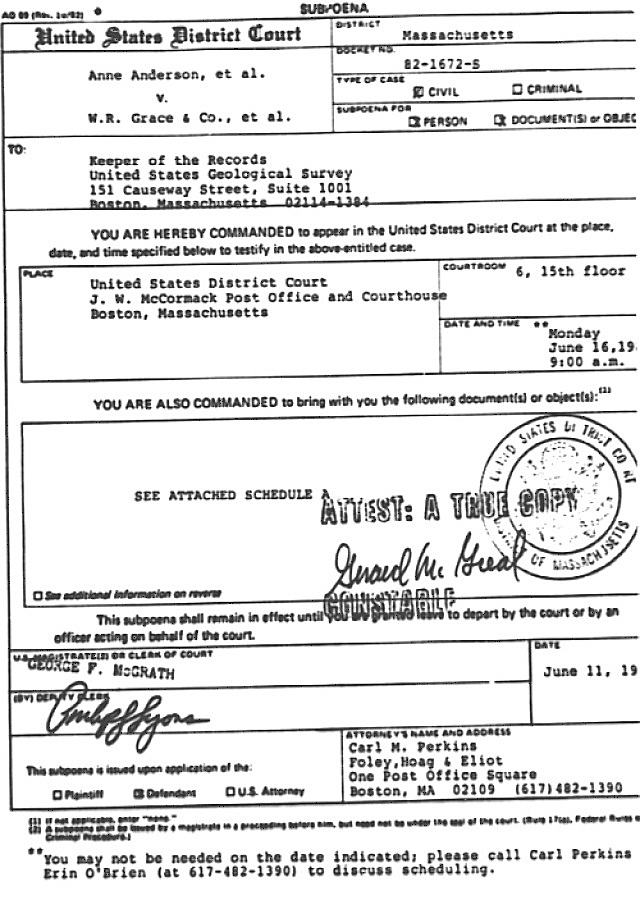
If voluntary cooperation is not forthcoming, the State Securities Administrator has the authority to subpoena witnesses to compel attendance at a hearing or investigation. They can simultaneously compel the production of books and other records relevant to an investigation.
The Fifth Amendment and Administrator Hearings
A common misconception is that a professional can completely stonewall an investigation by pleading the Fifth Amendment. Under the USA, a person cannot be excused from attending a State Securities Administrator proceeding on the grounds that the required testimony might tend to be incriminating.
To compel this testimony without violating constitutional rights, the law provides a specific trade-off: Immunity. An individual cannot be prosecuted for any transaction concerning which the individual is compelled to testify after claiming the privilege against self-incrimination.
However, this immunity applies to the transaction being investigated, not to behavior during the testimony itself. If a witness lies on the stand, an individual compelled to testify by the State Securities Administrator can still be prosecuted for perjury committed while testifying. Likewise, if they misbehave or refuse to answer properly, they can be prosecuted for contempt committed while testifying.
When Subpoenas are Ignored
The Administrator is a regulator, not a judge. If a subpoenaed party simply ignores the Administrator's demands, the Administrator cannot dispatch police. Instead, a State Securities Administrator may apply to a court of competent jurisdiction to enforce compliance with an ignored subpoena. Once a judge issues the order, ignoring it escalates the legal severity: failure to obey a court order enforcing a State Securities Administrator subpoena may be punished by the court as contempt.
When an Administrator detects ongoing or imminent harm, they must act swiftly. If it appears a person has engaged in an act violating the Uniform Securities Act, the State Securities Administrator may issue a cease and desist order. Because prevention is equally critical, they may also issue a cease and desist order if it appears a person is about to engage in an act violating the Act.
Speed is the priority here. Consequently, the State Securities Administrator can issue a cease and desist order without providing a prior hearing to the subject of the order.
However, a cease and desist order is an administrative directive—it is essentially the Administrator saying "stop." To physically seize assets or legally compel behavior requires judicial power. Therefore, the State Securities Administrator does not have the legal authority to issue an injunction. To obtain a legal injunction against a violator, the State Securities Administrator must apply to a court of competent jurisdiction. Once in court, the judge has broad equitable powers: a court may appoint a receiver or conservator for a defendant's assets upon a proper showing by the State Securities Administrator.
The most severe administrative power is the ability to revoke a professional's livelihood. Because this power is so profound, the USA places strict guardrails around its use.
To take disciplinary action against a registration, the Administrator must satisfy a strict two-pronged test:
- A State Securities Administrator may only deny or revoke a registration if the action is in the public interest.
- A State Securities Administrator must have a specific statutory cause in addition to the public interest to deny or revoke a registration.
The "public interest" alone is never enough; the Administrator must point to a specific rule or standard the applicant or registrant has breached.
Statutory Grounds for Disciplinary Action
The USA explicitly defines the statutory grounds that justify denying, suspending, or revoking a registration. An Administrator may act if:
- Application Issues: A State Securities Administrator may deny a registration if the application is incomplete in any material respect. Furthermore, a State Securities Administrator may revoke a registration if the application contains a statement that was false or misleading with respect to any material fact.
- Willful Violations: A State Securities Administrator may suspend a registration if the registrant has willfully violated any provision of the Uniform Securities Act.
- Criminal History: A State Securities Administrator may deny a registration if the applicant has been convicted of any felony within the past ten years. Additionally, they may deny a registration if the applicant has been convicted of a misdemeanor involving a security within the past ten years.
- Regulatory & Legal History: A State Securities Administrator may revoke a registration if the registrant is permanently enjoined by any court from engaging in the securities business. They may also suspend a registration if the registrant is the subject of an order by a state securities regulator denying registration.
- Ethical Breaches: A State Securities Administrator may deny a registration if the applicant has engaged in dishonest or unethical practices in the securities business.
- Supervisory Failures: For firms, a State Securities Administrator may suspend the registration of a broker-dealer for failing to reasonably supervise broker-dealer agents.
- Administrative Failures: A State Securities Administrator may deny a registration simply if the applicant fails to pay the proper filing fee.
- Financial Failure (Insolvency): A State Securities Administrator may revoke a registration if a broker-dealer or investment adviser is insolvent.
Definition: Insolvency is defined under the Uniform Securities Act as having liabilities that exceed assets or being unable to meet current obligations as those obligations mature.
The Qualification Nuance: Training vs. Experience
A State Securities Administrator may deny a registration if the applicant is not qualified on the basis of training and knowledge of the securities business. However, everyone has to start somewhere. Therefore, an applicant's lack of experience is an invalid ground for registration denial if the applicant possesses adequate training or knowledge. You can be brand new to the industry, provided you have passed the necessary exams and received proper training.
The 90-Day Rule for Known Facts
Administrators cannot use old news to suddenly suspend a professional if they already approved the registration knowing those facts. A State Securities Administrator is generally prohibited from instituting a suspension proceeding based solely on a fact known to the Administrator when the registration became effective.
There is, however, a brief window for buyer's remorse: a State Securities Administrator has ninety days from a registration effective date to institute a proceeding based on a fact known at the time of effectiveness.
Before permanently denying, suspending, or revoking a registration, the Administrator must afford the subject standard due process.
- The State Securities Administrator must provide appropriate prior notice to the applicant or registrant before issuing a final order denying a registration.
- They must provide an opportunity for a hearing before issuing a final order suspending a registration.
- Finally, a final order from a State Securities Administrator denying or revoking a registration must include written findings of fact and conclusions of law.
Summary Orders: Act First, Hear Later
Sometimes, leaving a potentially dangerous agent active while waiting for a hearing threatens the public. In these cases, a State Securities Administrator may issue a summary order postponing or suspending a registration pending final determination of any proceeding.
Because summary orders take immediate effect, due process is accelerated. Upon entry of a summary order, the State Securities Administrator must promptly notify the applicant of the order and the reasons for the order. If the subject fights the suspension, a hearing requested after a summary order is issued must be held within fifteen days of the receipt of the written request.
Registrations do not only end through disciplinary action; they also end through natural attrition. It is vital to distinguish between a cancellation and a withdrawal.
| Feature | Cancellation | Withdrawal |
|---|---|---|
| Nature | Administrative / Non-Punitive | Voluntary Action by Registrant |
| Trigger | Registrant ceases to exist or cannot be found. | Registrant decides to leave the industry. |
Cancellation of a securities registration is a non-punitive administrative action. A State Securities Administrator may cancel a registration under three specific conditions:
- If the registrant is no longer in existence or has ceased doing business.
- If the registrant is subject to an adjudication of mental incompetence.
- If the registrant cannot be located after a reasonable search.
Withdrawal, on the other hand, is a voluntary termination initiated by the professional. When an individual or firm decides to retire or leave the business, a withdrawal from registration generally becomes effective thirty days after the withdrawal application is filed.
However, bad actors cannot simply "withdraw" to escape the Administrator's wrath. A State Securities Administrator retains jurisdiction over a former registrant for one year after the effective date of a registration withdrawal. Consequently, even if you formally leave the industry, a State Securities Administrator may institute a revocation proceeding within one year after a registration withdrawal becomes effective.