Communications with the Public
Imagine walking into a crowded room and shouting a guarantee of a 15% return. Now imagine whispering that same guarantee to a single colleague, or presenting it in a sealed boardroom to a dozen pension fund managers. The fundamental risk of the information changes based on who is listening and how many ears are in the room. This is the exact physical reality that FINRA Rule 2210 maps onto the financial markets. The rule dictates that every piece of written and electronic communication leaving a broker-dealer must be weighed, categorized, and regulated based on the audience's vulnerability and size. Mastering these rules is the mechanism by which broker-dealer agents legally prospect for clients, market new offerings, and survive regulatory audits without inadvertently triggering a firm-wide violation.

FINRA Rule 2210 categorizes all written and electronic communications by member firms into three distinct categories: institutional communications, retail communications, and correspondence. Regulators do not care what medium you use—an email, a billboard, a text message, or a glossy brochure—they care entirely about who receives it and how many receive it.
1. Institutional Communications
Regulators view institutional investors as the heavyweights of the financial world. They have the resources, legal teams, and analytical prowess to fend for themselves. Consequently, institutional communications are defined as any written or electronic communications distributed or made available only to institutional investors.
If a single mom-and-pop investor accidentally receives the message, the communication loses its institutional status.
To understand this category, we must define the institutional investor. Under FINRA Rule 2210, this exclusive club includes:
- Financial Institutions: Banks, savings and loan associations, and insurance companies.
- Government: Governmental entities and governmental subdivisions.
- Industry Peers: Registered investment companies (mutual funds) and registered investment advisers (RIAs).
- Large Entities: Any entity with $50 million or more in total assets.
Crucial Distinction: You might assume an internal memo sent exclusively to your firm's own brokers qualifies as an institutional communication. It does not. Internal communications within a broker-dealer are excluded from the definition of institutional communications. They belong to their own unregulated internal category, provided they never leak to the public.
2. Retail Communications
If institutional investors are the heavyweights, retail investors are everyone else. A retail investor is defined simply as any person other than an institutional investor.
Do not fall into the trap of thinking a "retail investor" must be an existing client. A person qualifies as a retail investor under FINRA Rule 2210 regardless of whether that person has an account with the broker-dealer. A stranger reading your firm's tweet is a retail investor.
A retail communication is any written or electronic communication distributed or made available to more than 25 retail investors within any 30 calendar-day period.
3. Correspondence
Regulators understand that you need to send individual emails to your clients without triggering a massive compliance review every single time you hit "send."
Correspondence is defined as any written or electronic communication distributed or made available to 25 or fewer retail investors within any 30 calendar-day period.
Think of correspondence as a localized conversation, while retail communication is a broadcasting campaign. The 26th retail investor changes the legal physics of the message entirely.
| Feature | Correspondence | Retail Communication | Institutional Communication |
|---|---|---|---|
| Audience | 25 or fewer retail investors | > 25 retail investors | Institutional investors ONLY |
| Timeframe | Within any 30 calendar-day period | Within any 30 calendar-day period | N/A |
| Pre-Use Approval? | No (with training/review program) | Yes, generally required | No (with training/review program) |
Because retail communications act as megaphones directed at the general public, regulators demand a safety net. An appropriately qualified principal (a licensed manager at the broker-dealer) must approve each retail communication before the communication is used, and before filing the communication with FINRA.

However, regulatory frameworks are designed to be practical. Regulators carve out strict exemptions where prior principal approval for retail communications is not required:
- Interactive Electronic Forums: Retail communications posted on an interactive electronic forum (like a Reddit AMA, a live X-Space, or a real-time chat room) do not require prior principal approval. Pre-approving a live, dynamic conversation would mathematically freeze time; therefore, these are supervised post-use.
- No Recommendations: Retail communications that do not make any financial or investment recommendation do not require prior principal approval.
- No Product Promotion: Retail communications that do not promote a product or service of the member firm escape the pre-approval requirement. (For example, a generic market update stating "The S&P 500 closed up 20 points today").
Supervising the Quiet Channels
If correspondence and institutional communications do not require a principal to read them before they are sent, how are they policed?
A broker-dealer must establish written procedures for the review of incoming and outgoing correspondence by an appropriately qualified principal. Correspondence and institutional communications do not require principal approval prior to use if the broker-dealer implements a program of training and post-use review. You are given the freedom to communicate quickly, but the firm will randomly audit the tape to ensure you aren't violating the rules.
Certain retail communications carry enough systemic risk that FINRA wants them explicitly filed in their centralized database. Depending on the risk profile of the firm or the product, the filing must occur either before or after the communication hits the market.
Pre-Use Filing (10 Business Days Prior to First Use)
FINRA demands a 10-business-day head start to review certain materials before the public ever sees them:
- The Rookie Firm: A new broker-dealer must file all broadly disseminated retail communications with FINRA 10 business days prior to first use during its first year of FINRA membership.
- Self-Created Rankings: Retail communications concerning registered investment companies (mutual funds) that include self-created rankings must be filed 10 business days prior. Why? If Morningstar says your fund is #1, FINRA trusts the math. If your firm invents a custom metric to claim your fund is #1, FINRA demands ten days to verify your arithmetic.
- Security Futures: Given their extreme leverage and complexity, retail communications concerning security futures must be filed 10 business days prior to first use.
Post-Use Filing (Within 10 Business Days of First Use)
For slightly less hazardous materials, FINRA allows you to publish the material first, but you must drop a copy on their desk shortly after:
- Standard Fund Ads: Retail communications concerning registered investment companies without self-created rankings must be filed with FINRA within 10 business days of first use.
- DPPs: Retail communications concerning public direct participation programs (like public real estate syndications or oil and gas partnerships) must be filed within 10 business days of first use.
When a corporation files to issue new stock, they enter a highly restrictive "cooling-off period." The SEC mandates that no one can hype the stock or legally sell it during this time. Yet, the underwriters need the market to know the security is coming.
Enter the tombstone advertisement.
A tombstone advertisement is a basic, strictly factual announcement of a new securities offering. It may be published during the cooling-off period of a securities registration. It earns its grim name because, historically, these ads were unadorned, black-and-white blocks of text resembling a grave marker. No flashy graphics, no promises of wealth—just the bare, permissible facts.

The Legal Reality: A tombstone advertisement is not legally considered an offer to sell a security, nor is it legally considered a solicitation of an offer to buy a security. It is simply a signpost pointing to where the real legal offer lives.
Because it is merely a signpost, a tombstone advertisement must state where a prospective investor can obtain a written statutory prospectus.
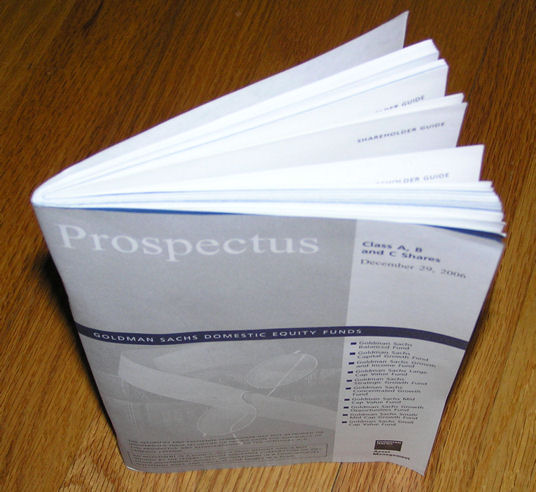
Regulators strictly limit what a tombstone ad may include. If an underwriter crosses this line, they violate the Securities Act of 1933. The permitted elements include:
- The name of the issuer of the securities.
- The type and amount of the security being offered.
- A brief indication of the general type of business of the issuer.
- The public offering price of the security.
- The names of the managing underwriters for the offering.
While FINRA acts as the self-regulatory organization on the federal and industry level, you must also answer to the state. Under the Uniform Securities Act (USA), state securities administrators possess immense authority over your local marketing efforts.
State securities administrators may require the filing of sales and advertising literature addressed to prospective investors. If you blast a pamphlet to dentists in Ohio, the Ohio Administrator can demand a copy on their desk.
However, the Administrator's power is not absolute. State securities administrators cannot require the filing of advertising literature for exempt securities (such as U.S. Treasury bonds or municipal securities) and they cannot require the filing of advertising literature for exempt transactions (such as an isolated non-issuer transaction).
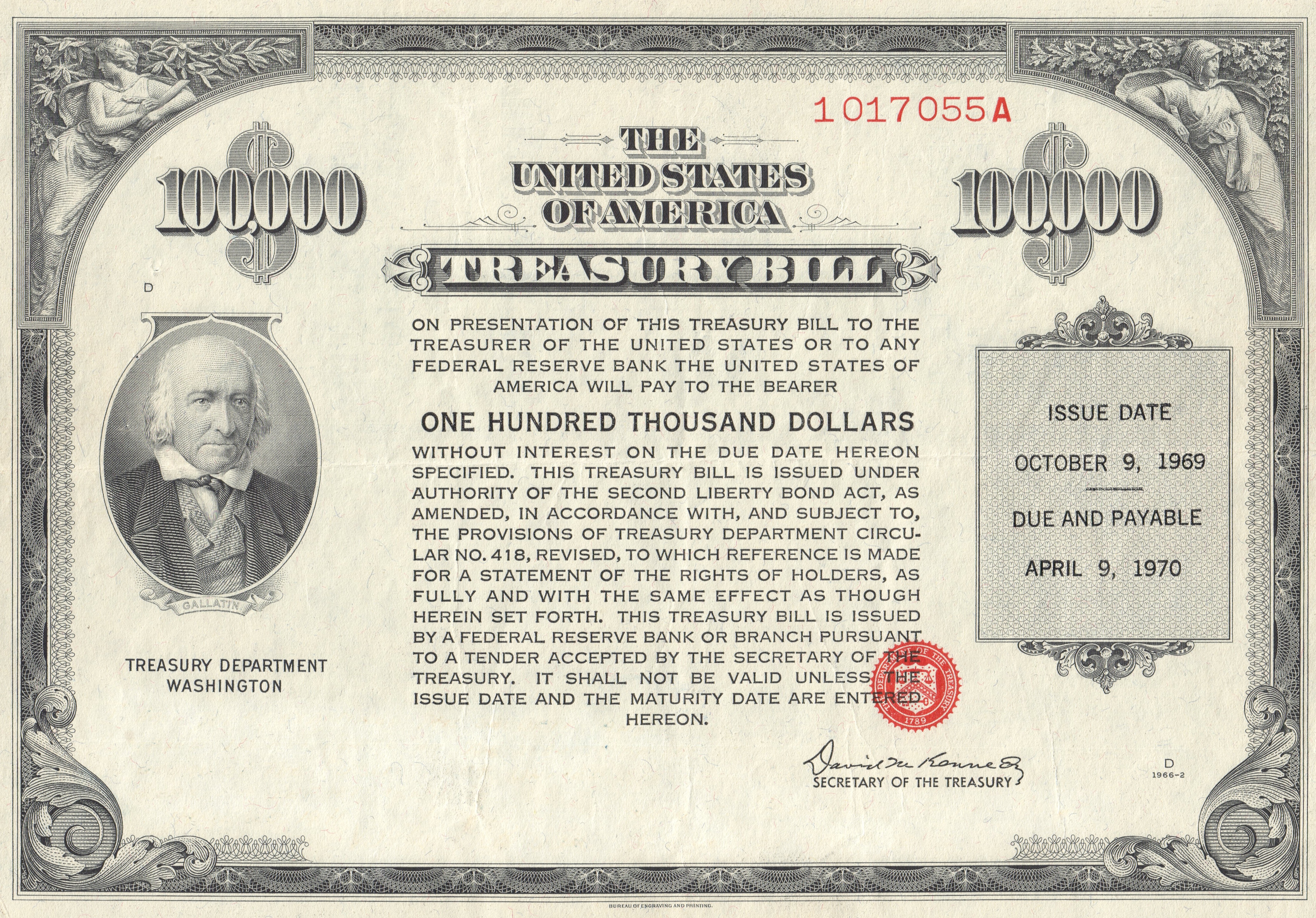
The logic here is profoundly practical: If a security or transaction is entirely exempt from state registration in the first place, the Administrator does not want to be buried under a mountain of paperwork reviewing the marketing literature for it.