Issuers and the Offering Process
Imagine a regional factory that has perfected a revolutionary new commercial jet engine but lacks the capital to build the massive assembly lines required to manufacture it. To bridge the gap between human ingenuity and physical production, this company must access the capital markets. It must transform itself into an issuer of securities. As a securities agent, your entire profession is built upon the mechanics of this transformation: the strict legal choreography required to safely move capital from the pockets of individual investors into the hands of enterprises, and the subsequent trading of those stakes in the open market.

Understanding the precise legal definitions of who is issuing a security, how the underwriters orchestrate the sale, and the stringent communication rules governing the initial offering is not just about passing the Series 63. It is about understanding the structural integrity of the American financial system. State securities laws are designed to prevent fraud at the inception of a security's life. We are going to dissect the anatomy of the offering process—from the moment a company decides to raise money, through the regulatory purgatory of the cooling-off period, all the way to the effective date.
To regulate the sale of securities, state law must first identify exactly who is responsible for creating them. Under the Uniform Securities Act, an issuer is any person who issues or proposes to issue any security.
You must understand that the law defines a person broadly. It is not limited to a living, breathing human being. A "person" includes an individual, a corporation, a partnership, an association, or any other legal entity. If an entity is creating a financial instrument to raise capital, it is acting as an issuer.
However, the financial world is full of complex instruments that do not neatly fit the mold of a standard corporation issuing common stock. The Uniform Securities Act anticipates this and establishes specific legal definitions for the "issuer" of certain specialized securities:
- Trusts and Deposits: For voting trust certificates, collateral-trust certificates, and certificates of deposit for a security, the legally defined issuer is the person assuming the duties of depositor or manager. The trust itself is just a piece of paper; the law looks to the human or corporate manager as the accountable issuer.
- Equipment Trust Certificates: These are often used by airlines or railroads to finance large assets. For equipment trust certificates, the legally defined issuer is the person to whom the equipment is to be leased or conditionally sold. (If an investment bank creates a trust to buy planes and leases them to Delta Airlines, Delta is the legal issuer, because they are the ultimate source of the cash flows).

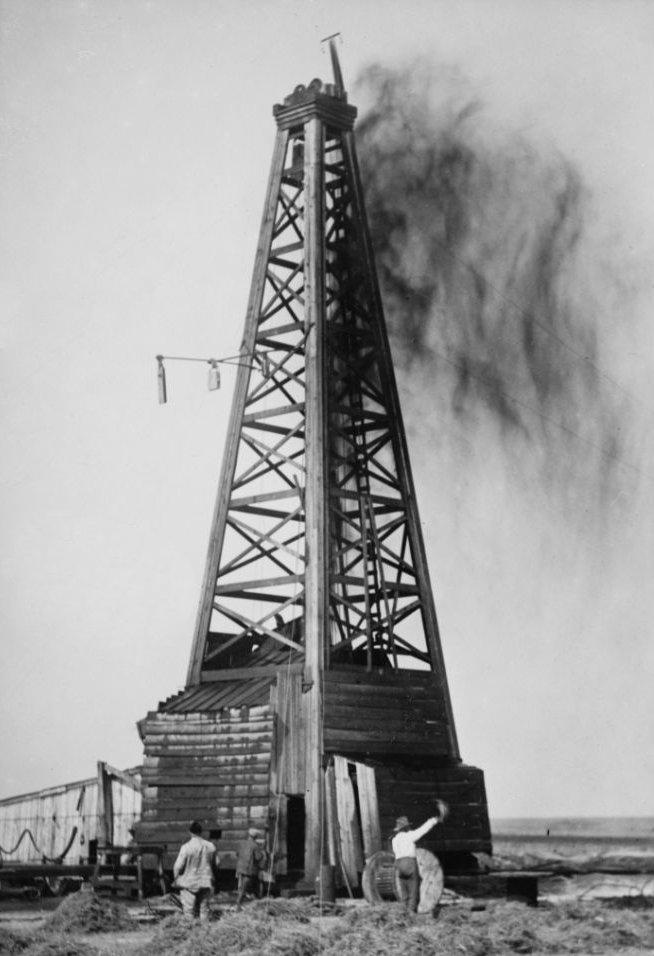
- The Ultimate Exception: There is one notable area where the law simply throws up its hands. Under the Uniform Securities Act, there is no defined issuer for certificates of interest or participation in oil, gas, or mining titles or leases. Because of the highly fragmented, speculative nature of wildcat drilling and mineral rights, regulators focus on registering the security and regulating the broker-dealer, rather than trying to pin the "issuer" label on a decentralized group of leaseholders.
Once we know who the issuer is, we must classify the nature of the transaction. The distinction rests entirely on one question: Where do the proceeds of the sale go?
The Issuer Transaction (The Primary Market)
An issuer transaction is a transaction in which the issuer receives the proceeds from the sale. Because newly created securities are being sold to the public to raise capital for the issuer, an issuer transaction takes place in the primary market.
Real-World Application: An initial public offering (IPO) is a common example of an issuer transaction. When a tech startup goes public and sells $100 million worth of stock, that $100 million (minus underwriting fees) goes directly into the startup's treasury to fund research and development.

The Non-Issuer Transaction (The Secondary Market)
Conversely, a non-issuer transaction is a transaction in which the proceeds of the sale do not go directly or indirectly to the issuer. These transactions take place in the secondary market.
Most trades executed between investors on a stock exchange are non-issuer transactions. If you buy 100 shares of Apple on the Nasdaq, you are handing your money to another investor who is selling their shares. Apple receives absolutely nothing from this transaction.

Why this matters for your exam: The distinction governs exemptions. A critical rule under the Uniform Securities Act is that isolated non-issuer transactions are strictly exempt from state registration. If an individual casually sells a few unregistered shares of a private company to a neighbor, the state Administrator generally does not require those shares to undergo a full state registration process, because it is an isolated, secondary market event.
Issuers are experts at building software, manufacturing engines, or drilling for oil—they are rarely experts at navigating the capital markets. To sell newly created securities to the public, an issuer hires a broker-dealer to act as an underwriter.
When a securities offering is massive, a single underwriter rarely wants to shoulder all the risk. Instead, they will form a syndicate, which is a collaborative group of broker-dealers that work together to underwrite a securities offering.
The agreement between the issuer and the underwriter determines who holds the financial risk during the offering.
| Underwriting Type | Definition | Risk Allocation |
|---|---|---|
| Firm Commitment | The underwriter purchases the entire securities issue directly from the issuer. | The underwriter assumes the financial risk of failing to sell the securities to the public. If the public doesn't buy, the underwriter eats the loss. |
| Best Efforts | The underwriter agrees to sell as much of the securities issue as possible, but does not guarantee the sale of the entire securities issue to the public. | The issuer assumes the risk. If shares go unsold, the issuer simply raises less capital. |
To help push the securities out to the retail public, the syndicate will often enlist a selling group. A selling group consists of broker-dealers who help distribute securities without assuming financial liability for unsold shares. They earn a small fee for the shares they successfully sell, but if demand dries up, they simply walk away unscathed.
You cannot simply print stock certificates and start selling them on a Tuesday. Under federal and state law, a registration statement must be filed before a new security can be offered to the public.
The moment this thick document of financial disclosures is filed with the Securities and Exchange Commission (SEC), a highly regulated window of time begins, known as the cooling-off period.

The federal cooling-off period lasts a minimum of 20 days. State Administrators typically coordinate state registration effective dates with the federal 20-day cooling-off period (a process logically called Registration by Coordination).
This period is designed to let the SEC and state Administrators review the disclosures, and to let the public "cool off" and review the facts without high-pressure sales tactics. The rules governing the behavior of broker-dealers during this 20-day window are absolute and unforgiving.
What is Strictly Prohibited?
- No Sales: During the registration cooling-off period, no actual sales of the security may legally take place.
- No Funds Accepted: An underwriter cannot legally accept money for the new security. You cannot hold a client's check "in escrow" or take a deposit.
- No Alterations: Highlighting or altering any part of a preliminary prospectus is strictly prohibited by securities laws. You cannot draw a smiley face next to the revenue projections or underline a favorable paragraph to steer a client's attention. The document must speak for itself.
What is Permitted?
Broker-dealers are allowed to test the waters and disseminate basic information during the cooling-off period using very specific tools:
1. The Tombstone Advertisement During the cooling-off period, underwriters are permitted to publish tombstone advertisements. A tombstone advertisement is a basic, bare-bones announcement that includes the name of the issuer, the type of security, and the names of the underwriters. Because it contains no persuasive language or performance projections, a tombstone advertisement does not constitute a legally binding offer to sell a security.
2. The Preliminary Prospectus (Red Herring) Broker-dealers may distribute a preliminary prospectus, which is universally referred to in the securities industry as a red herring (due to the red disclaimer text traditionally printed on its cover).
- A preliminary prospectus contains essential facts about the upcoming securities offering—financial statements, business models, and management bios.
- However, because the final pricing depends on market demand right before launch, a preliminary prospectus legally omits the final public offering price of the security.
- It also legally omits the effective date of the offering.

3. Indications of Interest Armed with the red herring, broker-dealers may solicit non-binding indications of interest from potential buyers. If a client says, "Put me down for 500 shares when this goes live," the agent records this interest. Crucially, an indication of interest does not legally commit an investor to purchasing the new security. When the security finally goes live, the client has every right to change their mind.
Halting the Clock
The 20-day clock is not a guarantee; it is a minimum. Regulators possess the authority to hit the brakes.
- If regulators find errors, omissions, or unclear disclosures, they will issue a deficiency letter. A deficiency letter from the SEC or a state Administrator pauses the clock and extends the registration cooling-off period beyond the original 20 days until the issuer corrects the paperwork.
- If a state Administrator suspects fraud or severe legal violations, they will deploy their most aggressive tool: a stop order. A stop order issued by a state Administrator will immediately halt the registration process of a security in that state.
Once the regulatory bodies are satisfied with the disclosures and the minimum cooling-off period has elapsed, the offering is cleared for launch.
The effective date is the first day the newly registered security can legally be sold to the public. The underwriters execute their pricing meeting, determine the final valuation, and the indications of interest are transformed into legally binding sales (provided the clients confirm their orders).
At this stage, the red herring is replaced by the finalized legal document. A final prospectus must be delivered to each purchaser no later than the completion of the sale of the security.
Unlike its preliminary predecessor, the final prospectus contains the final public offering price of the security. It is the definitive document of record, ensuring that every investor who parts with their capital does so with complete, finalized, and legally vetted information.