SIPC Insurance Coverage Scope
When an investor transfers wealth to a broker-dealer, they are implicitly trusting not just the economic potential of the financial markets, but the structural integrity of the institution itself. Markets fluctuate, companies fail, and asset prices swing—these are the expected, calculated risks of capitalism. However, an investor should not have to calculate the risk that their brokerage firm might simply misplace their assets, embezzle their funds, or collapse into insolvency, leaving their accounts empty. To insulate the financial system against the localized failure of the broker-dealer firm, we rely on a specific structural safeguard: the Securities Investor Protection Corporation.
For a securities agent, understanding the precise boundaries of this safety net is not merely a regulatory prerequisite. It is fundamental to how you guide clients through the architecture of their accounts, how you manage their exposure, and how you explain the fundamental difference between market risk and institutional risk.
To understand how the Securities Investor Protection Corporation (SIPC) operates, we must first dispel a persistent myth: SIPC is not the Federal Deposit Insurance Corporation (FDIC) of the investment world, nor is it a branch of the federal government.
Congress created SIPC under the Securities Investor Protection Act of 1970 in response to a period of severe financial distress on Wall Street, during which several prominent brokerage firms went bankrupt, freezing customer assets. The legislation mandated the creation of an entity that protects customers of member broker-dealers in the event of the broker-dealer's financial failure.

Crucially, SIPC is a non-profit membership corporation, not a government agency. It is funded by its member firms. By law, almost all broker-dealers registered with the Securities and Exchange Commission (SEC) must be members of the Securities Investor Protection Corporation. When a member firm fails and customer assets are missing, SIPC steps in to return the customers' cash, stock, and other securities.
The Core Distinction: SIPC exists strictly to cure the institutional failure of the broker-dealer. It acts as an recovery mechanism to restore missing assets. It does entirely nothing to cure the economic failure of an investment strategy.
When a broker-dealer enters SIPC liquidation, the immediate question for any client is: How much of my wealth is actually protected?
The Securities Investor Protection Corporation provides up to $500,000 of total protection per customer.
Within that $500,000 maximum, there is a strict limitation on how much can be claimed as cash. The SIPC coverage includes a maximum limit of $250,000 for uninvested cash. It is vital to understand that this is not $500,000 for securities plus $250,000 for cash. The $250,000 cash coverage limit is a sub-limit included within the overall $500,000 total protection limit.
The Cash "Intent" Rule
Furthermore, SIPC is not a bank alternative. The Securities Investor Protection Corporation covers cash deposited with a broker-dealer only if the cash is intended for the purchase of securities. If a client simply parks money in a brokerage account with no intention of investing it, treating the broker-dealer like a traditional savings bank, that cash falls outside the scope of SIPC's statutory mandate.
Margin Accounts and Valuation
If a client utilizes leverage, how do we value their claim? Securities Investor Protection Corporation coverage for margin accounts is calculated based on the net equity of the margin account. If an investor holds $600,000 in securities but owes a $200,000 margin debit balance to the broker-dealer, their net equity is $400,000. Because this is below the $500,000 maximum, their account is fully protected.
We must also establish a fixed point in time to measure the value of the assets, because markets do not stop moving just because a brokerage firm collapses. The Securities Investor Protection Corporation calculates the value of missing securities based on the market value of the securities on the date the broker-dealer firm failed. If a stock was worth $50 a share on the day the firm went under, that is the value SIPC uses to calculate the client's claim, regardless of whether the stock price subsequently doubles or halves during the liquidation proceedings.
One of the most profound, and highly testable, mechanical rules of SIPC involves how it defines a "customer." The $500,000 limit is not a lifetime or universal cap per human being. Instead, the Securities Investor Protection Corporation applies coverage limits per customer in each separate capacity of ownership.
"Separate capacity" refers to the legal ownership structure of the account. If an investor structures their wealth across legally distinct types of ownership, they receive a fresh set of SIPC limits for each one.
Consider a client, Dr. Chen, who holds multiple accounts at a single failing broker-dealer:
- An individual brokerage account in her name.
- A joint account owned by Dr. Chen and her husband.
- A Traditional Individual Retirement Account (IRA).
- A Roth IRA.
Under SIPC rules, an individual account and a joint account owned by the same person are considered separate capacities for coverage limits. Furthermore, a traditional Individual Retirement Account (IRA) and a Roth IRA held by the same investor are treated as separate capacities.
Therefore, Dr. Chen has four separate capacities. She receives up to $500,000 of protection for her individual account, another $500,000 for her portion of the joint account, a separate $500,000 for the Traditional IRA, and yet another $500,000 for the Roth IRA. Understanding this geometry of ownership is a daily necessity for securities agents advising high-net-worth clients on asset consolidation.
SIPC's protection is highly specific. It covers the traditional, regulated ecosystem of securities, but it becomes entirely blind once an investor ventures outside of that ecosystem or takes on market risks.
Protected vs. Unprotected Assets
The Securities Investor Protection Corporation explicitly covers registered securities including stocks, bonds, and mutual funds. If an asset is regulated by the SEC and traded within the standard brokerage framework, it falls under the SIPC umbrella.

However, many financial instruments exist outside this regulatory perimeter. The following assets are strictly excluded from SIPC protection:
| Asset Class | Why it is Excluded |
|---|---|
| Commodities & Futures Contracts | The Securities Investor Protection Corporation does not provide coverage for commodities or futures contracts. These are regulated by the CFTC, not the SEC, and fall outside the legal definition of an SIPA security. |
| Physical Foreign Currency | The Securities Investor Protection Corporation does not provide coverage for physical foreign currency. Currency is a sovereign exchange medium, not a registered security. |
| Precious Metals | The Securities Investor Protection Corporation does not provide coverage for precious metals (e.g., physical gold bars in a vault). These are hard assets, not securities. |
| Fixed Annuity Contracts | The Securities Investor Protection Corporation does not provide coverage for fixed annuity contracts. Fixed annuities are insurance products regulated by state insurance commissioners, not SEC-registered securities. |
| Unregistered Investments | The Securities Investor Protection Corporation does not provide coverage for unregistered investment contracts or unregistered limited partnerships. Because these skip the standard SEC registration and disclosure process, SIPC does not extend its safety net to them. |

Additionally, if a client decides to invest directly in the broker-dealer—perhaps by buying bonds issued by the firm itself, or purchasing equity shares in the brokerage company—they act as a creditor or owner of the business. The Securities Investor Protection Corporation does not protect an investor's personal equity or debt investment in the failed broker-dealer firm itself. If you buy stock in the firm, and the firm goes bankrupt, that investment goes to zero.
The Illusion of Market Guarantees
Finally, we must delineate the difference between custody and strategy. A broker-dealer's job is to custody assets and execute trades. The investor's job is to bear the economic risk of those trades.
- The Securities Investor Protection Corporation does not protect investors against a decline in the market value of securities.
- The Securities Investor Protection Corporation does not guarantee the principal value of investments.
- The Securities Investor Protection Corporation does not protect investors from losses resulting from poor investment advice.
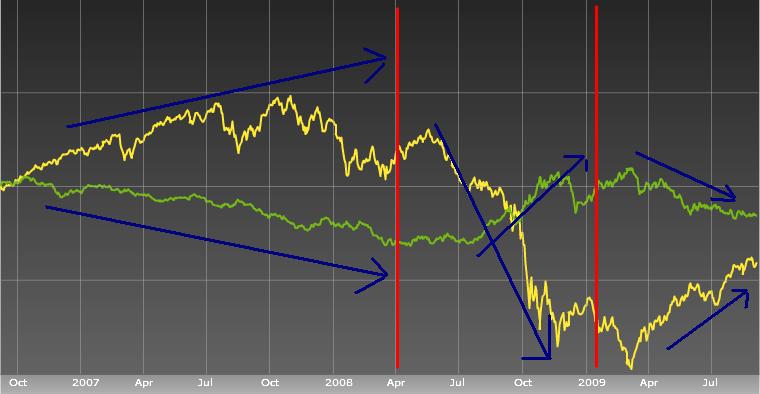
If an agent recommends a disastrous portfolio of technology stocks, and the portfolio's value plummets by 80%, SIPC will not intervene. The assets are not "missing" due to the firm's insolvency; they simply evaporated due to market forces and poor strategy. SIPC guarantees the presence of the asset in the account, never its profitability.
For the Series 63 candidate, mastering SIPC requires separating the physical safety of an asset from its economic performance. You must be able to look at a client's portfolio, instantly identify the legal capacities in play, strip away the unregistered and non-securities assets, calculate the net equity, and confidently explain exactly where the structural safety net begins and where it abruptly ends.