Criminal Liability and Penalties
The architecture of securities law operates on two distinct tracks when addressing misconduct: one track seeks to repair financial damage, while the other seeks to punish deliberate wrongdoing. For a financial professional executing transactions, managing portfolios, or advising clients, understanding the boundary between an administrative error and a criminal offense is not merely an academic exercise. It is the definitive line between writing a check to compensate a client and facing years in a state penitentiary. The Uniform Securities Act (USA) strictly delineates these boundaries through Section 409, isolating those who accidentally stumble over complex regulations from those who deliberately disregard the mechanics of fair markets.
To understand how the state regulates the securities industry, you must first understand the fundamental philosophical difference between civil and criminal law. The state does not view all infractions through the same lens.
Civil liabilities under state securities laws focus on compensating victims through financial restitution. If an agent makes an honest, negligent mistake that costs a client capital, the law prioritizes making the client whole. The objective of the civil framework is restorative; it demands that the violator return the victim's funds, often with interest, essentially rolling back the clock to before the unlawful transaction occurred.
Criminal penalties, conversely, aim to punish willful violators. In a criminal context, the state determines that the violator’s actions were so detrimental to the integrity of the financial markets that society itself was wronged. Criminal penalties for willful securities violations include state-imposed monetary fines and state-imposed imprisonment. The objective here is deterrence and retribution, not restitution.
| Feature | Civil Liability | Criminal Penalty |
|---|---|---|
| Primary Objective | Compensating victims (making them whole). | Punishing willful violators (deterrence and retribution). |
| Financial Consequence | Financial restitution (returning funds + interest). | State-imposed monetary fines payable to the state. |
| Liberty Consequence | No threat of imprisonment. | State-imposed imprisonment. |
| Requirement of Intent | Can apply to negligent or accidental infractions. | Strictly requires a "willful" violation. |
The entire apparatus of criminal enforcement under the Uniform Securities Act hinges on a single, vital concept: intent. Criminal liability under the Uniform Securities Act applies only to persons who commit a willful violation of the Act.
But how exactly does the law define "willful"?
In everyday conversation, we might assume that "willfully breaking the law" means the person read the law, understood it, and deliberately chose to break it. Securities law operates differently. A securities law violation is considered willful if the violator acted intentionally. That means the person intended to perform the action, regardless of whether they intended to break the law.
Crucial Distinction: A securities law violation can be deemed willful even if the violator was completely unaware that the specific action violated state law.
Imagine you are driving a car. You intentionally press your foot on the accelerator. If you are speeding in a school zone, your action of driving fast is intentional, even if you did not see the speed limit sign. You willfully drove the car at that speed.

Similarly, if an agent sells a security to a client, the act of selling is intentional. If it turns out the security was unregistered, the agent cannot escape criminal liability by claiming, "I didn't know it had to be registered!" The act of selling was intentional; therefore, the violation is willful. Ignorance of the state's legal code does not erase the intentionality of the physical act.
This standard applies across the entire spectrum of securities regulation:
- Fraud: Naturally, fraudulent actions can result in criminal prosecution if the fraudulent actions are committed willfully. If you deliberately falsify a balance sheet to sell a promissory note, the act is willful.
- Administrative Violations: Surprisingly to many candidates, even purely administrative violations—such as failing to register as a broker-dealer agent—can result in criminal prosecution if the failure to register is willful. If you deliberately choose to open an office and solicit clients without submitting your Form U4 to the state, you are willfully acting as an unregistered agent.
When a securities professional willfully crosses the line into criminal conduct, the Uniform Securities Act sets strict statutory maximums for the resulting penalties. You can easily remember these maximums as the "5-3 Rule."
- The Fine: The maximum criminal fine for a willful violation of the Uniform Securities Act is $5,000 per violation.
- The Imprisonment: The maximum prison sentence for a criminal violation of the Uniform Securities Act is three years.
It is mathematically vital to note that the $5,000 fine is per violation. If an agent willfully executes 10 separate unauthorized trades, they are looking at a potential $50,000 in fines, alongside the possibility of imprisonment.
The Shield of Ignorance: The "Lack of Knowledge" Defense
We have established that a violation is willful even if you didn't know you were breaking the law. However, the Uniform Securities Act recognizes a fundamental principle of human liberty: it is philosophically extreme to lock someone in a prison cell if they genuinely had no idea that a highly specific regulatory rule or order existed.
Because of this, the law provides a narrow, precise safe harbor known as the lack of knowledge defense.
A defendant cannot be sentenced to prison for a criminal securities violation if the defendant proves a lack of knowledge of the specific rule or order violated.
Note the precise language: proves a lack of knowledge of the specific rule or order. A defendant cannot walk into court and claim, "I didn't know fraud was illegal." Fraud is a universal concept. But if the state Administrator issued a highly technical, obscure order regarding the retention of specific electronic correspondence, and a firm owner willfully deletes those emails without knowing that specific order existed, the owner can invoke this defense.
The burden of proof falls entirely on the defendant. The state does not have to prove you knew the rule; you must prove to the court that you were genuinely unaware of it.
However, this defense is a shield against the prison cell, not a shield against the state's treasury. A defendant who avoids a prison sentence by proving a lack of knowledge of a rule or order can still be subjected to criminal fines. You keep your liberty, but you must still pay up to the maximum $5,000 fine per violation.
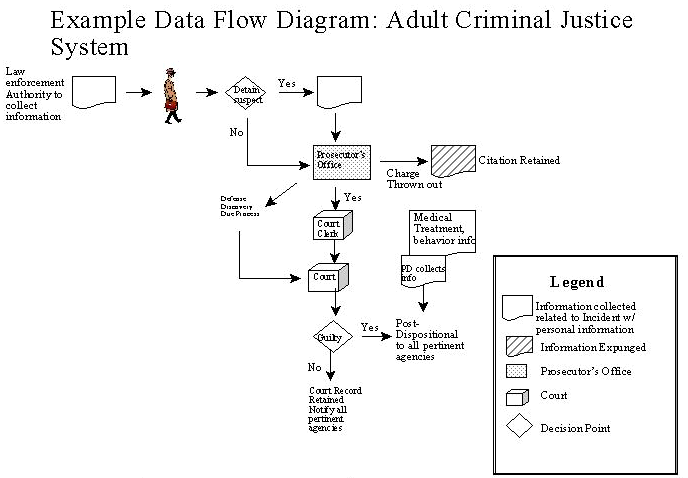
To understand how these penalties are applied in the real world, you must understand the mechanics of state government. The state securities Administrator is immensely powerful. They can deny registrations, issue cease and desist orders, subpoena records, and freeze operations.
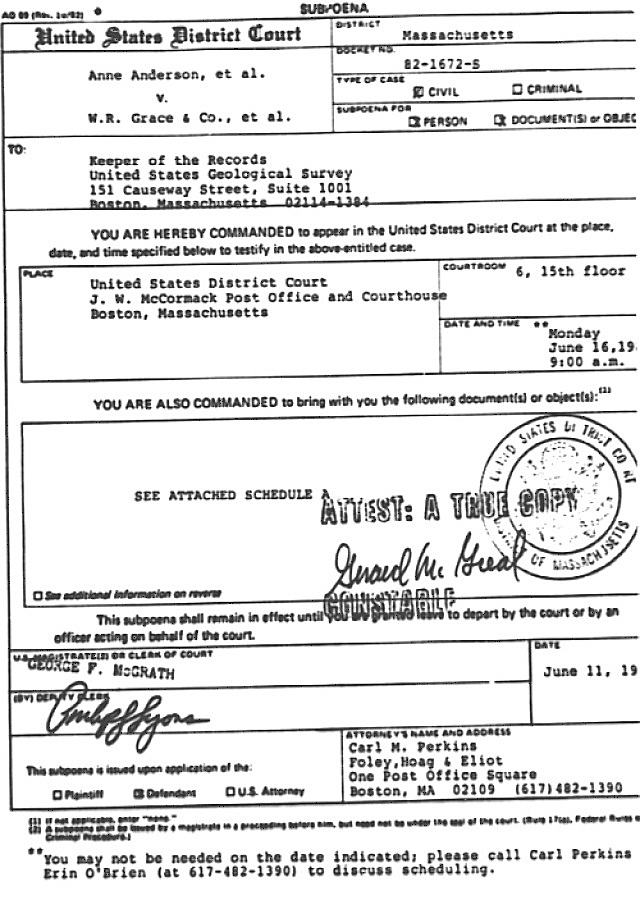
However, the United States legal system relies on a strict separation of powers. An administrative regulator cannot act as both police officer and prosecutor. Therefore, the state securities Administrator lacks the legal authority to file criminal charges against a securities law violator.
The Administrator operates as an investigator. When the Administrator uncovers evidence of willful, criminal misconduct during an audit or an investigation, they cannot draw up an indictment. Instead, the state securities Administrator must forward evidence of potential criminal violations to the proper criminal justice authorities.
Who actually wields the power to prosecute?
- The State Attorney General: As the chief legal officer of the state, the state attorney general holds the power to initiate criminal prosecutions for state securities violations.
- The Local District Attorney: Depending on the jurisdiction and the specific statutes of the state, the local district attorney holds the power to initiate criminal prosecutions for state securities violations within their jurisdiction (e.g., the county where the fraud took place).
By forcing the Administrator to hand the evidence over to the Attorney General or District Attorney, the law ensures that an independent prosecutorial body reviews the facts before a citizen is threatened with a $5,000 fine or three years in prison.
The justice system does not allow the threat of criminal prosecution to hang over a person's head for eternity. Evidence degrades. Financial records are legitimately destroyed after their mandatory retention periods expire. Witnesses forget critical details.
To ensure fairness, the law dictates a strict countdown. The statute of limitations for initiating criminal charges under the Uniform Securities Act is five years from the date of the alleged violation.
If an agent willfully sells unregistered securities on May 1, 2020, the state Attorney General has exactly until May 1, 2025, to file criminal charges. If the state discovers the crime on May 2, 2025, they are entirely barred from pursuing criminal penalties under the USA, regardless of how overwhelming the evidence might be. (Note: The federal government or other civil mechanisms may have different timelines, but under the state USA framework for criminal charges, the limit is strictly five years).
For a securities professional, this timeline demands rigorous record-keeping and an unyielding commitment to compliance. Understanding these parameters—what constitutes a willful act, the limits of the 5-3 penalties, the precise nature of the lack of knowledge defense, and the strict five-year window for prosecution—provides the clarity needed to navigate the high-stakes environment of state securities law.