Unauthorized Trading and Insider Trading
The financial markets operate on a singular, invisible currency: trust. When an investor places their capital into the market, they are fundamentally assuming that the playing field is level, that the information they receive is accurate, and that their agent acts strictly within the bounds of granted authority. The regulatory framework enforced by state Administrators and federal agencies is not merely a set of arbitrary hurdles; it is the structural engineering that keeps the capital markets from collapsing into chaos. As a securities professional, your license grants you the immense power to execute transactions that shape your clients' financial destinies. Understanding the boundaries of that power—specifically regarding the handling of sensitive information, the absolute truthfulness required in communication, and the precise limits of trading authority—is the absolute core of your professional and legal duty.
Imagine you are playing a game of poker, but you are the only player at the table who has seen the deck before it was dealt. The game ceases to be a measure of skill or calculated risk; it becomes theft. This is the underlying principle behind the prohibition of insider trading.
Insider trading involves purchasing or selling a security while in possession of material nonpublic information. Let us break down exactly what that means:
- Material nonpublic information is information that is not available to the general public, which a reasonable investor would consider important when making an investment decision.
- Trading on material nonpublic information constitutes an ethical and legal violation regardless of the outcome. It is a violation when the trade results in a profit, and equally a violation when the trade results in a loss. The crime is the act of trading on the unfair advantage, not the success of the trade.

The Anatomy of the Leak: Tippers, Tippees, and Misappropriation
Information rarely leaps directly from a boardroom into the market; it flows through people.
- A tipper is an individual who shares material nonpublic information with another person.
- A tippee is an individual who receives material nonpublic information from another person.
If a corporate executive tells her brother about an unannounced merger, she is the tipper, and he is the tippee. A tippee commits an insider trading violation by trading securities while knowing the shared information was obtained improperly. What about the executive who simply passed the note but made no trades herself? The law is uncompromising: a tipper can be held legally liable for insider trading violations committed by a tippee.
Liability also extends to those who steal information. The misappropriation theory holds an individual liable for insider trading when they violate a duty of trust owed to the source of the nonpublic information. If a lawyer discovers a pending acquisition while reviewing a client's confidential files and trades on that knowledge, they have misappropriated the information.
Containment: Information Barriers
Because financial firms often house both investment banking (where secrets are born) and retail trading (where trades are executed) under one roof, broker-dealers are required to establish internal information barriers to prevent the misuse of material nonpublic information.
Information Barriers (historically known as Chinese Walls) restrict the internal flow of sensitive information between different departments within a financial firm. Think of them like the watertight doors on a submarine; if one compartment floods with sensitive, market-moving data, the barrier slams shut so the trading desks are not compromised.
The Consequences: Penalties for Insider Trading
The penalties for violating these rules are designed to be devastating, serving as a powerful deterrent against market manipulation.
- Federal Civil Penalties: Under federal law, civil penalties for insider trading can reach up to three times the profit gained or three times the loss avoided. This is known as treble damages.
- Federal Criminal Penalties: The Department of Justice does not view insider trading lightly. Under federal law, maximum criminal fines for insider trading can reach up to $5 million for an individual. Furthermore, maximum criminal prison sentences for insider trading are up to twenty years per violation.
- State-Level Enforcement: At the state level, a state securities Administrator has the authority to deny, suspend, or revoke a securities agent’s registration for insider trading violations.
In physics, a vacuum is the absence of matter. In finance, an omission is the absence of a material fact. A material fact is any detail that a reasonable investor would consider essential when making an investment decision. When communicating with clients, you are bound by dual obligations: you must not lie, and you must not hide the truth.
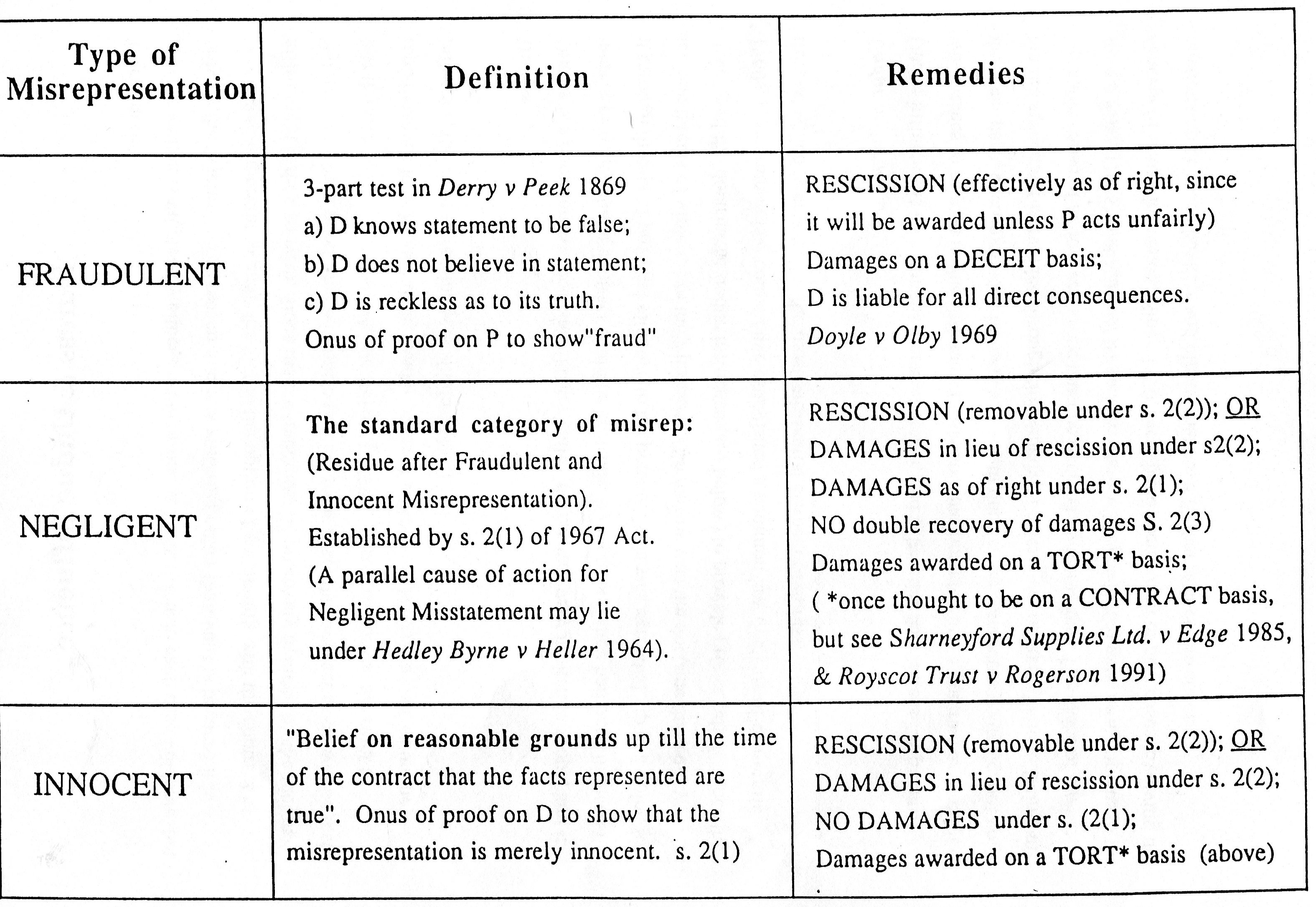
Misrepresentation occurs when an agent makes a deliberately false statement regarding a material fact to a client. Conversely, an omission occurs when an agent fails to disclose a material fact necessary to prevent a statement from being misleading.
Common Forms of Misrepresentation
As an agent, your words carry weight. Certain statements are universally recognized as unethical or fraudulent:
- False Guarantees: Promising a specific future price for a security constitutes a misrepresentation of a material fact. Similarly, guaranteeing a client against a loss in a securities transaction constitutes an unethical business practice. The market is inherently risky; shielding a client from that reality is a profound ethical breach.
- Administrator Approval: Stating that a security has been approved by a state securities Administrator constitutes a fraudulent misrepresentation. Why? Because a state securities Administrator does not approve registered securities, nor does a state securities Administrator endorse registered securities. They merely clear them for legal sale based on required disclosures.
- Inaccurate Data: Providing inaccurate market quotations to a client is a misrepresentation of a material fact.
- Inflated Claims: Exaggerating the historical performance of a security constitutes a misrepresentation of a material fact.
The Danger of Omissions
An omission is often more subtle than a direct lie. Failing to disclose the specific risks associated with an investment recommendation is an omission of a material fact. If you recommend a highly volatile, illiquid security but only discuss its potential upside, you have misled the client by omission. Furthermore, an agent making a recommendation must disclose conflicts of interest to avoid an omission of a material fact.
Do not think that burying your head in the sand is a defense. Deliberate ignorance of material facts does not protect an agent from liability for omissions. You have an affirmative duty to know what you are selling.
Rumors: The Virus of the Market
Market rumors are highly contagious and deeply dangerous. Executing a trade based on an unverified market rumor constitutes an unethical business practice. Taking it a step further, deliberately spreading false market rumors to manipulate the price of a security is a heavily prosecuted fraudulent act.
A client's account is their property. You are merely the gatekeeper. Unauthorized trading occurs when an agent executes a transaction without the client's prior consent.
Imagine you receive a panicked phone message from a client asking you to buy a specific security immediately, but they hang up before you can confirm the details. An agent receiving a phone message to buy a security cannot execute the trade without speaking directly to the client. You must verify the order directly.
Dealing with Third Parties
Authority does not automatically extend to family members or legal counsel. An agent cannot accept trading instructions from a client's spouse without written third-party trading authorization. Likewise, an agent cannot accept a trade order from a client's attorney without a written third-party trading authorization on file.
This written third-party trading authorization is formally referred to as a Power of Attorney (POA). A critical mechanism to remember: A Power of Attorney terminates immediately upon the death of the client. In fact, all discretionary trading authority terminates immediately upon the death of the client. The moment a client passes away, the agent's authority to trade ceases, and the account is frozen pending instructions from the estate.

Discretionary Trading vs. Time and Price Discretion
Trading authority operates on a spectrum.
Discretionary trading authority allows an agent to independently decide the core mechanics of a trade. Specifically, it allows an agent to independently decide:
- The specific security to trade for a client.
- Whether to buy a security for a client.
- Whether to sell a security for a client.
- The specific number of shares to trade for a client.
If the agent is choosing the Asset, the Action (buy/sell), or the Amount, the agent is exercising full discretion.
In contrast, Time and price discretion allows an agent to determine only the exact timing of a client trade execution or the specific execution price of a client trade.
- An agent exercising time and price discretion must rely on the client to specify the exact security to be traded.
- An agent must rely on the client to specify whether to buy the security.
- An agent must rely on the client to specify whether to sell the security.
- An agent must rely on the client to specify the exact number of shares to be traded.
Think of it this way: If a client says, "Buy 100 shares of Apple today whenever you think the price dips to a good level," that is time and price discretion. If the client says, "Buy some tech stocks with $10,000," that requires full discretionary authority.
Crucially, time and price discretion does not require written discretionary authority from the client. It is a routine part of executing standard orders.
The Rules of Engagement: Broker-Dealers vs. Investment Advisers
State law treats the requirement for written discretionary authority differently depending on whether you operate as a Broker-Dealer Agent or an Investment Adviser Representative (IAR).
| Professional Role | Rule for Discretionary Authority |
|---|---|
| Broker-Dealer Agent | Must obtain written authorization from a client before executing any discretionary trades in the client's account. |
| Investment Adviser Representative (IAR) | May execute discretionary trades based on oral authorization for up to ten business days. |
The 10-Day Rule for IARs: The ten-business-day window for an Investment Adviser Representative's oral discretionary authority begins on the date of the first discretionary trade (not the date the oral permission was granted). After ten business days from the initial discretionary trade, an Investment Adviser Representative must have written authorization to continue discretionary trading.
Abuse of Authority: Churning
Even when a client hands you the keys to their account via full, written discretionary trading authority, your duty to act in their best interest remains absolute.
Executing trades that are excessive in size for a client's financial profile is an unethical practice called churning. Similarly, executing trades that are excessive in frequency for a client's financial profile is also classified as churning.
Churning is typically driven by an agent's desire to generate higher trading commissions, entirely disregarding the client's investment objectives. Do not fall into the trap of thinking a signature absolves you of this duty: churning is an ethical violation even if the client has granted full discretionary trading authority to the agent. Authority is not a license to exploit.