Account Authorizations and Discretion
In the mechanics of the securities industry, a brokerage account is fundamentally a vault of assets, and an order ticket is the lever that moves them. The central question of account authorization is simply this: whose hand is legally allowed to pull the lever? When an individual opens a standard account, the answer is straightforward. But the financial world rarely operates on simple, solitary ownership. You will routinely deal with entities acting as a collective, third parties stepping in for incapacitated clients, or clients asking you—their registered representative—to take the wheel entirely.
To navigate these scenarios, you must understand the exact legal documentation required to prove authority, and the strict boundaries FINRA places on your own power to act. A mistake here is not merely a paperwork error; executing trades without proper authorization is a severe regulatory violation. Let us break down the exact mechanisms that grant, limit, and revoke control in a brokerage account.

Entities are legal fictions; they cannot physically sign an order ticket or pick up a phone. Therefore, to open an account for an entity, a broker-dealer must obtain specific governing documents that grant flesh-and-blood human beings the authority to act on the entity's behalf.
Corporate Accounts
When dealing with a corporation, you are not taking orders from the "company"—you are taking orders from specific officers.
- A corporate resolution is required to open a corporate brokerage account.
- The primary purpose of a corporate resolution is that it explicitly identifies the specific individuals authorized to execute trades on behalf of the corporation.
If the corporation wishes to trade on margin, the regulatory bar is raised. You cannot assume a corporation is permitted to borrow money. To open a margin account for a corporation, a corporate charter must be obtained. Furthermore, this corporate charter must explicitly permit margin trading for a broker-dealer to legally open the margin account.
Partnership Accounts
Partnerships operate similarly. A partnership agreement is required to open a brokerage account for a partnership. Just like the corporate resolution, the partnership agreement identifies the specific partners authorized to execute trades on behalf of the partnership. If a partner calls you to place a trade, their name must be on that document.
Trust Accounts
Trusts are highly sensitive legal arrangements where one party holds assets for the benefit of another. Because of this fiduciary duty, the rules are rigid.
- A trust agreement is required to open a brokerage account for a trust.
- This agreement serves two vital functions: it identifies the designated trustee of the trust, and it explicitly specifies the trading powers granted to that trustee.
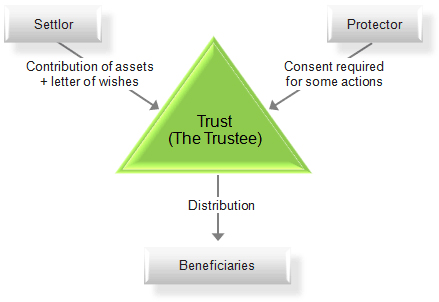
Crucial Fiduciary Rule: A trustee cannot delegate trading authority to another party (such as a separate money manager or an attorney) unless the trust agreement explicitly allows such delegation.
Additionally, because trusts are designed to preserve assets, risk is tightly controlled. Margin trading is prohibited in a trust account unless the trust agreement specifically authorizes margin trading. Without that exact clause in the paperwork, the trust account must operate on a strictly cash basis.
When an individual account owner wants to hand control to someone else—a spouse, a child, or a CPA—they use a Power of Attorney. A Power of Attorney is a legal document granting a third party the authority to act on behalf of the account owner.

Depending on the scope of power the client wishes to grant, the POA will either be Full or Limited.
Full vs. Limited Power of Attorney
| Authority Level | Capabilities | Restrictions |
|---|---|---|
| Full Power of Attorney | Grants a third party the authority to execute trades in a customer account. | None. Grants the third party the authority to withdraw cash and withdraw securities from the customer account. |
| Limited Power of Attorney | Grants a third party the authority to execute trades in a customer account. | Prohibits a third party from withdrawing cash from a customer account. Prohibits a third party from withdrawing securities. |
Because a Limited Power of Attorney only allows for trading, it is commonly known as a trading authorization.
Real-world application: Suppose an accountant holds a Limited POA on your client's account to manage tax-loss harvesting. The accountant tells you to liquidate $10,000 worth of stock and mail a check. You can execute the trade, but who gets the money? Checks drawn from an account managed by a third party with trading authority must be made payable to the account owner. The accountant cannot request the check be made out to themselves, nor can they wire it to a different account.

Durability and Termination of a POA
Mental competence and mortality are the two events that disrupt a Power of Attorney.
- A Non-Durable Power of Attorney automatically terminates if the account owner becomes mentally incompetent (e.g., falls into a coma or suffers severe dementia). The third party instantly loses authority.
- A Durable Power of Attorney remains legally valid if the account owner becomes mentally incompetent. This is essential for elder-care planning.

However, neither document survives mortality. All Powers of Attorney automatically terminate upon the death of the account owner. The moment you learn a client has passed away, you must immediately freeze the account and cancel all open orders, regardless of who holds a POA.
Up to this point, we have discussed third parties acting for the client. But what happens when the client wants you, the registered representative, to make trading decisions for them?
This crosses a major regulatory threshold into the realm of FINRA Rule 3260, which governs the rules and restrictions for discretionary accounts.
Defining Discretion: The "Three A's"
How do you know if you are exercising discretion? It comes down to three specific elements of a trade. Discretionary authority is required if a registered representative chooses:
- The specific security to be traded (Asset)
- Whether to buy or sell a security (Action)
- The quantity of a security to be traded (Amount)
If a registered representative chooses the asset, action, or amount for a trade, they are exercising discretion.
Requirements to Open and Operate
Because giving a broker control over a client's money presents a massive conflict of interest, the authorization process is absolute.
- A customer must provide prior written authorization for a registered representative to exercise discretionary power.
- A registered principal must provide prior written approval to open a discretionary account.
Warning: Verbal authorization from a customer is legally insufficient to establish a discretionary account. If a client says over the phone, "Just buy whatever tech stocks look good today," and you do not have written discretionary authority on file, executing that trade is an unauthorized trade—a severe violation.
Once the account is open, strict mechanical and oversight rules apply:
- Ticket Marking: Every discretionary order ticket must be clearly marked as a discretionary trade.
- Principal Review: A registered principal must review and approve all discretionary trades in writing. Crucially, principal approval of discretionary trades must occur promptly after execution. A registered principal is not required to approve a discretionary trade prior to trade execution.
- Firm Records: Broker-dealers are required to maintain a centralized record of all discretionary accounts.
Churning and Customer Rights
When you have discretion, you control the volume of trading. This opens the door to Churning—the illegal practice of trading excessively in a discretionary account for the primary purpose of generating commissions.
To prevent this, discretionary accounts are subject to frequent principal reviews to detect excessive trading patterns. The fundamental rule is that the frequency and size of trades in a discretionary account must align with the customer's stated investment objectives. (For example, executing 50 trades a week in the account of a retiree seeking capital preservation is a massive red flag, even if the trades are profitable).
It is also important to remember that granting discretion is not surrendering ownership. A customer retains the right to enter their own orders in a discretionary account. Furthermore, a discretionary authorization remains valid until formally revoked in writing by the customer.
There is one extremely common scenario where you are allowed to make a decision without formal written discretionary authority.
Suppose a client calls and says: "Sell my 500 shares of Apple sometime today, whenever you think the price is best."
Are you exercising discretion? Let's check the Three A's. Did you pick the Action? No, the client said "Sell". Did you pick the Amount? No, the client said "500 shares". Did you pick the Asset? No, the client said "Apple".
Because the client provided the Action, Amount, and Asset, you do not need written discretion. A registered representative can choose the time of trade execution, and can choose the price of trade execution, without written discretionary authority if the customer provides the asset, action, and amount.
An order where the customer leaves the time and price to the representative's discretion is known as a Not Held order (you are "not held" to the immediate execution price).
The Boundary of the Exception
This power is strictly limited by the clock. Verbal time and price authority is valid only for the single business day on which the customer grants the authority. If the market closes and you haven't executed the trade, the order dies. You cannot carry it over to tomorrow.
If the client wants you to work the order over the course of a week, written customer instructions are required for a time and price exception order to remain valid for more than one business day.
Summary for your daily practice: If it’s an entity, get the governing documents. If it's a third party, get the power of attorney. If you are picking the Asset, Action, or Amount, get the written discretionary form approved. And if you only have verbal permission to pick the time and price, you have until the closing bell to get it done. Keep these legal boundaries clear, and you will protect both your clients' assets and your own career.