Customer Investment Profile
A physician does not prescribe a powerful antibiotic without first examining the patient, reviewing their medical history, and understanding their allergies. To do otherwise is gross malpractice. In the capital markets, the same physical laws of cause, effect, and harm apply. As a General Securities Representative, your prescription pad is filled with equities, bonds, and options, but the fundamental constraint remains identical: you cannot recommend an allocation until you thoroughly understand the condition of the investor. This diagnostic process forms the bedrock of the broker-customer relationship, governed by rigid frameworks designed to protect the investor from unsuitable advice and protect the representative from disastrous liabilities.

Before any recommendation is formulated, you must perform a rigorous baseline assessment. FINRA Rule 2090 is known as the Know Your Customer rule. This is not a mere suggestion of professional courtesy; the Know Your Customer rule requires broker-dealers to use reasonable diligence to discover essential facts concerning every customer before opening and operating an account.
What constitutes an "essential fact"? It is a specific, operational threshold. Essential customer facts include:
- Information required to effectively service the customer's account.
- Information required to understand the authority of each person acting on behalf of the customer.
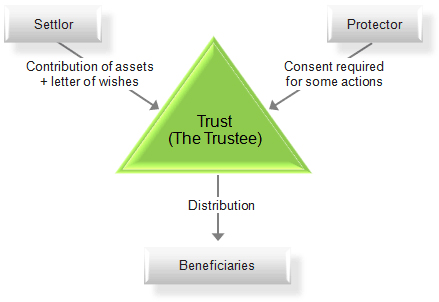
If a corporate account is opened, who has the trading authorization? If a trust is established, who is the trustee? Without understanding the authority of the actor, you cannot legally execute the action.
Once you know who you are dealing with, you must define the mathematical and psychological dimensions of their financial life. Under FINRA Rule 2111, a customer's investment profile is constructed from highly specific variables, which include the customer's:
- Age
- Tax status
- Investment experience
- Investment time horizon
- Liquidity needs
- Risk tolerance
Financial Factors and the Calculus of Wealth
To gauge a client's capacity for risk, we must map their wealth accurately. A customer's net worth is calculated by subtracting total liabilities from total assets. However, total net worth is often a deceptive number. A farmer might be worth millions on paper but have no cash to invest.
Therefore, we measure a customer's liquid net worth, which deliberately excludes assets that cannot be easily converted into cash. Crucially, real estate holdings are typically excluded from a customer's liquid net worth calculation.

Furthermore, a customer's marginal tax bracket influences the suitability of tax-advantaged investment recommendations. Placing a client in a complex tax-sheltered vehicle when they are in the lowest tax bracket is functionally useless.
Finally, every investment has a temporal dimension. A customer's investment time horizon is the expected duration until the invested funds need to be withdrawn. A 30-year-old saving for retirement operates under vastly different physical constraints than a 70-year-old requiring income next month.

Every financial instrument is a tool designed to solve a specific problem. If you misdiagnose the objective, you select the wrong tool.
1. Preservation of Capital
Preservation of capital is an investment objective focused on preventing the loss of the principal amount invested. This is for the investor who states, "I do not care about making money; I just cannot afford to lose what I have."
- Suitable Instruments: United States Treasury bills and bank certificates of deposit (CDs) are highly suitable for a preservation of capital investment objective because they are backed by the federal government or FDIC insurance.

2. Current Income
Current income is an investment objective focused on generating regular cash flow from an investment portfolio.
- Suitable Instruments: Corporate bonds are commonly recommended to investors seeking a current income investment objective. Additionally, dividend-paying preferred stocks align well with a current income investment objective because they offer fixed, predictable quarterly payouts.
3. Growth
Growth is an investment objective focused on the capital appreciation of the invested assets over a period of time. This requires accepting market volatility in exchange for long-term expansion.
- Suitable Instruments: Common stocks are a primary vehicle for achieving a growth investment objective.
4. Liquidity
Liquidity is an investment objective prioritizing the ability to quickly convert investments into cash without significant loss of principal.
- Suitable Instruments: Money market mutual funds are highly suitable for investors prioritizing a liquidity investment objective, as they maintain a stable net asset value of $1.00 per share.
5. Speculation
Speculation is an investment objective focused on achieving unusually high returns by taking on substantial market risk.
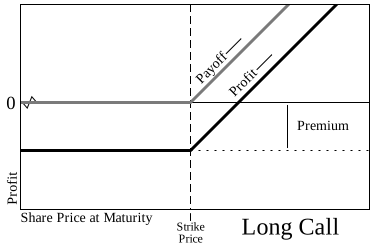
- Suitable Instruments: Options trading is generally classified under a speculation investment objective due to the high probability of losing the entire premium paid.
6. Tax-Free Income
Tax-free income is a common investment objective for investors in high marginal tax brackets.
- Suitable Instruments: Municipal bonds are suitable for high-income investors seeking tax-exempt interest payments.
Critical Application Warning: Municipal bonds are generally unsuitable for placement in tax-advantaged accounts like Individual Retirement Accounts (IRAs). Because IRAs already shelter investments from taxes, placing a lower-yielding municipal bond inside one wastes the bond's primary benefit.
FINRA Rule 2111 governs the suitability of recommendations made by registered representatives. Suitability is evaluated through three distinct, cumulative prongs. You must satisfy all three:
- Reasonable-Basis Suitability: Requires a broker-dealer to understand the risks and rewards of a recommended product. Furthermore, it requires a recommended product to be suitable for at least some hypothetical investors. If an instrument is so toxic or structurally flawed that it is good for no one, it fails here.
- Customer-Specific Suitability: Requires a recommendation to align with the specific individual customer's investment profile. (A speculative penny stock might pass reasonable-basis for a day trader, but it fails customer-specific suitability for an 80-year-old widow).
- Quantitative Suitability: Requires a registered representative to ensure a series of recommended transactions is not excessive in light of the customer's profile. Quantitative suitability violations often involve excessive trading intended to generate commissions.
- Terminology: Excessive trading in a customer account to generate commissions is universally known as churning.
The Institutional Exemption
The regulatory framework recognizes that massive financial institutions do not require the same hand-holding as retail investors. An institutional investor may qualify for an exemption from the customer-specific suitability obligation under FINRA Rule 2111.
To qualify, two conditions must be met:
- The institutional suitability exemption requires the institution to be capable of evaluating investment risks independently.
- The institutional suitability exemption requires the institution to affirmatively indicate it is exercising independent judgment.
For decades, the industry operated strictly on "suitability." But a product could be "suitable" without being the "best" option for the client. Enter the modern era.
SEC Regulation Best Interest (Reg BI) applies to broker-dealers making recommendations to retail customers.
Who is a retail customer? A retail customer under Regulation Best Interest is defined precisely as a natural person receiving a recommendation primarily for personal, family, or household purposes.
Scope Limitation: Regulation Best Interest applies exclusively to retail customers. It does not apply to recommendations made to institutional investors.
The Core Mandate
Regulation Best Interest requires broker-dealers to act in the best interest of the retail customer at the time the recommendation is made. Crucially, Regulation Best Interest prohibits broker-dealers from placing their financial interests ahead of the retail customer's interests. You cannot recommend a mutual fund with a higher commission over an identical fund with a lower commission simply to pad your payout.
Reg BI's jurisdiction is broad. It applies to:
- Recommendations of securities transactions.
- Recommendations of investment strategies involving securities (e.g., "You should use margin to buy more stock").
- Recommendations regarding specific types of investment accounts to open (e.g., advising a client to roll over a 401(k) into an IRA).
The Four Component Obligations of Reg BI
To satisfy Reg BI, a broker-dealer must comply with four structural obligations:
| Obligation | Definition |
|---|---|
| Disclosure | Requires providing written disclosures of material facts regarding the broker-customer relationship. |
| Care | Requires exercising reasonable diligence, care, and skill when making a recommendation. |
| Conflict of Interest | Requires firms to establish policies to mitigate or eliminate conflicts of interest. |
| Compliance | Requires firms to establish written policies to achieve compliance with the regulation. |
Form CRS: To fulfill the Disclosure Obligation, the SEC created Form CRS, which stands for Client Relationship Summary. Broker-dealers must provide a Form CRS to retail investors before or at the earliest time of a recommendation.
Information degrades. A client who is aggressively seeking growth at age 30 may face a catastrophic medical diagnosis at age 35, radically shifting their liquidity needs. The SEC and FINRA account for this through strict recordkeeping and verification cycles.
- Initial Delivery: Broker-dealers must send a copy of the customer account record to the customer within 30 days of account opening.
- Routine Verification: Broker-dealers must verify customer account information with the customer at least every 36 months.
- Material Changes: A material change in a customer's financial situation (e.g., marriage, divorce, loss of a job, massive inheritance) requires the broker-dealer to update the customer's account record.
- Updated Delivery: Once updated, these new account records must be sent to the customer within 30 days of receiving notice of a material change.
Knowing your customer is not a one-time event; it is a continuous, dynamic loop of data gathering, analysis, and realignment. Mastering these rules ensures you protect the capital of those who trust you, and in doing so, protect the integrity of the market itself.