Bringing New Issues to Market
Every great enterprise eventually exhausts its private capital. When a corporate entity determines that its internal cash flow or private bank loans are no longer sufficient to fund the construction of a new factory, the acquisition of a competitor, or the expansion into a new continent, it must turn to the public markets. The process of transforming a privately held vision into publicly traded securities is the vital machinery of global capitalism. For you, the Series 7 candidate and future registered representative, understanding this machinery is not just macroeconomic theory—it is the foundation of the inventory you will soon distribute, the underwriting syndicates your firm will join, and the strict regulatory boundaries you must never cross.

Before a single share of a corporate offering can be sold to your retail clients, the issuer must submit to the transparency mandate of the federal government. The Securities Act of 1933 requires the registration of new issues of non-exempt securities. To begin this process, a corporate issuer must file a registration statement with the SEC before offering non-exempt securities to the public.
The moment that document hits the SEC's desk, a clock begins ticking. This is the SEC cooling-off period, which is a minimum 20-day period following the filing of a registration statement. The SEC utilizes this time to review the disclosures, but for you and your firm, this period is an exercise in strict marketing discipline. You cannot legally sell the security yet. However, during the cooling-off period, an underwriter can gather indications of interest from potential investors.
Indication of Interest: A non-binding expression of interest from an investor regarding a new issue. It is neither a promise to buy from the investor, nor a promise to sell from the broker-dealer.
To help investors decide if they are interested, you will provide them with a preliminary prospectus, commonly referred to as a red herring due to the red disclaimer text historically printed on its cover. This document is a preview of the company's financials, but it is intentionally incomplete. A preliminary prospectus contains an expected price range for a new issue, but crucially, it omits two definitive pieces of data: it omits the final public offering price of a new issue, and it omits the effective date (the exact date the securities will go live for trading).
How else does the public find out about the offering? Underwriters can publish tombstone advertisements during the SEC cooling-off period. A tombstone advertisement announces the basic details of an upcoming new issue without directly offering the securities for sale. Because of the strict rules against pre-selling, a tombstone advertisement is the only permitted written advertisement for a new issue during the cooling-off period.

The SEC Disclaimer
Eventually, the cooling-off period ends, the SEC clears the issue, and the effective date arrives. But we must be fiercely precise about what the SEC is actually doing.
The SEC does not approve any registered security, nor does it pass judgment on whether the investment is brilliant or bound for bankruptcy. Furthermore, the SEC does not guarantee the accuracy of the information inside a final prospectus. It simply verifies that the required level of disclosure has been met. To ensure no investor is confused on this point, the front cover of a final prospectus must include the SEC disclaimer regarding the lack of SEC approval.

Delivering the Final Prospectus
Once trading goes live, investors who purchase the newly issued shares in the secondary market are entitled to receive a final prospectus for a specified period. The required timeframe depends on the nature of the issue:
- A final prospectus must be delivered to purchasers of an exchange-listed initial public offering for 25 days following the effective date.
- A final prospectus must be delivered to purchasers of an unlisted follow-on offering for 40 days following the effective date.
- A final prospectus must be delivered to purchasers of a non-listed initial public offering for 90 days following the effective date (the highest risk demands the longest window of transparency).
In the digital age, printing and mailing physical books is highly inefficient. Therefore, the SEC access equals delivery rule satisfies prospectus delivery requirements if the final prospectus is filed with the SEC (usually via the EDGAR system). If the client has internet access, the requirement is met. Take note, however: The access equals delivery rule does not apply to the prospectus delivery requirements of mutual funds, which must still actively deliver a physical or electronic copy to the purchaser.
An issuer looking to raise $500 million does not simply walk into the market alone. They hire an investment bank to act as the managing underwriter, who signs the formal underwriting agreement with the corporate issuer.
However, underwriting a $500 million stock issue carries immense risk. What if the market crashes the day before the offering, and investors vanish? To mitigate this, the managing underwriter forms an underwriting syndicate to share the financial risk of distributing a new issue. The underwriting syndicate members sign an Agreement Among Underwriters, a legal framework that outlines the specific rights and responsibilities of each syndicate member.
The Nature of the Commitment
The risk profile of the syndicate depends entirely on the type of underwriting agreement negotiated with the issuer.
In a firm commitment underwriting, the syndicate purchases the entire issue from the issuer outright. Consequently, in a firm commitment underwriting, the underwriting syndicate assumes the total financial risk of unsold shares. If the public doesn't buy the stock, the syndicate's capital is permanently tied up in an unwanted asset.
There is a unique variation of this: A standby underwriting is a specialized firm commitment used alongside a corporate rights offering. If a corporation issues preemptive rights to existing shareholders, and some shareholders let their rights expire, the syndicate in a standby underwriting agrees to purchase any unsubscribed shares remaining from the rights offering.
If underwriters do not wish to risk their own firm's capital, they may negotiate a best efforts underwriting, where the underwriters act as agents for the issuer. In a best efforts underwriting, the underwriting syndicate assumes no financial responsibility for unsold shares. Any shares they cannot sell are simply returned to the issuer.
Contingency variations of best efforts include:
- All-or-none underwriting: Completely cancels the public offering if the entire issue cannot be sold. All investor funds are held in escrow until the target is met.
- Mini-max underwriting: Requires a predetermined minimum number of shares to be sold for the offering to proceed, with a cap (max) on the total amount that can be sold.
To further aid in distribution, the syndicate may build an external network. A selling group helps the underwriting syndicate distribute new issue shares to the public. Unlike the core syndicate, a selling group assumes no financial liability for unsold new issue shares. Selling group members formally sign a Selling Group Agreement with the syndicate manager to govern their compensation and conduct.
Why do broker-dealers take on these risks? For the spread.
The gross spread is the monetary difference between the price the issuer receives and the public offering price (POP). If an issuer sells shares to the syndicate at $18, and the syndicate sells them to the public at $20, the gross spread is $2.
The gross spread consists of three distinct components: the manager's fee, the underwriting fee, and the selling concession. Let us break down who earns what, and why:
| Component | Description & Purpose |
|---|---|
| Manager's Fee | Compensates the managing underwriter for negotiating the offering and running the books. |
| Underwriting Fee | Compensates the syndicate members for assuming the financial risk of the new issue. |
| Selling Concession | Compensates the specific broker-dealer party that successfully sells the shares to the public. |
It takes the most labor to actually find the end-buyer, which is why the selling concession represents the largest component of the underwriting gross spread.
How a firm is compensated depends on their role:
- The total takedown is the sum of the underwriting fee and the selling concession.
- A syndicate member selling shares directly to the public earns the total takedown. (They took the risk, and they made the sale).
- A selling group member selling shares to the public earns only the selling concession. (They made the sale, but they took no initial risk).
Once the stock begins trading, the managing underwriter is tasked with ensuring the price does not immediately plummet.
To achieve this, a stabilizing bid is placed by the managing underwriter to prevent a new issue price from dropping in the secondary market. However, price manipulation rules apply. A stabilizing bid may only be placed at or below the public offering price. Placing a stabilizing bid above the public offering price is a strict violation of SEC rules, as it would artificially inflate the market rather than merely supporting it.
The managing underwriter also despises "flippers"—investors who buy a hot IPO only to dump it 10 minutes later for a quick profit, which pushes the market price downward. To discourage this, a penalty bid allows the managing underwriter to reclaim the selling concession from a broker-dealer. A penalty bid is triggered if a broker-dealer's customer flips new issue shares shortly after the initial purchase. The message is clear: registered reps should place IPO shares with long-term investors, not day traders.
Post-IPO Restrictions
To ensure fairness and prevent conflicts of interest, strict post-IPO rules dictate broker-dealer behavior:
- FINRA Rule 5130 prohibits restricted persons from purchasing initial public offerings of common stock at the public offering price.
- Who is restricted? Broker-dealer personnel are classified as restricted persons under FINRA Rule 5130, and immediate family members of broker-dealer personnel are classified as restricted persons as well. You cannot use your industry position to hoard highly desirable IPOs for yourself, your spouse, or your parents at the expense of the investing public.
- The SEC quiet period restricts the publication of research reports by participating underwriters following an initial public offering. If a firm managed the IPO, their analysts cannot immediately begin hyping the stock. The SEC quiet period restricting research reports for an IPO manager lasts for 10 days following the offering date.
We must now shift our framework. Municipal bonds operate under distinct rules. Crucially, municipal securities are exempt from the formal registration requirements of the Securities Act of 1933. Because they are exempt, municipal issuers use an official statement instead of a prospectus to disclose detailed financial information to investors.
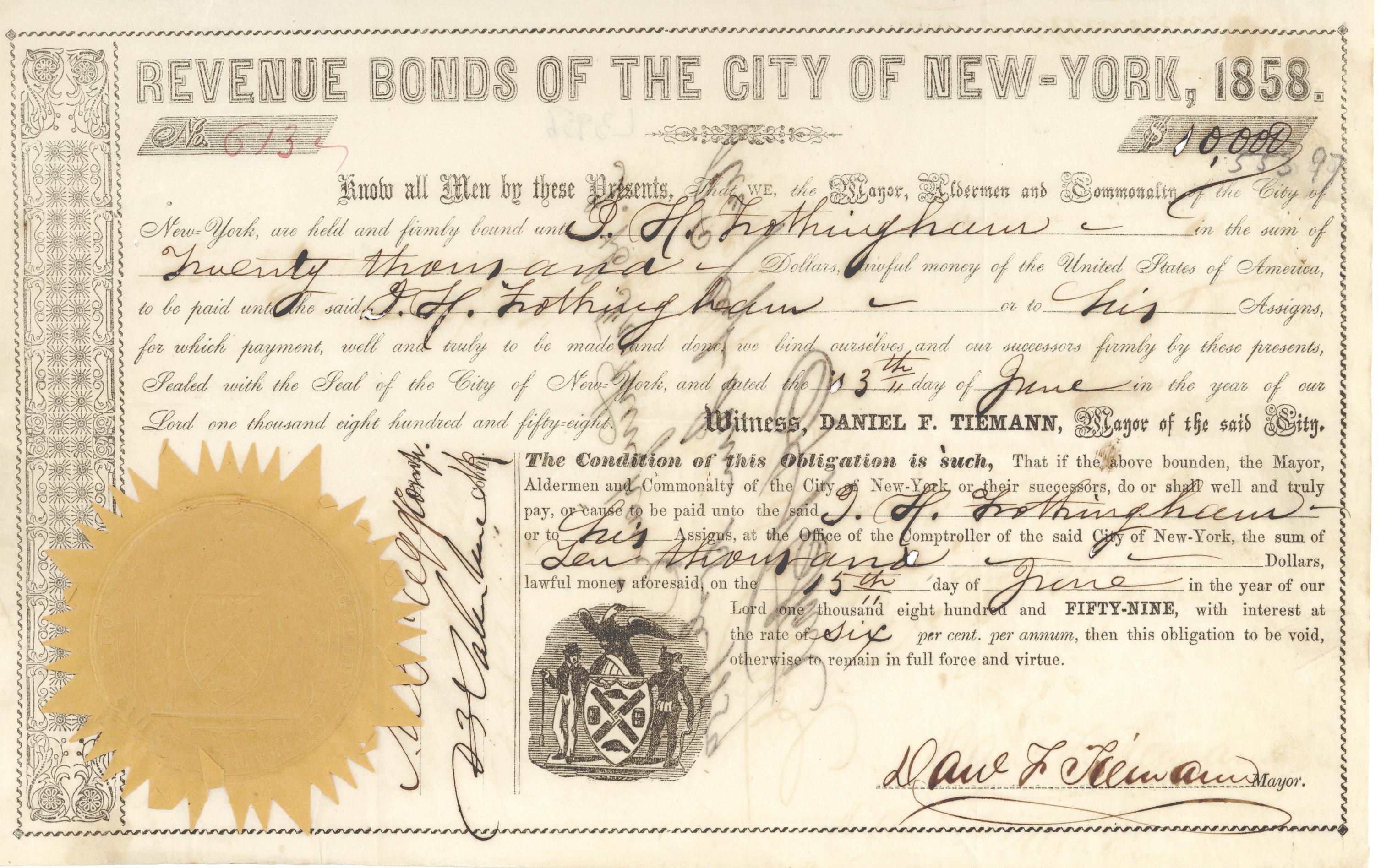
Before a municipality issues a bond, a specialized attorney is hired to verify its legitimacy. A legal opinion is printed on a municipal bond to verify the issue is legally binding upon the issuer. You want this opinion to be clean.
- An unqualified legal opinion indicates the bond counsel has found no legal restrictions concerning the municipal bond issue. (This is the ideal state).
- A qualified legal opinion indicates the bond counsel has identified specific potential legal uncertainties affecting the municipal bond issue. (There are "qualifications" or "reservations" regarding the issue).
Choosing the Municipal Syndicate
A municipality can choose its underwriting syndicate in two ways:
- Negotiated Sale: A negotiated municipal sale involves the issuer selecting an underwriting team through direct private negotiation. (Common for complex revenue bonds).
- Competitive Sale: A competitive municipal sale requires the issuer to invite underwriters to submit sealed bids for the bonds. (Common for general obligation bonds).
A municipal issuer initiates a competitive sale by publishing an Official Notice of Sale. The Official Notice of Sale contains the details necessary for an underwriter to formulate a competitive bid—details like the size of the issue, the maturity dates, and the amount of the good faith deposit required.
In a competitive bid, the issuer awards the municipal bond to the underwriting syndicate offering the lowest interest cost. The municipality wants to borrow money as cheaply as possible. To measure "lowest interest cost," issuers use two primary methods:
- Net Interest Cost (NIC): A straight-line calculation used to determine the lowest interest cost in a competitive municipal sale. It simply totals the interest payments and adjusts for premiums or discounts, completely ignoring when those payments happen.
- True Interest Cost (TIC): Incorporates the time value of money to determine the lowest interest cost in a competitive municipal sale. TIC recognizes that paying $1,000 in interest twenty years from now is significantly cheaper in present-value terms than paying $1,000 tomorrow.
Municipal Syndicate Structure and Allocation
When the municipal syndicate takes down the issue, how do they handle the risk among themselves? Municipal syndicates utilize two primary account structures:
- Eastern Syndicate Account: An Eastern syndicate account is an undivided account. In an Eastern syndicate account, members hold liability for unsold bonds based on their original participation percentage regardless of personal sales. Think of this like going to dinner with friends and splitting the bill evenly no matter who ate the most. If you sell your 10% allocation but the syndicate overall fails to sell the issue, you are still liable for 10% of whatever is left over.
- Western Syndicate Account: A Western syndicate account is a divided account. In a Western syndicate account, members hold no liability for unsold bonds once they have sold their specific original allocation. Think of this as paying only for your own meal. Once you clear your assigned inventory, your liability is extinguished.
Finally, because municipal bonds are often oversubscribed (more demand than supply), the syndicate manager cannot simply give bonds to whoever asks first. Municipal syndicates establish a priority of orders to allocate newly issued bonds.
The standard municipal syndicate allocation priority follows a strict hierarchy: presale, group net, designated, and member orders. (A popular mnemonic for the exam is Pro Golfers Don't Miss).
- Presale orders are placed by investors before the municipal syndicate officially wins the bid for the bond issue. These buyers committed blind, so they get top priority.
- Group net orders benefit all members of the municipal syndicate based on their exact percentage of liability. The profit from these sales goes into the syndicate pot to be shared by all.
- Designated orders allocate the selling concession to specific municipal syndicate members chosen directly by the buyer. Large institutional buyers often use this to direct commissions to specific broker-dealers that provide them with good research.
- Member orders allow a municipal syndicate member to purchase new bonds strictly for its own firm inventory. These are filled last, ensuring the public is served before the broker-dealers hoard the bonds for themselves.
Bringing new issues to market is the process of turning raw potential into liquid capital. Whether you are navigating the strict 20-day cooling-off period of a corporate IPO, avoiding the sting of a penalty bid, or calculating True Interest Cost on a new municipal offering, your understanding of these mechanics guarantees that capital flows legally, efficiently, and fairly. Master the rulebook, because the market relies on your precision.