Corporate Bonds
A corporation needs to construct a $500 million logistics hub. Rather than diluting the ownership of current shareholders by issuing new stock, or subjecting itself to the restrictive covenants of a massive bank loan, the corporation turns directly to the public markets to borrow the funds. A corporate bond is a debt security issued by a corporation to raise capital. When your clients purchase these instruments, they are stepping into the role of a lender. In exchange for their capital, the corporation promises to return the principal at maturity and, in most cases, pay regular interest along the way. However, the capital markets are rarely so simple. As a registered representative, your primary objective is not merely to facilitate trades, but to understand the architectural integrity of the debt you are placing in a client's portfolio. You must be able to look at a bond's structure and know exactly where your client stands if the corporation thrives, if it struggles, or if it outright collapses.
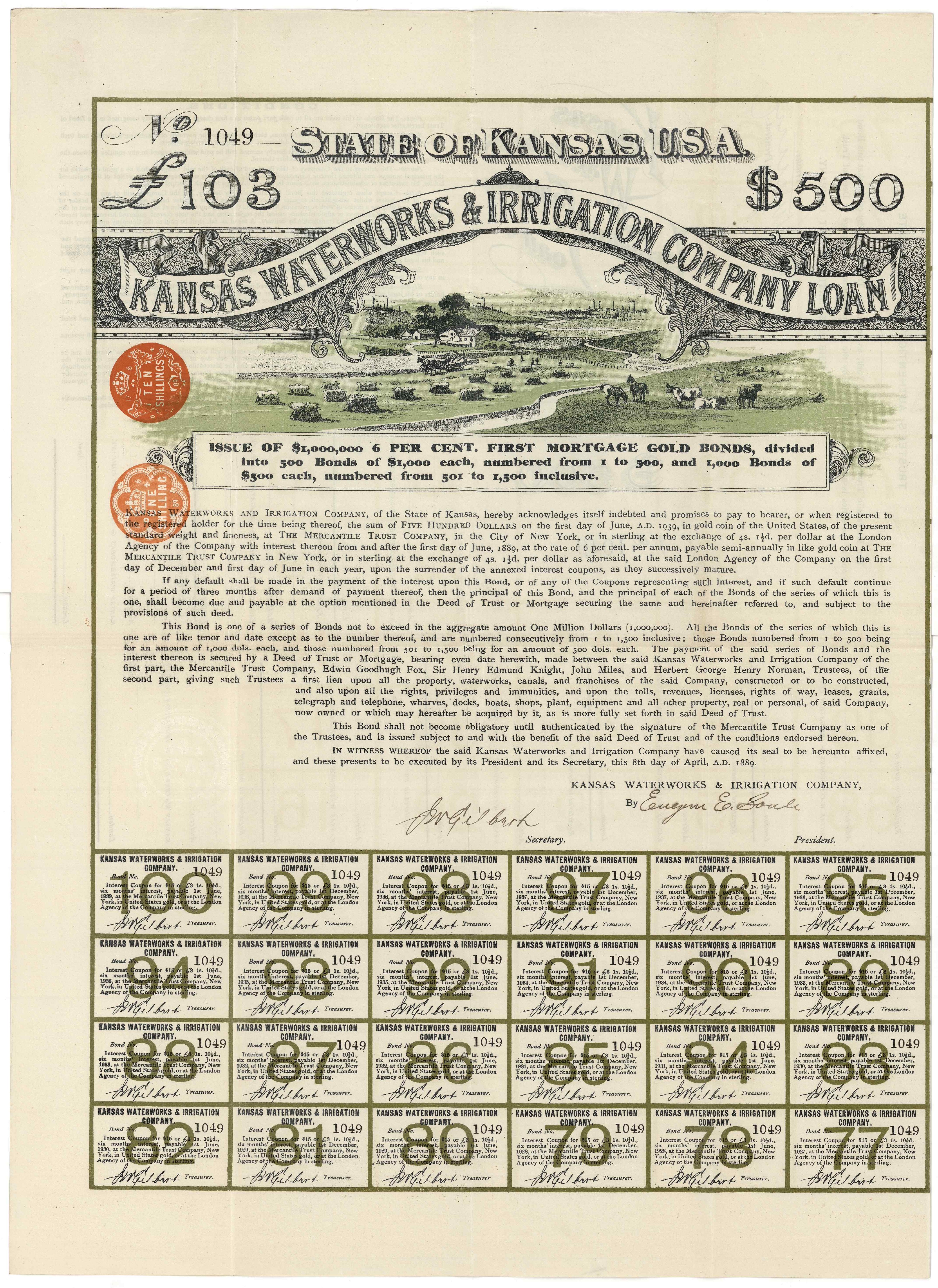
Before we examine the specific flavors of corporate debt, we must understand the legal guardrails that protect your clients. A corporate bond is not a handshake agreement. By law, the Trust Indenture Act of 1939 requires corporate bond issues exceeding $50 million to be issued under a formal trust indenture.
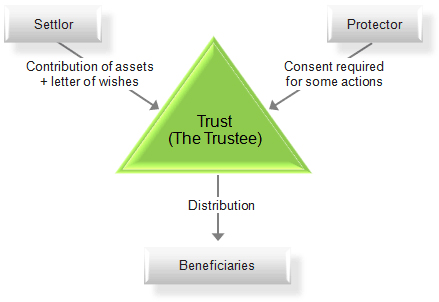
A trust indenture is a legal contract between the corporate bond issuer and a trustee representing the bondholders' interests. The trustee, usually a large commercial bank, monitors the corporation to ensure it complies with the covenants (promises) outlined in the indenture. If the corporation fails to make a payment or breaches a covenant, the trustee steps in to represent the bondholders, shielding individual retail investors from having to wage complex legal battles on their own.
When a corporation liquidates, a strict hierarchy dictates who gets paid first. The fundamental dividing line in corporate debt is whether the bond is secured by hard assets or backed only by a promise.
Secured Corporate Bonds
Secured corporate bonds are backed by specific corporate assets serving as collateral. If the corporation defaults, bondholders have a direct legal claim to seize and sell those specific assets to recover their principal. Because the risk is lowered by this tangible backing, secured bonds generally offer slightly lower yields than unsecured bonds from the same issuer.
There are three primary types of secured bonds you will encounter:
- Mortgage bonds: These are collateralized by real estate or physical property owned by the issuer. If a utility company defaults on a mortgage bond, the bondholders effectively hold the keys to the power plant.
- Equipment trust certificates (ETCs): These are backed by transportation or industrial equipment. Airlines and railroads use ETCs constantly. If an airline defaults, the trustee can repossess the planes and sell them to another airline to make the bondholders whole.
- Collateral trust bonds: Instead of physical property, these are secured corporate debt backed by financial securities owned by the issuing corporation. A parent company might place shares of a highly profitable subsidiary into a vault (a trust) to serve as collateral for its own debt.
Unsecured Corporate Bonds
Unsecured corporate bonds are backed solely by the issuing corporation's general credit and promise to pay. There is no factory or airplane to repossess; the investor relies entirely on the company's cash flow and integrity.
- Debentures: These are unsecured corporate bonds backed only by the full faith and credit of the issuing corporation. If a blue-chip technology company issues debt, it is almost always in the form of debentures. Their general credit is so strong they do not need to pledge specific assets.
- Subordinated debentures: These hold a lower claim on assets than standard debentures during a corporate liquidation. If the ship sinks, subordinated debenture holders wait in line behind secured bondholders, general creditors, and standard debenture holders. To compensate for this precarious position in the capital structure, they offer higher yields.
- Guaranteed bonds: These are unsecured corporate bonds backed by a third-party entity rather than the issuing corporation. Typically, a parent company will guarantee the debt of a weaker subsidiary, allowing the subsidiary to borrow at a lower interest rate.
As an advisor, you will inevitably deal with clients chasing higher yields or looking for debt instruments that behave differently than standard coupon-paying bonds.
High-Yield (Junk) Bonds
A bond's credit rating is a measure of its probability of default. Investment-grade bonds are considered relatively safe. However, high-yield bonds carry a higher risk of default than investment-grade corporate bonds.
To mathematically define this: high-yield bonds have a credit rating below BBB from Standard and Poor's, or similarly, they have a credit rating below Baa from Moody's. Because the marketplace is rational, high-yield bonds offer higher coupon rates to compensate investors for increased default risk. Consequently, they are commonly referred to as junk bonds. Your clients must understand that they are trading safety of principal for enhanced income.
Income Bonds (Adjustment Bonds)
Imagine a corporation emerging from bankruptcy. It has restructured its debt, but its cash flows are still highly uncertain. Such a company might issue income bonds—which are also known as adjustment bonds.
The defining characteristic here is conditional payment: income bonds pay interest to investors only if the issuing corporation earns sufficient income. Furthermore, even if the cash is there, a corporate board of directors must formally declare the interest payment for an income bond before the interest is paid.
Because buyers and sellers in the secondary market cannot guarantee whether the next interest payment will actually materialize, income bonds trade flat in the secondary market.
Trading Flat: Trading flat means a bond trades without accrued interest. The buyer pays exactly the quoted market price, with no added calculation for the interest earned since the last payment date.
Zero-Coupon Bonds: The Mathematics of Accretion
Most bonds pay a semi-annual coupon. Zero-coupon corporate bonds do not pay periodic interest payments. Instead, zero-coupon corporate bonds are issued at a deep discount to par value.
If a client buys a zero-coupon bond for $600 and holds it to maturity, they will receive the full $1,000 par value. The return on a zero-coupon bond is the difference between the discounted purchase price and the par value received at maturity.
While no cash changes hands during the holding period, the IRS is not willing to wait a decade to collect taxes. Mathematically, the bond's book value steps up slightly every year toward par. The annual upward adjustment of a zero-coupon bond cost basis is called accretion.
Here is the vital tax implication for your clients: Investors must pay annual federal income taxes on the accreted value of a corporate zero-coupon bond, even though they received no physical check. Taxing accreted value before actual cash is received is known as phantom income. (For this reason, zero-coupon bonds are exceptionally well-suited for tax-advantaged accounts like IRAs, where phantom income is shielded).
Finally, observe the market physics of a zero-coupon bond. Because the investor's entire return is locked at the end of the bond's life, the bond is highly sensitive to interest rate fluctuations. As a rule, zero-coupon bonds experience higher price volatility than coupon-paying bonds of the exact same maturity.
We now arrive at one of the most intellectually elegant securities in the marketplace: the convertible bond.
Convertible bonds allow the bondholder to exchange the debt instrument for a fixed number of shares of the issuing corporation's common stock. This gives the investor the best of both worlds: the downside protection of a bond (regular interest and return of principal) coupled with the explosive upside potential of equity. Because of this built-in equity option, convertible bonds typically offer lower coupon rates than non-convertible bonds issued by the exact same corporation.
Furthermore, convertible bonds provide a potential hedge against inflation because the underlying common stock price can rise during inflationary periods, offsetting the eroding purchasing power of fixed interest payments.
Conversion Mechanics
To understand convertibles, you must master two interdependent variables:
- The conversion price: This is the fixed price per share at which a convertible bond can be exchanged for common stock.
- The conversion ratio: This determines the exact number of common shares a bondholder receives upon converting a convertible bond.
The ratio is hardcoded into the bond's indenture from the day it is issued, using the standard $1,000 par value of a corporate bond.
Conversion Ratio Formula:
Conversion Ratio=Conversion PriceBond Par Value
Example: If a corporation issues a bond with a conversion price of $40, the conversion ratio is $1,000 / $40 = 25. The bondholder can trade their one bond for 25 shares of stock at any time.
The Physics of Parity
Because the bond can be transformed into stock, the price of the bond and the price of the stock become mathematically tethered in the secondary market. We measure this relationship using the concept of parity.
Parity exists when the market price of a convertible bond exactly equals the aggregate market value of the underlying common shares.
You must be able to calculate parity from both directions:
- The parity price of a convertible bond equals the market price of the common stock multiplied by the conversion ratio. (If the stock is trading at $50, and the ratio is 25 shares, the parity price of the bond is $50 × 25 = $1,250).
- The parity price of the underlying common stock equals the market price of the convertible bond divided by the conversion ratio. (If the bond is trading at $1,200, and the ratio is 25 shares, the parity price of the stock is $1,200 / 25 = $48).
| Metric | Formula |
|---|---|
| Bond Parity Price | Market Price of Stock×Conversion Ratio |
| Stock Parity Price | Conversion RatioMarket Price of Bond |
Arbitrage Opportunities
Markets are highly efficient, but occasionally, prices slip out of equilibrium. When a security is mispriced relative to its mathematical counterpart, institutional traders execute arbitrage.
Arbitrage involves simultaneously buying and selling related securities to profit from a price discrepancy. In the convertible space, a convertible bond arbitrage opportunity exists if the convertible bond trades at a discount to the bond parity price.
Let us observe this in action: Imagine our convertible bond (ratio of 25) is trading at $1,200. The underlying stock is trading at $50. The bond's parity price is $1,250 ($50 × 25). The bond is currently trading at $1,200—it is mathematically undervalued by $50.
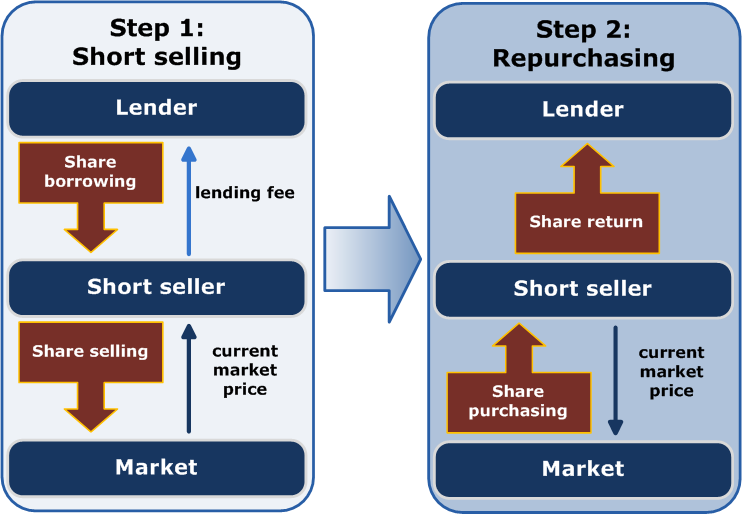
To execute convertible bond arbitrage, an investor buys the undervalued convertible bond and short sells the underlying common stock. The trader buys the bond for $1,200, immediately converts it into 25 shares, and uses those shares to cover the short position they sold at $50 per share ($1,250 total). They have locked in a risk-free $50 profit. This constant pressure from arbitrageurs forces the bond and stock to trade at or very near parity.
Corporate Actions: Anti-Dilution and Forced Conversion
What happens if the corporation executes a 2-for-1 stock split? If you held a bond convertible into 25 shares, your equity upside would be instantly halved if the terms didn't adjust.
To prevent this, convertible bonds include an anti-dilution covenant to protect bondholders against corporate actions that increase outstanding shares. This legal provision requires the issuer to lower the conversion price if a stock split or stock dividend occurs. Mathematically, lowering the conversion price due to a stock split proportionally increases the conversion ratio. If the stock splits 2-for-1, the conversion price is cut in half, and the bondholder will now receive 50 shares upon conversion, perfectly preserving their equity value.
Finally, you must warn clients about call features. An issuer will often call a bond when interest rates fall, but with convertibles, they use call features strategically to force equity issuance.
Forced conversion occurs when an issuer calls a convertible bond at a call price lower than the bond's current conversion value.
Suppose a bond has a conversion ratio of 25, and the stock is soaring at $60. The conversion value of the bond is $1,500. If the issuer calls the bond at $1,050, the bondholder faces a choice: accept $1,050 in cash from the call, or convert the bond into stock worth $1,500.
The choice is obvious. During a forced conversion, bondholders will rationally choose to convert the bond into stock rather than accept the lower call price. The issuer successfully wipes the debt off their balance sheet and replaces it with equity, which was their precise objective.
To master corporate bonds is to master the vital circulatory system of global business. Whether your client is seeking the ironclad safety of a first-mortgage bond, the steady mathematical accretion of a zero-coupon bond, or the complex, dual-natured upside of a convertible issue, your precise understanding of these mechanisms ensures their capital is deployed exactly where it belongs.